

How to Preserve Evidence After a Slip and Fall
Evidence fades fast after a slip and fall. The steps you take in the first 24–72 hours can make or break your Kentucky premises liability claim. Call 502-888-8888 for a free case review.
Why Evidence Disappears So Fast
A slip and fall accident can happen in an instant, but the evidence that proves what caused it starts disappearing almost immediately. Property owners have a strong financial incentive to fix the hazard quickly — sometimes within hours — and to claim they had no prior knowledge of the problem. Surveillance systems at most commercial properties automatically overwrite footage on a 24–72 hour loop. Witnesses leave the scene and are hard to track down later. Your injuries may look different on day one than they do a week later.
Under Kentucky law, a slip and fall claim is a premises liability claim. To win, you need to prove that the property owner knew (or should have known) about the dangerous condition and failed to fix it or warn you. That requires evidence that the hazard existed, that the owner had notice of it, and that it caused your specific injuries. Collecting that evidence starts the moment you’re able to act.
The 8 Critical Evidence Preservation Steps
Follow these steps in order. Some have strict time windows.
-
Photograph the Scene — Immediately
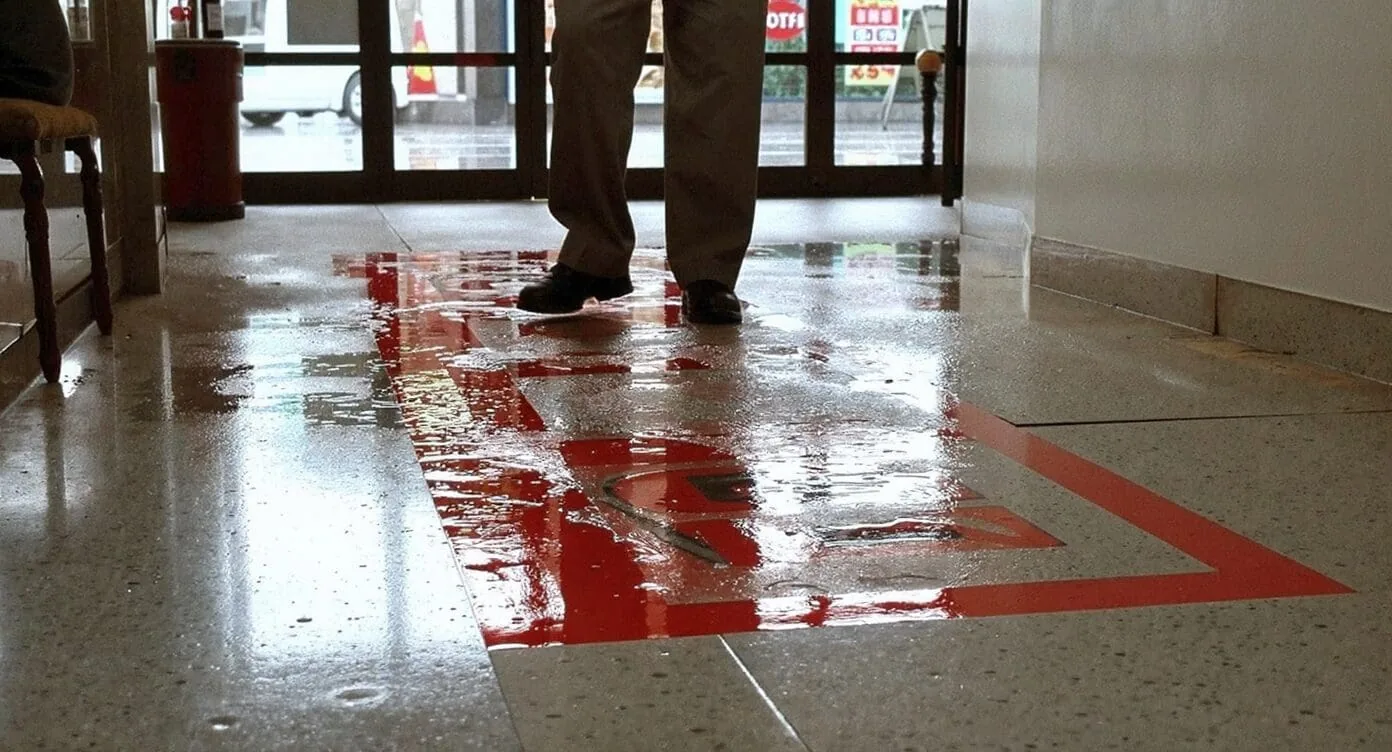
Use your phone to take as many photographs as possible of the exact condition that caused your fall. Get wide shots showing the location and close-up shots of the specific hazard — the wet floor, the broken step, the icy patch, the unmarked transition. Photograph any “wet floor” signs or warning cones (or their absence). Take photos before you move or before anyone cleans up. These images are often the single most important evidence in a slip and fall case.
-
File an Incident Report on the Spot
Ask to speak with a manager or supervisor before leaving. Tell them you fell and you need to file an incident report. Insist on a copy. Write down exactly what you said and what they said. This creates an official record that the incident happened on their property, at a specific time, and under specific conditions. Property owners sometimes claim they have no record of an incident — a written report removes that argument.
-
Request Preservation of Surveillance Footage
Most commercial properties — stores, restaurants, parking garages, apartment complexes, hospitals — have surveillance cameras. The footage that captured your fall can be your strongest evidence. Ask the manager on the spot to preserve the footage and confirm who to contact for a copy. Then have your attorney send a formal written preservation demand as soon as possible. Many systems overwrite footage every 24–72 hours. Once it’s gone, it’s gone.
-
Collect Witness Contact Information
Anyone who saw you fall — or who can describe the condition before you fell — is a potential witness. Get full names and phone numbers before leaving the scene. Bystanders may be willing to help now but difficult to locate later. If a store employee saw the fall, document their name and position. Witness testimony about how long the hazard existed before the fall is particularly valuable in establishing that the property owner had notice of the problem.
-
Preserve Your Footwear — Do Not Throw It Away
The shoes you were wearing at the time of the fall are physical evidence. Their condition — sole wear, heel type, presence of anti-slip texture — goes directly to the property owner’s defense that you were wearing inappropriate shoes. Place them in a bag and do not wear them again. Some property owners and insurance adjusters will argue that the slip was caused by your footwear rather than their unsafe floor. Your preserved shoes, examined by your attorney, can help counter that argument.
-
Seek Medical Care the Same Day — Document Everything
Go to an emergency room, urgent care, or your primary care physician the day of the fall. Even if your injuries seem minor, get checked. Two reasons: First, some injuries — soft tissue damage, concussion, internal bruising — don’t show up immediately. Second, medical records created on the day of the fall establish the link between the accident and your injuries. If you wait days to seek care, the property owner’s insurance will argue your injuries were caused by something else. Every medical record, prescription, and imaging report becomes part of your claim.
-
Write Down What Happened — In Detail, Right Away
Memory fades and shifts over time. Write a detailed account of the fall as soon as possible — preferably the same day. Include: what time it was, exactly where you were walking, what you were doing, what you saw (or didn’t see) before you fell, how you fell and what part of your body hit the ground, what the hazardous condition was, whether there were any warning signs, and how you felt immediately after. Keep this document for your records. Your attorney will use it to ensure your account is consistent throughout the case.
-
Contact an Attorney Before Talking to Their Insurance Company
After a slip and fall, the property owner’s insurance adjuster may contact you quickly — often within 24–48 hours — asking for a recorded statement. Do not give one. Recorded statements made while you’re still in pain, before you know the full extent of your injuries, and before you understand your legal rights are frequently used to deny or minimize your claim. Call 502-888-8888 first. A free case review costs you nothing and ensures you know what you’re agreeing to before you speak to anyone from the insurance company.
What Is Spoliation — and Why Does It Matter?
Spoliation is the legal term for the destruction or alteration of evidence after a party knows (or should know) that litigation is reasonably anticipated. In Kentucky premises liability cases, a “spoliation letter” — a formal written demand sent by your attorney to the property owner — puts the owner on legal notice that they must preserve all evidence related to your fall, including surveillance footage, maintenance records, incident reports, and floor inspection logs. If the property owner destroys evidence after receiving a spoliation letter, courts can impose serious consequences — including allowing the jury to assume the destroyed evidence would have supported your claim. This is why early attorney involvement matters.
Maintenance Records and Prior Incident Reports
One of the most powerful forms of evidence in a slip and fall case is showing that the property owner knew about the hazard before you fell. This comes from:
- Prior incident reports — other people who fell in the same area and filed reports
- Maintenance work orders — records showing the hazard was identified but not fixed promptly
- Inspection logs — routine walk-through records showing who inspected the property and when
- Complaints to management — written or email complaints from customers or employees about the same condition
These records typically cannot be obtained without the discovery process that follows a formal legal claim. That’s another reason to contact an attorney early — the sooner a case is filed, the sooner these records can be requested before they’re lost, misplaced, or destroyed.
The Medical Documentation Timeline
Your medical records are the backbone of your damages claim. Every time you see a provider, every scan, every therapy session, and every prescription fills in the picture of how seriously you were hurt and how your injuries have progressed. A gap in treatment can be used by the insurance company to argue you weren’t seriously injured, or that you failed to mitigate your damages. Keep a consistent medical timeline:
- Day 1–3: Emergency or urgent care visit; initial injury documentation
- Week 1–2: Follow-up with primary care physician or orthopedic provider
- Ongoing: Physical therapy, specialist visits, imaging (MRI, X-ray) as ordered
- Continuous: Keep every Explanation of Benefits (EOB), receipt, and prescription document
Frequently Asked Questions
How long do I have to file a slip and fall claim in Kentucky?
What if the property owner already cleaned up the hazard before I could photograph it?
What is a spoliation letter and when should it be sent?
Should I give a recorded statement to the store’s insurance company?
Does it matter if the fall was at least partly my fault?
Start Your Free Case Review
Fill out the form below and our team will reach out to discuss your options.