

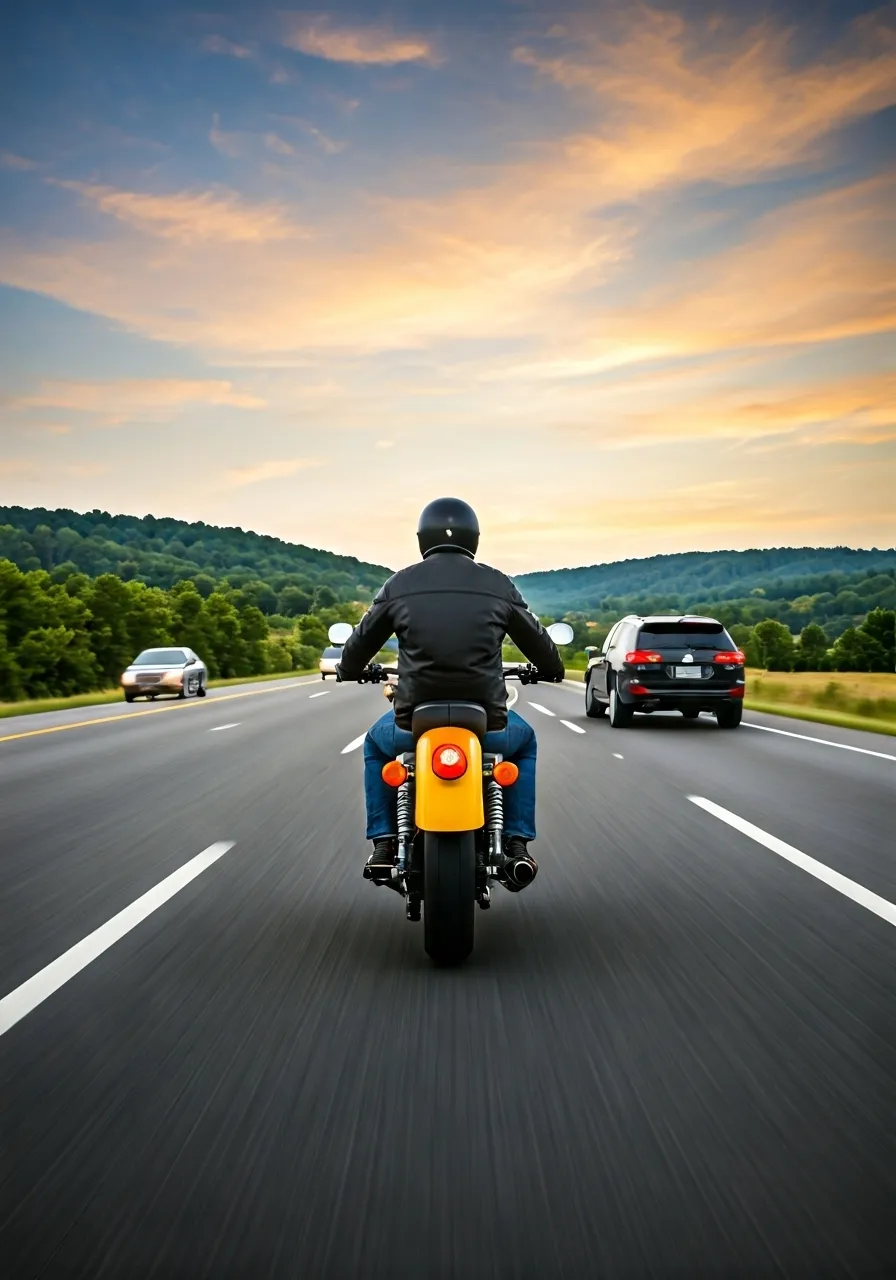
Motorcycle Accidents and Weather Claims
Rain, fog, and wet roads don’t eliminate another driver’s duty to operate safely. We prove who failed to adjust — and make them pay.
Rain, fog, and wet roads don’t eliminate another driver’s duty to operate safely. When a car or truck driver causes a motorcycle crash in bad weather, Kentucky’s pure comparative fault system still allows the rider to recover compensation — reduced only by any percentage of fault attributable to the rider. At Sam Aguiar Injury Lawyers, we use dashcam footage, telematics data, and National Weather Service radar records to prove exactly what conditions existed and who failed to adjust.
How Weather Affects Motorcycle Accident Claims in Kentucky
Kentucky’s climate creates year-round hazards for motorcyclists. Spring and summer bring sudden thunderstorms. Fall brings fog in river valleys. Winter leaves residual ice and salt on road surfaces well into March. Every one of these conditions changes both the dynamics of a crash and the legal arguments around fault.
According to the Federal Highway Administration (FHWA), weather-related crashes account for approximately 21% of all traffic collisions nationwide — roughly 1.2 million crashes per year on wet pavement, during rain, or in other adverse conditions. For motorcyclists, the margin for error is far smaller. Reduced tire contact, limited visibility, and longer stopping distances make every weather-related hazard exponentially more dangerous on two wheels.
(FHWA)
(FHWA)
(FHWA)
Liability When Bad Weather Causes a Motorcycle Crash
The critical legal point in weather-related crashes is this: bad weather does not excuse negligence. Every driver on the road has a duty to adjust their driving to match current conditions — including reducing speed, increasing following distance, and using headlights. When a car or truck driver fails to make those adjustments and hits a motorcyclist, they are liable for the resulting injuries.
Common weather-related negligence scenarios include:
Hydroplaning Into a Motorcycle
When a car’s tires lose contact with wet pavement, the driver loses steering and braking control. If that driver was traveling too fast for conditions — or had worn tires — and hydroplaned into a rider, that’s negligence. Speed, tire condition, and road design all become evidence in these claims.
Reduced Visibility Collisions
Fog, heavy rain, and glare reduce a driver’s ability to see motorcycles — which are already harder to spot in clear conditions. A driver who fails to reduce speed or use proper lighting in low-visibility conditions can be held liable for hitting a rider they “couldn’t see.”
Ice and Snow Crashes
While most riders avoid riding in winter conditions, early-season and late-season ice — or unexpected black ice — can catch riders on the road. If a government entity failed to treat a road surface, or if another driver lost control on ice due to excessive speed, liability may extend beyond just the other driver. See our dedicated page on ice and snow injury claims for related premises liability issues.
Road Maintenance Failures in Weather
Standing water caused by clogged drains, unrepaired potholes filled with rainwater, and oil slicks that become more dangerous in wet weather can all create motorcycle-specific hazards. When a government entity or road maintenance contractor failed to address these conditions, they may share liability for a resulting crash.
Kentucky’s Pure Comparative Fault and Weather Claims
Insurance companies love to argue that a rider “shouldn’t have been riding in bad weather” to shift fault. Kentucky’s pure comparative fault system means your recovery is reduced by your share of fault — but not eliminated. If you were riding in rain and a car ran a red light and hit you, the rain doesn’t make the red light your fault. We isolate the specific negligent act that caused the crash and keep weather conditions from inflating your fault percentage unfairly.
Evidence We Use to Prove Weather-Related Motorcycle Claims
Weather claims require a different evidence toolkit than a clear-day crash. We pursue every available source to document conditions at the exact time and location of the collision:
National Weather Service (NWS) Radar Data
The National Weather Service maintains archived radar data that shows precipitation intensity, timing, and coverage for specific locations. This data establishes exactly what weather conditions existed at the time of the crash — not what the other driver claims they were.
Dashcam and Helmet Camera Footage
Dashcam footage from the rider, the other driver, or nearby vehicles captures real-time road conditions, visibility, precipitation, and the other driver’s behavior in the moments before the crash. If you ride with a helmet cam or GoPro, that footage can be decisive evidence.
Vehicle Telematics and EDR Data
Modern vehicles record speed, braking, and stability control activation in their event data recorders. In a hydroplaning crash, EDR data can prove the other driver’s speed was too fast for wet conditions. Stability control activation records can show the vehicle was losing traction before impact.
Road Condition Reports
KYTC maintenance logs, Louisville Metro road treatment records, and 511 traffic advisories document what road conditions were reported and what maintenance actions were (or were not) taken before the crash.
Meteorological Testimony
In complex cases, we retain meteorologists who can testify about the exact conditions at the time of the crash — including visibility distance, precipitation rate, road surface temperature, and whether conditions were foreseeable for a prudent driver.
What You Can Recover After a Weather-Related Motorcycle Crash
The compensation available in a weather-related motorcycle crash is the same as any other motorcycle accident claim — the weather context changes who’s at fault, not what you’re owed. A full recovery may include:
- Medical expenses: Emergency care, surgery, hospitalization, rehabilitation, and all future treatment
- Lost income: Wages lost during recovery and reduced earning capacity from permanent injuries
- Pain and suffering: Physical pain, emotional distress, and loss of enjoyment of life
- Property damage: Motorcycle repair or replacement, riding gear, and personal items
- Scarring and disfigurement: Road rash, burns, and permanent visible injuries
If you were riding in Central Kentucky when the crash happened, we also handle Lexington motorcycle accident claims.
Weather doesn’t excuse negligence. If a driver hit you because they didn’t adjust for conditions, they owe you full compensation. At Sam Aguiar Injury Lawyers, our Bigger Share Guarantee® means you keep more of every dollar recovered — no increased litigation fees, never increases. $0 Out-Of-Pocket, no matter what.
Frequently Asked Questions
Can I still file a motorcycle accident claim if it was raining when I crashed?
Yes. Rain does not eliminate another driver’s liability. Every driver must adjust their behavior for weather conditions. If the other driver was speeding on wet roads, following too closely, or failed to use headlights, they can be held responsible. Kentucky’s pure comparative fault system allows recovery even if weather contributed to the crash.
How do you prove weather conditions at the time of a motorcycle crash?
We use National Weather Service archived radar data, dashcam and helmet camera footage, vehicle telematics data, KYTC road condition reports, and — in complex cases — meteorological testimony. This evidence establishes the exact conditions at the time and location of the crash.
Will the insurance company blame me for riding in bad weather?
They will try. Insurance adjusters routinely argue that a rider ‘assumed the risk’ by riding in rain or fog. Kentucky’s pure comparative fault system may reduce your recovery if weather was a factor, but it does not eliminate it. We isolate the other driver’s specific negligent act — running a light, speeding, failing to yield — and keep weather from inflating your fault percentage unfairly.
What if a pothole or road defect caused my crash in the rain?
If a government entity or road maintenance contractor failed to repair a known hazard — or if poor drainage created standing water — they may share liability. We investigate road maintenance records and prior complaints to determine whether the responsible party had notice of the condition and failed to act.
Does Kentucky have a helmet law that affects weather-related claims?
Yes. KRS 189.285 requires all riders in Kentucky to wear DOT-compliant helmets regardless of weather conditions. Wearing a helmet strengthens your claim. Not wearing one does not bar your claim but may affect the assessment of head injury damages.
Start Your Free Case Review
Fill out the form below and our team will reach out to discuss your options.