

Pedestrian Hit At A Roundabout
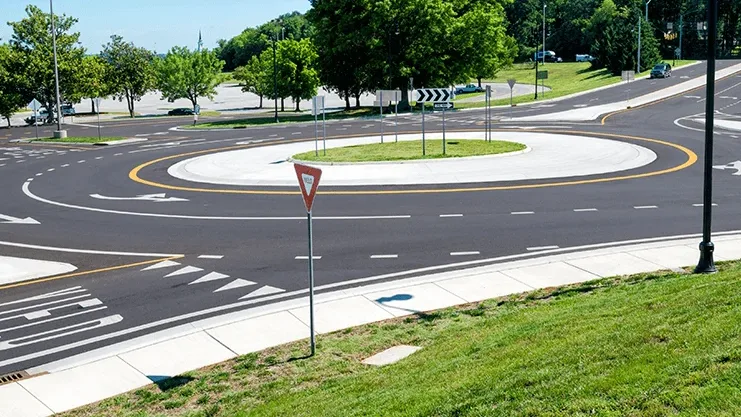
A driver who strikes a pedestrian at a Kentucky roundabout or traffic circle can still be liable. The circular layout lowers vehicle speed. The duty to yield at the entry and exit crossings, where people walk, remains.
Kentucky Roundabout Liability
Kentucky treats a roundabout pedestrian accident as an ordinary negligence case. The driver owed a duty of reasonable care, including a lookout for people in the crossing and a yield to a pedestrian who had the right of way.
A roundabout is still an intersection for that purpose. Entry and exit legs have marked or unmarked crossings. A driver who is watching the circulating lane and not the person on foot can be liable in the same way as a driver who fails to yield at a conventional crosswalk. How those cases are built is covered on the pedestrian accident page. Related right-of-way rules for people on bikes are collected in Kentucky bicycle accident laws.
Pedestrian Crossing Design
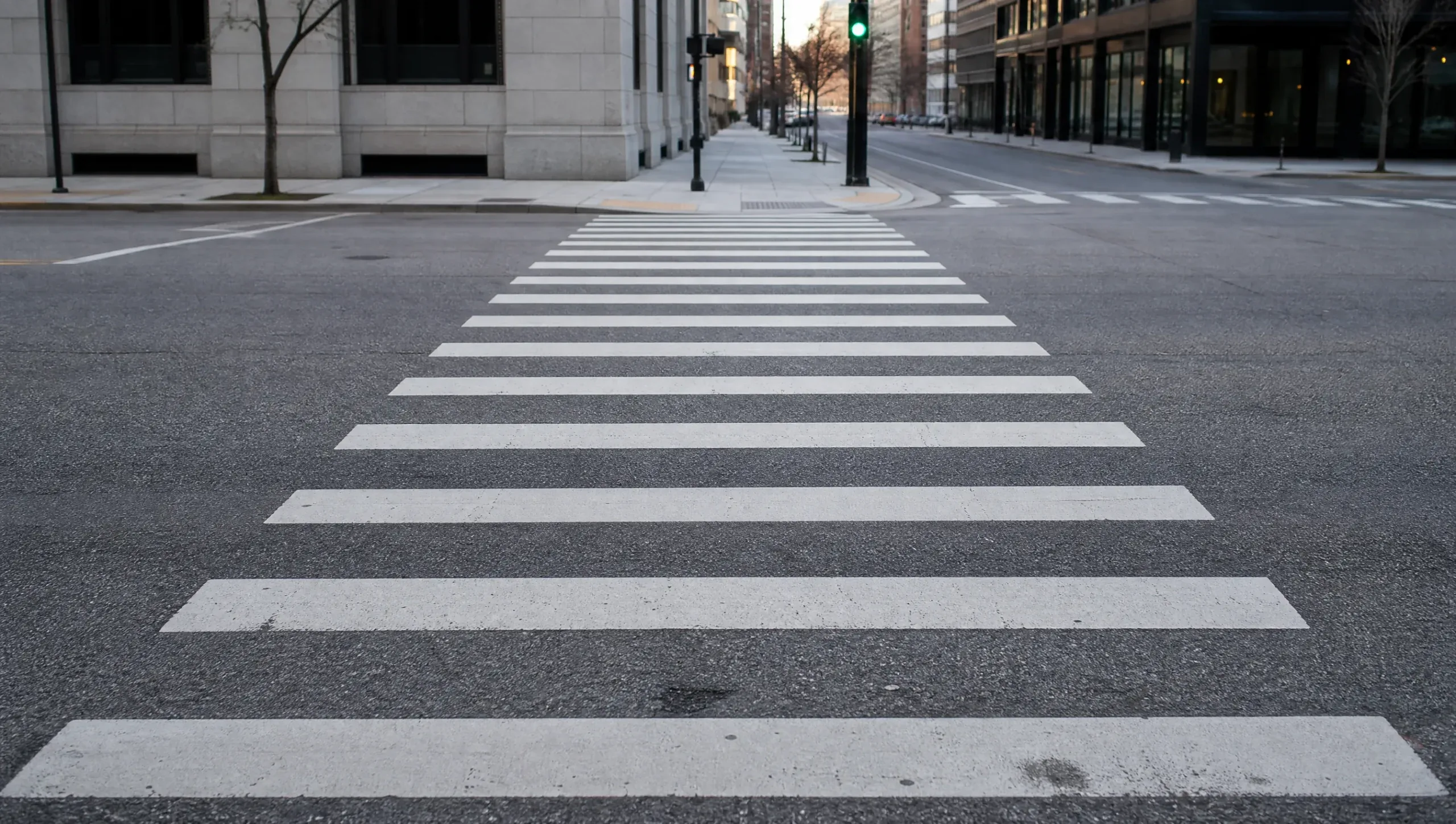
Roundabouts reduce how often pedestrians are struck compared with traditional intersections. The Insurance Institute for Highway Safety reports that studies in Europe indicate converting conventional intersections to roundabouts can reduce pedestrian accidents by about 75%, and that U.S. conversions reduced injury accidents by 72% to 80% overall.
IIHS notes that pedestrians at roundabouts cross only one direction of traffic at a time, over relatively short distances, at lower traffic speeds than at traditional intersections. Lower speed and a shorter crossing cut the number of accidents. The fault question is still whether the driver yielded at that crossing.
Multi-Lane Yield Failures
Multi-lane roundabouts are harder for people on foot than single-lane ones because one stopped vehicle can hide a pedestrian from a driver in the next lane. IIHS notes that motorists failed to yield to pedestrians 2 to 3 times more often at multi-lane roundabouts than at single-lane roundabouts.
That hidden-person problem is a lookout failure at a multi-lane crossing. A driver in the second lane who goes around a stopped car and strikes someone in the walkway is the liability fact pattern those studies describe.
Exit Leg Risk
Drivers leaving a roundabout are the greater concern for pedestrians. An IIHS-cited study found that drivers leaving a roundabout were less likely to yield to pedestrians than drivers entering it, so people crossing at exit legs face a higher risk of not being seen in time.
IIHS estimated that converting just 10% of U.S. signalized intersections to roundabouts would have prevented 289 fatal accidents in 2024. The tight circle forces drivers to slow down and makes the most severe accident types, including right-angle, left-turn, and head-on collisions, unlikely. The leftover risk for people walking is the yield at the exit, not a high-speed angle strike in the middle of the circle.
National Pedestrian Toll
Pedestrian deaths remain high nationwide even as roundabouts cut intersection severity. NHTSA reports 7,080 pedestrians were killed and more than 71,000 injured in 2024, roughly one pedestrian death every 74 minutes.
IIHS reports that accidents at two-lane roundabouts decreased an average of 9% a year, and the odds that an accident involved an evident or incapacitating injury fell by nearly one-third annually as drivers grew familiar with them. Design improvements and driver familiarity lower the count. A Kentucky case still depends on whether this driver failed to yield. Statewide context on fatal motor-vehicle accidents is in the Kentucky fatal car accident statistics.
Struck While Crossing at a Roundabout?
A driver who fails to yield at a roundabout crosswalk can leave a pedestrian with injuries that take months to treat, and the insurer will look for ways to shift blame onto you. Sam Aguiar Injury Lawyers checks DOT and TRIMARC traffic camera archives that reach back about six months for footage of the crossing. Under the Bigger Share Guarantee®, you always walk away with more than the firm after bills, liens and case costs. Begin with a free case review.
Latest Articles
Kentucky Diminished Value Claims
Kentucky drivers may pursue a repaired vehicle’s leftover market loss from the at-fault driver as part of a.

FMCSA Revoked ELDs: Fleet Compliance and Enforcement Deadlines
FMCSA removed five electronic logging devices from the registered list on August 6, 2026, and set an October.

FMCSA English Proficiency Rule and OOS Enforcement
FMCSA English Proficiency Rule Sam Aguiar Injury Lawyers August 11, 2026 7 minute read On This Page.