

ELD Falsification in Truck Accident Cases

ELD falsification is any change that makes a truck driver’s electronic hours-of-service record say something other than what happened. Under 49 CFR 395.8(a)(1)(i), a motor carrier subject to Part 395 must have its drivers record duty status on an electronic logging device (“ELD”). The exceptions include drivers who keep logs on no more than 8 days in any 30-day period and trucks built before model year 2000. The same section, at 395.8(e), bars a driver or a carrier from making a false report or tampering with the device. Kentucky applies Part 395 to commercial motor vehicles operating for hire or in private carriage, interstate or intrastate, through 601 KAR 1:005, subject to the exceptions that regulation lists.
The driving limits themselves, including 11 hours of driving inside a 14-hour window under 49 CFR 395.3, are explained in hours-of-service rules and ELD evidence.
Federal Rules Against False Logs
Three federal rules reach a falsified log. 49 CFR 395.8(e) bars any driver or motor carrier from making a false report about duty status, and from disabling, jamming, reprogramming, or otherwise tampering with an ELD so that it does not accurately record and keep the required data. It also bars either one from permitting or requiring another person to do those things.
49 CFR 390.35 bars a motor carrier and its agents, officers, representatives, and employees from making a fraudulent or intentionally false entry on any record the safety regulations require. 49 CFR 395.30(e) bars a motor carrier from coercing a driver to falsely certify a record of duty status.
Edit History in an ELD Record
49 CFR 395.26 lists the data an ELD records on its own: date, time, location, engine hours, vehicle miles, and the driver, vehicle, and carrier identification. While the truck is moving, the device makes an intermediate recording at least once an hour. The device records those entries from the truck’s own data.
Under 49 CFR 395.30, the driver certifies each 24-hour record by selecting “Agree” after a statement that the entries are true and correct. Every edit or added entry must carry an annotation. A carrier may propose an edit only after the driver submits the record, and the edit takes effect only when the driver confirms it and recertifies. Section 395.30(f) bars the carrier from altering or erasing the original hours-of-service information or the source data streams behind it, so the original entry and the later change can both be requested.
Personal Conveyance Misuse
Personal conveyance is the special driving category for using a truck for personal reasons while off duty, under 49 CFR 395.28. FMCSA’s 2018 personal conveyance guidance allows it only when the carrier has relieved the driver from work. The same guidance states that moving a truck to improve a carrier’s operational readiness, or driving to the carrier’s terminal after loading or unloading, does not qualify.
The category changes what the device records. Under 49 CFR 395.26(d)(2), an intermediate recording made during authorized personal use leaves engine hours and vehicle miles blank and records location only to roughly a 10-mile radius. Business driving logged as personal conveyance comes off the driving clock and leaves a coarser trail, which is why the bills of lading and dispatch messages for that window are compared against it.
Unidentified Driving Records
When a truck moves and no driver has logged in, 49 CFR 395.32 requires the ELD to assign that driving to a single account labeled “Unidentified Driver.” At the next login, the driver must either take the records that belong to that driver or say they do not. The carrier must review unidentified driving and either annotate why the time is unassigned or assign it to the right driver.
The carrier must keep unidentified driving records for each ELD for at least 6 months from receipt. Driving left in that account, or driving assigned to someone who was not in the truck, takes hours off the record of the driver who was.
Device Tampering and Malfunctions
A carrier may use only an ELD listed on FMCSA’s registered devices list, under 49 CFR 395.22(a), and the device must be calibrated and maintained to its provider’s specifications. Unplugging the device, blocking its signal, or reprogramming it falls within the tampering ban in 395.8(e)(2). The site’s article on FMCSA revoked ELDs covers what happens when a device loses its registration.
A real malfunction has its own procedure. Under 49 CFR 395.34, the driver must give the carrier written notice within 24 hours, reconstruct the current day and the previous 7 days on paper logs unless the records are retrievable, and keep paper logs until the device is fixed. The carrier must correct the malfunction within 8 days of learning of it, unless it requests more time from FMCSA. A malfunction claimed for the hours before an accident can be compared against those notices and repair records.
Supporting Documents That Check the Log
49 CFR 395.11 requires a carrier to keep supporting documents for each driver for every 24-hour period: bills of lading or itineraries showing origin and destination, dispatch and trip records, expense receipts tied to on-duty time, electronic messages sent through a fleet management system, and payroll or settlement records. Each document must show the driver or truck, the date, the nearest city or town, and, subject to one limited exception, the time.
The driver must hand these documents to the carrier within 13 days, and the carrier must keep them in a way that lets them be matched to the driver’s record of duty status. Section 395.11(f) bars a carrier or driver from obscuring, destroying, or altering the information in them. A fuel receipt from one city, timed while the log shows the driver off duty in another, is the kind of conflict a side-by-side comparison finds.
Carrier Responsibility for Falsified Logs
The federal rules put duties on the carrier itself. Section 395.3 bars a motor carrier from permitting or requiring a driver to drive past the limits, 390.35 covers false entries made by the carrier’s own officers and employees, and 395.30(e) bars coercing a driver into a false certification. The carrier also chose the device, managed its accounts under 395.22, and reviewed its unidentified driving.
Log records sit beside the carrier’s other files. The driver qualification file is explained in qualification rules for truck drivers, drug and alcohol testing history in FMCSA Drug and Alcohol Clearinghouse records, and the carrier’s federal safety scores in reading the FMCSA SMS report.
Preservation Letters and Spoliation
Under 49 CFR 395.8(k)(1), a carrier must keep records of duty status and supporting documents for at least 6 months from receipt. After that window, the regulation no longer requires the records to exist. A preservation letter identifies the truck, the driver, the date range, and the ELD data, edit history, unidentified driving records, and supporting documents the carrier is expected to keep.
Kentucky does not recognize a separate lawsuit for destroying evidence. In Monsanto Co. v. Reed, 950 S.W.2d 811 (Ky. 1997), the Kentucky Supreme Court declined to create that tort and pointed to evidentiary rules and missing evidence instructions instead. In University Medical Center, Inc. v. Beglin, 375 S.W.3d 783 (Ky. 2011), the court held that when material evidence in a party’s exclusive control is lost without explanation, the jury may infer it was destroyed in bad faith and would have hurt that party. The same opinion says the instruction is not warranted for mere negligence or for destruction in the normal course of file maintenance under industry or regulatory standards, which is why the date a carrier knew litigation was likely can decide whether the inference is available.
| Citation | Authority | Period |
|---|---|---|
| Citation49 CFR 395.8(k)(1) | Authority Records of Duty Status The carrier keeps each driver’s records of duty status and supporting documents for at least 6 months from receipt. | Period6 months |
| Citation49 CFR 395.8(k)(2) | Authority Driver’s Copy The driver keeps the previous 7 consecutive days available for inspection while on duty. | Period7 days |
| Citation49 CFR 395.32(c)(2) | Authority Unidentified Driving The carrier keeps unidentified driving records for each ELD for at least 6 months from receipt. | Period6 months |
| Citation49 CFR 395.11(b) | Authority Supporting Documents The driver submits supporting documents to the carrier within 13 days. | Period13 days |
| Citation49 CFR 395.34(a)(1) | Authority Malfunction Notice The driver gives the carrier written notice of an ELD malfunction within 24 hours. | Period24 hours |
| Citation49 CFR 395.34(d)(1) | Authority Malfunction Repair The carrier corrects the malfunction within 8 days unless FMCSA extends the time. | Period8 days |
Were the Driver’s Logs Changed Before the Accident?
Edit histories, unidentified driving records, and dispatch messages can show whether a truck driver’s logged hours match the trip. Sam Aguiar Injury Lawyers handles truck accident cases through a dedicated trucking team, and you pay $0 Out-Of-Pocket Forever. Call today for a free case review.
Frequently Asked Questions
What Is ELD Falsification?
Can a Trucking Company Edit a Driver’s ELD Logs?
How Long Must a Trucking Company Keep a Driver’s Logs?
Does Personal Conveyance Count as Driving Time?
What Happens When a Truck’s ELD Malfunctions?
Does Kentucky Allow a Separate Lawsuit for Destroyed Evidence?
Latest Articles

Electronic Logging Device Exemptions After the Paper Log Denial
On September 30, 2026, FMCSA denied a request to let truck drivers trade electronic logging devices for paper logs.
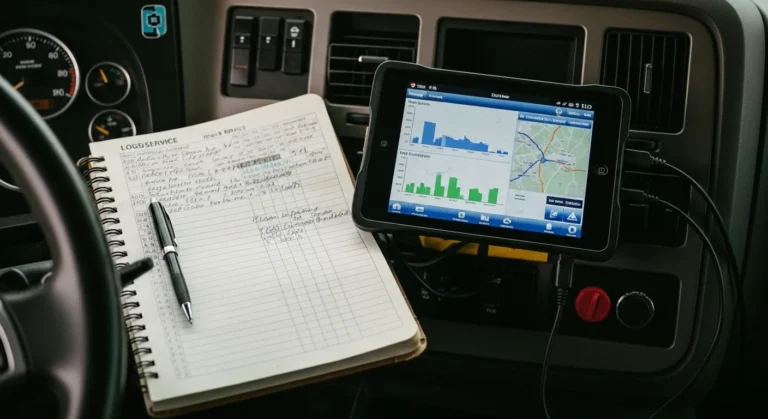
FMCSA Revoked ELDs and the October 6 Replacement Deadline
FMCSA removed five electronic logging devices from the registered list on August 6, 2026, and set an October 6 replacement deadline.
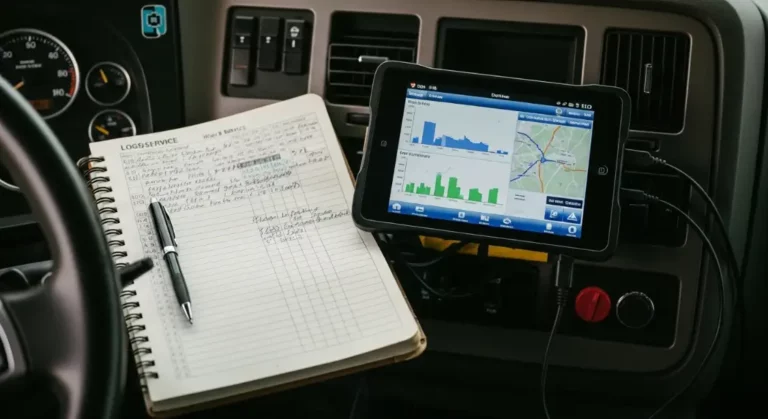
Hours-of-Service Rules and ELD Evidence
Federal hours-of-service limits for commercial drivers and how electronic logs show a violation.