

Black Box Data in Truck Crash Cases
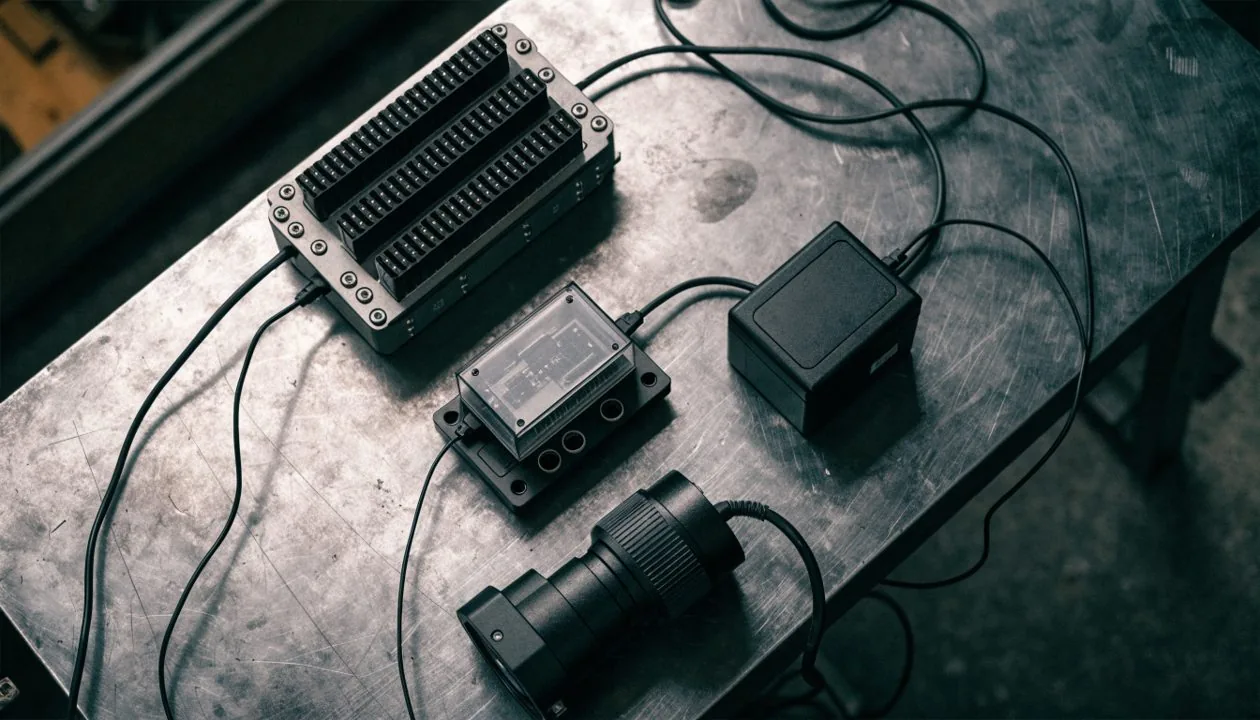
A commercial truck generates dozens of independent data streams that can confirm or contradict the carrier’s version of a crash. Modern 18-wheelers record data continuously through engine control modules, electronic logging devices, telematics systems, and dashcams, and much of that data can be overwritten, deleted, or lost unless a preservation demand reaches the carrier quickly. For black box data in a Jefferson County truck case, the Louisville truck accident lawyer page covers what carriers retain.
Electronic Evidence in Truck Crash Cases
Truck data records what happened in the seconds before a crash, independent of what the driver says. Under 49 CFR 390.15, carriers must keep an accident register and related records.
In a car crash, the primary evidence is usually physical: skid marks, damage patterns, and witness statements, which are often ambiguous. A commercial truck adds electronic records of the truck’s speed, whether the brakes were applied, whether the driver had exceeded hours-of-service limits, and whether the carrier’s safety systems worked as required.
Six Categories of Trucking Data
Trucking data falls into six categories, and each one answers a different question about the crash.
ECM vs. ELD vs. EDR vs. Camera Explorer
An ELD, an engine controller, an event-data function, and a camera answer different questions.
Comparison
Part 563 applies to specified light vehicles if equipped with an event data recorder. The scope uses both an 8,500-pound GVWR limit and a 5,500-pound unloaded-weight limit, plus other terms and exclusions. It does not establish a universal heavy-truck recording mandate. That limit also does not mean a heavy truck cannot contain electronic event evidence.
ECM / engine controller
- Purpose: Engine-control hardware may also contain event-data functionality, depending on implementation.
- Possible information: Needs device-specific verification before any field list is named.
- Capture condition: Depends on make, model, software, and whether an event function was enabled.
- Storage / custody: Often the vehicle, sometimes a download held by a shop or carrier.
- Retrieval questions: Identify make, model, software, event capability, and retrieval method before naming recoverable fields.
- Retention basis: No universal retention floor in this guide.
- Limitations: Do not describe a universal parameter list or recording window.
ELD / RODS
- Purpose: A recording method within the duty-status framework. The hours-of-service rule includes exceptions to ELD use.
- Possible information: Duty status, edits, and related login or unidentified-driving events. Not a high-frequency accident recording.
- Capture condition: When the driver or system records a duty status under the applicable rule.
- Storage / custody: Carrier ELD account, with a possible vendor copy.
- Retrieval questions: Ask for the file, the account, and the edit history.
- Retention basis: RODS and required supporting documents use the Guide 18 receipt clock. That period is not a camera or GPS period.
- Limitations: Duty-status information is not interchangeable with event-data recording.
EDR / event function
- Purpose: Heavy-vehicle event recording can sit inside more than one system. It is not one universal standalone box.
- Possible information: Needs device-specific verification. An event function may overlap an engine controller.
- Capture condition: Only if that vehicle’s system actually records events.
- Storage / custody: Whichever module contains the function. Overlap with an ECM is possible.
- Retrieval questions: Confirm there is an event function before planning a download.
- Retention basis: No universal retention floor in this guide.
- Limitations: Do not count ECM and EDR automatically as two independent sources.
Telematics / GPS
- Purpose: Position, trip, and fleet-event categories are possible product-specific outputs.
- Possible information: Location, trip summary, and configured fleet events. Each item needs the product’s documentation.
- Capture condition: Depends on installed hardware, subscription, and configuration.
- Storage / custody: Carrier account, vendor platform, or both.
- Retrieval questions: Verify the vendor documentation, hardware, subscription, and configuration.
- Retention basis: No universal period. Do not borrow the ELD six-month figure.
- Limitations: A subscription screenshot is not proof of what was stored on a given date.
Inward / outward camera
- Purpose: Footage, event clips, metadata, and remote copies are possible product-specific outputs.
- Possible information: Clips and metadata when the product and settings create them. Audio is a separate question.
- Capture condition: Camera presence does not establish recording, coverage, audio, retention, or a usable file.
- Storage / custody: Vehicle, vendor cloud, carrier safety account, or a combination.
- Retrieval questions: Ask which lens, which event triggered a clip, and whether a remote copy was made.
- Retention basis: No universal period. Selecting a camera does not display a recording window.
- Limitations: Part 563 is a light-vehicle event-data rule. It uses both an 8,500-pound GVWR limit and a 5,500-pound unloaded-weight limit, with additional scope terms. It does not create a universal heavy-truck recording mandate, and it also does not mean a heavy truck cannot have electronic event evidence.
Engine Control Module Data
Every modern commercial truck has an Engine Control Module (ECM), commonly called a black box, that records vehicle operating data. The ECM captures speed, throttle position, brake application, engine RPM, gear selection, and activation of stability control systems, giving a near second-by-second account of what the truck was doing before impact.
ECM data carries the most weight in cases involving speeding, sudden braking failures, or a driver’s case of having no time to react, because it supports or contradicts those cases with recorded numbers. A separate page covers black box evidence in truck cases.
Electronic Logging Device Data
Most commercial carriers have been required to use electronic logging devices to record driver hours of service since the FMCSA ELD rule took effect in December 2017. An ELD connects to the engine and automatically records the driver’s on-duty and driving time, showing whether the driver was complying with federal limits at the time of the crash.
ELD records also show odometer readings, engine hours, location over time, and driving status changes. Combined with the ECM, ELD data documents driver activity leading up to the crash. Hours-of-service violations are one of the most common causes of serious truck crashes.
Telematics and GPS Data
Most large carriers use fleet telematics systems that transmit data from the truck to the carrier’s dispatch system. This data includes GPS position updated every few seconds, vehicle speed, harsh braking and cornering events, idle time, lane departure warnings, and collision avoidance system activations.
Telematics data is uploaded to the carrier’s servers, so it sits on a system the carrier controls and can delete. A preservation demand to the carrier protects that data before it is purged. More detail appears in an article on fleet management system data in truck investigations.
Driver Vehicle Inspection Reports
Under 49 CFR 396.11, drivers must prepare a Driver Vehicle Inspection Report identifying defects or deficiencies found in the vehicle, and the carrier must keep those reports. A DVIR shows whether the truck had known mechanical problems that went unaddressed. If a driver noted a brake defect two trips before a crash and the carrier did not fix it, those reports become evidence of maintenance negligence.
Dashcam Footage
Many commercial fleets equip trucks with forward-facing dashcams and inward-facing driver cameras. Forward cameras capture what was in the truck’s path before the crash. Inward cameras record driver behavior, including cell phone use, distraction, drowsiness, and reaction time. Some systems overwrite footage on a rolling 72-hour cycle, making it one of the most time-sensitive records in a crash case.
Carrier Crash Records and Maintenance Logs
Carriers must keep records of the crashes involving their vehicles in the accident register required by 49 CFR 390.15. Maintenance logs show the truck’s repair history, brake servicing, tire replacements, and inspection results, and a pattern of deferred maintenance or repeated violations shows the carrier knew about a safety problem and did not fix it. A separate page covers trucking evidence in more depth.
Data Retention Windows
Trucks do not preserve crash data indefinitely. ECM data can be overwritten within 30 days on many systems, telematics data is often purged on 30 to 60 day server cycles, and dashcam footage can overwrite on a rolling 72-hour loop. A litigation hold letter, a formal preservation demand sent to the carrier soon after a crash, stops that deletion, and a carrier that destroys evidence after receiving one risks spoliation sanctions.
Evidence Analysis Steps
Trucking data has to be downloaded, analyzed, and interpreted by qualified professionals. The process typically involves six steps:
- ECM download: an accident reconstruction professional downloads the ECM data using manufacturer-specific software before it can be overwritten.
- ELD analysis: hours-of-service data is mapped against federal regulations to identify violations and driver fatigue.
- Telematics correlation: GPS and event data from the carrier’s fleet management system is matched with physical evidence from the scene.
- Dashcam review: video footage is analyzed for driver behavior, external conditions, and the sequence of events.
- DVIR audit: inspection reports are cross-referenced with maintenance records to identify known and ignored defects.
- FMCSA SMS data: the carrier’s public Safety Measurement System record is reviewed for prior violations, out-of-service orders, and crash history, as explained in reading the FMCSA SMS report.
The result is a reconstruction of the crash that stands apart from what the driver or carrier cases. Carriers have no obligation to hand over data that hurts them voluntarily, so a formal legal demand backed by the threat of court sanctions is what keeps that evidence from being deleted. Accident reconstruction professionals handle the technical side of that work.
Carrier Cases and Contradicting Data
Each common carrier defense has a matching data source that can refute it.
| Carrier Case | Data That Can Refute It |
|---|---|
| Carrier Case“The driver was well-rested and compliant.” | Data That Can Refute ItELD records showing hours-of-service violations and duty cycle data showing inadequate rest periods |
| Carrier Case“The driver was going the speed limit.” | Data That Can Refute ItECM speed data showing actual vehicle speed at the time of the crash |
| Carrier Case“The brakes were in perfect condition.” | Data That Can Refute ItDVIRs showing reported brake defects and maintenance logs showing deferred repairs |
| Carrier Case“The driver applied the brakes in time.” | Data That Can Refute ItECM data showing brake application timing and stopping distance calculations |
Source: Federal Motor Carrier Safety Regulations, 49 CFR Parts 390 to 396
Black Box Data Telling a Different Story?
When a carrier insists its driver was under the speed limit or braked in time, ECM, ELD and EDR data can say otherwise, as long as someone downloads it and reads it correctly. Sam Aguiar Injury Lawyers has a dedicated trucking team that reads that data next to the DVIRs and maintenance logs. You never pay anything up front, because every case runs on $0 Out-Of-Pocket Forever. Open the door with a free case review.
Frequently Asked Questions
1How long does a trucking company have to keep accident data?+
2Can I get trucking data myself, or do I need an attorney?+
3What is a black box in a commercial truck?+
4Does ELD data show if a driver was fatigued?+
5What is a truck crash investigation?+
Latest Articles
Kentucky Diminished Value Claims
Kentucky drivers may pursue a repaired vehicle’s leftover market loss from the at-fault driver as part of a.

FMCSA Revoked ELDs: Fleet Compliance and Enforcement Deadlines
FMCSA removed five electronic logging devices from the registered list on August 6, 2026, and set an October.

FMCSA English Proficiency Rule and OOS Enforcement
FMCSA English Proficiency Rule Sam Aguiar Injury Lawyers August 11, 2026 7 minute read On This Page.