
Personal Injury Protection Coverage in Kentucky

Kentucky’s no-fault law gives an injured person a first layer of money for medical bills and lost income before anyone settles who caused the accident. That layer is personal injury protection, or PIP. The Kentucky Department of Insurance identifies the law as the Motor Vehicle Reparations Act, KRS 304.39, enacted in 1975, and the statutes call PIP basic reparation benefits.
PIP Under Kentucky’s No-Fault Law
KRS 304.39-010 lists the purposes of the law, including prompt payment to accident victims without regard to whose negligence caused the accident, and prompt payment for medical care and rehabilitation. The law took effect on July 1, 1975.
Kentucky runs this system as a choice. Under KRS 304.39-030, every person injured in a Kentucky accident arising out of the maintenance or use of a motor vehicle has a right to basic reparation benefits, unless that person rejected the limits on tort rights under KRS 304.39-060(4). Anyone who has not filed that rejection is covered by default, and the rejection process is explained below.
PIP runs in the opposite direction from liability coverage. Liability insurance pays the people a driver injures. PIP pays the injured person through the policy on the vehicle that person occupied, or for a pedestrian, the vehicle that struck them. KRS 304.39-040 states that basic reparation benefits “shall be paid without regard to fault.”
The two coverages sit side by side on a standard Kentucky policy. Under KRS 304.39-110, the required security for a vehicle includes liability limits of at least $25,000 per person and $50,000 per accident for bodily injury, plus $25,000 for property damage, or a $60,000 single limit, alongside basic reparation benefits.
Covered Losses Under PIP
Basic reparation benefits max out at $10,000 per person, per accident, under KRS 304.39-020, regardless of how many people are entitled to them or how many insurers are involved. That $10,000 is one shared pool for every type of loss below.
Medical Expenses
PIP pays reasonable charges for needed medical products, services, and accommodations, including medical care, physical rehabilitation, rehabilitative occupational training, licensed ambulance service, and other remedial treatment. The definition in KRS 304.39-020 reaches every healing arts profession licensed in Kentucky, and for PIP and added PIP the statute presumes that any medical expense submitted under it is reasonable. Hospital room charges are held to semi-private rates unless intensive care is medically required.
For benefits issued or renewed on or after July 15, 2026, KRS 304.39-020 ties PIP medical payments to the fee schedule set under KRS 342.035: a payment cannot exceed the schedule’s maximum fee, and cannot fall below the maximum fee on the schedule in effect on July 15, 2026. Under KRS 304.39-210, a provider cannot try to collect the amount above that maximum from the insured or harm the insured’s credit over it, and a provider must submit its charge within 180 days of the service, except charges submitted under the insured’s written direction of benefits. The changes came from House Bill 627, 2026 Ky. Acts ch. 149, which became law without the Governor’s signature on April 14, 2026, and our page on Kentucky PIP reform in 2026 covers the bill.
Work Loss
Work loss covers income from work the injured person probably would have performed if the accident had not happened. KRS 304.39-130 caps work loss, replacement services, and survivor benefits combined at $500 per calendar week for benefits issued or renewed on or after July 15, 2026, prorated for partial weeks. Coverage issued or last renewed before that date carries the prior $200 weekly limit, which 2026 Ky. Acts ch. 149 replaced. Under the $200 limit, someone earning $1,500 a week collects the same $200 as someone earning $400. When earnings or work are seasonal or irregular, the weekly limit is adjusted on an annual basis.
Workers’ compensation benefits are subtracted when net loss is calculated under KRS 304.39-120. When wage benefits are not taxable, the income tax saving is subtracted too, capped at 15 percent of the lost income.
Replacement Services
PIP reimburses what an injured person spends hiring out ordinary household work the injuries prevent. KRS 304.39-020 defines replacement services loss as the expense of obtaining ordinary and necessary services the injured person would have performed for self or family, such as childcare, cleaning, and yard work. These expenses sit under the same combined weekly limit as lost wages.
Survivor Benefits
After a fatal accident, PIP pays the people who depended on the person who died, as KRS 304.39-020 identifies them through the wrongful death statute, KRS 411.130. Survivor’s economic loss replaces the contributions of economic value the decedent would have provided, and survivor’s replacement services loss covers the expense of replacing the work the decedent did for the household. Both draw from the same $10,000 pool.
Funeral Expenses
Medical expense under the statute includes funeral, cremation, and burial charges. The amended KRS 304.39-020 allows up to $5,000 per person for benefits issued or renewed on or after July 15, 2026, and earlier coverage carried a $1,000 limit. The amount comes out of the $10,000 limit rather than sitting on top of it.
PIP Coverage Exclusions
PIP leaves these losses to other coverage or to the liability case:
- Pain, suffering, inconvenience, and other noneconomic losses, because KRS 304.39-020 limits PIP to economic loss
- Vehicle damage, which runs through property damage liability or collision coverage
- Lost income above the combined weekly limit
- Anything beyond the $10,000 per-person limit, unless added reparation benefits were purchased
- Injuries to motorcycle operators and passengers, unless optional motorcycle PIP was purchased under KRS 304.39-040
Insurer Priority for PIP
PIP follows the vehicle. Under KRS 304.39-050, the insurance that pays basic reparation benefits is the coverage on the vehicle the injured person occupied at the time of the accident. A passenger in a friend’s car files the PIP claim with the friend’s insurer, and a pedestrian files with the insurer of the vehicle that struck the pedestrian.
The injured person’s own policy applies in two situations. When no insurance covers the occupied vehicle, the injured person’s own basic reparation coverage applies. When the vehicle’s insurer fails to pay within 30 days after receiving reasonable proof of the fact and amount of the loss, the statute entitles the injured person to payment under the person’s own policy, and that insurer collects full reimbursement from the company that should have paid.
The same statute blocks stacking. No one may collect basic reparation benefits from more than one insurer for the same accident, or more than $10,000 in basic benefits, however many policies touch the vehicle.
Household membership widens coverage. KRS 304.39-020 extends basic reparation coverage to the named insured plus a spouse, other relatives, and minors in their custody who live in the same household. When no security covers the vehicle involved, KRS 304.39-050 points to any policy under which the injured person is a basic reparation insured, so a household policy can pay a pedestrian struck by an uninsured vehicle.
When no policy applies, KRS 304.39-160 lets the injured person obtain benefits through Kentucky’s assigned claims plan. The plan applies when no basic reparation insurance covers the injury, the right insurer cannot be identified, the insurer cannot pay because of financial inability, or an insurer rejected the PIP claim for a reason other than the person’s lack of entitlement. An owner injured in an uninsured vehicle the owner was required to insure cannot use the plan, unless the lapse was caused solely by the insurer’s failure to provide the benefits.
PIP Payment Deadlines
Basic reparation benefits are payable monthly as the loss accrues. KRS 304.39-210 sets the deadlines and the penalties for missing them.
Kentucky Puts PIP Insurers on a 30-Day Clock
Payment rules for basic reparation benefits under KRS 304.39-210
Benefits are payable monthly as work loss, replacement services loss, or medical expense is incurred.
Payment is overdue 30 days after the insurer receives proof of the fact and amount of the loss, unless the insurer accumulates claims for up to 31 days and pays within 15 days after that period.
When reasonable proof supports part of a claim totaling $100 or more, that part becomes overdue on the same schedule.
Overdue payments bear 12 percent annual interest, or 18 percent when the delay was without reasonable foundation.
Medical expense benefits can be paid directly to providers when the claimant designates it.
A rejected claim requires prompt written notice stating the reason, with assigned claims bureau information where it applies.
Under KRS 304.39-241, the insured can direct in writing how benefits are split among the elements of loss, and the insurer must honor that direction going forward. The insured can also direct PIP to reimburse a health plan, Medicaid, Medicare, or a Medicare supplement provider for related medical bills already paid, which lowers what those payers later seek as medical liens on the settlement. Benefits are not overdue while the insurer holds a provider payment at the insured’s request during that direction. The options are covered in directing PIP benefits in Kentucky.
Disputes With a PIP Insurer
A PIP insurer that rejects a claim must give the claimant prompt written notice with the reason, under KRS 304.39-210. When the rejection is for a reason other than the person’s entitlement to benefits, the notice must tell the claimant that the claim can go to the assigned claims bureau and give the bureau’s name and address.
An insurer cannot order its own medical examination. Under KRS 304.39-270, the insurer must petition the circuit court, and the court may order a mental or physical examination for good cause, with an order that sets the time, place, scope, and physician. The person examined can request a copy of the physician’s detailed written report.
When overdue benefits are recovered in a lawsuit, or paid after the insurer receives notice of the attorney’s representation, the court may award a reasonable attorney’s fee if the denial or delay was without reasonable foundation, under KRS 304.39-220. That fee is not charged against the benefits otherwise due.
Optional Added Reparation Benefits
The $10,000 basic limit is fixed, and more coverage can be purchased. KRS 304.39-140 requires insurers to provide added reparation benefits when a reparation insured requests them, sold in units of $10,000 per person, up to the lesser of $40,000 in added coverage or the policy’s per-person liability limit above Kentucky’s required minimum.
Added benefits pay economic loss, and insurers may attach their own terms, waiting periods, deductibles, or coinsurance to them. The same statute requires insurers to make PIP deductibles of $250, $500, or $1,000 available on request, and a deductible reduces the benefits paid.
A person who rejected Kentucky’s no-fault limits can still request basic and added reparation coverage, and under KRS 304.39-140 the insurer must make it available. Opting out of the lawsuit limits and carrying first-party injury coverage are separate decisions. Added reparation benefits exist only on policies where someone asked for them, and the declarations page shows whether they were purchased. More on the purchase decision is in added PIP coverage in Kentucky.
Lawsuits and Kentucky’s Tort Threshold
Under KRS 304.39-060, Kentucky’s limited-tort rule cuts off tort recovery for losses PIP already pays, and it keeps pain and suffering behind a threshold until a listed injury opens that part of the case.
Kentucky’s Tort Threshold
A case against the at-fault driver for pain and suffering opens when any one of these is true under KRS 304.39-060:
- PIP-payable medical expenses for the injury exceed $1,000
- A fracture to a bone
- Permanent disfigurement
- Loss of a body member
- Permanent injury within reasonable medical probability
- Permanent loss of bodily function
- Death
Once any item on that list exists, the case against the at-fault driver reaches what PIP never touched: medical bills beyond the $10,000 limit, lost income above the weekly limit, and the pain and disruption the no-fault system leaves out. A permanent brain injury is a clear example of the lasting harm that leaves medical bills, wage loss, and pain still unpaid once PIP is gone. The limits do not apply at all to an injured person who is not an owner, operator, maintainer, or user of a motor vehicle, or to a motorcycle passenger. The overview of no-fault insurance claims in Kentucky explains how the two layers interact, and the Kentucky car accident attorney page covers the liability case.
PIP Subrogation
An insurer that paid PIP can recover what it paid. Under KRS 304.39-070, it recovers from the insurer of the at-fault driver, either by joining a lawsuit the injured person files or through reimbursement between the companies in the cases the Kentucky Insurance Arbitration Association handles.
Two rules keep that right from consuming the injured person’s recovery. KRS 304.39-140 gives the injured person priority: when the injured person is collecting damages from a liable party’s insurer, that collection comes before the PIP insurer’s reimbursement. KRS 304.39-070 also caps the PIP insurer’s recovery at the liability coverage left after that priority is satisfied. The mechanics are covered in subrogation in Kentucky car accident cases.
Rejecting PIP
Kentucky lets any driver step out of the no-fault system, which is why PIP is not strictly mandatory here. Under KRS 304.39-060(4), the rejection must be completed in writing or electronically on the form prescribed by the Kentucky Department of Insurance, and it must be filed with the department before any accident it is meant to cover.
The trade cuts both ways. A driver who rejects keeps full tort rights, including the ability to pursue an at-fault driver for all damages with no threshold to clear, and keeps full tort liability in return. The same driver gives up PIP itself: a person who has rejected the limits cannot collect basic reparation benefits after an accident, apart from coverage purchased under KRS 304.39-140(5). Motorcyclists can file a rejection that applies only to the motorcycle and leaves their car coverage untouched.
When every member of a household rejects, the policy must include guest PIP for guest passengers and pedestrians, according to the Kentucky Department of Insurance. The department verifies a person’s rejection status on a written request, using form NFV-1 with a $5 fee.
PIP is optional in Kentucky only in that sense. The coverage applies by default, and rejecting it requires a deliberate filing made in advance, so the status on the day of the accident controls everything else above.
Is Your PIP Coverage Paying Your Bills?
If PIP is not paying your medical bills or lost wages, start with which policy owes the benefits and whether the insurer gave written reasons for a denial. Sam Aguiar Injury Lawyers sorts out which insurer owes PIP, then builds the injury case against the at-fault driver. Most cases qualify in under 10 minutes, and you pay $0 Out-Of-Pocket Forever. Call today for a free case review.
Frequently Asked Questions
1How Much Does PIP Pay in Kentucky?+
2Is PIP Required in Kentucky?+
3Does PIP Pay Regardless of Who Caused the Accident?+
4Which Insurance Company Pays My PIP Claim?+
5Who Gets the PIP Check in Kentucky?+
6Do Motorcycle Riders Get PIP Benefits in Kentucky?+
7Does Kentucky PIP Cover an Accident in Another State?+
8What Happens When PIP Runs Out?+
Latest Articles
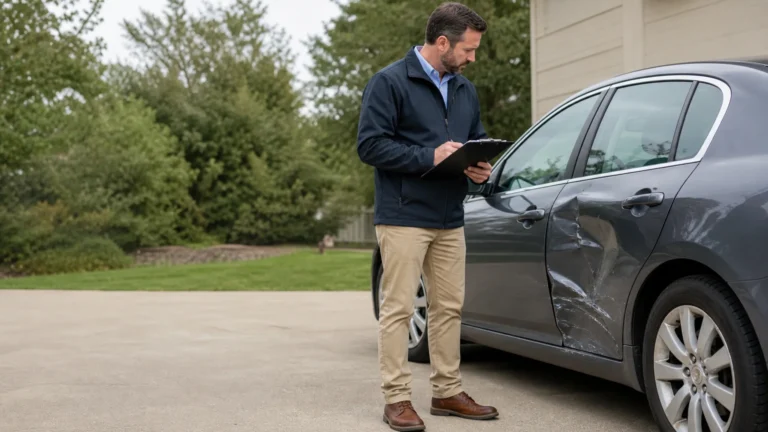
Kentucky Diminished Value Claims
Kentucky drivers may pursue that loss from the at-fault driver as part of a third-party property damage claim when the evidence shows the vehicle’s market value remains lower after repairs.
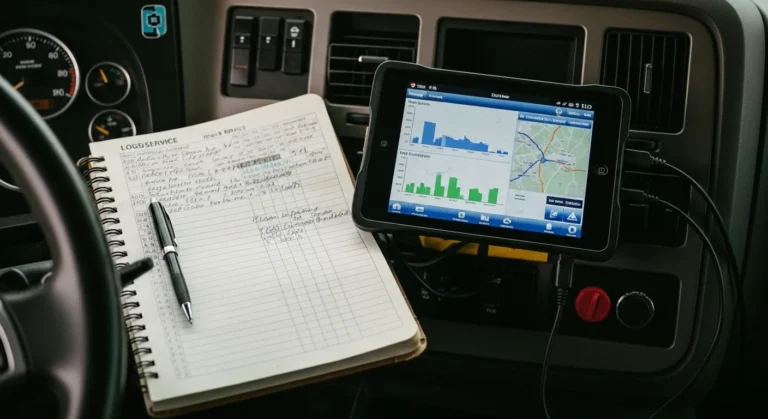
FMCSA Revoked ELDs
Five electronic logging devices lost their FMCSA registration on August 6, 2026, and fleets using any of them must have a registered replacement in use before October 6, 2026, according to the FMCSA announcement.

FMCSA English Proficiency Rule
The Federal Motor Carrier Safety Administration has published a notice of proposed rulemaking that would codify the English language proficiency requirement for commercial drivers as an out-of-service violation.