FedEx Delivery Accident Lawyer in Kentucky
FedEx Express uses employees. FedEx Ground uses contractors. That split changes everything about your claim.
On This Page
FedEx is not one company. It is a collection of operating companies, and the two that matter most after a delivery crash are FedEx Express and FedEx Ground. Express drivers are W-2 employees of FedEx. Ground drivers are employees of Independent Service Providers (ISPs), which are small businesses that contract with FedEx to deliver packages. That corporate split determines who is liable, which insurance applies, and how much resistance you will face when you file a claim. Sam Aguiar Injury Lawyers has handled delivery vehicle accident cases across Kentucky and knows exactly how to pursue claims against both FedEx operating models. Call (502) 888-8888.
FedEx’s Two-Company Structure: Express vs. Ground
Most people see a FedEx truck and assume it belongs to one company. It does not. FedEx Corporation is a holding company that operates multiple subsidiaries, each structured as a separate legal entity. The two subsidiaries responsible for the vast majority of residential and commercial deliveries in Kentucky are FedEx Express and FedEx Ground.
FedEx Express handles priority and overnight packages. Every Express driver is a W-2 employee of FedEx Express, Inc. They drive FedEx-owned vehicles, wear FedEx uniforms, follow FedEx dispatch instructions, and are covered by FedEx’s corporate insurance. When an Express driver causes a crash, the liability chain is straightforward: the driver was on the job, driving a company vehicle, following company orders. FedEx Express is directly liable under the doctrine of respondeat superior.
FedEx Ground is different. Ground handles the bulk of residential package deliveries, including all FedEx Home Delivery shipments. But FedEx Ground does not employ its own delivery drivers. Instead, it contracts with thousands of Independent Service Providers (ISPs) across the country. Each ISP is a small business that hires its own drivers, owns or leases its own vehicles, and is responsible for delivering packages within an assigned service area. According to FedEx’s own corporate disclosures, FedEx Ground uses approximately 5,000 to 6,000 ISP businesses in the United States, collectively employing tens of thousands of drivers.
This is not a minor organizational detail. It is the single most important fact in any FedEx Ground delivery accident case. When a Ground driver causes a crash, FedEx’s immediate legal position is that the ISP is an independent contractor, the driver is the ISP’s employee, and FedEx bears no direct responsibility.
Express vs. Ground: The Key Differences
FedEx Express: Drivers are W-2 employees of FedEx Express, Inc. They drive FedEx-owned vehicles. FedEx sets schedules, routes, and operational standards. FedEx’s corporate commercial auto policy covers all Express vehicles. Respondeat superior applies directly.
FedEx Ground: Drivers are W-2 employees of ISPs, not FedEx. ISPs own or lease their vehicles (often through FedEx-affiliated leasing programs). FedEx sets service areas, delivery standards, appearance requirements, and scanning protocols. Each ISP carries its own commercial auto insurance, with minimums set by FedEx. FedEx’s first defense is that it is not the employer and not liable.
FedEx Freight: A separate subsidiary that handles less-than-truckload (LTL) and full-truckload freight shipments using tractor-trailers. Freight drivers are FedEx Freight employees. These vehicles are regulated by the Federal Motor Carrier Safety Administration (FMCSA) and are subject to hours-of-service rules, CDL requirements, and DOT inspection standards.
Liability When a FedEx Express Driver Causes a Crash
FedEx Express cases are the more straightforward of the two models. Under Kentucky law, an employer is vicariously liable for the negligent acts of its employees when those acts occur within the scope of employment. This is the respondeat superior doctrine, and it applies cleanly to FedEx Express drivers.
When an Express driver runs a red light, rear-ends a car while checking a scanner, or loses control of a delivery van on a rain-slicked Kentucky road, FedEx Express is directly liable for the resulting injuries. There is no contractor shield. There is no separate small business standing between you and FedEx. The driver is a FedEx employee, the vehicle is a FedEx vehicle, and the delivery was a FedEx delivery.
FedEx Express vehicles are covered by FedEx’s corporate commercial auto liability policy. The available policy limits are substantially higher than what most ISPs carry. This matters because severe crashes involving delivery vehicles, particularly step vans and box trucks, often produce injuries that exceed $1 million in medical costs, lost wages, and pain and suffering. Having access to a deep corporate policy is the difference between full recovery and falling short.
Express cases can still involve disputes over the scope of employment (was the driver on a personal detour?), but the underlying employment relationship is not in question. FedEx cannot claim the Express driver was someone else’s employee. That simplifies the case considerably.
Liability When a FedEx Ground ISP Driver Causes a Crash
Ground cases are where the real legal battle begins. FedEx Ground’s entire business model is designed to create contractual separation between FedEx and the drivers who deliver its packages. When a Ground driver causes a crash, FedEx’s attorneys will immediately assert that the ISP is an independent contractor, that the driver is the ISP’s employee, and that FedEx has no vicarious liability.
That argument has a surface appeal: the ISP signs a contract with FedEx, the ISP hires and pays the drivers, the ISP provides workers’ compensation, and the ISP carries its own commercial auto insurance. On paper, the ISP is a separate business.
But the operational reality tells a different story. FedEx Ground exercises substantial control over nearly every aspect of an ISP’s daily operations:
- Routes and service areas: FedEx assigns each ISP a defined geographic service area. The ISP cannot choose where to deliver. FedEx determines the boundaries and can reassign areas at its discretion.
- Delivery standards: FedEx sets delivery windows, service commitments, and on-time performance targets. ISPs that fail to meet FedEx’s standards face financial penalties and potential contract termination.
- Vehicle appearance: FedEx requires ISP vehicles to display FedEx branding, use approved vehicle types, and maintain a specific appearance. To the public, an ISP van looks identical to a FedEx-owned van.
- Uniforms: ISP drivers must wear FedEx-branded uniforms. There is no visible distinction between an ISP driver and a FedEx employee to someone on the street.
- Scanning and technology: ISP drivers use FedEx-provided handheld scanners and follow FedEx’s package tracking protocols. FedEx monitors scanning compliance in real time.
- Vehicle leasing: Many ISPs lease their vehicles through FedEx-affiliated leasing programs. The vehicles are branded, spec’d, and financed through FedEx’s preferred vendors.
- Contract termination: FedEx can terminate an ISP’s contract with relatively short notice. This gives FedEx enormous leverage over ISP operations, because an ISP’s entire business depends on maintaining its FedEx contract.
Under Kentucky law, the question of whether a worker (or a contractor’s employee) is truly independent or is functionally an agent depends on the degree of control the hiring party exercises over the work. The more control FedEx exercises over how ISP drivers do their jobs, the stronger the argument that the ISP is FedEx’s agent, not a genuinely independent business. Courts have recognized this distinction in delivery driver cases. The U.S. Department of Labor’s guidance on employment relationships identifies control over the manner and means of work as a primary factor in determining whether a relationship is genuinely independent or functionally an employment arrangement.
Control Argument Explained
If FedEx tells the ISP where to deliver, when to deliver, what to wear, what truck to drive, and how to scan every package, the “independent contractor” label on the contract does not automatically shield FedEx from liability. Kentucky courts look at the actual working relationship, not just the words in the contract. This same argument applies in Amazon DSP cases, and it applies here.
FedEx Ground ISP Model
FedEx Ground transitioned from its original Independent Contractor (IC) model to the current Independent Service Provider (ISP) model starting in 2011. Under the old IC model, individual owner-operators contracted directly with FedEx to run a single delivery route. Under the ISP model, contractors are required to operate multiple routes, own or lease multiple vehicles, and hire their own teams of drivers.
The ISP model was designed, in large part, to strengthen FedEx’s legal defense against misclassification claims. By requiring ISPs to be multi-route businesses with their own employees, FedEx can argue that each ISP is a legitimate independent business, not a disguised employment arrangement. The transition settled several class-action lawsuits that alleged FedEx had misclassified individual owner-operators as independent contractors.
Here is how the ISP model works in practice:
- Route acquisition: ISPs purchase or are assigned a set of delivery routes within a FedEx Ground service area. Some ISPs operate 5 to 10 routes; larger ISPs may operate 20 or more. Routes are bought and sold on a secondary market, with prices ranging from tens of thousands to hundreds of thousands of dollars per route.
- Vehicle requirements: ISPs must own or lease vehicles that meet FedEx specifications. Most Ground delivery vehicles are step vans (often Freightliner P700/P1000 or Morgan Olivo models) or Sprinter-style cargo vans. FedEx offers preferred vendor leasing programs, and many ISPs finance their fleets through these programs.
- Hiring and HR: ISPs hire their own drivers, handle payroll, provide workers’ compensation insurance, and manage day-to-day scheduling. ISP drivers are W-2 employees of the ISP, not of FedEx.
- Revenue model: FedEx pays ISPs a per-stop and per-package rate, with adjustments for fuel surcharges and peak-season volume. ISPs pay their drivers, fuel costs, vehicle maintenance, insurance, and all other operating expenses out of this revenue.
- Margins: ISP profit margins are thin. According to industry reporting, many ISPs operate on margins of 10% to 15% after paying drivers, fuel, insurance, and vehicle costs. This financial pressure directly affects safety: ISPs that are barely profitable are more likely to defer vehicle maintenance, skip training, and push drivers to deliver faster.
The ISP model insulates FedEx on paper. But the operational control FedEx retains over ISP operations, combined with the fact that FedEx is the sole source of revenue for most ISPs, creates a dependency relationship that undermines the “independent contractor” classification when it comes to tort liability.
Insurance in FedEx Delivery Accident Cases
The insurance landscape in a FedEx accident depends entirely on which operating company was involved.
FedEx Express Insurance
Express vehicles are covered by FedEx’s corporate commercial auto liability policy. FedEx Corporation is one of the largest companies in the world, with annual revenues exceeding $90 billion as reported in its SEC filings. Its insurance program includes primary commercial auto coverage, excess/umbrella layers, and self-insured retention. For a severe crash, the available coverage is substantial.
FedEx Ground ISP Insurance
FedEx requires each ISP to carry commercial auto liability insurance meeting minimum coverage thresholds. According to FedEx Ground’s ISP operating requirements, ISPs must maintain at least $1 million in combined single-limit commercial auto liability coverage. Some ISPs carry higher limits; many do not.
The problem with relying solely on ISP insurance is that ISPs are small businesses. A single catastrophic accident can exceed the ISP’s policy limits. If the ISP carries only the $1 million minimum required by FedEx and the injuries produce $2 million or more in damages, the ISP’s policy is not enough. That is why pursuing FedEx Ground directly, through agency and control arguments, matters: it opens the door to FedEx’s corporate insurance, which has far higher limits.
There is also a practical issue: ISPs sometimes allow their insurance to lapse or carry policies with exclusions that reduce effective coverage. FedEx requires proof of insurance, but enforcement can lag behind reality. We verify every policy, check for lapses, and identify all available coverage before filing a claim.
FedEx Freight Insurance
FedEx Freight operates tractor-trailers that are regulated by FMCSA insurance filing requirements. Under federal law, motor carriers operating vehicles over 10,001 pounds GVWR that transport property for hire must carry a minimum of $750,000 in financial responsibility (49 CFR 387.9). For hazardous materials carriers, the minimum is $1 million to $5 million depending on the cargo class. FedEx Freight, as a major LTL carrier, maintains coverage well above these minimums.
Multiple Insurance Policies May Apply to Your Case
A single FedEx Ground crash can involve the ISP’s commercial auto policy, FedEx Ground’s contingent or excess coverage, the vehicle lessor’s policy (if the truck was leased through a FedEx-affiliated program), and potentially even the ISP owner’s personal umbrella policy. Identifying and stacking every available policy is how we maximize your recovery. This is not something adjusters will volunteer. They will point you to the ISP’s primary policy and stop there.
FedEx Vehicle Types and Crash Dynamics
FedEx operates a wide range of vehicles across its subsidiaries. The vehicle type involved in your crash affects the severity of injuries, the applicable federal regulations, and the investigation process.
Step Vans (FedEx Ground and Express)
The most common FedEx delivery vehicle on Kentucky roads is the step van, also called a walk-in van or package car. These are typically Freightliner P700, P1000, or P1200 models, or Morgan Olivo bodies mounted on commercial chassis. Step vans range from 10,001 to 26,000 pounds GVWR, placing them in the Class 3 to Class 6 commercial vehicle range.
A loaded step van weighs 16,000 to 23,000 pounds. By comparison, the average passenger car weighs about 4,000 pounds. When a step van rear-ends a sedan at 35 mph, the mass disparity produces devastating injuries: spinal cord damage, traumatic brain injuries, crush injuries to the lower extremities, and fatal outcomes. The Bureau of Labor Statistics reports that the transportation and warehousing sector has one of the highest rates of fatal and nonfatal workplace injuries of any industry, and delivery driving is a major contributor to those numbers.
Cargo Vans and Sprinters
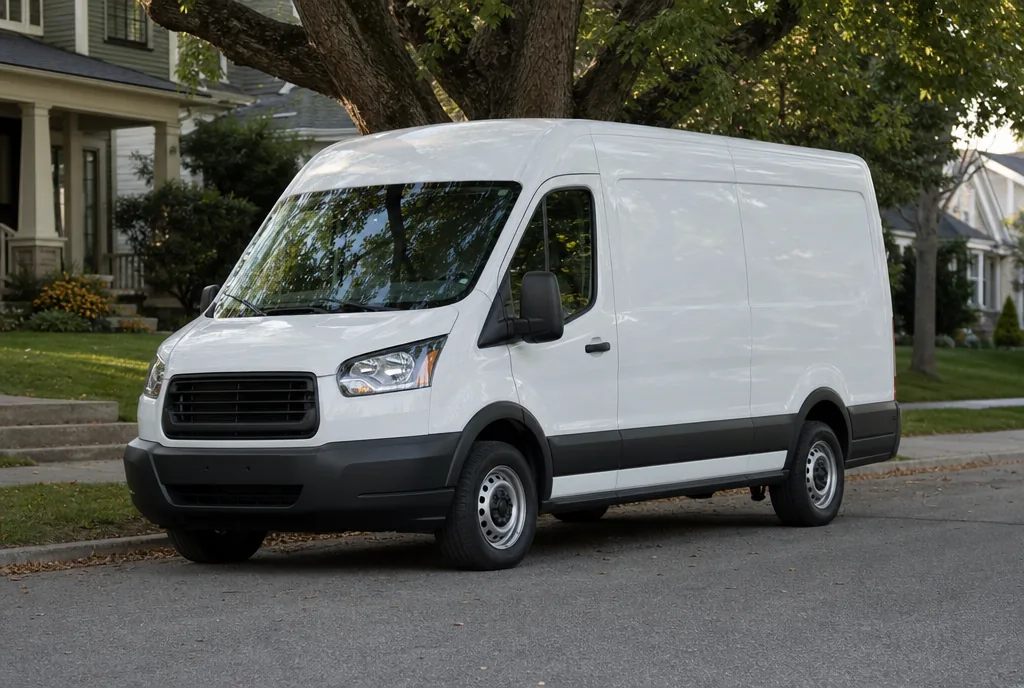
Smaller FedEx Ground routes and some Express routes use cargo vans (Ram ProMaster, Ford Transit, or Mercedes Sprinter models). These vehicles weigh 8,000 to 11,000 pounds loaded. They are more maneuverable than step vans but still present a significant mass advantage over passenger vehicles. Cargo van crashes in residential neighborhoods are particularly common because drivers are making frequent stops, backing up, pulling in and out of driveways, and operating in tight spaces.
FedEx Freight Tractor-Trailers
FedEx Freight operates Class 8 tractor-trailers with gross vehicle weight ratings of up to 80,000 pounds. These vehicles are subject to the full scope of FMCSA hours-of-service regulations, electronic logging device (ELD) requirements, CDL driver qualification standards, and pre-trip/post-trip vehicle inspection mandates. A crash involving a FedEx Freight tractor-trailer on I-64, I-65, or I-75 in Kentucky can produce catastrophic or fatal injuries due to the sheer mass and kinetic energy involved.
FMCSA maintains a public database of motor carrier safety records. The Safety Measurement System (SMS) tracks inspection results, crash history, and safety ratings for every registered motor carrier, including FedEx Freight. We pull these records as part of every trucking case to identify patterns of violations, out-of-service orders, and driver qualification issues.
FedEx Custom Critical (Straight Trucks and Specialty Vehicles)
FedEx Custom Critical handles time-sensitive and high-value freight using straight trucks, expedited vans, and temperature-controlled vehicles. These are typically owner-operators under contract with FedEx Custom Critical. The insurance and liability analysis mirrors the Ground ISP model: FedEx will claim the owner-operator is independent, but the degree of operational control may support a direct claim against FedEx.
Delivery Pressure and Its Impact on Safety
FedEx Ground ISPs face relentless pressure to meet delivery targets. FedEx sets daily stop counts, delivery windows, and on-time performance metrics. ISPs that consistently miss targets face financial penalties and potential contract termination. That pressure flows directly to the drivers.
Route Density and Time Constraints
A typical FedEx Ground route in the Louisville metro area involves 120 to 200 stops per day. During peak season (November through January), that number can spike to 250 or more. Drivers are expected to complete their routes within a defined delivery window, typically 8 to 12 hours. In rural parts of Kentucky, where stops are spread across greater distances and roads are narrower and less maintained, the time pressure is even more acute.
The Occupational Safety and Health Administration (OSHA) has documented the connection between time pressure in the delivery and trucking industry and increased accident rates. Drivers who are rushing to meet stop counts are more likely to speed, skip pre-trip inspections, run yellow and red lights, make unsafe lane changes, and fail to check mirrors before backing up.
ISP Financial Pressure and Maintenance Shortcuts
Because ISPs operate on thin margins, there is a direct financial incentive to defer vehicle maintenance. Replacing brake pads, fixing alignment issues, repairing lighting systems, and maintaining tires are all expenses that eat into an ISP’s already narrow profit. An ISP running 10 vehicles may face $50,000 to $100,000 per year in maintenance costs. Cutting corners on maintenance saves money in the short term but puts every driver on the road in a vehicle that may not stop, steer, or signal properly.
Under FMCSA vehicle safety regulations, commercial motor vehicles over 10,001 pounds GVWR must be systematically inspected, repaired, and maintained. Drivers are required to complete pre-trip and post-trip inspections and document any deficiencies. In practice, many ISP drivers skip these inspections because they are unpaid and time-consuming. If your crash involved a mechanical failure, such as brake failure, tire blowout, or a non-functioning turn signal, and the ISP failed to maintain the vehicle properly, that maintenance failure becomes an independent basis for liability.
Driver Hiring and Training
ISPs handle their own hiring and training. FedEx requires ISPs to ensure drivers meet minimum qualification standards, but the actual hiring process varies widely between ISPs. Some ISPs conduct thorough background checks, driving record reviews, and multi-day training programs. Others, particularly smaller or newer ISPs operating on tight budgets, hire drivers quickly with minimal screening.
The FMCSA driver qualification standards require that drivers of commercial motor vehicles over 10,001 pounds GVWR be at least 21 years old for interstate operation, hold a valid CDL if the vehicle exceeds 26,001 pounds GVWR, and pass a DOT physical examination. For vehicles under 26,001 pounds (which includes most step vans), no CDL is required, only a standard driver’s license. This means many FedEx Ground drivers are operating 20,000-pound vehicles with nothing more than a regular Class D license and whatever training their ISP provided.
FedEx already has a legal team. You need one too. We know the difference between Express and Ground, we know how the ISP model works, and we know where the insurance is. Call Sam Aguiar Injury Lawyers before FedEx’s adjusters lock down their narrative.
Peak Season Crash Risk
FedEx’s annual volume peaks between Thanksgiving and Christmas. During this period, FedEx Ground’s daily package volume increases by 30% to 50% over normal levels. ISPs bring on temporary drivers to handle the surge. These temporary drivers receive abbreviated training, are less familiar with their routes, and are more likely to make errors.
According to Bureau of Transportation Statistics data, freight shipment volume in the United States spikes significantly during the fourth quarter of each year, corresponding with holiday e-commerce demand. More trucks on the road, more stops per route, more inexperienced drivers, and worse winter weather conditions combine to create the most dangerous period of the year for FedEx-related crashes in Kentucky.
Kentucky’s I-65 corridor between Louisville and Elizabethtown, the I-75 corridor through Lexington and into northern Kentucky, and the I-64 corridor between Louisville and Frankfort all see heavy FedEx Ground and Freight traffic. FedEx operates major sorting hubs in the region, and these corridors are primary distribution routes.
DOT Camera Footage May Show Your Crash
Sam Aguiar Injury Lawyers has access to Kentucky Department of Transportation camera footage and TriMarc traffic monitoring data covering major Kentucky interstates and key interchange areas. If your crash with a FedEx vehicle happened near a monitored corridor, such as I-64, I-65, I-71, I-75, or the Watterson Expressway, we may be able to obtain footage that captures the collision or the moments leading up to it.
This access is not something most firms have. DOT camera footage can be overwritten within days if no preservation request is made. TriMarc data, which tracks traffic flow, speed, and incidents in real time, is also time-sensitive. The sooner we are involved, the more likely we are to capture and preserve this footage before it is gone.
In FedEx Ground cases, DOT camera footage is especially valuable because it can corroborate or contradict the driver’s account of the crash. ISP drivers, like all drivers, may misstate speeds, claim the light was green, or deny that they were distracted. Camera footage removes the guesswork.
Common Causes of FedEx Delivery Crashes in Kentucky
Based on delivery vehicle accident cases handled across Kentucky, the most frequent causes of FedEx crashes include:
- Distracted driving: ISP and Express drivers use handheld scanners, GPS devices, and smartphones while driving. Scanning a package barcode while approaching an intersection or checking a route map on a phone creates the same distracted driving risk as texting.
- Backing accidents: Delivery drivers back up dozens of times per shift. Backing a 20,000-pound step van in a residential neighborhood, often without a spotter, is one of the most dangerous maneuvers in delivery driving. The Bureau of Labor Statistics has documented that backing incidents are a leading cause of both pedestrian and vehicle-to-vehicle collisions in commercial delivery operations.
- Running red lights and stop signs: Time pressure pushes drivers to push through yellow lights and roll through stop signs. In Kentucky’s rural counties, intersections without cameras and with limited visibility are especially dangerous.
- Speeding in residential areas: Drivers making 150+ stops per day in residential neighborhoods routinely exceed posted speed limits to stay on schedule.
- Failure to yield: Step vans and box trucks have significant blind spots. Drivers pulling out of driveways, merging onto highways, or making left turns across traffic may not see approaching vehicles.
- Improperly secured cargo: Packages shifting inside the cargo area during transit can cause the driver to lose control. Unsecured cargo that falls out of an open rear door creates road hazards for following vehicles.
- Mechanical failure: Brake failure, tire blowouts, and lighting malfunctions caused by deferred maintenance on ISP vehicles.
- Fatigue: Drivers working 10- to 14-hour shifts during peak season, often six or seven days per week, experience fatigue that impairs reaction time and decision-making.
Kentucky’s PIP System and FedEx Accident Claims
Kentucky is a choice no-fault state. Under KRS 304.39-060, motor vehicle owners can choose to carry personal injury protection (PIP) coverage or reject it. PIP is optional in Kentucky. If you carry PIP, it covers your initial medical expenses and lost wages regardless of who caused the crash, up to your policy limits.
Whether or not you carry PIP, you can step outside the no-fault system and pursue a liability claim against the FedEx driver (and FedEx or the ISP) if your injuries meet Kentucky’s tort threshold. Under KRS 304.39-060(2), you can pursue a tort claim if you suffered permanent injury, a fracture, permanent disfigurement, or if your medical expenses exceed a certain threshold.
The statute of limitations for motor vehicle accident claims in Kentucky is two years from your last PIP payment under KRS 304.39-230. If you did not carry PIP or rejected PIP coverage, the standard two-year statute of limitations under KRS 413.140 applies from the date of the accident. Do not wait until the deadline approaches. FedEx ISPs have contractual document retention policies, and electronic data such as scanner logs, GPS records, and telematics data can be purged within 60 to 90 days if no litigation hold is in place.
Comparative Fault in FedEx Accident Cases
Kentucky follows a modified comparative fault system under KRS 411.182. You can recover damages as long as you were less than 51% at fault for the crash. Your total recovery is reduced by your percentage of fault. If the jury determines you suffered $500,000 in damages but were 20% at fault, your recovery is reduced to $400,000.
FedEx’s insurance adjusters and defense attorneys will aggressively try to shift blame onto you. Common tactics include claiming you were following too closely, that you failed to take evasive action, that you were distracted by your own phone, or that you had a pre-existing condition that accounts for your injuries. We counter these arguments with evidence: crash reconstruction, vehicle data (EDR/black box downloads), DOT camera footage, scanner logs showing the FedEx driver was scanning at the time of impact, and medical records that distinguish crash injuries from any prior conditions.
Pre-Existing Conditions Do Not Disqualify Your Claim
Under Kentucky’s “eggshell plaintiff” doctrine, a defendant takes the plaintiff as they find them. If you had a prior back injury and the FedEx crash made it worse, FedEx is liable for the full extent of the aggravation. Defense attorneys will try to attribute all of your symptoms to the pre-existing condition. We work with your treating physicians to document the specific worsening caused by the crash.
Evidence We Collect in FedEx Accident Cases
FedEx delivery accident cases require aggressive early investigation. The evidence that wins these cases is electronic, time-sensitive, and controlled by FedEx or the ISP. We move to preserve and collect the following:
- ISP contract with FedEx Ground: The written agreement between the ISP and FedEx defines the scope of FedEx’s control over the ISP’s operations. This document is central to any agency or control argument.
- Driver qualification file: The ISP is required to maintain a qualification file for each driver, including driving record, background check results, drug test results, and training documentation.
- Vehicle maintenance records: Inspection logs, repair invoices, and maintenance schedules for the vehicle involved in the crash.
- Scanner/telematics data: FedEx’s scanning system records the time and GPS location of every package scan. This data shows exactly where the driver was and what they were doing in the moments before the crash.
- Event data recorder (EDR): Most commercial vehicles have an EDR (similar to a “black box”) that records speed, braking, throttle position, and seatbelt status in the seconds before and after a collision.
- DOT camera and TriMarc footage: Kentucky DOT camera footage covering major interstates and interchanges.
- FedEx performance metrics: FedEx tracks ISP performance, including delivery completion rates, on-time percentages, and customer complaint rates. These records can show that the ISP was under pressure to perform, which contributes to unsafe driving.
- Dashcam and surveillance video: If nearby businesses or residences had security cameras, or if you or other drivers had dashcams running, we collect that footage immediately.
We send preservation letters to FedEx, the ISP, and the vehicle lessor within hours of engagement. If evidence is destroyed after a preservation demand, we pursue spoliation sanctions, which can include adverse inference instructions at trial.
What Your FedEx Delivery Accident Case Is Worth
The value of your case depends on the severity of your injuries, the total medical costs, your lost income, the impact on your daily life and ability to work, and the number of available insurance policies. FedEx Express cases with access to corporate insurance tend to produce higher recoveries because the available coverage is deeper. FedEx Ground cases require more work to unlock FedEx’s insurance, but the recovery potential is equally significant when agency and control arguments succeed.
Damages in FedEx delivery accident cases typically include:
- Past and future medical expenses (surgery, rehabilitation, pain management, imaging, prescriptions)
- Lost wages and lost earning capacity
- Pain and suffering
- Loss of enjoyment of life
- Scarring and disfigurement
- Loss of consortium (for spouses)
- Wrongful death damages (if the crash was fatal)
With our Bigger Share Guarantee®, you always take home more than the lawyer after all bills, liens, and costs are paid. Our contingency fee is flat and never increases, even if the case goes to trial. You pay $0 out of pocket from start to finish.
You owe us nothing unless we recover money for you. The Bigger Share Guarantee® means you keep more than we do. Always. No exceptions. No fine print.
Related Resources From Sam Aguiar Injury Lawyers
FedEx Delivery Accident Questions
Can I sue FedEx directly if a FedEx delivery driver caused my crash?
It depends on which FedEx subsidiary employed or contracted the driver. If the driver was a FedEx Express employee, FedEx Express is directly liable under respondeat superior. If the driver was employed by a FedEx Ground ISP, FedEx’s first defense is that the ISP is an independent contractor. However, the degree of control FedEx exercises over ISP operations can support a direct claim against FedEx Ground under agency and control theories. We investigate the specific driver’s employment arrangement and pursue every liable party.
What is the difference between FedEx Express and FedEx Ground for accident claims?
FedEx Express drivers are W-2 employees of FedEx Express, Inc., driving FedEx-owned vehicles. FedEx Express is directly liable for crashes caused by its employees. FedEx Ground drivers are employees of Independent Service Providers (ISPs), which are small contractor businesses. FedEx Ground claims the ISP is responsible, not FedEx. The liability analysis in Ground cases focuses on the degree of operational control FedEx retains over ISP operations. Express cases have a clearer path to FedEx’s corporate insurance; Ground cases require more legal work but can still reach FedEx’s insurance through agency arguments.
What is a FedEx Ground Independent Service Provider (ISP)?
An ISP is a small business that contracts with FedEx Ground to deliver packages within an assigned service area. ISPs hire their own drivers (who are W-2 employees of the ISP, not FedEx), own or lease their delivery vehicles, and carry their own commercial auto insurance. FedEx Ground sets the service area boundaries, delivery standards, vehicle appearance requirements, and scanning protocols. There are approximately 5,000 to 6,000 ISPs operating across the United States. The ISP model replaced FedEx’s earlier Individual Contractor (IC) model in 2011.
How long do I have to file a claim after a FedEx delivery accident in Kentucky?
For motor vehicle accidents in Kentucky, the statute of limitations is two years from your last PIP payment under KRS 304.39-230. If you do not carry PIP, the standard two-year statute under KRS 413.140 applies from the date of the crash. Do not wait. FedEx scanner data, telematics records, and ISP vehicle maintenance logs can be purged within 60 to 90 days. The sooner we get involved, the more evidence we preserve.
What if I was partly at fault for the crash with a FedEx driver?
Kentucky uses a modified comparative fault system under KRS 411.182. You can recover damages as long as you were less than 51% at fault for the crash. Your total recovery is reduced by your percentage of fault. FedEx’s adjusters will try to shift blame onto you. We build the evidence, including DOT camera footage, EDR data, and scanner logs, to minimize your fault allocation and maximize your recovery.
Does it cost anything to talk to Sam Aguiar Injury Lawyers about my FedEx delivery accident?
No. Your initial case review is free. We work on a contingency fee that never increases, even through litigation and trial. With our Bigger Share Guarantee®, you always take home more than we do after all costs are paid. You owe $0 out of pocket. Forever.