


Motorcycle Accident Lawyers
HIT ON YOUR MOTORCYCLE?
You Focus On Getting Better.We Handle Everything Else.
★★★★★Over 1,000 Five-Star Reviews
 ★★★★★
Over 1,000 Five-Star Reviews
•
Available 24/7. $0 Out-Of-Pocket Forever.
★★★★★
Over 1,000 Five-Star Reviews
•
Available 24/7. $0 Out-Of-Pocket Forever.

Kentucky Motorcycle Cases
Motorcycle cases often draw scrutiny of speed, lane position, riding gear, and modifications. Those questions should be considered alongside what the other driver did. A companion article covers the full impact of motorcycle accidents in Kentucky.
For a motorcycle accident in Jefferson County, the Louisville motorcycle accident lawyers at the firm handle the case locally.
A motorcycle case must establish how the accident happened and how the injuries changed the rider’s life. Roadway evidence and vehicle damage address the accident; medical and employment records document the losses.
Physical Evidence
Physical evidence can reconstruct the accident: the road surface, the motorcycle, the other vehicle, and any camera pointed at the intersection.
Scene photographs can record skid marks, gouges, debris, and rest positions. Vehicle damage and video can show the angle of impact, while riding gear can document impact damage.
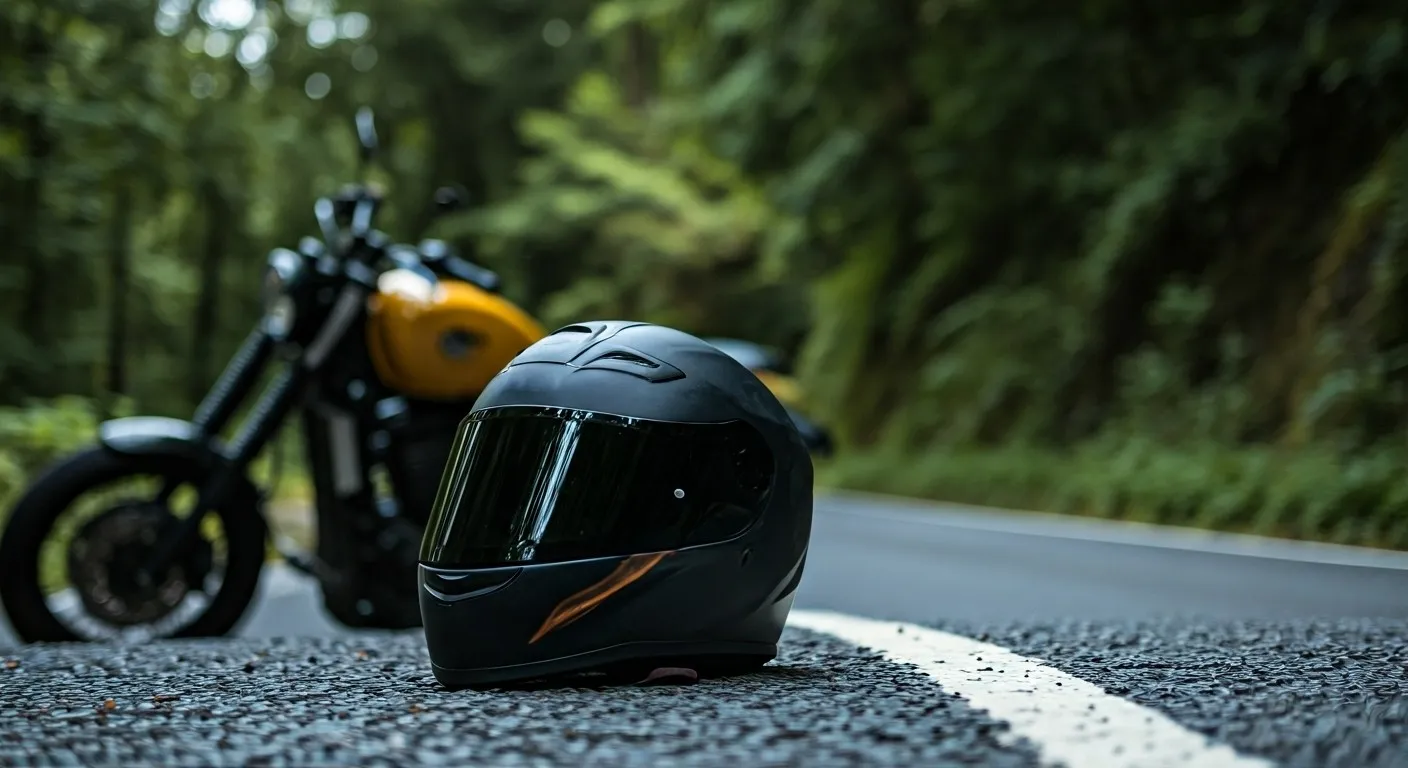
Kentucky Helmet Law
KRS 189.285 requires protective headgear while a motorcycle is moving on a public highway for operators and passengers under 21, operators riding under a motorcycle instruction permit, and operators who have held a motorcycle license for less than one year. The statute separately requires an operator riding on a highway to use an approved eye-protective device.
Whether a helmet met Kentucky’s standard depends on the helmet and its label. 601 KAR 14:010 requires a helmet to meet 49 C.F.R. 571.218 and carry a permanent, legible outer-surface label with DOT letters one centimeter high. The regulation also specifies the label’s contrast and placement. Beyond the legal standard, helmets are estimated to be 37 percent effective in preventing fatalities to motorcycle riders and 41 percent effective for passengers.
Motorcycle Accident Evidence
Motorcycle file. Damage, repair records, onboard data, lights, tires, and protective equipment can reconstruct the accident.
Vehicle file. Impact points, mirrors, tires, event data, and repair estimates can show how the other vehicle and motorcycle met.
Scene file. Road markings, debris, sight distance, traffic controls, and surface conditions place the impact in context.
Video file. Traffic cameras, business cameras, doorbell cameras, and dashcams may preserve lane position, signal use, and speed evidence.
Medical file. Imaging, surgery notes, therapy records, work restrictions, and injury photographs document the treatment course.
Medical and Income Records
Medical records connect diagnosed injuries, treatment, and functional limits to the accident. Wage records, attendance records, and employer statements document time missed and changes in work duties.
When an injury affects future work, treating-provider opinions and qualified economic analysis can document the projected loss. The records must distinguish accident-related limits from earlier conditions.
Left-Turn Accidents
The evidence in a left-turn accident includes the light sequence, sight lines, lane position, approach speed, vehicle damage, and any video that captured the intersection. Each record shows when the driver began the turn and where the motorcycle was at that moment.
Leg and Skin Injuries
The legs and skin often take the force of a motorcycle accident: the impact first, then contact with the road.
Lower-extremity injuries occurred in 56 percent of nonfatally injured riders in a Los Angeles County group injured in 1988 and 1989. Among 810 riders admitted to a Level 1 trauma center with abrasion injuries from 2018 through 2022, burn surgery was consulted in 7 percent.
Coverage Sources
Liability coverage may be one source when another driver caused the accident. Kentucky requires at least $25,000 per person, $50,000 per accident, and $25,000 for property damage, with a $60,000 single-limit option, under KRS 304.39-110.
KRS 304.20-020 governs uninsured-motorist coverage, and KRS 304.39-320 governs underinsured-motorist coverage. Whether either applies depends on the policies and the facts. Uninsured motorist coverage applies when the at-fault driver has no insurance, and underinsured motorist coverage applies when the driver’s limits fall short of the damages.
Kentucky Accident Data
Documented Losses
A Kentucky motorcycle accident case may include past and future medical treatment, lost income and reduced earning capacity, motorcycle damage and loss of use, and the pain and disability the injury causes in daily life.
No figure or range applies to an individual case before the records and coverage documents exist. Results figures come from the firm’s published results only.
Kentucky Motorcycle Rules
The current Kentucky statutes and regulations below control the listed issues. The facts and policy language determine which rules apply to a specific case.
KRS 189.285 Sets Kentucky rules for motorcycle licensing, eye protection, mirrors, seats, footrests, and when protective headgear is required.
601 KAR 14:010 Sets current standards for protective headgear and eye-protective devices used by motorcycle operators.
KRS 304.20-020 Governs uninsured motorist coverage that may apply when an at-fault driver has no liability insurance.
KRS 304.39-320 Governs underinsured motorist coverage when liability insurance exists but is too low for the documented loss.
Key Takeaways
Hurt on Your Motorcycle in Kentucky?
Riders often face adjusters who assume the motorcycle was at fault, even in a left-turn crash caused by the other driver. Sam Aguiar Injury Lawyers answers that assumption with physical evidence, medical records, and footage from DOT and TRIMARC traffic camera archives reaching back about six months. More than 1,000 five-star Google reviews come from clients who went through the process. Call today for a free case review.
Frequently Asked Questions
1What evidence is most important in a Kentucky motorcycle accident case?
Important evidence can include photographs of the road and sight lines, damage to the vehicles and riding gear, available event data recorder information, and nearby video. The sources that apply depend on how the accident happened.
2How many people were killed in motorcycle-related collisions in Kentucky in 2024?
In 2024, 104 people were killed in motorcycle-related collisions in Kentucky: 103 riders or passengers and one person outside the motorcycle. Those deaths occurred in 99 fatal collisions.
3Does Kentucky require motorcycle riders to wear a helmet?
KRS 189.285 requires protective headgear while a motorcycle is moving on a public highway for operators and passengers under 21, operators riding under a motorcycle instruction permit, and operators who have held a motorcycle license for less than one year. The statute separately requires an operator riding on a highway to use an approved eye-protective device.
4What makes a motorcycle helmet legally approved in Kentucky?
601 KAR 14:010 requires a helmet to meet 49 C.F.R. 571.218 and carry a permanent, legible outer-surface label with DOT letters one centimeter high. The regulation also specifies the label’s contrast and placement.
5What insurance coverage can apply after a Kentucky motorcycle accident?
Liability coverage may apply when another driver caused the accident. KRS 304.20-020 governs uninsured-motorist coverage, and KRS 304.39-320 governs underinsured-motorist coverage. Whether either applies depends on the policies and the facts.
6What share of 2022 motorcyclist fatalities happened in daylight?
In 2022, 58 percent of motorcyclist fatalities occurred in daylight and 37 percent in dark conditions. Dawn and dusk accounted for the remainder.