

Truck Accident Lawyers
Hit by a Truck in Kentucky?
 ★★★★★
Over 1,000 Five-Star Reviews
•
Available 24/7. $0 Out-Of-Pocket Forever.
★★★★★
Over 1,000 Five-Star Reviews
•
Available 24/7. $0 Out-Of-Pocket Forever.
Kentucky Truck Accident Cases
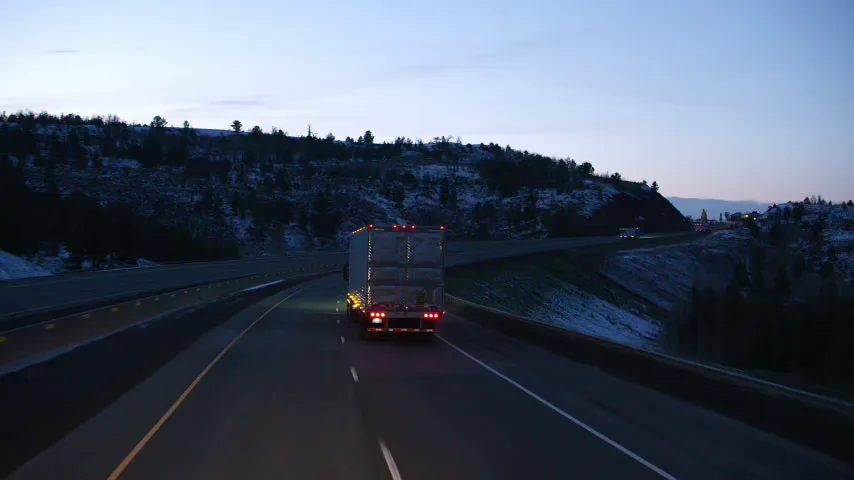
Sam Aguiar Injury Lawyers is a Kentucky personal injury law firm that represents people hurt in truck accidents. Its offices are in Louisville and Lexington. The firm has a dedicated trucking team focusing exclusively on trucking and commercial vehicle accident cases. That team handles commercial truck accidents involving semi trucks, tractor-trailers, 18-wheelers, box trucks, and delivery trucks, along with the wrongful death cases that follow them.
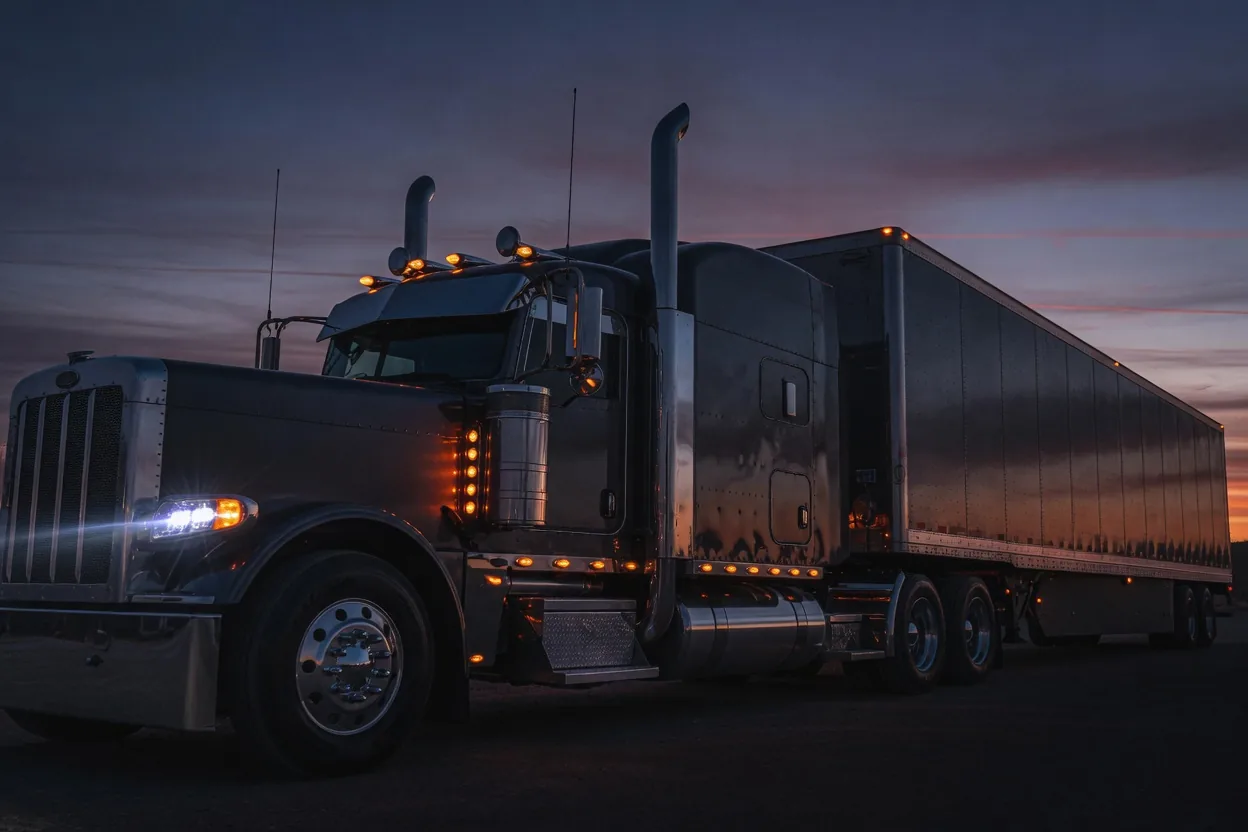
A truck accident case differs from a car accident case in three ways: federal safety rules govern the truck, more companies can share liability, and the insurance policies are larger.
You focus on getting better. We handle everything else. That covers the insurance companies, the trucking company’s records, and the evidence of what the accident cost you in medical bills, lost income, and daily life.
Our truck accident attorneys work with accident reconstructionists, life care planners, economists, and medical specialists when a case calls for them. You pay $0 Out-Of-Pocket Forever. The firm works on a flat contingency fee basis that never increases if your case goes to trial, and your case is covered by our exclusive Bigger Share Guarantee®.
Truck accident cases from Louisville and Jefferson County have their own Louisville truck accident lawyer page. Cases from Lexington and Central Kentucky, including 18-wheeler accidents on I-75 and I-64, are on the Lexington truck accidents page.
Other trucking pages cover coal truck accidents, tow truck accidents, reefer truck accidents, the causes of truck accidents, and trucking evidence. Related articles explain left-lane rules for semi trucks, federal safety rules used as evidence, commercial vehicle accident basics, and trucking company tactics after an accident.
Large Truck Accident Statistics
Trucks were 5 percent of the vehicles in Kentucky traffic accidents in 2024 and 7 percent of the vehicles in fatal accidents, counting any vehicle with a registered weight of 10,000 pounds or more as a truck.
Of those truck accidents, 32 percent happened on interstates or parkways and 47 percent on U.S. and state routes. Of the truck drivers whose home state was known, 41 percent lived outside Kentucky. Inattention, a form of driver error, was the most common driver factor in fatal truck accidents.
5,472 people were killed nationally in traffic accidents involving large trucks in 2023, and seventy percent of them were occupants of other vehicles. In Kentucky, 114 people died in those accidents in 2023, and 88 of them were riding in other vehicles.
Who Is Liable for a Semi Truck Accident?
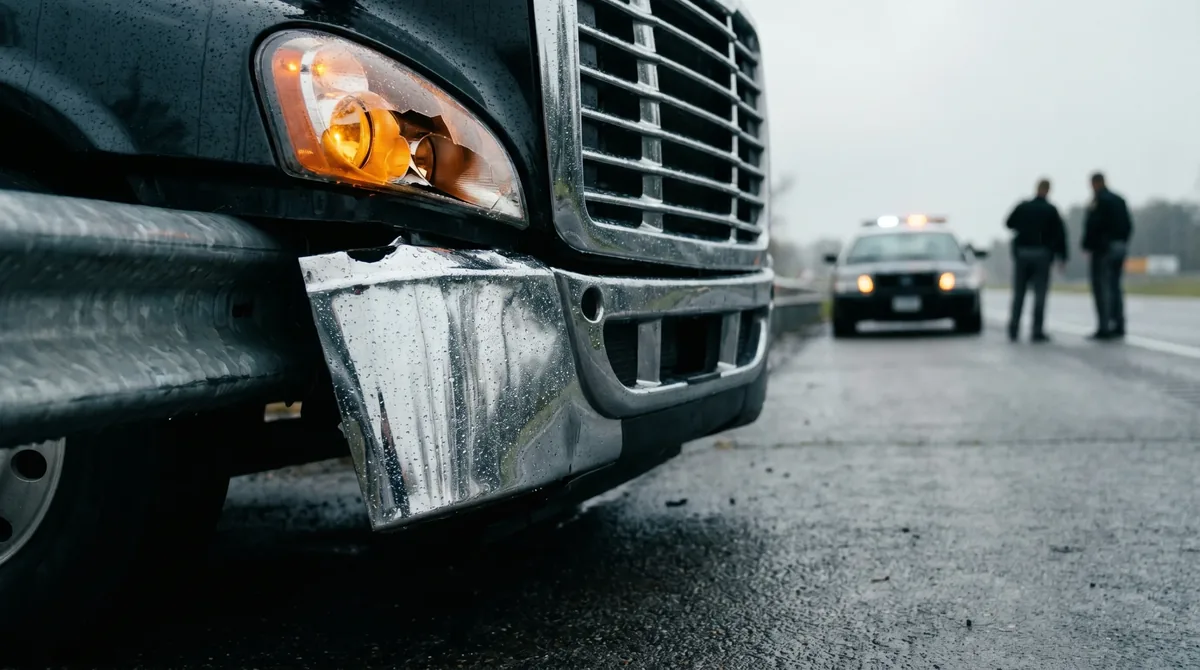
A semi truck accident can make multiple parties liable: the truck driver, the motor carrier, the truck’s owner, the freight broker, the company that loaded the cargo, the repair shop, and the maker of a failed part. Jon Hollan, Managing Partner of the firm’s Lexington office, walks through each one in the Truck Talk episode on who is responsible. Our article on trucking accident liability in Kentucky has more detail, and delivery vehicle accidents raise the same questions on a smaller scale.
Truck Driver
The truck driver is personally liable for negligent driving and for breaking traffic laws, such as speeding, distracted driving, following too closely, or an unsafe lane change. Federal rules bar truck drivers from texting while driving under 49 CFR 392.80 and from using a hand-held mobile phone while driving under 49 CFR 392.82.
Motor Carrier
Responsibility for the driver’s negligence on the job falls on the motor carrier, along with responsibility for its own decisions about hiring, training, supervision, dispatch, and maintenance. When a carrier leases a truck from an owner-operator, 49 CFR 376.12 requires the lease to say the carrier “shall assume complete responsibility for the operation of the equipment for the duration of the lease.” Calling the driver an independent contractor does not change that lease term.
Freight Broker
A freight broker arranges the load and picks the carrier. In Montgomery v. Caribe Transport II, LLC, decided May 14, 2026, a unanimous U.S. Supreme Court held that federal law does not preempt a negligent-hiring case against a company that hired a carrier to transport goods. The Federal Aviation Administration Authorization Act limits state laws on the prices, routes, and services of the trucking industry. It keeps an exception for state safety rules on motor vehicles, and that case falls within it. A broker therefore cannot use federal preemption to end a negligent hiring case at the outset.
Cargo Loader
The shipper or loader that packed the trailer can share liability when a load shifts or falls. 49 CFR 393.100 requires cargo to be secured to prevent it “from leaking, spilling, blowing or falling from the motor vehicle.” It must also be secured against shifting that hurts the truck’s stability or maneuverability.
Repair Shop
When brake, tire, or coupling work fails and causes the accident, the shop that did the work can be liable.
Parts Manufacturer
A defective truck part, such as a brake component, a tire, or a steering part, can make its manufacturer liable.
Federal Motor Carrier Safety Regulations
Title 49 of the Code of Federal Regulations holds the federal rules for commercial truck drivers and trucking companies. They cover driver qualifications, medical certification, hours of service, drug and alcohol testing, inspection and maintenance, and cargo securement. In a box truck accident, those rules can apply once the truck is rated at 10,001 pounds, before its driver needs a commercial license.
Kentucky adopts those rules for commercial truck operations. Under 601 KAR 1:005, a commercial truck and its driver running “interstate, or intrastate” are governed by the federal rules on drug and alcohol testing, driver qualifications, driving, parts and accessories, hours of service, and inspection and maintenance. That reach includes trucks that haul freight only inside Kentucky, so a truck accident case here is measured against state and federal regulations at once.
Under 49 CFR 395.3, outside the exceptions in 49 CFR 395.1, a property-carrying truck driver must take 10 consecutive hours off duty before driving. After that, the driver may drive a total of 11 hours and may not drive after the 14th consecutive hour after coming on duty. The driver must also stop for at least 30 minutes after 8 hours of driving. Unless an exception applies, such as a truck built before model year 2000, 49 CFR 395.8 requires the carrier to have each driver record duty status on an electronic logging device (“ELD”). Those records can show fatigue, dispatch pressure, or hours-of-service violations.
After an accident that kills someone, the employer must test each surviving driver for alcohol and drugs under 49 CFR 382.303. Other accidents trigger testing only when the driver is cited for a moving violation and someone was treated away from the scene or a vehicle was towed. Alcohol testing then applies to a citation within 8 hours, and drug testing to a citation within 32 hours.
Proving that the driver or carrier broke a federal rule is a separate question from proving that the violation caused the accident.
Duties Under Part 396
Part 396 puts three separate duties on the carrier, and each one leaves a record.
Truck Maintenance Records
Driver vehicle inspection reports and repair histories can show whether a known equipment problem was left on the road.
Under 49 CFR Part 396, the required records include the date and nature of each inspection, repair, and maintenance operation.
Comparing a driver’s inspection report with the repair orders that follow can show whether a reported defect was fixed before the truck went back into service.

Reportable Inspection Points
49 CFR 396.11 requires a written report at the completion of each day’s work on each vehicle operated. Drivers are not required to prepare a report if no defect or deficiency is discovered by or reported to the driver. The report must cover at least the following parts and accessories.
Evidence Preservation
Determining liability in a truck accident case depends on records the trucking company controls: ELD data, engine control module (“ECM”) data, dispatch and GPS records, the driver qualification file, drug and alcohol test results, and maintenance files.
Federal rules set minimum retention periods for these records. The driver qualification file holds the truck driver’s job application, motor vehicle records, road test certificate, and medical examiner’s certificate. The carrier must keep that file for as long as the driver works there and for three years after, as 49 CFR 391.51 requires. The carrier’s accident register must be kept for three years after each accident under 49 CFR 390.15. The record of each Drug and Alcohol Clearinghouse query must be kept for three years under 49 CFR 382.701.
Other evidence comes from outside the company: the police report, photos from the accident scene, witness statements, and traffic camera footage. The firm’s trucking team has DOT and TRIMARC camera access with six-month archives.
Trucking Insurance Coverage
Federal law requires far more liability coverage from trucking companies than Kentucky requires from car owners. Under 49 CFR 387.9, a for-hire interstate carrier hauling ordinary freight in a truck of 10,001 pounds or more must carry at least $750,000. Oil and certain other hazardous materials require $1,000,000, and bulk hazardous substances and certain explosives and poisons require $5,000,000. By comparison, KRS 304.39-110 sets Kentucky’s minimum auto liability coverage at $25,000 per person and $50,000 per accident.
The carrier’s policy also carries the Form MCS-90 endorsement required by 49 CFR 387.15. On that form, the insurer agrees to pay “any final judgment recovered against the insured for public liability resulting from negligence in the operation, maintenance or use of motor vehicles” covered by the federal rules, within the limits of liability stated in the endorsement. That obligation holds even when the policy’s own terms would not require payment.
A carrier may also have excess or umbrella policies above its primary policy. Other negligent parties, such as the trailer owner, the broker, the shipper, or a maintenance vendor, may each have separate coverage. Every policy that applies can pay toward the case, in addition to the federal minimum.
Common Truck Accident Injuries
Weight explains the severe injuries in a truck accident. A loaded truck on the interstate can legally weigh up to 80,000 pounds under 23 CFR 658.17, far more than standard passenger cars.
Truck accident injuries include traumatic brain injuries, spinal cord injuries, crush injuries, amputations, broken bones, internal injuries, and multi-organ trauma. People who suffer injuries like these can need surgery, long hospital stays, rehabilitation, and care that lasts for years.
For more on these injuries, see the pages on traumatic brain injury cases and Kentucky truck accident injury cases.
Damages in a Truck Accident Case
In a truck accident lawsuit, you can recover compensation for two kinds of losses: financial losses you can document, and the pain and suffering the injuries cause. When serious injuries are permanent, the damages rest on projections of future medical expenses and lost earning ability from life care planners, economists, and vocational rehabilitation professionals.
Financial Losses
These include medical bills for emergency care, hospital stays, surgery, imaging, prescriptions, and physical therapy. They also include future medical care the evidence supports, lost wages shown by pay and tax records, reduced earning ability, and the cost to repair or replace your vehicle.
Pain and Suffering
This covers the physical pain of the injuries and the recovery, mental anguish, and the activities and independence the injuries take away.
Wrongful Death After a Truck Accident
If a truck accident took the life of a family member, KRS 411.130 allows damages for the death to be recovered from the person who caused it, “or whose agent or servant caused it.” That second phrase can reach the trucking company that employed the driver. The personal representative of the person who died brings the case.
The same statute allows punitive damages “if the act was willful or the negligence gross.” KRS 411.133 lets the personal representative recover for the death and for the injuries the person suffered before death in the same action.
The firm’s wrongful death and fatal car accident pages explain these cases further.
Truck Talk
Jon Hollan covers one trucking topic per episode, and Truck Talk segments also air on WKYT’s Everyday Kentucky.
Why Choose Sam Aguiar Injury Lawyers
Insurance companies will try to minimize your pain. We don’t let that happen. Our truck accident lawyers hold insurance companies, corporations, and trucking companies accountable.
Trucking Team Investigation
At Sam Aguiar Injury Lawyers, a truck accident lawyer on the trucking team investigates the accident and identifies every company and insurance policy behind the truck. The evidence the trucking team pursues includes ELD and ECM data, driver qualification and maintenance files, dispatch records, cargo documents, post-accident drug and alcohol test results, and DOT and TRIMARC camera footage.
Your case also gets a dedicated three-person team: a top-rated attorney, an experienced case manager, and a skilled legal assistant, with biweekly updates and 24/7 response to calls and texts.
Attorney Recognition
Two of the firm’s truck accident attorneys, Sam Aguiar and Jon Hollan, are named to the Trucking Trial Lawyers Association Top 10. Other recognition for the firm’s attorneys includes Forbes Best-In-State, National Trial Lawyers Top 100, Multi-Million Dollar Advocates Forum, and American Board of Trial Advocates. The firm’s attorneys are also recognized in 2026 Super Lawyers and Rising Stars, with recognition continuous since 2017. The firm has 50 seven-figure results in the last five years.
Key Takeaways
Serious Truck Accident in Kentucky?
One truck load can involve a driver, a motor carrier, a broker, and a shipper, each of which may carry its own insurance. Sam Aguiar Injury Lawyers puts a dedicated trucking team on your case. With our Bigger Share Guarantee®, you always get more: you walk away with more than the firm after bills, liens, and case costs, or the firm cuts its fee. Call today for a free case review.