

Personal Injury Attorneys
Motor Vehicle Accident Cases
 ★★★★★
Over 1,000 Five-Star Reviews
•
Available 24/7. $0 Out-Of-Pocket Forever.
★★★★★
Over 1,000 Five-Star Reviews
•
Available 24/7. $0 Out-Of-Pocket Forever.
Kentucky Motor Vehicle Cases
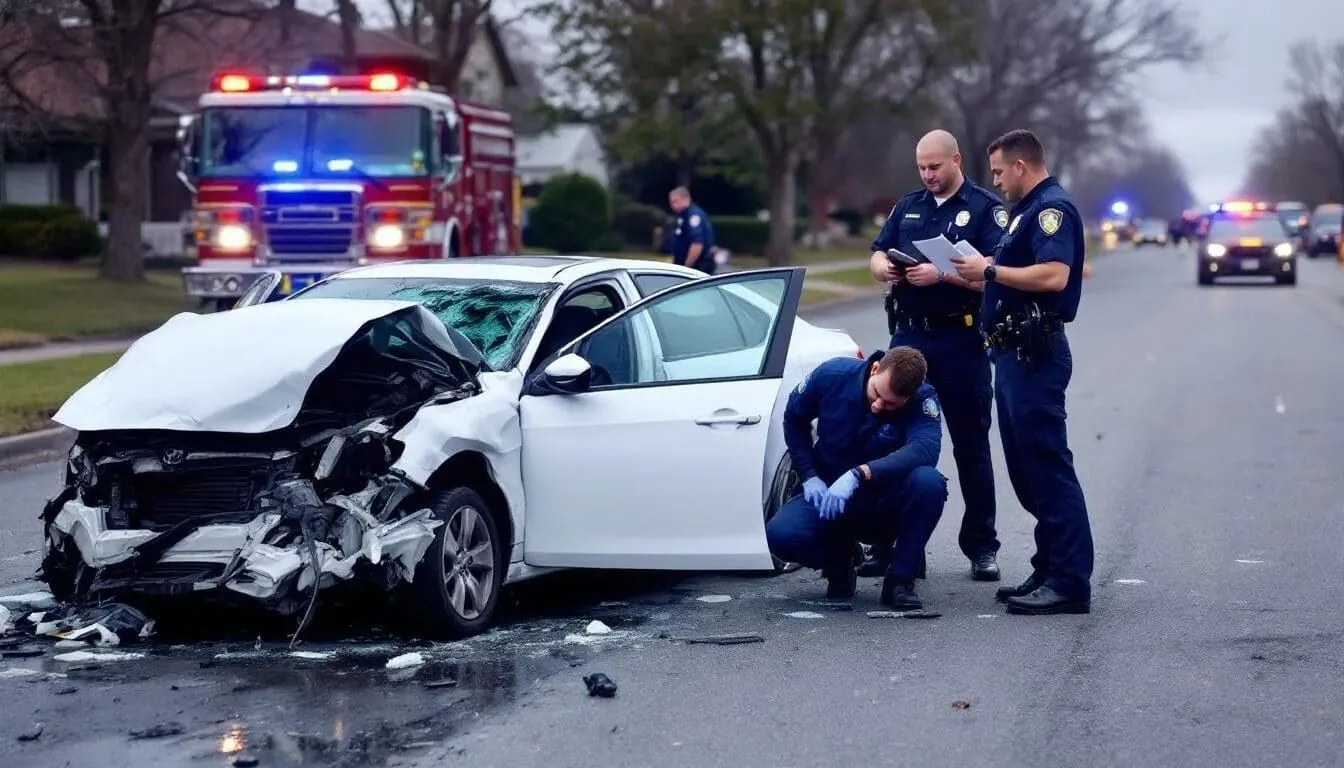
A motor vehicle case begins with a collision, but the legal and insurance issues rarely stop at two vehicles and one policy. A passenger may have coverage through a household policy. A driver may have been making a delivery or traveling for work. A commercial vehicle may be owned, leased, maintained, and operated by different companies. A roadway defect or a failed vehicle part may add another responsible party. Each fact changes the records that should be obtained and the sources of coverage that should be examined.
Sam Aguiar Injury Lawyers handles roadway injury cases across Kentucky. The firm’s work includes car accidents, commercial truck collisions, motorcycle cases, pedestrian and bicycle impacts, rideshare cases, delivery vehicle incidents, and crashes involving uninsured or unidentified drivers. The goal is a documented case file that explains what happened, identifies every available source of recovery, and measures the losses tied to the injuries.
Motor vehicle cases also move on different tracks. Medical treatment develops over time. Vehicles may be repaired, sold, or destroyed. Electronic data can be overwritten. Businesses may hold dispatch records, driver files, inspection material, or camera footage. Insurers begin their own investigations immediately. Strong case preparation brings those separate tracks into one organized record.
Roadway Crash Data
Kentucky’s statewide collision data shows how frequently roadway events affect drivers, passengers, and families. The Kentucky Transportation Cabinet’s 2024 Collision Facts report recorded 139,663 reported collisions. Of those, 117,661 occurred on public roads. The report lists 29,235 people injured and 707 people killed in public-road collisions during that year.
Those totals include very different events. A low-speed intersection impact presents different evidence than a highway rollover. A motorcycle collision may raise visibility and roadway-surface questions. A pedestrian impact may require signal timing, sight-distance analysis, and nearby video. A commercial truck case can involve federal records, company systems, and vehicle data unique to the equipment. The case strategy should match the collision, the vehicles, and the injuries.
The same state report identified driver inattention as a contributing factor in 42,363 public-road collisions, or 36 percent of the total. A notation in a collision report is only one part of the evidence. Phone records, infotainment data, dash cameras, vehicle downloads, witness observations, and scene evidence may support or contradict an initial description. The full record matters more than a single checkbox.
Cases Across Vehicle Types
Car accident cases can involve rear impacts, intersection collisions, lane changes, left turns, head-on impacts, roadway departures, and multi-vehicle chains. Each configuration creates its own sequence of movement and contact. Damage patterns, debris fields, event data, roadway markings, and witness positions can clarify that sequence. When several vehicles are involved, the timing between impacts may determine which conduct caused a particular injury or loss.
Commercial truck cases add company records and industry duties. Tractor-trailers, dump trucks, box trucks, utility vehicles, and other commercial units may be subject to inspection, maintenance, loading, and driver-management requirements. Ownership and control can be divided among a motor carrier, broker, shipper, leasing company, maintenance provider, and driver. Contracts and operational records can show who controlled the trip and the equipment.
Motorcycle accident cases often require careful work on visibility, lane position, braking, road conditions, and protective equipment. A rider has far less physical protection than an occupant inside a passenger vehicle. That difference can produce severe injuries even when the vehicles make limited contact. Photographs of the motorcycle, helmet, clothing, road surface, and involved vehicle can preserve details that may disappear after repairs or cleanup.
Pedestrian and bicycle cases may involve crosswalk timing, lighting, sight lines, speed, lane position, and the movement of turning vehicles. Nearby businesses, traffic cameras, residential security systems, and transit vehicles may capture useful footage. Location measurements and a clear account of where each person was positioned can be central to reconstruction.
Rideshare and delivery cases require close attention to the driver’s status at the time of the collision. Coverage may depend on whether an app was off, available for a request, matched to a passenger, carrying a passenger, or completing a delivery. Digital trip records and company communications can establish the operational phase. A personal insurer, platform policy, employer policy, or commercial policy may each require separate notice and analysis.
Insurance Coverage in the Case
Coverage analysis begins with identifying every person and business connected to the trip.
The driver’s policy is one source, but it may not be the only one.
The vehicle owner, an employer, a household member, a rideshare platform, a delivery company, or a commercial operator may have separate coverage.
Policy declarations, endorsements, exclusions, reservation letters, and coverage positions should be collected and compared to the facts.
Policy limits also affect case planning.
A serious injury case can exceed the first policy identified after a collision.
Underinsured motorist coverage, umbrella coverage, commercial policies, and policies tied to other responsible parties may become significant.
A complete review should occur before a case is resolved because releasing one party can affect rights involving another policy or defendant.
Coverage disputes are often document driven.
The language of the policy, the named insureds, the listed vehicles, household relationships, trip purpose, app status, and employment records can determine whether a policy applies.
The insurer’s label for a trip does not settle the issue.
The governing contract and verified facts do.
Evidence by Collision Type
Scene evidence provides a physical record of the collision.
Photographs can capture vehicle resting positions, lane markings, damage, skid marks, debris, traffic controls, weather, lighting, and obstructions.
Measurements can connect those images to a scaled diagram.
When the roadway changes during construction or repair, early documentation preserves conditions that may never exist again.
Vehicles contain additional information.
Event data recorders may store speed, braking, throttle, steering, and restraint data for a limited period surrounding an event.
Modern infotainment systems can retain device connections, calls, messages, routes, or app activity.
Commercial vehicles may have engine control data, telematics, electronic logging information, inward and outward cameras, and fleet-management records.
The available data depends on the vehicle and system.
Video can come from more places than a traffic camera.
Homes, businesses, schools, buses, parking facilities, construction sites, and other vehicles may record the roadway.
Many systems overwrite footage on short cycles, so the location and timing of requests are important.
A camera map and scene canvass can identify sources that are not mentioned in a police report.
Witness accounts are strongest when they are detailed and tied to a clear vantage point.
A witness may have observed a signal phase, speed, lane movement, phone use, lighting, statements, or the condition of a driver.
Contact information and a prompt recorded account can preserve what the person actually remembers before time changes the detail.
Public records can add another layer.
Collision reports, dispatch audio, emergency response records, roadway plans, signal timing, prior inspection material, and government-maintained camera footage may address disputed facts.
Requests should be tailored to the agency and the event rather than relying on one broad demand.
Commercial Vehicle Cases
Commercial transportation cases often involve company conduct as well as driver conduct. Driver qualification files, training records, safety history, dispatch instructions, route planning, hours records, inspection reports, maintenance files, and post-collision testing may reveal how the trip was managed. A carrier’s electronic systems can provide timestamps and vehicle locations that can be compared with the driver’s account.
Federal motor carrier records can also identify the entity operating under a Department of Transportation number, its insurance filings, and its inspection history. The Federal Motor Carrier Safety Administration’s SAFER system provides public carrier information, though the public profile is only a starting point. Bills of lading, lease agreements, broker contracts, payroll records, dispatch logs, and insurance documents may be needed to identify every business role.
Load condition matters in many truck and cargo cases. Weight, securement, distribution, trailer condition, and loading procedures can affect braking and vehicle control. Cargo records, scale tickets, photographs, seal records, and shipper communications may establish the condition of the load. Mechanical issues can require inspection of brakes, tires, steering, coupling equipment, lights, and maintenance history.
Company policies are meaningful when compared to actual practice. A written safety policy may require inspections or rest, while dispatch timestamps and maintenance records show what occurred. The comparison should be based on authenticated records and testimony. It can identify whether the collision arose from an isolated driver decision or a broader operational failure.
Hit-And-Run Cases
Hit-and-run cases require two parallel investigations: identifying the vehicle and examining available insurance coverage. Kentucky’s 2024 report counted 12,744 hit-and-run collisions, including 27 fatal collisions and 1,011 injury collisions. Those figures in the state collision report show that an unidentified driver is a recurring issue, not an unusual one.
Vehicle identification can develop from partial plate information, paint transfer, broken parts, nearby footage, traffic cameras, witness descriptions, repair activity, and vehicle-specific damage. A fragment may contain a part number that narrows the make and model. Time and route analysis can connect separate cameras even when no single recording captures the entire event.
When the driver remains unknown, uninsured motorist coverage may become the central source of recovery. The policy language, household coverage, vehicle occupancy, and notice requirements must be examined. The case still needs evidence of the collision and the resulting injuries. An unknown driver changes the insurance path, but it does not eliminate the need for a complete liability and damages file.
Medical and Financial Documentation
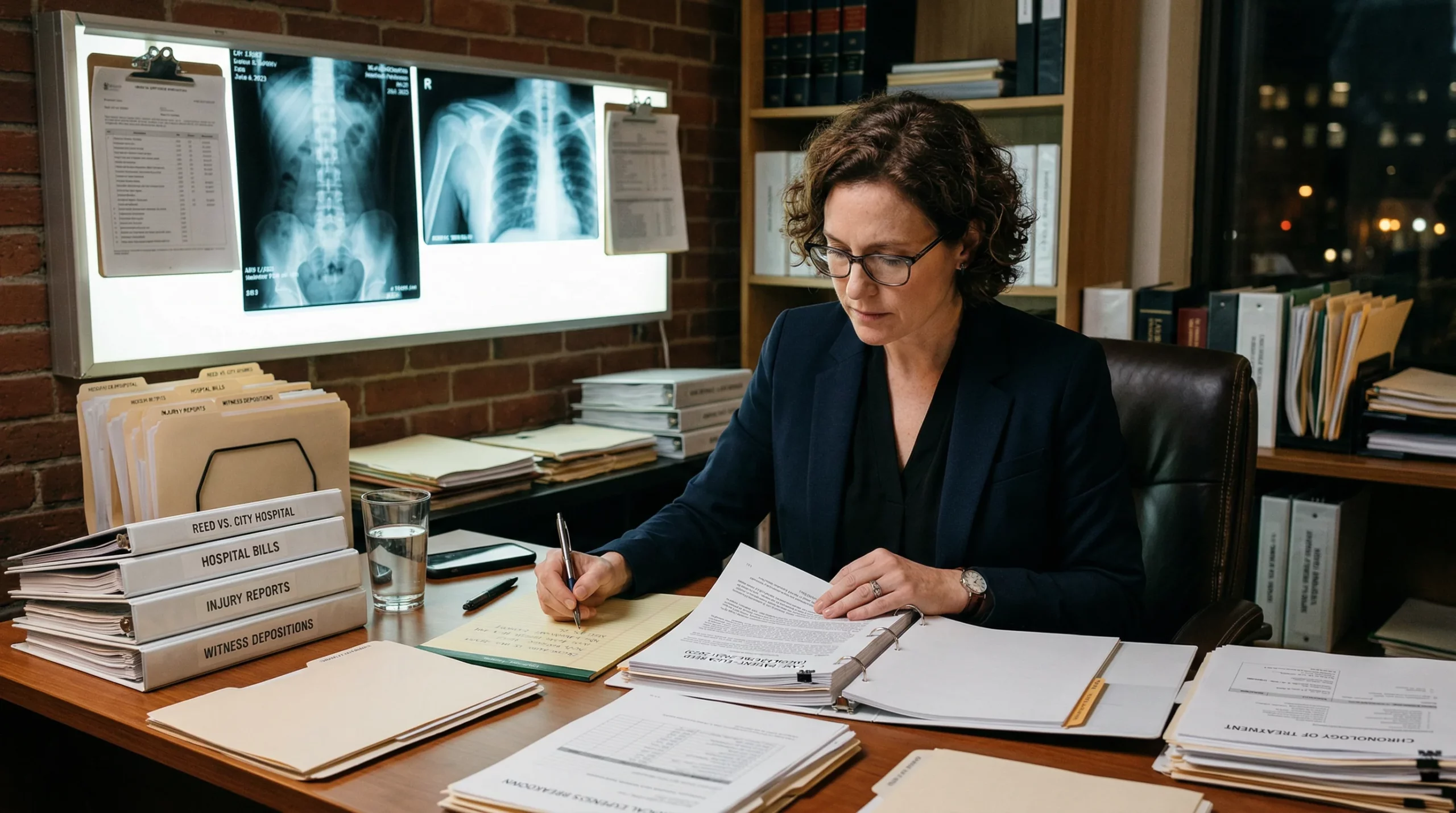
Injury documentation should connect diagnosis, treatment, symptoms, limitations, and prognosis. Emergency records may describe the first complaints and imaging. Follow-up records can show how symptoms changed, what treatment was attempted, and whether restrictions remained. Imaging, operative reports, therapy notes, specialist evaluations, and pharmacy records each serve different functions in the medical history.
A clear chronology can reveal patterns that are difficult to see in a stack of records. It can track appointments, diagnostic findings, referrals, procedures, work restrictions, and reported limitations. It can also identify missing records or inconsistencies that should be addressed before an insurer or defense lawyer raises them.
Income loss requires its own documentation. Pay records, tax material, employer verification, schedules, commissions, benefits, and business records may be relevant depending on the person’s work. For self-employed clients, the analysis may require contracts, invoices, calendars, staffing records, and historical revenue. Future earning loss can involve medical restrictions, vocational analysis, and reliable work-history evidence.
Household and personal limitations belong in the record when they are tied to the injury. Testimony from the injured person, family, coworkers, and friends can describe changes in mobility, sleep, concentration, recreation, caregiving, and daily tasks. Specific examples carry more meaning than broad adjectives. Photographs, calendars, messages, and contemporaneous notes may support those accounts.
Medical billing and lien work continues alongside the injury case. Health insurers, government benefit programs, providers, and other payors may assert reimbursement interests. Accurate payment ledgers, benefit statements, lien correspondence, and provider balances are needed to calculate the client’s net recovery and resolve valid obligations.
Firm Resources for Roadway Cases
Motor vehicle cases benefit from coordinated work across legal, investigative, medical, and insurance issues. Sam Aguiar Injury Lawyers uses a three-person case team with an attorney, case manager, and legal assistant. That structure divides responsibility while keeping the evidence, treatment history, client communication, and insurance work connected.
The firm advances case expenses, so clients pay no case costs out of pocket while the case is pending. When the case requires scene inspection, record retrieval, vehicle analysis, medical review, or qualified outside professionals, those needs can be evaluated based on the case rather than a client’s ability to fund them.
Clients can review the firm’s broader approach on the Bigger Share Guarantee® page and see examples of prior work on the case results page. Every matter depends on its own facts, injuries, coverage, and evidence. Prior outcomes do not determine a future result.
Communication is also part of case management. Clients need to know what records are being gathered, what coverage has been identified, what medical information is still developing, and what decisions are approaching. A documented workflow keeps those issues visible to the entire team.
Cases Across Kentucky
The firm represents clients in Louisville, Lexington, Bowling Green, Elizabethtown, Florence, Shelbyville, and communities throughout Kentucky. Venue, roadway design, responding agencies, medical systems, and available records vary by location. A rural highway collision may involve different evidence sources than an urban intersection or interstate interchange.
Regional medical care can also affect the record. Some clients receive emergency treatment near the collision and later transfer to a larger hospital or return home for follow-up. The case file should connect those facilities, providers, imaging studies, and referrals into one chronology. Missing links can make a continuous course of care look fragmented.
A roadway case should be built around the event that actually happened. The vehicles, people, businesses, coverage, injuries, and available technology define the work. Careful investigation and organized documentation provide the basis for negotiations and, when necessary, litigation.
Key Takeaways
Injured on a Kentucky Road?
Car, truck, motorcycle, rideshare, and pedestrian crashes each come with their own coverage and evidence questions, and the answers shape what your case can recover. Sam Aguiar Injury Lawyers handles motor vehicle cases across Kentucky from offices in Louisville and Lexington. Under the Bigger Share Guarantee®, you always walk away with more than the firm after bills, liens and case costs, or the firm cuts its fee. Call today for a free case review.