

Delivery Vehicle Accident Lawyers
Delivery Vehicle Accidents
 ★★★★★
Over 1,000 Five-Star Reviews
•
Available 24/7. $0 Out-Of-Pocket Forever.
★★★★★
Over 1,000 Five-Star Reviews
•
Available 24/7. $0 Out-Of-Pocket Forever.
How Driver Status Changes the Case
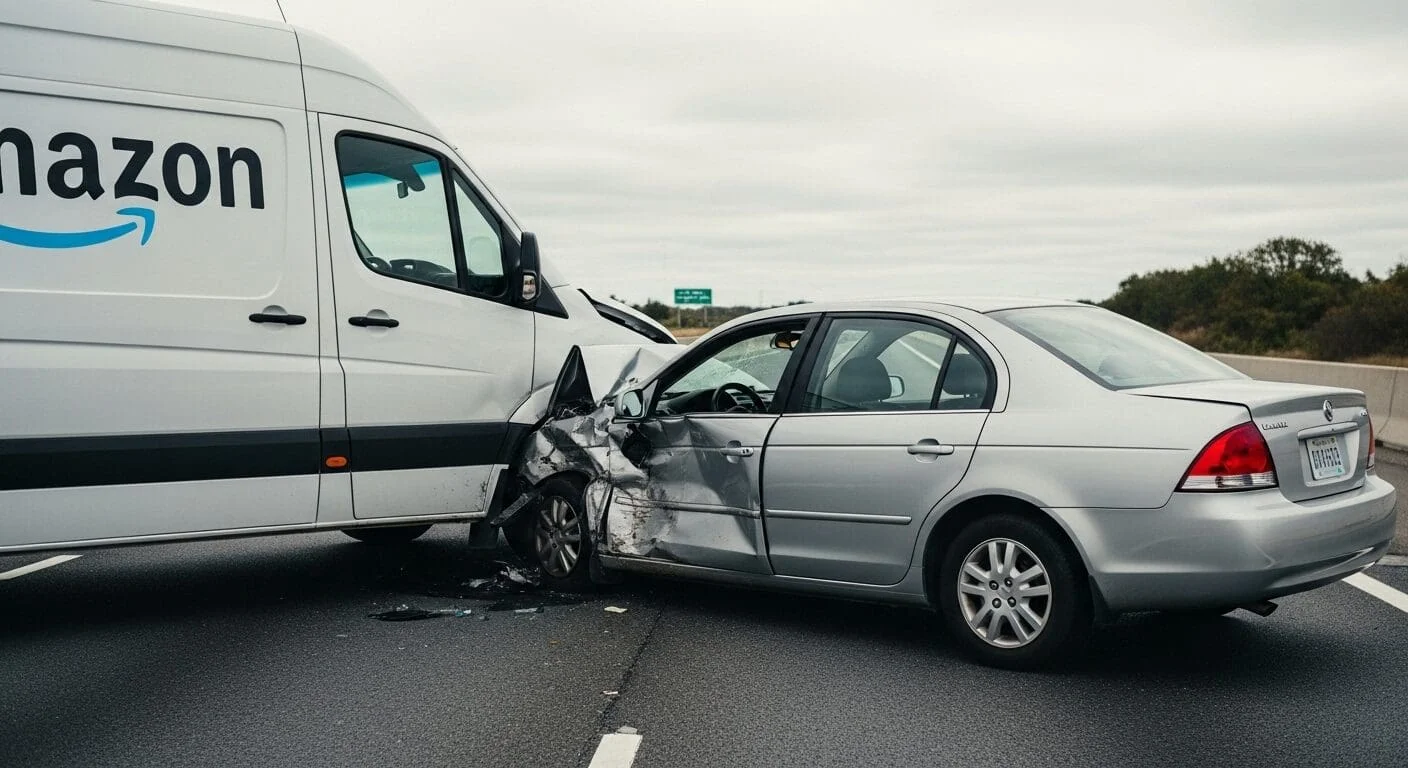
If a delivery driver hit you in Kentucky, the driver’s employment status determines who is liable and which insurance policy responds. Not all delivery drivers work the same way. Some are full employees with company trucks, benefits, and training. Others are independent contractors using their own cars with minimal oversight. According to the Bureau of Labor Statistics, delivery and truck driving is one of the fastest-growing job categories in the United States, and more drivers on the road means more crashes.
W-2 Company Employees
When a UPS driver or FedEx Express driver causes a crash, their employer is directly liable under the legal doctrine of respondeat superior. The company’s commercial insurance policy covers the case, and these policies typically carry significantly higher coverage limits than a personal auto policy.
DSP Subcontractors (Amazon Model)
Amazon does not employ its own delivery drivers directly. Instead, it contracts with Delivery Service Partners, small businesses that hire drivers and operate branded Amazon vans. When an Amazon delivery driver causes a crash, liability can fall on the DSP, the driver, or in some cases Amazon itself, depending on the facts. For the full Amazon case path, see our Amazon Delivery Vehicle Accident Lawyers guide.
We take delivery accident cases against every major carrier: FedEx, USPS, UPS, DoorDash, Uber Eats, Instacart, and Amazon Delivery Vehicle Accident Lawyers handles the Amazon side.
Gig Contractors (DoorDash, Uber Eats, Instacart)
Gig delivery drivers are classified as independent contractors by the platforms they work for, and the platform will typically argue it is not responsible for the driver’s actions. These companies do provide layered insurance coverage during active deliveries, but that coverage often depends on the driver’s exact app status at the moment of the crash.
Government Employees (USPS)
If a USPS mail carrier caused the crash, the case process is entirely different. Federal employees are protected by sovereign immunity, and a claim must proceed through the Federal Tort Claims Act, with no jury trial and strict administrative filing deadlines.
Delivery Companies Operating in Kentucky
Each delivery company has a different corporate structure, insurance setup, and approach to managing drivers, which means case strategy changes depending on which company’s driver was involved.
- Amazon DSP and Flex drivers: DSP contractors drive branded vans, while Flex drivers use personal vehicles for last-mile delivery.
- DoorDash: gig contractors using personal vehicles with layered, platform-provided coverage during active deliveries.
- Instacart: shoppers deliver groceries in personal vehicles under an independent contractor classification.
- Uber Eats: platform-based delivery with tiered insurance that depends on the driver’s app status at the time of the crash.
- UPS: employees driving company-owned vehicles with commercial coverage.
- FedEx: FedEx Express uses employees, while FedEx Ground uses independent contractors, meaning two different liability models operate under one brand.
- USPS: federal employees covered under the Federal Tort Claims Act, with strict administrative filing requirements.
Insurance Gaps That Hurt Crash Victims
The biggest problem in delivery vehicle accident cases is often not whether insurance exists, but whether it applies at the exact moment of the crash.
According to DoorDash’s own coverage documentation, the company provides excess auto liability coverage that activates in specific circumstances tied to app status, which leaves gaps outside those windows.
Personal auto insurance policies also commonly exclude commercial use, and if a driver’s own insurer discovers they were delivering at the time of the crash, that case can be denied entirely.
Evidence to Save After a Delivery Accident
Small details can decide which company and which policy has to respond.
Save the delivery driver’s name, vehicle photos, app screenshots if visible, order or tracking details, witness names, the police report number, and the exact intersection or business location where the crash happened.
App and Order Status
Delivery screens, order numbers, accepted times, and route details can show which coverage window applied at the moment of the crash.
Camera and Location Proof
Photos, nearby business cameras, DOT and TriMarc footage covering major Kentucky interstates, and the exact intersection can show how the crash happened and which coverage layer should respond.
More on Kentucky Delivery Vehicle Accidents
Delivery Truck Accident Differences
A delivery truck accident can involve commercial insurance, corporate liability, and federal safety regulations that a standard car accident does not. FedEx, UPS, Amazon DSP, and local fleet cases often need a different case plan, because both the driver and the company behind the truck can be part of the liability review.
Delivery Truck Case Types
- FedEx and FedEx Ground crashes: FedEx Ground uses independent contractors, which complicates liability. We trace the chain from the driver to the contractor to FedEx itself.
- UPS truck accidents: UPS drivers are company employees, so employer liability is typically clearer, but UPS moves quickly to limit payouts.
- Local fleet delivery vehicles: Grocery delivery, restaurant supply, HVAC service trucks, plumbing vans, and other commercial fleet vehicles.
- Last-mile delivery crashes: Smaller vans and sprinter-style vehicles making residential deliveries.
Delivery Truck Case Differences
Commercial vehicles must carry higher insurance minimums. Federal Motor Carrier Safety Administration (FMCSA) regulations require detailed driver logs, vehicle maintenance records, and training documentation. When a delivery company cuts corners on any of these, that becomes evidence in your case.
Delivery truck cases can involve black box data, dashcam footage, driver logs, route records, and dispatch records. Those records should be identified quickly because they may become key evidence in the case.
Damages In Delivery Truck Cases
Commercial delivery truck cases often involve larger insurance layers than standard car accident cases. The case can include medical bills, lost income, pain, long-term impairment, and disability caused by delivery vehicle accidents.
Related pages: semi-truck accident lawyer, truck accident injury cases, brain injuries from car accidents.
More Questions We Get About Delivery Vehicle Accidents
How does liability differ between FedEx Ground and UPS delivery crashes?
FedEx Ground uses independent contractors, which complicates liability and requires tracing the chain from the driver to the contractor to FedEx itself. UPS drivers are company employees, so employer liability is typically clearer, though UPS moves quickly to limit payouts.
What records matter most in a delivery truck accident case?
Black box data, dashcam footage, driver logs, route records, and dispatch records can all become key evidence, and Federal Motor Carrier Safety Administration regulations require carriers to maintain detailed driver logs and maintenance documentation.
Why do delivery drivers face pressure that increases crash risk?
Delivery drivers face tight schedules and constant pressure to meet quotas, which can lead to speeding, distracted driving, running stop signs, and rolling through residential neighborhoods too fast.
What types of delivery vehicles are involved in these cases?
Cases can involve FedEx and FedEx Ground trucks, UPS delivery vehicles, local fleet vehicles such as grocery delivery or HVAC service trucks, and last-mile delivery vans, box trucks, or sprinter-style vehicles making residential deliveries.
What damages can a delivery truck accident case include?
Commercial delivery truck cases often involve larger insurance layers than standard car accident cases and can include medical bills, lost income, pain, long-term impairment, and disability caused by the crash.
Key Takeaways
Was the Delivery Driver on the Clock?
Whether a delivery driver was logged into an app, carrying a package or off duty can change which insurance company pays for your injuries. Sam Aguiar Injury Lawyers pins down the driver’s status and goes after the app data, route history and photos that close the insurance gaps these companies leave behind. The fee never goes up if your case goes to trial, and more than 1,000 five-star Google reviews come from our clients. Call today for a free case review.