

Pedestrian Accident Cases in Louisville and Across Kentucky
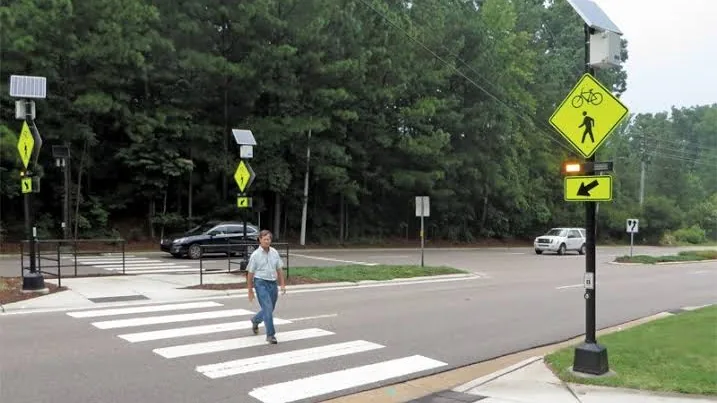
Kentucky law sets out what a driver owes a person on foot. Under KRS 189.570, a driver must yield to a pedestrian crossing a road where traffic signals are not in place or not working, and every driver must use due care to avoid hitting any pedestrian, wherever that person is walking. A Louisville pedestrian accident lawyer at Sam Aguiar Injury Lawyers builds each case on those duties, on the camera footage, police records, and witness accounts from the scene, and on every insurance policy that applies. The firm handles pedestrian cases across Kentucky from offices in Louisville and Lexington.
Louisville Pedestrian Deaths in 2023
Walking in Louisville carried more than double the national risk in 2023. In NHTSA’s Pedestrians: 2023 Data fact sheet, 28 of the 118 people killed in Louisville traffic accidents that year were pedestrians, or 23.7 percent. That is 4.49 pedestrian deaths per 100,000 residents, against a national rate of 2.18.
28
Pedestrians killed in Louisville traffic accidents in 2023
23.7%
Share of Louisville traffic deaths in 2023 who were pedestrians
4.49
Louisville pedestrian deaths per 100,000 residents in 2023, against 2.18 nationally
A citywide rate describes risk across a population. It does not show what any one driver did, which is the question a case has to answer.
Statewide, the Kentucky State Police 2023 Crash Facts report counted 1,089 collisions involving pedestrians. Those collisions killed 124 pedestrians and injured 873. NHTSA’s count for Kentucky the same year is 121 pedestrian deaths. The report explains the gap: the federal Fatality Analysis Reporting System does not include pedestrians killed in parking lots, and the Kentucky Collision Reporting System does.
Nationally, NHTSA recorded 7,314 pedestrian deaths in 2023. Of those, 84 percent happened in urban areas, 77 percent happened in the dark, and 74 percent happened at locations that were not intersections. Each figure points to a question in a Louisville case: how dark the scene was, where the person was crossing, and what the driver could see.
Pedestrian deaths cluster in the evening. In NHTSA’s 2023 data, 32 percent of pedestrian deaths in the fall months of September through November happened between 6 and 8:59 p.m., and in the winter months that same evening window held 34 percent. In spring and summer, the largest share moved later, to 9 through 11:59 p.m., at 28 percent and 35 percent.
Louisville also stands apart from the rest of the state. NHTSA puts Kentucky’s 2023 pedestrian death rate at 2.67 per 100,000 residents, and pedestrians were 14.9 percent of all Kentucky traffic deaths, against 23.7 percent in Louisville. State police data adds the ages involved: 3.3 percent of the pedestrians killed or injured in Kentucky in 2023 were 14 or younger, and 22.3 percent were 65 or older.
Kentucky Right-of-Way Rules
KRS 189.570 is Kentucky’s pedestrian statute, and its current version took effect July 15, 2026. It sets duties for drivers and for people on foot. A pedestrian case starts by asking which of the driver’s duties applied at that spot and whether the driver met them.
Roads Without Traffic Signals
Where traffic signals are not in place or not in operation, subsection (4) requires a driver to yield to a pedestrian crossing the road, slowing down or stopping if needed. The same duty covers a pedestrian approaching from the opposite half of the road who is close enough to be in danger.
Stopped Vehicles at Crosswalks
When a vehicle stops at a marked crosswalk, or at an unmarked crosswalk at an intersection, to let a pedestrian cross, subsection (5) bars any driver approaching from behind from passing the stopped vehicle. On a multi-lane road, that rule reaches the driver in the next lane who goes around a stopped car without seeing why it stopped.
Sidewalk Right of Way
Subsection (8) requires a driver to yield to any pedestrian on a sidewalk. A driver pulling out of a driveway, an alley, or a parking lot exit across a sidewalk owes that duty to the person walking past.
Pedestrian Duties
The statute also sets rules for people on foot. Pedestrians must obey traffic control devices meant for them under subsection (1). Under subsection (6)(a), a pedestrian crossing outside a marked crosswalk, or outside an unmarked crosswalk at an intersection, must yield to vehicles. Inside city limits, subsection (6)(c) requires a pedestrian between two adjacent intersections with working signals to cross only in a marked crosswalk.
Subsection (9) bars a pedestrian from suddenly leaving a curb into the path of a vehicle too close to stop. Where a sidewalk is provided and practicable, pedestrians must use it. Without a sidewalk, they walk on the shoulder, and where there is neither, they walk near the outside edge of the road and, on a two-way road, on the left side, under subsections (12) through (14).
Due Care Toward Everyone on Foot
Subsection (6)(d) applies notwithstanding every pedestrian rule above and any local ordinance. Every driver must exercise due care to avoid colliding with any pedestrian, must sound the horn when necessary, and must take proper precaution on seeing a child or an obviously confused or incapacitated person in the road. A person crossing mid-block is still a pedestrian the driver must use due care to avoid. Roundabout crosswalks follow these rules too; see pedestrians hit at a roundabout.
Common Causes of Pedestrian Accidents
Kentucky State Police code the factors a responding officer saw in each collision. In the 1,089 pedestrian collisions of 2023, inattention was the driver factor recorded most, in 302 collisions, or 27.73 percent. Failure to yield the right of way came next, in 119 collisions, or 10.93 percent. Officers also recorded a driver not under proper control in 48 collisions, distraction in 36, disregard of a traffic control in 30, and alcohol involvement in 23.
In the 122 fatal pedestrian collisions, inattention was again the driver factor recorded most, in 16 of them. Exceeding the speed limit and alcohol involvement each appear in fatal collisions at higher shares than in pedestrian collisions overall: 5.74 percent and 6.56 percent of fatal collisions, against 1.38 percent and 2.11 percent of all pedestrian collisions.
Parking lots are their own setting. State police recorded improper backing as a driver factor in 8 pedestrian collisions in 2023, and only the state count, not the federal one, includes a person killed in a lot. The city’s highest-risk roads are named in accident-prone hotspots in Louisville, and crossings near Kentucky schools are covered in preventing pedestrian school zone accidents.
An officer’s coded factor is the first record of what happened, not the last word. Camera footage, vehicle damage, and witness accounts can confirm it or show something the officer did not see.
Hit-and-Run Drivers in Kentucky
Kentucky State Police counted 12,618 hit-and-run collisions in 2023. Of those, 45 were fatal collisions and 995 caused injuries. Seventeen of the people killed in hit-and-run collisions that year were pedestrians, and 119 pedestrians were injured. Nationally, 24 percent of the pedestrians killed in 2023 were struck by hit-and-run drivers, according to NHTSA.
City streets lead the state report’s location table. Of the 12,618 hit-and-run collisions, 5,193, or 41 percent, happened on city streets, followed by state routes at 26 percent and U.S. routes at 15 percent. Fourteen of the 45 fatal hit-and-run collisions happened on city streets, the same number as on state routes.
Under KRS 189.580, the driver of a vehicle involved in an accident that injures or kills a person must immediately stop, find out how badly the person is hurt, and give reasonable assistance. That includes taking the person, or arranging for the person to be taken, to a doctor or hospital when treatment is apparently necessary or the injured person asks for it. If asked, the driver must also give the person struck the vehicle’s registration number and the names and addresses of the owner, the occupants, and the driver.
Under KRS 189.990(1)(b), breaking that duty carries a fine of $20 to $2,000, up to one year in county jail, or both. When the accident involved death or serious physical injury and the driver knew or should have known it, leaving is a Class D felony.
The criminal case against the driver and the injured person’s civil case are separate. A conviction does not pay medical bills, but the police investigation behind a charge can identify the driver and put the vehicle on record. Hit-and-run cases have their own page: hit-and-run accidents.
Coverage Sources
A pedestrian case can draw on more than the at-fault driver’s liability policy. Which policies apply depends on whether the driver is identified, whether the driver carried insurance, and which policies the injured person and that person’s household hold.
Uninsured Motorist Coverage
Under KRS 304.20-020, an auto liability policy issued in Kentucky must include uninsured motorist coverage unless a named insured rejects it in writing. The coverage protects people insured under the policy who are legally entitled to recover damages from the owner or driver of an uninsured vehicle. The policy terms are covered in more depth under uninsured motorist cases and rejecting uninsured motorist coverage, and underinsured motorist coverage applies when an identified driver’s limits fall short.
Physical Contact Terms
Coverage for a driver who is never identified works differently. In State Farm Mutual Automobile Insurance Co. v. Baldwin, 373 S.W.3d 424 (Ky. 2012), the Kentucky Supreme Court explained that KRS 304.20-020 does not require hit-and-run coverage. Insurers provide it voluntarily and may define its terms, and the court held that a policy’s physical-impact requirement is a valid contract term.
For a pedestrian, that makes evidence of contact with the fleeing vehicle central: paint or fabric transfer, damage to the vehicle, an injury pattern that matches a vehicle strike, and witness or camera evidence that the vehicle hit the person.
Household Policies
A pedestrian who owns no car may still be an insured under someone else’s policy. KRS 304.20-020 protects the persons insured under each policy, and each policy’s definition of an insured decides whether a household member’s coverage reaches a pedestrian living in that home.
Basic Reparation Benefits
Kentucky’s no-fault law reaches people on foot too. Under KRS 304.39-030, every person who suffers loss from an injury arising out of the use of a motor vehicle in Kentucky has a right to basic reparation benefits, unless that person rejected the limitation on tort rights. How those benefits are paid is laid out in personal injury protection coverage in Kentucky.
Drivers Identified Later
Camera footage, witness tips, and vehicle evidence can lead police to a hit-and-run driver after the fact. When that driver is found and insured, the pedestrian’s case can proceed against the driver’s liability policy, with uninsured or underinsured motorist coverage available for what the liability policy does not pay.
Pedestrian Accident Evidence
The evidence in a pedestrian case shows where the person was, what the driver did, and what the injuries have cost and will cost.
Traffic Camera Footage
Sam Aguiar Injury Lawyers has access to DOT and TRIMARC traffic camera archives that reach back about six months. That footage can show the signal, the pedestrian’s position, and the vehicle’s path. What those cameras record is described in TRIMARC cameras in Louisville. Business and doorbell cameras near the scene keep footage on their own schedules, so identifying them early decides whether that video still exists.
Police Report
The collision report records the officer’s account of the accident, the factors coded for the driver and the pedestrian, and witness information. Our article on how to read a Kentucky police report walks through each part of the form.
Dashcam Video
Video from the striking vehicle or from cars nearby can show speed, braking, and what the driver could see. Dashcam evidence in a Kentucky car accident case covers how that video is obtained.
Medical Records
Emergency records, imaging, surgical notes, and follow-up treatment connect the injuries to the accident and document what recovery requires. Head injuries have their own page: traumatic brain injury cases.
Accident Reconstruction
Reconstruction specialists use the point of impact, vehicle damage, and scene measurements to work out speed and sight lines. Their findings answer whether the driver had the time and the view to see and avoid the pedestrian.
Drivers Working for a Company
When the driver who hit a pedestrian was making deliveries, driving for a rideshare platform, or using a work vehicle, the company’s insurance and records can become part of the case. Our pages on DoorDash delivery accidents, Amazon Flex drivers, and rideshare accidents cover those coverage rules, and our article on underinsured motorist coverage after a company vehicle accident covers work vehicles.
Damages in a Pedestrian Case
An injured pedestrian’s case includes the losses the evidence supports: medical expenses already paid and expected in the future, lost wages and lost earning capacity, and pain and suffering. How those losses are measured and documented is explained in pain and suffering damages in Kentucky and permanent impairment ratings.
Fatal Accidents
When a pedestrian dies, KRS 411.130 gives the deceased’s personal representative the right to bring the wrongful death action. The amount recovered, after funeral expenses and the costs of administration and recovery, goes to the deceased’s family in a set order. A surviving spouse with no children takes all of it, a spouse and children each take half, children take all of it when there is no surviving spouse, and parents take it when there is no spouse or child. Families in Jefferson County can read more on Louisville wrongful death cases.
Statewide Representation
Sam Aguiar Injury Lawyers handles pedestrian cases in every part of Kentucky from offices in Louisville and Lexington. Readers in Fayette County and Central Kentucky will find Lexington-specific information on our Lexington pedestrian accident page. Cases from Eastern Kentucky, including Pike County, are handled from the same two offices; our Pikeville page covers that region.
Laws Cited on This Page
Each citation links to the official text published by the Kentucky General Assembly.
| Citation | Authority | Area |
|---|---|---|
| CitationKRS 189.570 | Authority Pedestrian Rules Sets driver yield duties, the crosswalk passing ban, the due care duty, and pedestrian duties. | AreaRight of way |
| CitationKRS 189.580 | Authority Duty to Stop Requires a driver in an injury accident to stop, give reasonable assistance, and share identifying information. | AreaHit-and-run |
| CitationKRS 189.990(1)(b) | Authority Leaving the Scene Sets the penalty for breaking the duty to stop, up to a Class D felony. | AreaPenalties |
| CitationKRS 304.20-020 | Authority Uninsured Motorist Coverage Requires uninsured motorist coverage in Kentucky auto policies unless rejected in writing. | AreaCoverage |
| CitationKRS 304.39-030 | Authority Basic Reparation Benefits Gives a person injured by the use of a motor vehicle in Kentucky a right to basic reparation benefits. | AreaCoverage |
| CitationKRS 411.130 | Authority Wrongful Death Gives the personal representative the wrongful death action and sets who receives the recovery. | AreaWrongful death |
Source: Kentucky Revised Statutes, Kentucky General Assembly.
Hit While Walking in Louisville?
A driver who hits someone on foot owes duties Kentucky law spells out, and the footage that shows whether the driver met them does not stay on file forever. Sam Aguiar Injury Lawyers puts a three-person team, an attorney, a case manager, and a legal assistant, on your case, with access to DOT and TRIMARC camera archives that reach back about six months. With our Bigger Share Guarantee®, you always get more. You pay $0 out-of-pocket forever, and most cases qualify in under 10 minutes. Start a free case review or call 502-888-8888.
Frequently Asked Questions
1Do Pedestrians Have the Right of Way in Kentucky?+
2What Charges Does a Driver Face for Hitting a Pedestrian and Leaving?+
3Does Uninsured Motorist Coverage Pay When a Hit-and-Run Driver Is Never Found?+
4Can a Pedestrian Hit Outside a Crosswalk Bring a Case?+
5How Many Pedestrians Were Killed in Louisville in 2023?+
6What Does a Pedestrian Accident Lawyer at Sam Aguiar Injury Lawyers Cost?+
Latest Articles

TRIMARC Cameras in Louisville and Crash Footage
TRIMARC cameras record Louisville roads and interstates, and crash video can be requested through open records.
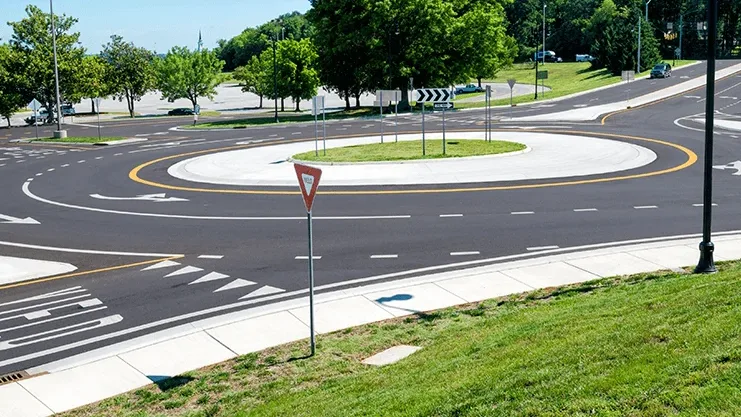
Pedestrian Hit At A Roundabout
Kentucky drivers must yield to pedestrians in roundabout crosswalks under KRS 189.570.
Do I Need Uninsured Motorist Coverage?
Kentucky requires uninsured motorist coverage at the KRS 304.39-110 limits unless a named insured rejects it in writing.