

Kentucky Car Accident Attorneys
Injured In A Kentucky Car Accident?
 ★★★★★
Over 1,000 Five-Star Reviews
•
Available 24/7. $0 Out-Of-Pocket Forever.
★★★★★
Over 1,000 Five-Star Reviews
•
Available 24/7. $0 Out-Of-Pocket Forever.
Kentucky Car Accident Cases
A car accident on a Kentucky road can leave you with injuries, a car you cannot drive, missed work, medical bills, and calls from more than one insurance company before anyone has sorted out which policy pays. Sam Aguiar Injury Lawyers handles car accident cases across Kentucky from offices in Louisville and Lexington. The value of your case rests on every coverage source that applies, evidence secured before it disappears, and a medical and work record that shows what the accident cost you.
The Louisville office handles car accident cases in Louisville and the rest of Jefferson County, and the Lexington office handles them in Lexington and Fayette County. The insurance rules and Kentucky statutes below apply in every county.
Accident Totals and Contributing Factors in Kentucky
Kentucky recorded 117,661 accidents on public roads in 2024, and 707 people were killed. That was down from 814 deaths in 2023. Another 19,834 accidents injured someone without killing anyone.
Jefferson County had the most accidents, 25,417, followed by Fayette County with 12,188. Kenton County (4,994), Warren County (4,528), and Boone County (4,456) came next. Sam Aguiar Injury Lawyers takes car accident cases statewide, including in counties far from its Louisville and Lexington offices.
Contributing Factors in Kentucky Accidents
Police officers can list up to three driver factors for each driver, so one accident can appear in more than one row and the rows do not add up to the total.
- 1
Driver Inattention
Driver inattention was listed in 42,363 accidents, 36 percent of all accidents, and in 123 fatal accidents, 18.66 percent of the fatal total. Kentucky’s texting ban, KRS 189.292, bars any driver of a motor vehicle in motion on the traveled portion of a roadway from writing, sending, or reading text-based communication on a personal communication device.
- 2
- 3
Failed to Yield
Failure to yield was listed in 13,678 accidents, 11.62 percent of the total, and in 70 fatal accidents. Intersection and turning cases fall here, and signal timing and sight lines show who had the right of way.
- 4
Alcohol and Drugs
Alcohol involvement was listed in 3,447 accidents and 102 fatal accidents, 15.48 percent of the fatal total, and drug involvement in 1,082 accidents and 73 fatal accidents. The report warns that drug numbers may be vastly underreported. A DUI conviction can support a civil case, but the civil case does not require one.
- 5
Speed
Unsafe speed was listed in 1,162 accidents and 98 fatal accidents, 14.87 percent of the fatal total, and too fast for conditions in 3,487 accidents and 30 fatal accidents. Event data recorders and camera timestamps can show how fast a vehicle was moving.
Coverage Sources
Liability coverage pays for injuries and damage caused by the at-fault driver. Kentucky requires at least $25,000 for one person’s injuries, $50,000 for all injuries in one accident, and $25,000 for property damage, or a single limit of $60,000, under KRS 304.39-110.
Kentucky’s no-fault coverage, personal injury protection (“PIP”), pays up to $10,000 per person for medical bills, lost income, and related costs without regard to fault under KRS 304.39-020 and KRS 304.39-040. It comes from the policy on the vehicle you were in, or the vehicle that struck you if you were on foot or on a bicycle, under KRS 304.39-050. The at-fault driver’s liability is reduced by the PIP benefits payable under KRS 304.39-060.
Uninsured motorist coverage on your own policy applies when the at-fault driver carries no insurance. Kentucky insurers must include it unless a named insured rejects it in writing under KRS 304.20-020. Underinsured motorist coverage pays what a judgment leaves unpaid once the at-fault driver’s limits run out, up to your own underinsured limits, under KRS 304.39-320. Whether those coverages add together across vehicles depends on premiums: if separate premiums were paid for uninsured or underinsured coverage on each vehicle, stacking rights exist for each vehicle paid for. Medical payments coverage and health insurance can also pay medical bills.
Hit-and-Run Duties
A driver involved in an accident that injures or kills someone must stop immediately, find out how badly people are hurt, and give aid, including arranging a trip to a doctor or hospital when treatment is plainly needed or the injured person asks for it, under KRS 189.580. On request, the driver must also give the vehicle’s registration number and the names and addresses of the owner, the occupants, and the operator.
When a driver leaves instead, your case depends on identifying that driver through video, witnesses, and vehicle damage. If no one is found, your own coverage carries the case: PIP from the vehicle you occupied, or from a household policy if you were on foot, under KRS 304.39-050, and your uninsured motorist coverage.
Common Car Accident Types
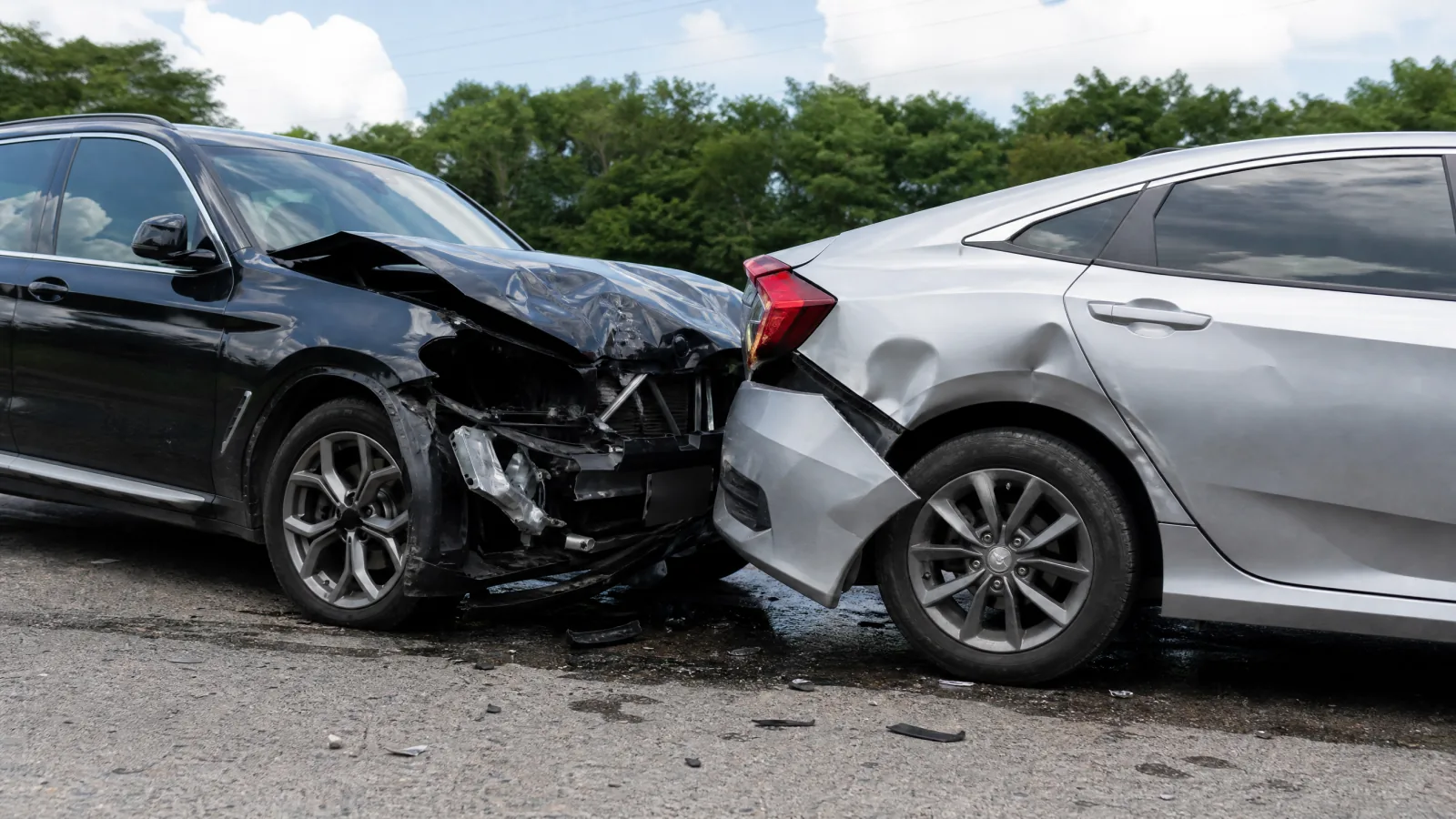
Rear-end accidents, T-bone accidents at intersections, head-on accidents, and sideswipes each raise their own evidence questions. A rear-end case puts the injury at the center: how hard the impact was and whether the treatment matches it. At an intersection, signal timing, speed, and sight lines show who had the right of way. In a sideswipe, damage patterns and witness accounts show who left their lane. Kentucky’s 2024 crash data shows how often each type of collision ends in a death.
Sam Aguiar Injury Lawyers also handles car accidents involving rideshare drivers, delivery vehicles, passengers, borrowed cars, and drunk drivers. Each of those changes which policies apply: the type of vehicle involved, and whether the injured person was in it or on foot, sets which insurance applies and how much coverage the law requires. An accident with a tractor-trailer or other commercial truck is different, because federal safety rules govern the truck, more companies can share liability, and the insurance policies are larger.
Injuries From a Car Accident
Car accidents injure the head, neck, back, chest, shoulders, arms, hips, knees, and legs. The medical record is what moves an injury from disputed to documented: the diagnosis, the imaging, range of motion, work limits, and the treating provider’s notes.
Imaging does not always show the injury: a whiplash injury does not show on imaging tests, and an x-ray will not show a meniscus tear.
Kentucky Unfair Claims Settlement Practices Act
Insurance companies in Kentucky must follow KRS 304.12-230, which lists 17 unfair settlement practices.
Misrepresenting coverage is one of them. Refusing to pay without investigating all available information is another. When an adjuster’s conduct crosses these lines, it can support a separate insurance bad faith case alongside the car accident case.
- 1
Misrepresenting pertinent facts or insurance policy provisions relating to coverages at issue;
- 2
Failing to acknowledge and act reasonably promptly upon communications with respect to claims arising under insurance policies;
- 3
Failing to adopt and implement reasonable standards for the prompt investigation of claims arising under insurance policies;
- 4
Refusing to pay claims without conducting a reasonable investigation based upon all available information;
- 5
Failing to affirm or deny coverage of claims within a reasonable time after proof of loss statements have been completed;
- 6
Not attempting in good faith to effectuate prompt, fair and equitable settlements of claims in which liability has become reasonably clear;
- 7
Compelling insureds to institute litigation to recover amounts due under an insurance policy by offering substantially less than the amounts ultimately recovered in actions brought by such insureds;
- 8
Attempting to settle a claim for less than the amount to which a reasonable man would have believed he was entitled by reference to written or printed advertising material accompanying or made part of an application;
- 9
Attempting to settle claims on the basis of an application which was altered without notice to, or knowledge or consent of the insured;
- 10
Making claims payments to insureds or beneficiaries not accompanied by statement setting forth the coverage under which the payments are being made;
- 11
Making known to insureds or claimants a policy of appealing from arbitration awards in favor of insureds or claimants for the purpose of compelling them to accept settlements or compromises less than the amount awarded in arbitration;
- 12
Delaying the investigation or payment of claims by requiring an insured, claimant, or the physician of either to submit a preliminary claim report and then requiring the subsequent submission of formal proof of loss forms, both of which submissions contain substantially the same information;
- 13
Failing to promptly settle claims, where liability has become reasonably clear, under one (1) portion of the insurance policy coverage in order to influence settlements under other portions of the insurance policy coverage;
- 14
Failing to promptly provide a reasonable explanation of the basis in the insurance policy in relation to the facts or applicable law for denial of a claim or for the offer of a compromise settlement;
- 15
Failing to comply with the decision of an independent review entity to provide coverage for a covered person as a result of an external review in accordance with KRS 304.17A-621, 304.17A-623, and 304.17A-625;
- 16
Knowingly and willfully failing to comply with the provisions of KRS 304.17A-714 when collecting claim overpayments from providers; or
- 17
Knowingly and willfully failing to comply with the provisions of KRS 304.17A-708 on resolution of payment errors and retroactive denial of claims.
Accident Evidence
A police report identifies the scene and the people involved. Photos, vehicle damage, witness accounts, vehicle data, and medical records each answer a different question: how the accident happened, which injuries were diagnosed, and what income was lost.
Cars and light trucks built since September 1, 2012 that carry an event data recorder must record vehicle speed, accelerator position, and brake use in the seconds before impact, under federal rules at 49 CFR 563.3 and 49 CFR 563.7.
Sam Aguiar Injury Lawyers has DOT and TRIMARC camera access with six-month archives, and whether a recording of a specific accident exists depends on the camera system and how long its operator keeps the footage.
Recoverable Losses
A Kentucky car accident case seeks past and future medical treatment, lost income and reduced earning capacity, property damage and loss of use, and pain and suffering.
Vehicle damage is paid by the at-fault driver’s property damage liability coverage or by your own vehicle damage coverage. PIP does not pay it, because KRS 304.39-020 limits PIP to economic loss from injury. A repaired car can also lose market value, a loss Kentucky drivers may pursue from the at-fault driver. No dollar figure applies to an individual case before the medical and work records exist.
Representation by Sam Aguiar Injury Lawyers
Every client gets a dedicated three-person team: a top-rated attorney, an experienced case manager, and a skilled legal assistant. The flat contingency fee never increases if your case goes to trial, and you pay $0 out-of-pocket forever. Most cases qualify in under 10 minutes, and the average resolution time is under 7 months pre-litigation.
Sam Aguiar is a Forbes Best-In-State lawyer, one of 2 in Kentucky and 16 nationwide, and he meets clients at the end of each case to confirm they are satisfied.
After an accident, the insurance company doesn’t waste time. Neither should you. Before you give a recorded statement to the other driver’s insurance company, know that these statements are typically not required, especially with the at-fault driver’s insurer.
Key Takeaways
Which Kentucky Policies Cover Your Car Accident?
A Kentucky car accident case can draw on PIP, the at-fault driver’s liability coverage, and your own uninsured or underinsured motorist coverage, and each insurer answers for a different part of the loss. Sam Aguiar Injury Lawyers identifies every policy that applies and builds the evidence to collect from each one. With our Bigger Share Guarantee®, you always get more. Call today for a free case review.
Frequently Asked Questions
1Who Pays for Car Damage in Kentucky?+
The at-fault driver’s property damage liability coverage pays, and KRS 304.39-110 requires at least $25,000 of it. The owner’s own vehicle damage coverage can pay instead, subject to its deductible. PIP does not pay for vehicle damage, because KRS 304.39-020 limits PIP to economic loss from injury.
2What Evidence Is Most Important in a Kentucky Car Accident Case?+
The police report, scene photographs, vehicle damage, witness accounts, traffic and business camera video, event data recorder downloads, and medical records. Each one answers a different question about how the accident happened and what it cost the injured person.
3Should I Give a Recorded Statement to the Other Driver’s Insurance Company?+
Sam Aguiar Injury Lawyers advises against it. A recorded statement becomes evidence the insurance company can use to dispute the injury or the cause of the accident, and the injured person’s lawyer can handle communication with that insurer instead.
4What If the At-Fault Driver Has Low Insurance Limits?+
Underinsured motorist coverage on the injured person’s own policy pays what a judgment leaves unpaid beyond those limits, up to the underinsured limits, under KRS 304.39-320. Before settling with the at-fault driver’s insurer, the injured person sends written notice of the proposed settlement by certified or registered mail to every underinsured motorist insurer, and each insurer has 30 days to respond.
5Can a Passenger Bring a Car Accident Case in Kentucky?+
Yes. A passenger can pursue the at-fault driver, including the driver of the car the passenger was riding in. The passenger’s PIP comes from the policy on that car under KRS 304.39-050.
6How Much Does a Kentucky Car Accident Attorney Cost?+
Sam Aguiar Injury Lawyers charges a flat contingency fee that never increases if the case goes to trial, and clients pay $0 out-of-pocket forever. Under the Bigger Share Guarantee®, the fee is applied to the net recovery after medical bills, liens, and case expenses are paid.