

Trucking Regulations in Crash Cases
Federal Motor Carrier Safety Regulations (FMCSRs) exist to prevent commercial trucks from killing and injuring people. When a carrier or driver violates those regulations and a crash follows, the violations are some of the most powerful evidence available in a truck crash case. Under Kentucky negligence law, a regulatory violation that causes harm can establish negligence per se, meaning the defendant’s failure to follow the law is itself evidence of negligence.
Federal Framework for Trucking Rules
The Federal Motor Carrier Safety Administration (FMCSA), a division of the U.S. Department of Transportation, writes and enforces the FMCSRs, found at 49 CFR Parts 390 through 399. These regulations cover driver qualifications, hours of service, vehicle maintenance, cargo securement, and drug testing.
Carriers operating in interstate commerce must comply with federal standards. States such as Kentucky also enforce federal regulations through the Motor Carrier Safety Assistance Program (MCSAP), so Kentucky State Police and state inspectors enforce the same FMCSA rules at roadside checkpoints and carrier terminals. These rules are legally binding obligations backed by federal enforcement authority.
What Is Negligence Per Se?
Negligence per se is a Kentucky personal injury doctrine that uses a regulatory violation as direct evidence of negligence. When a statute or regulation was designed to protect people from the type of harm that occurred, and the injured person falls within the class the rule was designed to protect, violating that rule establishes the negligence element of the claim without a broader showing of carelessness. The firm’s overview of negligence per se in Kentucky covers the doctrine in more detail.
In a truck crash case, an injured person can point to a specific FMCSA regulation the carrier violated, and that violation is evidence of negligence. The regulation already defines safe operation, and the carrier failed to meet it.
FMCSA Regulations in Truck Crash Cases
Five groups of federal rules appear most often in truck crash litigation.
Hours of Service Under 49 CFR Part 395
Fatigued driving is one of the leading causes of large truck crashes. The hours-of-service rules cap driving time at 11 hours after 10 hours off, limit the on-duty window to 14 hours, and require rest breaks. When a driver was over hours and caused a crash, that violation is core liability evidence. The firm’s page on hours-of-service violations covers these standards in detail.
Driver Qualifications Under 49 CFR Part 391
Carriers must verify driver CDLs, conduct motor vehicle record checks, require drug tests, and confirm that drivers hold current medical certificates. A driver who was medically unqualified, had a disqualifying history, or had not passed required drug screening, and whose carrier failed to catch it, can make the carrier liable for negligent hiring and entrustment.
Vehicle Inspection, Repair, and Maintenance Under 49 CFR Part 396
Trucks must be maintained in safe operating condition. Pre-trip and post-trip inspections are required, and known defects must be repaired before the next trip. When a brake failure, tire blowout, or other preventable mechanical defect causes a crash, and maintenance records show the problem was known or should have been found, the carrier can be liable for failure to maintain.
Cargo Securement Under 49 CFR Part 393
Improperly secured loads shift during transport, change truck handling, and can fall off and strike other vehicles. FMCSA’s cargo securement rules set minimum standards for tie-down strength, arrangement, and load distribution. Violations are directly traceable to the crash when a shifted load or debris strike caused the collision.
Drug and Alcohol Testing Under 49 CFR Parts 382 and 40
Commercial drivers are subject to pre-employment, random, post-accident, and suspicion-based drug and alcohol testing. A carrier that fails to conduct required testing, or retains a driver who tested positive, can face significant liability when that driver causes a crash.
Carrier Defenses to Regulation Evidence
Trucking companies and their insurers rarely concede regulatory violations. Three defense tactics come up repeatedly:
- Arguing that violations are not causally connected, such as claiming a log discrepancy had nothing to do with a crash even when it shows the driver was over hours
- Relying on technical compliance, arguing the carrier met the letter of a regulation while ignoring its safety purpose
- Blaming only the driver, shifting liability entirely to the driver as an independent contractor to insulate the company from carrier responsibility
FMCSA Regulations and the Standard of Care
In Kentucky personal injury cases, a defendant’s conduct is measured against the applicable standard of care. For commercial trucking, the FMCSRs define that standard. A carrier that meets every FMCSA requirement has at least met the minimum standard. A carrier that falls below those requirements has, by definition, fallen below the standard of care the law imposes.
FMCSA violation evidence is persuasive when it follows three steps: what the rule required, what the carrier did, and what happened as a result. That framework removes ambiguity.
Punitive Damages for Willful Violations
Regulatory violations can also support punitive damages when the carrier’s conduct was knowing and willful. Under KRS 411.184, Kentucky allows punitive damages when a defendant acts with oppression, fraud, or malice.
A carrier that consistently fails FMCSA inspections, receives warning letters, and keeps putting unsafe trucks on the road shows the kind of disregard for public safety that Kentucky courts have found supports punitive damages. The FMCSA’s CSA database is the starting point for this analysis: carriers with high BASIC scores in Unsafe Driving, Hours-of-Service Compliance, or Vehicle Maintenance have a documented history of violations showing the crash was predictable.
The firm’s overview of FMCSR truck crash evidence covers the records these regulations create and how long carriers must keep them.
Ready to Take Action on Your Injury Claim?
After a serious injury, medical bills pile up while the insurance company looks for ways to pay you less. Most law firms take their cut first and leave you with whatever is left. Sam Aguiar Injury Lawyers does things differently. With our exclusive Bigger Share Guarantee®, you always get more. Every client gets a dedicated three-person team: an attorney, a case manager, and a legal assistant. We never raise our fee rate if we have to go to court, and you pay $0 Out-Of-Pocket Forever.
Frequently Asked Questions
1What are the FMCSRs, and how do they apply in a truck crash case?+
2What is negligence per se?+
3Can a carrier be liable when the driver violated the regulations?+
4How do I know if the truck company had prior FMCSA violations?+
5Can regulatory violations increase the damages I can recover?+
Latest Articles
Kentucky Diminished Value Claims
Kentucky drivers may pursue a repaired vehicle’s leftover market loss from the at-fault driver as part of a.
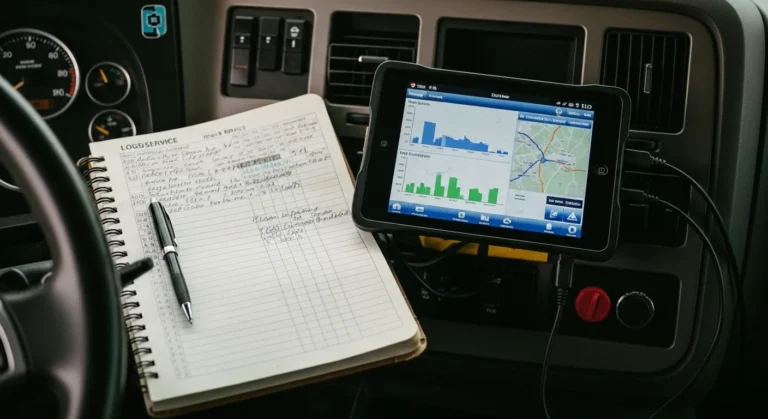
FMCSA Revoked ELDs: Fleet Compliance and Enforcement Deadlines
FMCSA removed five electronic logging devices from the registered list on August 6, 2026, and set an October.

FMCSA English Proficiency Rule and OOS Enforcement
FMCSA English Proficiency Rule Sam Aguiar Injury Lawyers August 11, 2026 7 minute read On This Page.