

Wrong-Way Driver Accidents in Kentucky
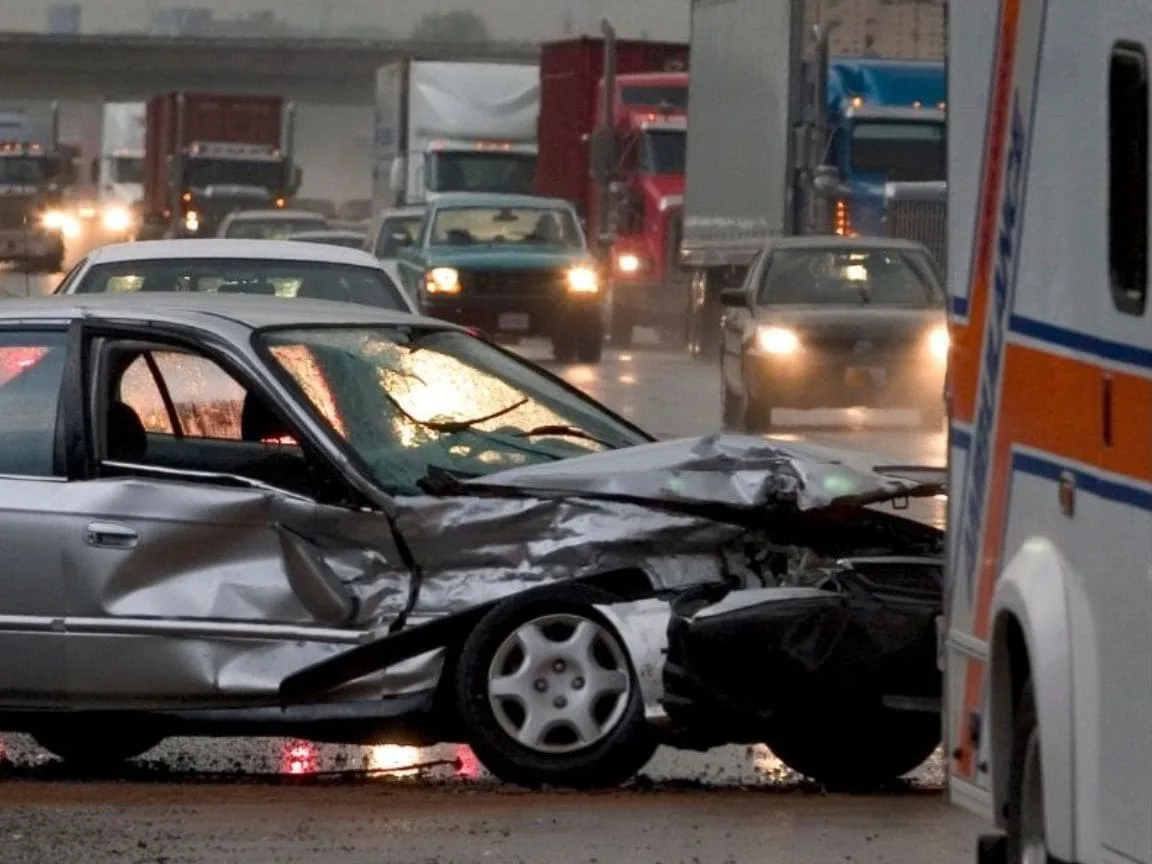
Wrong-way crashes can cause head-on impacts at highway speed.
Key Takeaways
- Wrong-way crashes usually produce head-on collisions at full highway speed, making them among the most dangerous on Kentucky roads.
- The wrong-way driver is almost always fully at fault, but dram shop liability or government road-design liability can add responsible parties.
- When the wrong-way driver lacks enough insurance, your own uninsured or underinsured motorist coverage may be essential.
Why These Crashes Are a Different Level of Dangerous
A wrong-way driver accident in Kentucky happens when a driver enters an interstate or divided highway going against traffic, usually triggering a head-on collision at full highway speed. Under Kentucky law, wrong-way drivers are almost always fully at fault. Sam Aguiar Injury Lawyers handles wrong-way crash cases throughout Louisville and Lexington, pursuing full compensation from the at-fault driver’s insurer, your own underinsured motorist coverage, and any other liable party. According to the National Transportation Safety Board, head-on collisions from wrong-way crashes are 27 times more likely to be fatal than the average motor vehicle crash.
Picture this: you’re merging onto I-64 heading east out of Louisville on a Friday night. Your lanes are clear. Then, out of nowhere, headlights appear directly ahead, moving toward you at 65 miles per hour. You have less than two seconds to react. That scenario plays out on Kentucky interstates more than most people realize. Between 2015 and 2023, the Kentucky State Police Crash Facts Report documented 191 wrong-way crashes on state interstates and parkways. Those 191 crashes killed 55 people and left 76 others with serious injuries. The victims were almost never the wrong-way driver.
Head-on collisions represent only 3.8% of all Kentucky crashes, yet account for 33.8% of all fatal accidents in the state, according to the Kentucky State Police Traffic Collision Facts Report.
Sources: KSP Crash Facts 2023 | NTSB Wrong-Way Driving Report
Most car accidents involve some degree of angled impact or glancing contact. Wrong-way crashes on highways are different. When two vehicles traveling at 60 to 70 mph collide head-on, the combined speed at impact can exceed 120 mph. That kind of force produces injuries that are rarely minor: traumatic brain injuries, spinal cord damage, shattered bones, organ trauma, and death.
The AAA Foundation for Traffic Safety found that between 2015 and 2018, wrong-way crashes on divided highways killed 2,008 people nationwide. That’s an average of more than 500 deaths a year, up 34% from the prior four-year period. The crashes are not getting rarer. The injuries are not getting lighter.
How Wrong-Way Drivers End Up on the Wrong Side of the Road
Understanding what causes a wrong-way crash matters for building your case, because the cause often points to additional liable parties.
| Cause | How It Happens | Potential Liability Beyond the Driver |
|---|---|---|
| Alcohol or drug impairment | Driver enters exit ramp or travels the wrong direction on a divided highway | Dram shop liability under KRS 413.241 if a bar over-served the driver |
| Confusing interchange design | Poorly marked exit ramps, absent “Wrong Way” signage, or non-standard lane configurations | Potential claim against Kentucky Transportation Cabinet or a road contractor |
| Distraction or GPS error | Driver following incorrect navigation directions, enters highway going the wrong way | Driver remains at fault; employer may share liability if driver was working |
| Medical emergency or elderly disorientation | Driver has a sudden medical event or becomes confused about direction | Driver or estate still responsible; possibly a physician if a known condition went unreported |
Who Is Responsible for Your Injuries
The wrong-way driver carries the primary responsibility. Unlike accidents where fault is disputed, wrong-way driving is almost always a clear-cut act of negligence. There is no innocent explanation for traveling the wrong direction on a divided highway at speed.
Dram Shop Liability
If the wrong-way driver was drunk and had just left a bar or restaurant, the establishment may share liability. Kentucky’s dram shop law under KRS 413.241 allows injured victims to pursue a claim against a vendor that knowingly served alcohol to a visibly intoxicated person. The NTSB found that more than 60% of wrong-way crashes involve alcohol. That means this avenue is worth investigating in the majority of these cases.
Government Liability for Road Design
Kentucky’s own Kentucky Transportation Cabinet recognized that some interchanges are more prone to wrong-way entries than others. That’s precisely why KYTC launched a $9.5 million wrong-way detection and deterrent program in 2024, starting with Jefferson County (Louisville) and Fayette County (Lexington), the two counties with the highest rates of wrong-way incidents in the state. If a crash occurred at a known high-risk interchange with inadequate signage or lighting, the government entity responsible for that road may share liability.
When the Wrong-Way Driver Doesn’t Have Enough Coverage
One of the harder realities in these cases: wrong-way drivers are often uninsured, underinsured, or driving on a suspended license. Drunk drivers, in particular, frequently have lapsed coverage. If the at-fault driver’s policy doesn’t cover the full extent of your injuries, your own underinsured motorist (UIM) or uninsured motorist (UM) coverage steps in to fill the gap.
UIM and UM coverage exist for exactly this situation. The value of those policies, combined with the at-fault driver’s coverage and any dram shop or road-design claims, determines the full picture of recovery. Our car accident attorneys in Louisville and Lexington car accident attorneys stack every available source of recovery from day one, so nothing is left on the table. Learn more about Kentucky car accident liability and how multiple policies can apply.
Frequently AskedQuestions.
Is a wrong-way driver automatically at fault in Kentucky?
What if the wrong-way driver who hit me had no insurance?
Can I pursue a claim against a bar that served the drunk wrong-way driver?
What if the wrong-way driver died in the crash?
Can KYTC or a local government be liable if poor signage contributed to the crash?
Which Louisville and Lexington interstates see the most wrong-way incidents?
What evidence matters most after a wrong-way crash?
Can I still recover if I was involved in a multi-vehicle pileup triggered by a wrong-way driver?

Get More. Get It Faster.
Get It With Sam Aguiar.
- ✓Bigger Share Guarantee® On Every Case
- ✓$0 Out-Of-Pocket Forever
- ✓No Fee Increase If Your Case Goes To Litigation
- ✓Dedicated Three-Person Case Team
- ✓Forbes Best-In-State Recognition
- ✓1,000+ Five-Star Google Reviews