

FMCSA Drug and Alcohol Clearinghouse Records in Truck Accident Cases

The FMCSA Drug and Alcohol Clearinghouse is a secure online database of drug and alcohol program violations. It covers drivers who hold a commercial driver’s license (“CDL”) or a commercial learner’s permit. The rules require a driver to tell a new carrier about a violation committed at another carrier. The Clearinghouse lets the new carrier find that violation when the driver does not. Carriers, the Federal Motor Carrier Safety Administration (“FMCSA”), state licensing agencies, and state law enforcement can use it. Its records are not public, according to FMCSA’s Clearinghouse FAQ.
The federal rules call the carrier the “employer.” 49 CFR 382.107 defines an employer as a person or entity that employs one or more workers and must follow these testing rules.
Clearinghouse Record Types
A carrier checking a driver can see seven types of records listed in 49 CFR 382.703(b): four violation records and three return-to-duty records. The violation records are a verified positive, adulterated, or substituted drug test; an alcohol confirmation test at 0.04 or higher; a refusal to test; and a carrier’s report of “actual knowledge” that the driver used alcohol or drugs against the rules. The return-to-duty records are a substance abuse professional’s report that the driver finished return to duty, a negative return-to-duty test, and a carrier’s report that follow-up testing is done.
“Actual knowledge” has a set definition in 49 CFR 382.107. It comes from four sources: the carrier seeing the use, word from a previous carrier, a traffic ticket for impaired driving in a commercial motor vehicle, or the driver’s admission.
Violation Reporting Timeline
A medical review officer must report within two business days, and a carrier by the close of the third business day, under 49 CFR 382.705. The carrier’s deadline runs from the day it obtains the information. The medical review officer who verifies a positive, adulterated, or substituted drug test reports it, along with certain refusals. The carrier reports alcohol tests at 0.04 or higher, alcohol test refusals, certain drug test refusals, negative return-to-duty tests, and completed follow-up testing.
The same section gives a substance abuse professional shorter deadlines. The date of the driver’s first assessment is due by the close of the next business day. The date the driver became eligible for return-to-duty testing is due by the close of the business day after that decision.
A late report still goes in. FMCSA’s Clearinghouse FAQ says the Clearinghouse captures the date the violation was reported. That date may be reviewed in an investigation of the carrier’s compliance with federal safety rules.
Five-Year Availability Rule
A violation stays visible to carriers until the driver completes return to duty and follow-up testing and five years have passed since the violation determination, under 49 CFR 382.719(a). All three return-to-duty records must be reported first. A driver who never starts return to duty keeps the violation on record past the five-year mark.
Carrier Query Requirements
A carrier must run a full query before the driver does any safety-sensitive work, then query at least once a year, as 49 CFR 382.701 requires. A full query releases the driver’s records and needs the driver’s specific consent. For the yearly check, a carrier may use a limited query instead. It only tells the carrier whether a record exists. If the limited query finds a record, the carrier must run a full query within 24 hours. If the carrier does not run that full query within 24 hours, the driver may not do safety-sensitive work until a full query confirms no prohibition.
The same rule requires FMCSA to tell a carrier about any violation entered within 30 days after its query. FMCSA’s Clearinghouse FAQ says that, since March 8, 2023, carriers get an email about new entries within 12 months of a pre-employment or annual query.
The Clearinghouse is also where a carrier checks a driver’s drug and alcohol history with past employers. Since January 6, 2023, 49 CFR 391.23(e)(4) has required carriers to use it for that history when FMCSA regulates the past employer. That inquiry is part of the federal driver qualification rules.
| Citation | Authority | Area |
|---|---|---|
| Citation49 CFR 382.701(a) | Authority Pre-Employment Query A full query, with the driver’s consent, before the driver does any safety-sensitive work. | AreaQuery |
| Citation49 CFR 382.701(b) | Authority Annual Query At least one query a year, which may be a limited query that only shows whether a record exists. | AreaQuery |
| Citation49 CFR 382.701(b)(3) | Authority Limited-Query Follow-Up A full query within 24 hours after a limited query finds a record. | AreaQuery |
| Citation49 CFR 382.701(d) | Authority Driving Prohibition No safety-sensitive work while a query shows an unresolved violation. | AreaProhibition |
| Citation49 CFR 382.701(e) | Authority Query Records A record of each query and its response, kept for three years; since January 6, 2023, a valid Clearinghouse registration meets that duty. | AreaRecords |
| Citation49 CFR 391.23(e)(4) | Authority Past-Employer History Since January 6, 2023, the Clearinghouse is where a carrier checks a driver’s drug and alcohol history with FMCSA-regulated past employers. | AreaQuery |
Prohibited Driver Status
No carrier may let a driver do safety-sensitive work while a Clearinghouse query shows an unresolved violation, under 49 CFR 382.701(d). The prohibition ends once the driver completes the substance abuse professional’s evaluation and treatment and passes a return-to-duty test. If follow-up tests remain, the carrier that puts the driver back to work must take over managing them.
Since November 18, 2024, a prohibited status also means a CDL downgrade. FMCSA’s Clearinghouse overview says state licensing agencies must remove commercial driving privileges from a prohibited driver until return to duty is complete. 49 CFR 382.725(a)(2) also requires the state to pull the driver’s Clearinghouse record when the driver applies for a CDL or commercial learner’s permit.
FMCSA Drug and Alcohol Clearinghouse Data
As of February 1, 2026, 210,007 drivers were in prohibited status, and 166,925 of them had not started return to duty, according to FMCSA’s January 2026 Clearinghouse Monthly Report. Until they complete return to duty, those drivers may not do safety-sensitive work, and FMCSA’s Clearinghouse overview says state licensing agencies must remove their commercial driving privileges.
The same report counts 14,648 drug violations and 773 alcohol violations from post-accident tests since January 6, 2020.
Public Access Limits
Only people and agencies the regulations authorize may access the Clearinghouse, under 49 CFR 382.723(a). No one may share, publish, or release its records unless a law specifically allows it.
A carrier’s use is narrower still. The same section limits it to deciding whether the driver is barred from safety-sensitive work. The carrier may not share what it learns with anyone outside that decision.
A driver may review his or her own Clearinghouse record under 49 CFR 382.709, and 49 CFR 382.721 bars charging the driver a fee for it.
Unlike Clearinghouse records, an interstate carrier’s safety record in FMCSA’s Safety Measurement System is open to anyone.
Truck Accident Case Evidence
Five sets of records bear on the driver and the carrier after a truck accident: the carrier’s query history, any limited-query follow-up, the driver’s status on the accident date, post-accident test results, and the carrier’s testing files.
The carrier must keep a record of each query and its response for three years under 49 CFR 382.701(e). Since January 6, 2023, a valid Clearinghouse registration meets that duty.
Under 49 CFR 382.719(b), a violation on record when the carrier ran a required query was available to that carrier.
A missing query, an ignored limited-query result, or letting a driver in prohibited status drive is a federal rule violation by the carrier under 49 CFR 382.701. It can be evidence in a negligent hiring case against the carrier.
Positive results and refusals from a U.S. Department of Transportation (“DOT”) post-accident test under 49 CFR 382.303 are reported under 49 CFR 382.705, the same rule that covers other DOT tests. The post-accident testing rules for commercial drivers set when that test is required.
The carrier’s testing files hold results the Clearinghouse does not. The carrier must keep alcohol results of 0.02 or higher, verified positive drug results, and test refusals for at least five years under 49 CFR 382.401(b)(1). That file includes alcohol results from 0.02 to just under 0.04, below the level the Clearinghouse records.
Did the Carrier Check the Driver’s Clearinghouse Record?
If a truck accident injured you or killed someone in your family, the carrier’s Clearinghouse queries and testing files can be evidence in your case. Sam Aguiar Injury Lawyers handles truck accident cases against both the driver and the carrier and offers a free case review. With our Bigger Share Guarantee®, you always get more.
Frequently Asked Questions
Does the FMCSA Clearinghouse Cover Delivery Drivers Without a Commercial Driver’s License?
Can a Truck Driver Remove a Violation From the FMCSA Clearinghouse?
In limited cases. A driver may petition under 49 CFR 382.717(a) to fix administrative errors, such as a data entry mistake or a duplicate report. The petition can also ask FMCSA to remove certain carrier reports that did not meet the reporting requirements. A petition under 382.717 may not contest the accuracy of a test result, a refusal, or other violation information. A driver may ask for correction of those records under the Privacy Act procedures in 49 CFR Part 10, according to FMCSA’s Clearinghouse FAQ.
If a carrier reported “actual knowledge” based on a traffic ticket for impaired driving in a commercial motor vehicle, and the ticket did not end in a conviction, the driver may submit evidence of that result. 49 CFR 382.719(c) says FMCSA will remove the report within two business days of granting that request.
Do a Carrier’s Own Drug Tests Go Into the Clearinghouse?
Is a Truck Driver Notified When a Carrier Checks the Clearinghouse?
Latest Articles

Reading the FMCSA SMS Report
Every trucking company has a public safety record in the Federal Motor Carrier Safety Administration’s Safety Measurement System (SMS).

Qualification Rules for Truck Drivers
Driver qualification violations occur when a trucking company puts a driver on the road who does not meet federal requirements under 49 CFR Part 391, the FMCSA’s driver qualification regulations.
Commercial Driver Medical Issues
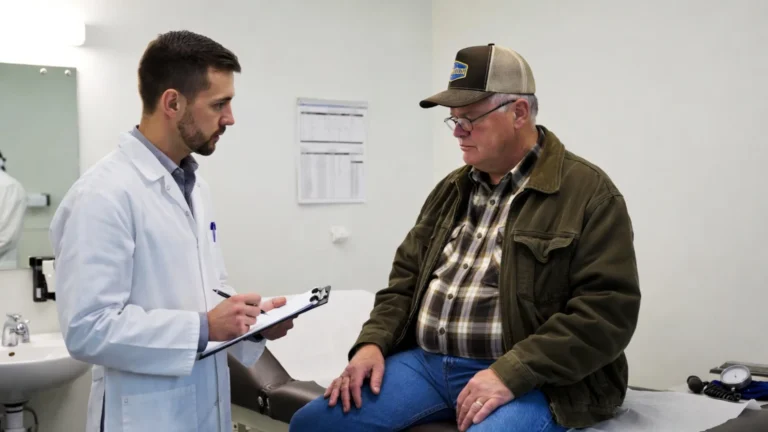
Under 49 CFR Part 391, Subpart E, no motor carrier may require or permit a commercial motor vehicle driver to operate unless that driver is physically qualified.