

Qualification Rules for Truck Drivers

Driver qualification violations occur when a trucking company puts a driver on the road who does not meet federal requirements under 49 CFR Part 391, the FMCSA’s driver qualification regulations. These violations include expired medical certificates, invalid commercial licenses, undisclosed disqualifying offenses, and falsified qualification files. When a crash happens and a driver qualification violation existed, the carrier’s liability exposure increases substantially.
49 CFR Part 391 Requirements
Part 391 defines who is, and who is not, qualified to operate a commercial motor vehicle (CMV). It applies to carriers operating vehicles with a GVWR of 10,001 pounds or more, vehicles carrying placarded hazardous materials, and vehicles designed to transport 16 or more passengers. The regulations cover:
- Minimum age (21 for interstate driving, 18 for intrastate driving in some states)
- A valid commercial driver’s license (CDL) for the vehicle class
- Physical and medical qualifications under Subpart E
- Driving record standards, disqualifying offenses, and motor vehicle record review
- Drug and alcohol testing compliance
- Driver Qualification File (DQF) maintenance at the motor carrier
Driver Qualification File Contents
Every motor carrier must keep a Driver Qualification File for each driver under 49 CFR §391.51. The file holds five core records:
- §391.21 Application for Employment: a completed application covering the prior 10 years of employment, with all crashes and violations in the prior 3 years.
- §391.23 Previous Employer Inquiries: the carrier must contact every DOT-regulated employer from the prior 3 years about crash history and drug and alcohol violations. Since January 6, 2023, the drug and alcohol inquiry runs through the FMCSA Drug and Alcohol Clearinghouse.
- §391.25 Annual Driving Record Inquiry and Review: the carrier must obtain a motor vehicle record from every state where the driver held a license in the past year and document a review confirming the driver still meets minimum safe driving standards.
- §391.31 Road Test Certificate or Equivalent: a signed certificate confirming the driver was tested on the type of vehicle the driver will operate, or an accepted equivalent such as a valid CDL.
- §391.43 Medical Examiner’s Certificate: a current certificate, Form MCSA-5876, issued by an examiner listed on the FMCSA National Registry, kept current as it is renewed.
Most Common Qualification Violations
The violations that appear most often when the FMCSA Compliance, Safety, Accountability (CSA) system flags carriers for driver qualification problems are the same ones that surface in litigation after a crash:
- No valid medical certificate (§391.41 and §391.45): driving without a current certificate or with one that has lapsed. In April 2025, FMCSA voided 15,225 unexpired medical certificates issued by two examiners it found had not adequately performed the required exams.
- No valid CDL or improper class (§391.11): operating a CMV without the right license class or endorsement, or with a suspended or revoked CDL.
- Driving while disqualified (§391.15): operating during a disqualification period that follows an offense such as DUI, leaving the scene of a crash, or using a CMV in a felony.
- Failure to obtain prior-employer safety information (§391.23): skipping the required 3-year employment history inquiry, which can hide a driver’s prior crashes or drug violations.
- No annual driving record review (§391.25): failing to pull or review the driver’s motor vehicle record each year, the routine check that reveals suspensions, violations, and disqualifying offenses.
- Incomplete or missing DQF (§391.51): missing documents in the qualification file itself, sometimes an attempt to obscure a disqualified driver’s history.
CDL Disqualification Periods
Federal law imposes mandatory disqualification periods for serious driving offenses, set out in 49 CFR §383.51 and enforced through §391.15. A carrier that lets a disqualified driver operate a CMV faces direct liability for a resulting crash. A trainee with a commercial learner’s permit may drive only with a qualified CDL holder beside them, a rule FMCSA declined to waive in September 2026.
| Violation | Disqualification Period |
|---|---|
| ViolationDUI, first offense in a CMV | Disqualification Period1 year |
| ViolationDUI, first offense while hauling hazardous materials | Disqualification Period3 years |
| ViolationDUI, second offense (any vehicle) | Disqualification PeriodLife (reinstatement possible after 10 years) |
| ViolationLeaving the scene of a crash in a CMV | Disqualification Period1 year |
| ViolationFelony involving a CMV | Disqualification Period1 year (life for controlled substance felonies) |
| ViolationFirst out-of-service order violation | Disqualification Period180 days to 1 year |
| ViolationSecond out-of-service order violation within 10 years | Disqualification Period2 to 5 years |
| ViolationTexting while driving a CMV, second offense in 3 years | Disqualification Period60 days |
| ViolationTexting while driving a CMV, third offense in 3 years | Disqualification Period120 days |
Source: 49 CFR §383.51, nonhazardous out-of-service periods shown
Qualification Violations in Truck Crash Cases
Evidence that a driver was unqualified, or that the carrier skipped required qualification checks, moves a Kentucky personal injury case from one driver’s mistake to the company’s decision to put that driver behind the wheel. That evidence shows the carrier knew, or ignored, that the driver should not have been there.
Kentucky’s pure comparative fault standard under KRS 411.182 means evidence of carrier negligence in driver selection and retention can significantly shift fault percentages and increase the carrier’s liability exposure. Punitive damages may also be available when the carrier’s conduct shows conscious disregard for safety.
The Driver Qualification File has to be preserved quickly, because a DQF can be altered or destroyed. A litigation hold letter in a truck crash case demands preservation of the DQF, motor vehicle records, prior-employer inquiry records, drug testing records, and the FMCSA Clearinghouse query history.
Drug and Alcohol Clearinghouse Queries
Since January 6, 2023, motor carriers conducting §391.23 investigations must query the FMCSA Drug and Alcohol Clearinghouse. The Clearinghouse keeps real-time records of CDL driver drug and alcohol violations, including positive tests, test refusals, and return-to-duty status. A carrier that skips this query and hires a driver with an unresolved drug violation puts a federally prohibited driver on Kentucky roads.
DOT out-of-service violations and hours of service violations are related carrier compliance failures that often appear alongside driver qualification problems in serious crash investigations.
Should This Driver Have Been Behind the Wheel?
A missing background check, a skipped Clearinghouse query, or a lapsed CDL in a driver qualification file points straight at the carrier that put that driver on the road. Sam Aguiar Injury Lawyers relies on a dedicated trucking team to request those files and compare them with federal rules. Under our Bigger Share Guarantee®, you always walk away with more than the firm. Request a free case review about your truck crash.
Frequently Asked Questions
1What is a Driver Qualification File?+
2Can a carrier be responsible for missing driver records?+
3How can a driver qualification issue be found after a truck crash?+
4What is the FMCSA Drug and Alcohol Clearinghouse?+
5Can an expired medical certificate affect a truck crash case?+
Latest Articles

Kentucky Diminished Value Claims
Kentucky drivers may pursue a repaired vehicle’s leftover market loss from the at-fault driver as part of a.
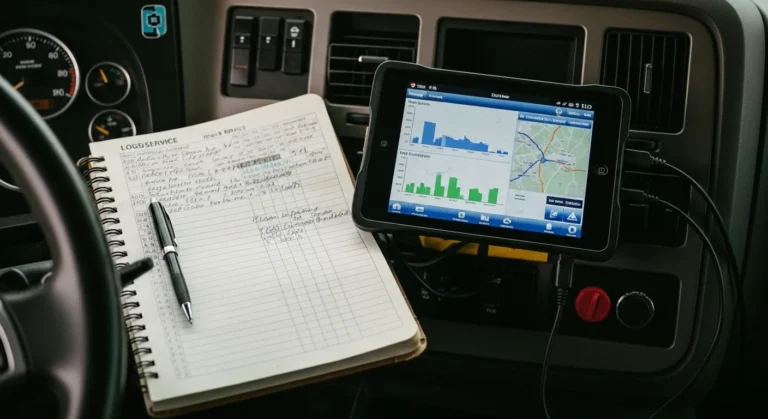
FMCSA Revoked ELDs: Fleet Compliance and Enforcement Deadlines
FMCSA removed five electronic logging devices from the registered list on August 6, 2026, and set an October.

FMCSA English Proficiency Rule and OOS Enforcement
FMCSA English Proficiency Rule Sam Aguiar Injury Lawyers August 11, 2026 7 minute read On This Page.