Hit by an Uber Eats Driver in Kentucky?
Uber Eats drivers are gig workers. Their insurance coverage depends on app status at the moment of the crash.
On This Page
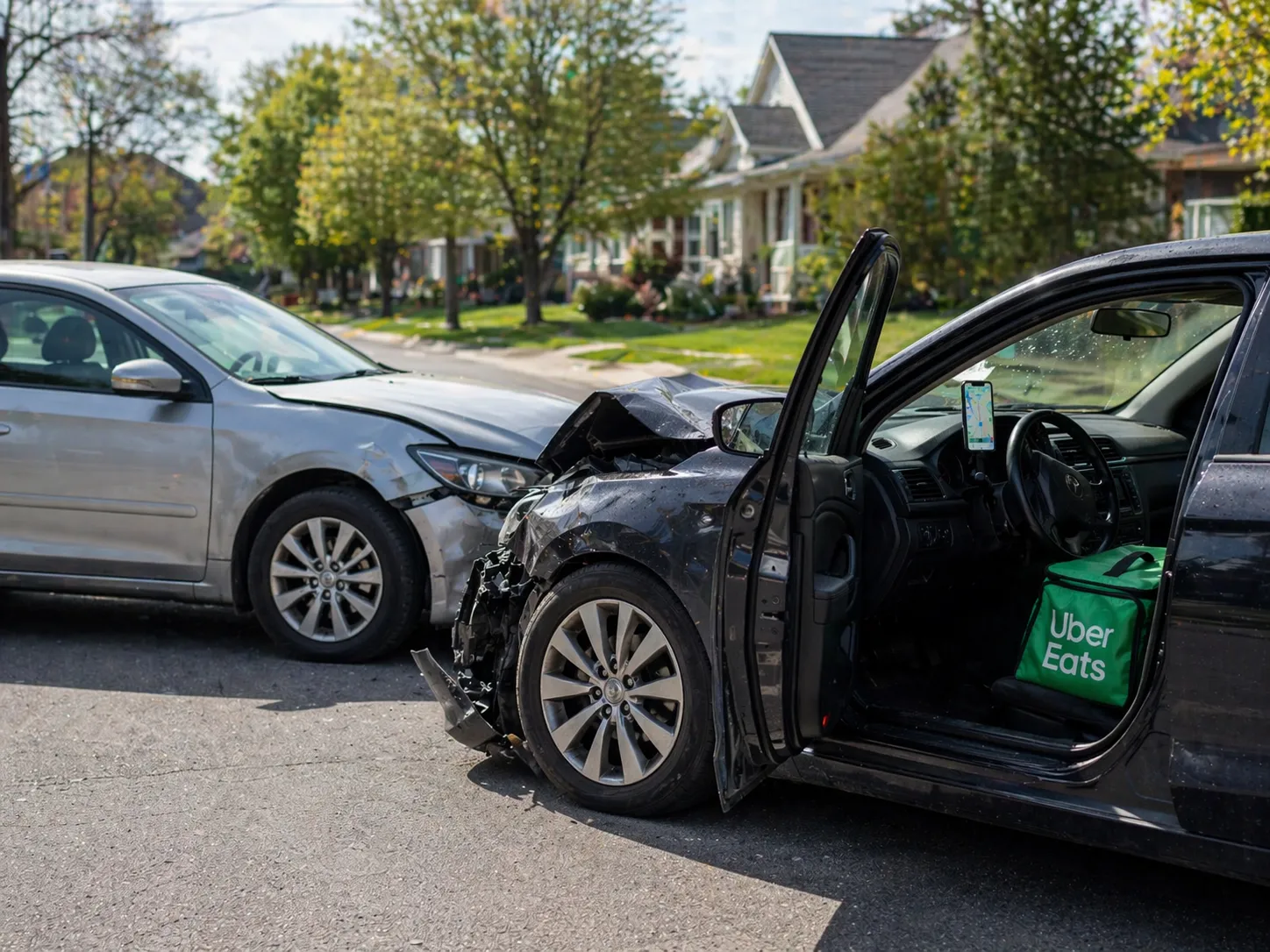
Uber Eats delivery drivers are independent contractors who use personal vehicles to deliver food orders. When an Uber Eats driver causes a crash in Kentucky, the insurance that covers your damages depends on whether the driver had an active delivery at the time. Uber provides tiered coverage that changes based on app status. Sam Aguiar Injury Lawyers can determine which coverage applies and pursue every liable party. Call (502) 888-8888.
How Uber Eats’ Insurance Tiers Work
Uber provides auto liability insurance for its Eats drivers, but the amount of coverage changes depending on what the driver was doing in the app at the moment of the crash. Uber uses the same tiered structure for Uber Eats as it does for its rideshare drivers, with three distinct coverage periods.
Uber Eats Coverage by App Status
App off: No Uber coverage at all. The driver’s personal auto insurance is the only policy in play.
App on, waiting for a delivery request: Uber provides limited liability coverage. This is a reduced policy that applies while the driver is logged in but has not yet accepted a delivery. The coverage amounts are lower than during an active delivery.
Active delivery (request accepted through dropoff): Uber provides up to $1 million in third-party liability coverage. This is the highest tier and applies from the moment the driver accepts a delivery request through completion of the dropoff.
The critical question in every Uber Eats accident case is which tier applied at the exact moment of the crash. Uber tracks this data through its app, but the company does not hand it over voluntarily. We use legal discovery tools to obtain the driver’s app status logs, GPS data, and delivery timestamps to prove exactly which coverage period was active.
Uber Eats vs. Rideshare
Many Uber drivers toggle between Uber Eats and Uber rideshare simultaneously. They can be logged into both platforms at once, waiting for whichever request comes first. This creates unique liability complications. If the driver was logged into both Uber Eats and Uber rideshare when the crash happened, determining which coverage applies requires investigating the app status for both services at the exact moment of impact.
In some cases, the driver may have been on an active rideshare trip with a passenger while also logged into Uber Eats. Or they may have been delivering food while the rideshare app showed them as available. Each configuration triggers different insurance tiers and coverage amounts. This is why obtaining complete app data from Uber is essential.
Why Uber Eats Drivers Cause Crashes
Uber Eats drivers face many of the same risk factors as other gig delivery drivers, plus some that are specific to the platform. Research from the AAA Foundation for Traffic Safety consistently shows that phone-based tasks while driving are among the strongest predictors of crash risk.
- App distraction: Uber Eats drivers check the app to accept orders, view restaurant pickup locations, confirm pickups, check delivery addresses, and update their status. All of this happens while driving.
- Delivery time estimates: Uber shows customers an estimated delivery time. Drivers who consistently deliver late receive lower satisfaction ratings. This creates pressure to speed and cut corners.
- Surge and promotion chasing: Uber offers incentive bonuses for completing a certain number of deliveries within a time window. Drivers chasing these bonuses rush between orders and take risks they would not otherwise take.
- Multi-app driving: Many Uber Eats drivers simultaneously run DoorDash, Instacart, or Grubhub. Managing multiple apps multiplies the distraction.
- No mandated rest: Unlike commercial drivers regulated by FMCSA hours-of-service rules, Uber Eats drivers have no legally required rest breaks. A driver can work all day and all night.
Personal Insurance Exclusions
Most personal auto policies contain a commercial use exclusion that applies when the driver is using the vehicle for paid delivery work. According to the National Association of Insurance Commissioners (NAIC), these exclusions are standard across all states, including Kentucky.
If the Uber Eats driver’s personal insurer discovers they were making a delivery at the time of the crash, the insurer can deny the claim. This creates a gap where the personal policy denies coverage and Uber’s platform coverage may be limited or disputed. When this gap exists, we pursue every available source: Uber’s platform insurance, the driver’s personal liability, and your own uninsured/underinsured motorist coverage.
Insurance companies already know about your crash. Their goal is to pay you as little as possible. We don’t let that happen. Call Sam Aguiar Injury Lawyers and let us deal with them.
Can You Hold Uber Liable Directly?
Uber classifies its Eats drivers as independent contractors and argues it has no vicarious liability for driver negligence. But the Department of Labor’s employment test looks at the actual level of control, not just the contract label. Uber controls the app interface, sets delivery fees, assigns orders by proximity, tracks driver performance metrics, and can deactivate drivers. Those control factors can support a claim that Uber is liable under agency principles.
Even under the independent contractor framework, Uber’s platform insurance still applies during active deliveries. And if Uber’s business practices (time pressure, incentive bonuses, lack of rest requirements) contributed to the crash, those practices can strengthen your claim.
What Your Uber Eats Accident Case Is Worth
The value depends on the severity of your injuries, your medical expenses, your lost income, and the long-term impact on your daily life. Uber Eats cases can involve multiple insurance policies across multiple platforms if the driver was running several apps simultaneously. Identifying and stacking every available policy is what maximizes your recovery.
With our Bigger Share Guarantee®, you always take home more than the lawyer after all bills, liens, and costs are paid. Our contingency fee is flat and never increases, even if the case goes to trial. You pay $0 out of pocket from start to finish.
Uber Eats Accident Questions
Does Uber have insurance that covers me if their Eats driver hit me?
Yes, but the amount depends on the driver’s app status. During an active delivery, Uber provides up to $1 million in third-party liability coverage. While the driver is logged in but waiting for an order, coverage is more limited. If the app was off, Uber provides no coverage at all.
What if the Uber Eats driver was also logged into another app like DoorDash?
Many gig drivers run multiple apps simultaneously. This complicates liability because the insurance from each platform has different coverage windows. We obtain app data from all platforms the driver was using to determine which policies apply and to stack coverage from multiple sources when possible.
What if the driver’s personal insurance denies my claim?
Personal auto insurers frequently deny claims when they discover the driver was doing paid delivery work. Commercial use exclusions are standard. When this happens, we pursue Uber’s platform insurance, the driver’s personal liability, and your own uninsured/underinsured motorist coverage to make sure your damages are covered.
How long do I have to file a claim after an Uber Eats accident in Kentucky?
For motor vehicle accidents in Kentucky, the statute of limitations is two years from your last PIP payment under KRS 304.39-230. Do not wait. Uber app data, GPS logs, and delivery timestamps can be overwritten. The sooner we get involved, the more evidence we can preserve.
What if I was partly at fault for the crash with an Uber Eats driver?
Kentucky uses a comparative fault system under KRS 411.182. You can recover damages as long as you were less than 51% at fault. Your recovery is reduced by your share of responsibility. We build the evidence needed to minimize your fault allocation and maximize your recovery.
Does it cost anything to talk to Sam Aguiar Injury Lawyers about my Uber Eats accident?
No. Your initial case review is free. We work on a contingency fee that never increases, even through litigation and trial. With our Bigger Share Guarantee®, you always take home more than we do after all costs are paid. You owe $0 out of pocket. Forever.