

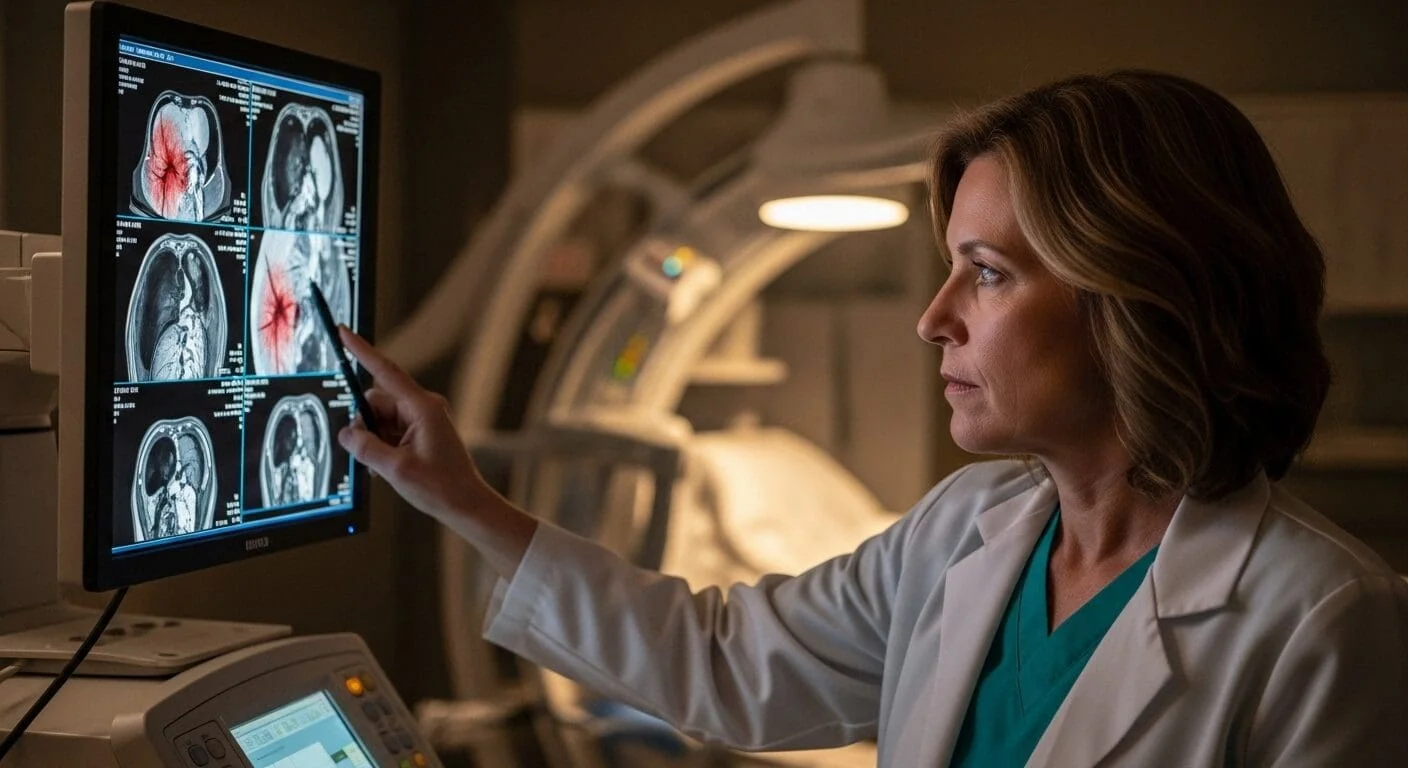
Kentucky Traumatic Brain Injury (TBI) Cases
On This Page
What Is a Traumatic Brain Injury?
A traumatic brain injury occurs when a sudden force, the jolt of a crash, a blow to the head, or violent whiplash, disrupts normal brain function. You do not have to hit your head on anything to suffer a TBI. The brain floating inside the skull can slam against the bone, twist on its axis, or experience diffuse axonal shearing from rapid deceleration, all of which cause injury at the cellular level.
According to the CDC, motor vehicle crashes remain one of the leading causes of TBI-related deaths and hospitalizations, particularly among people aged 15 to 44. NHTSA research identifies motor vehicle crashes as responsible for 31.8% of all fatal TBIs.
The injury spectrum is wide: from a concussion that disrupts brain function without direct head impact, to moderate-to-severe TBI involving structural brain damage that may require neurosurgical intervention, inpatient rehabilitation, and years of outpatient cognitive therapy. Research published in The Lancet Neurology estimates that 1.1% of the entire U.S. population lives with lifelong disabilities from TBI.
Types of Brain Injuries in Car Accidents
Car crashes produce multiple types of brain injuries, sometimes in the same crash. The specific type affects what symptoms you experience, how long recovery takes, and how the injury is documented and proved in a legal case.
Concussion (Mild TBI)
The most common crash-related brain injury. A concussion disrupts brain function through acceleration-deceleration forces, even without a direct head impact. Per NHTSA biomechanics research, concussions are frequently missed on CT scans because the damage is functional, not structural. Symptoms often appear hours or days after the crash.
Coup-Contrecoup Injury
When the brain bounces inside the skull, it can be injured at two sites simultaneously: the point of impact (coup) and the opposite side (contrecoup). This double-injury pattern is especially common in frontal and side-impact crashes. The frontal and temporal lobes, which control personality, judgment, memory, and emotional regulation, are the most vulnerable.
Diffuse Axonal Injury (DAI)
When the head rotates rapidly, the long nerve fibers (axons) connecting brain cells can stretch and tear. According to StatPearls at the National Institutes of Health, angular acceleration during high-speed deceleration is the principal mechanism, and DAI is a leading cause of prolonged coma and long-term disability after TBI. DAI is rarely visible on standard CT scans; advanced diffusion tensor imaging (DTI) is required to detect it.
Intracranial Hemorrhage and Contusion
Brain bruising (contusion) and bleeding inside the skull (hemorrhage) can follow severe impacts. There are four main types: subdural hematoma (bleeding between the brain and its outer covering, common in elderly patients who may develop a chronic form weeks after a minor crash), epidural hematoma (arterial bleeding between the skull and dura, a surgical emergency), subarachnoid hemorrhage (bleeding into the fluid-filled space surrounding the brain), and intraparenchymal hemorrhage (bleeding directly within brain tissue). CT scans detect these injuries, and immediate intervention is often required.
Secondary Brain Injury
The initial trauma triggers a cascade: swelling, inflammation, rising intracranial pressure, and metabolic disruption that can damage brain tissue hours to days after the crash. This secondary injury process is why crash victims need ongoing monitoring, not just a single ER visit.
Why a "Normal" CT Scan Does Not End Your Case
Insurance adjusters use normal CT results to argue there is no injury. But CT scans are designed to find bleeding and fractures, not functional brain injuries. The CDC and clinical researchers have long documented that many TBIs, including serious ones, produce normal CT findings. The injury is in how your brain processes information, not in its physical structure:
- Neuropsychological testing measures attention, memory, processing speed, and executive function, all areas damaged by TBI that imaging misses
- Vestibular and oculomotor testing captures balance and eye-tracking deficits caused by brain injury
- Advanced MRI sequences (DTI, SWI) can detect subtle white matter damage invisible on standard scans
- Collateral reports from family, employers, and coworkers document real-world functional changes
— R. Knox“They welcomed me like family, making me feel that I mattered to them and that I wasn’t just another case.”
TBI Severity: Mild, Moderate, and Severe
Clinicians classify TBI severity using the Glasgow Coma Scale (GCS), a 15-point scoring system that measures eye-opening response, verbal response, and motor response immediately after injury. Research published in The Lancet Neurology confirms the three standard tiers:
| TBI Level | GCS Score | Common Signs | Expected Impact |
|---|---|---|---|
| Mild (concussion) | 13–15 | Brief confusion, headache, dizziness, memory gaps | Most resolve in weeks; 15% develop persistent post-concussion syndrome |
| Moderate | 9–12 | Loss of consciousness > 30 min, cognitive impairment, behavioral changes | Often requires rehabilitation; lasting cognitive or physical deficits possible |
| Severe | 3–8 | Coma, prolonged unconsciousness, significant neurological deficits | High risk of permanent disability; life expectancy may be shortened by years |
One critical point: a "mild" GCS score does not mean a minor injury in everyday terms. A landmark study in The Lancet Neurology found that more than half of patients classified as mild TBI were still disabled at 5 to 7 year follow-up. Insurance companies exploit the word "mild" to minimize claims. That characterization does not reflect the clinical evidence.
The Department of Defense and VA use a four-tier classification system that distinguishes severity by loss of consciousness duration, post-traumatic amnesia, and alteration of consciousness. For legal purposes, the GCS tier recorded by the treating trauma center is the standard document.
How Motor Vehicle Crashes Cause TBI
Car crashes produce forces the human brain was never designed to withstand. Research published in the journal Traffic Injury Prevention estimated that motor vehicle crashes result in approximately 218,936 emergency department visits, 56,864 hospitalizations, and 16,402 deaths from TBI annually in the United States.
The injury mechanisms in a crash include:
- Direct impact: the skull strikes the steering wheel, window, door frame, or headrest during the crash sequence
- Coup-contrecoup injury: the brain bounces forward and backward inside the skull, bruising opposite sides simultaneously
- Rotational/shear injury (DAI): the head rotates violently, causing the brain's white matter axons to stretch or tear
- Whiplash-induced TBI: high-speed flexion-extension of the neck generates sufficient brain movement to cause injury without direct head contact
- Penetrating injury: debris or shattered glass enters the skull, common in high-speed or rollover crashes
DTI: What Insurers Don't Want You to Know
Initial CT scans and standard MRIs frequently miss TBI. A negative scan does not rule out serious brain injury. Diffuse axonal injuries, microscopic tears in white matter, are invisible on conventional imaging. Published research in the Journal of Neurology, Neurosurgery & Psychiatry confirms that Diffusion Tensor Imaging (DTI) detects white matter microstructural damage invisible to conventional MRI. FA (fractional anisotropy) reductions in the corpus callosum correlate directly with cognitive deficits. Insurers know this and count on you not getting the right testing.
Symptoms of Brain Injury After a Car Crash
Brain injury symptoms appear across four categories. The pattern and combination vary by individual, injury type, and severity. Critically, CDC clinical direction confirms that symptoms are often most severe 24 to 48 hours after injury and may not appear at all until days later. A crash victim who felt fine at the scene can still have a serious brain injury.
Physical Symptoms
Headaches, dizziness, balance problems, nausea, sensitivity to light and noise, vision changes, fatigue. These are the symptoms most likely to be dismissed as minor or attributed to unrelated causes.
Cognitive Symptoms
Memory gaps, difficulty concentrating, feeling mentally slowed, word-finding problems, trouble multitasking. Processing speed, the ability to take in information and respond quickly, is the domain most commonly impaired in moderate-to-severe TBI according to research published in JAMA Network Open.
Emotional and Behavioral Symptoms
Irritability, mood swings, anxiety, depression, personality changes noticed by others. These are frequently the first changes a spouse or coworker identifies, even before the injured person is aware of them. Research published in Biomedicines documents that apathy, irritability, aggression, and mood disorders are established consequences of moderate-to-severe TBI.
Sleep Disruption
Insomnia, sleeping too much, fragmented or unrefreshing sleep. Sleep disruption reinforces cognitive symptoms and slows recovery, creating a compounding cycle that can persist for months or years.
Danger Signs Requiring Immediate Emergency Care
Symptoms that worsen over time require immediate attention: a worsening headache, repeated vomiting, confusion, unequal pupils, seizures, or new weakness in an arm or leg. These can indicate a life-threatening bleed or dangerous brain swelling requiring emergency neurosurgical intervention.
The Medical Team Your TBI Case Needs
Unlike a broken bone that a single surgeon addresses, TBI demands a coordinated medical team from the moment of acute injury through years of follow-up. The right providers affect both recovery and claim documentation. Acute care must take place at a Level I or Level II trauma center with neurosurgical capability. In Kentucky, both UK HealthCare and University of Louisville Hospital are designated Level I trauma centers with dedicated neurotrauma programs.
Neurologist
Manages the medical aspect of brain injury: monitoring for seizure activity, managing intracranial pressure in the acute phase, prescribing appropriate medications, and overseeing long-term brain health. The neurologist's records establish the diagnosis, imaging findings, and trajectory of neurological change over time.
Neuropsychologist
Administers the standardized cognitive battery that objectively documents what the TBI has done to the person's thinking. Research published in Biomedicines confirms this assessment detects deficits in attention, executive function, memory, processing speed, and language, the cognitive domains most affected in moderate-to-severe TBI. The battery provides objective, reproducible data.
Physiatrist (PM&R Physician)
Coordinates the overall rehabilitation program. The physiatrist directs the transition from inpatient acute rehabilitation to outpatient cognitive therapy, occupational therapy, speech therapy, and vocational rehabilitation. Research published in The Journal of Head Trauma Rehabilitation shows that early rehabilitative involvement reduces complications and improves outcomes in moderate-to-severe TBI.
When the neurologist, neuropsychologist, and physiatrist are all treating the same patient and communicating clearly, the full picture of the injury is captured in the medical record rather than scattered across disconnected provider notes. That coordination is critical to building a strong claim.
What TBI Recovery Actually Looks Like
Recovery from moderate-to-severe TBI is not a single event. It is a phased process that spans months to years, with meaningful progress concentrated in the first twelve months post-injury. Individual outcomes vary based on injury severity, age, and the quality of coordinated care received.
- Days 1–14: ICU & Neurosurgical Stabilization Acute trauma center admission, intracranial pressure management, possible surgical intervention (craniotomy or ICP monitor placement). Sedation, mechanical ventilation, and continuous neurological monitoring. GCS is assessed repeatedly to track trajectory. Hyperosmolar therapy (mannitol or hypertonic saline) is used to reduce cerebral edema when ICP is elevated.
- Weeks 2–8: Inpatient Acute Rehabilitation Transfer to an acute rehabilitation hospital or brain injury unit. Physical, occupational, speech, and cognitive therapy begin. The Journal of Head Trauma Rehabilitation confirms that rehabilitation initiated once ICP normalizes reduces complications and improves long-term outcomes.
- Months 2–12: Outpatient Cognitive Rehabilitation Outpatient neuropsychology, cognitive therapy, and speech-language pathology. Research published in Frontiers in Neurology shows cognitive rehabilitation improves executive function and processing speed in moderate TBI. The greatest gains occur within the first twelve months post-injury.
- Year 1–2: Plateau & Reassessment Neuropsychological reassessment at 6 and 12 months documents stabilization or continued decline. JAMA Network Open data shows processing speed is the most commonly impaired domain at 6 months in moderate-severe TBI. Vocational assessment determines return-to-work feasibility.
- Long-Term: Permanent Deficits & Lifetime Care Planning According to the Archives of Physical Medicine and Rehabilitation, 43% of people discharged after an acute TBI hospitalization develop long-term disability. Lifetime care planning, home health assistance, and ongoing neuropsychological monitoring become permanent needs for many survivors.
The Long-Term Impact of TBI
TBI is not a time-limited event. It is a condition that evolves for years, sometimes decades, after the original crash. Research from The Lancet Neurology estimates that 1.1% of the entire U.S. population lives with lifelong disabilities from TBI. Survivors face elevated risks for:
- Cognitive decline and dementia: even a single moderate-to-severe TBI raises dementia risk by 26%, and mild TBI in those over 65 raises risk by 25%
- Seizure disorders and post-traumatic epilepsy
- Depression, anxiety, and major personality changes
- Sleep disorders and chronic fatigue
- Stroke: TBI survivors have 2.3 times the stroke risk in the five years post-injury
- Shortened life expectancy: severe TBI survivors die on average 7 years earlier than the general population
- Chronic post-concussion syndrome (PCS): a subset of mild TBI patients, estimated at 15%, develop persistent symptoms beyond three months
Men with TBI are nearly 2x more likely to be hospitalized and 3x more likely to die compared to women with TBI, per CDC data. People over 75 account for 32% of all TBI hospitalizations and 28% of TBI deaths.
Chronic traumatic encephalopathy (CTE) is a progressive neurodegenerative disease associated with repeated head trauma. CTE can only be definitively diagnosed post-mortem through brain tissue examination and is not diagnosable in living patients under current protocols, though the Boston University CTE Center continues to develop in-vivo biomarkers.
Pediatric TBI carries distinct considerations. The developing brain is more vulnerable to certain types of injury, and the effects on learning, behavior, and development differ from adult TBI. Educational and occupational therapy implications are often lifelong, requiring evaluation by pediatric neuropsychologists trained in developmental TBI.
Kentucky Brain Injury Resources
Kentucky families dealing with TBI have access to dedicated rehabilitation and support programs. The Brain Injury Alliance of Kentucky (BIAK) provides survivor support, caregiver resources, and community connections statewide. Frazier Rehab Institute (Louisville) is one of the leading inpatient TBI rehabilitation programs in the region. UK HealthCare's Physical Medicine and Rehabilitation program (Lexington) serves central and eastern Kentucky. Documentation of treatment at these programs strengthens the claim record.
What TBI Does to a Family
The Human Cost Behind the Medical Records
The medical language around brain injury, GCS scores, diffuse axonal injury, cognitive processing deficits, says nothing about the human reality of what happens inside a home when a person comes back from the hospital fundamentally changed.
The spouse who used to talk through the day's events with their partner at dinner now watches that partner forget conversations they had an hour ago. The connection they built over fifteen years is still there, but the access to it keeps slipping. They start keeping notes. They start repeating themselves.
The children notice something their parents try not to say out loud. Their father, the one who coached their soccer team and never missed a game, gets frustrated now in ways he never did before. The patience is shorter. The words come slower. He can't follow the noise and chaos of a Saturday afternoon the way he used to.
The office worker who spent twelve years building a career in accounting can no longer maintain concentration through a full morning of spreadsheets. A 2023 study in JAMA Network Open confirms that processing speed is the cognitive domain most commonly affected in moderate-to-severe TBI. The job that felt permanent is no longer accessible.
The truck driver fails the DOT cognitive assessment. The nurse can't complete a twelve-hour shift without errors that her supervisor now monitors. The construction foreman who spent twenty years reading blueprints and coordinating crews can't hold the sequence of a project in his head the way he once did.
This is what TBI costs. Not just the hospital bills and the rehabilitation invoices. The person who walked into the ER is not the same person who walked out. The claim has to reflect it.
How We Build a Kentucky Brain Injury Case
Brain injury cases require a different approach than a broken bone or soft tissue claim. The injury is often invisible on standard imaging, symptoms overlap with other conditions, and insurance companies will spend considerable effort disputing causation. The defense playbook is predictable.
The Insurance Defense Playbook for TBI Claims
The "normal CT" argument: Insurers point to a normal emergency CT scan as proof that no brain injury occurred. This ignores that CT scans detect bleeding and fractures, not the functional or microstructural damage that defines most TBIs.
The "pre-existing condition" argument: Any prior history of headaches, depression, anxiety, or previous head injury will be weaponized. Kentucky's eggshell plaintiff rule holds that the at-fault driver takes the victim as they find them, responsible for aggravating any pre-existing condition.
The "malingering" allegation: Insurers may hire neuropsychologists to conduct their own testing and suggest the injured person is exaggerating symptoms. Objective neuropsychological testing with validated validity indicators is the primary rebuttal.
The "MRI-negative" minimization: Even when standard MRI shows no abnormality, DTI and susceptibility-weighted imaging can document white matter damage. We make sure the right imaging is ordered.
The "life has returned to normal" argument: Adjusters monitor social media for photos of the injured person appearing healthy. This is why collateral documentation from employers, coworkers, and treating physicians documenting real-world functional changes is essential.
Our approach to building a Kentucky TBI case:
- Immediate evidence preservation: Traffic camera footage, black box data, accident reconstruction, and crash reports establish the forces involved. The violence of the impact is foundational evidence.
- Medical team coordination: We connect clients with neurologists, neuropsychologists, vestibular physicians, and neuroradiologists who understand TBI documentation requirements.
- Collateral documentation: Structured interviews with spouses, coworkers, supervisors, and teachers capture the observed behavioral and cognitive changes that third parties see daily.
- Full damages calculation: Medical bills, lost wages, future care needs, vocational impact, and non-economic damages are all documented and quantified with supporting testimony from treating and retained physicians.
- Kentucky jury data: The Kentucky Trial Court Review tracks 28 years of jury verdict data. For moderate-to-severe TBI cases, jury awards consistently exceed pre-litigation insurer offers. We use that data when building demands.
Proving TBI Damages in a Kentucky Case
The single biggest challenge in a Kentucky TBI case is documentation. Mild and moderate TBI victims often look and sound fine to friends, family, and insurers, while privately struggling with memory problems, emotional dysregulation, and cognitive gaps that make work and relationships nearly impossible.
Documenting TBI for a claim requires assembling a complete medical and functional picture:
- Emergency and Acute Imaging CT scans and standard MRI performed at the hospital immediately after the crash capture fractures, bleeds, and major structural injury. These are baseline documents, not the full story.
- Advanced Neuroimaging: DTI Scanning Published research in the Journal of Neurology, Neurosurgery & Psychiatry confirms that Diffusion Tensor Imaging (DTI) detects white matter microstructural damage invisible to conventional MRI. FA (fractional anisotropy) reductions in the corpus callosum correlate directly with cognitive deficits. This is often the most powerful imaging evidence in a TBI case.
- Neuropsychological Testing A complete neuropsychological battery quantifies deficits in memory, processing speed, executive function, attention, and emotional regulation. These test results translate subjective complaints into objective, documented impairments. Impairment ratings from neuropsychological testing can be converted to whole-person impairment percentages under the AMA Guides 6th Edition, relevant in cases with vocational rehabilitation components.
- Vestibular and Balance Testing Inner ear disruption from TBI causes dizziness, balance problems, and vision disturbances. Vestibular testing documents these functional deficits, which insurers often try to attribute to pre-existing conditions.
- Life Care Planning A certified life care planner calculates the total future cost of care: ongoing rehabilitation, medication, lost income, home modifications, and attendant care. This figure becomes the foundation of future economic damages. When the at-fault driver's liability limits are exhausted before the full scope of a catastrophic brain injury is addressed, umbrella and excess liability policies held by the at-fault driver may provide additional recovery.
Recoverable Damages Under Kentucky Law
Under Kentucky law, TBI victims in motor vehicle crashes can pursue:
- Medical expenses: past and future, including rehabilitation, medications, and long-term care
- Lost wages and diminished earning capacity: if TBI prevents return to the prior occupation at the same level
- Pain and suffering: physical pain, mental anguish, and loss of enjoyment of life
- Loss of consortium: impact on relationships with a spouse and family
- Punitive damages: available when the at-fault driver was impaired, racing, or flagrantly reckless
Kentucky's KRS § 304.39-060 no-fault system means Personal Injury Protection (PIP) coverage pays initial medical bills up to $10,000. TBI cases almost always exceed that threshold, allowing the injured party to step outside no-fault and pursue the at-fault driver's liability insurance directly.
Time Limits on Brain Injury Claims in Kentucky
Kentucky's statute of limitations under KRS § 304.39-230 gives most personal injury plaintiffs two years from the date of the last PIP payment, or two years from the crash if PIP was not pursued, to file suit. For wrongful death caused by a brain injury, the limit is one year from the date the personal representative is appointed. These deadlines apply regardless of how serious the injury is. Missing them means losing the right to compensation permanently.
One issue specific to brain injury cases: some victims don't connect their symptoms to the crash until weeks or months later. Kentucky recognizes a discovery rule in certain circumstances, but the window is narrow. If a delayed diagnosis is possible, legal consultation should happen immediately after symptoms appear, not after waiting to see whether they resolve.
Brain injuries are frequently paired with other serious injuries from the same crash. Car accident injuries including spinal cord damage, herniated discs, and PTSD factor into the total damages calculation. The time limits governing each co-injury claim may differ, making early documentation critical.
Frequently Asked Questions
My CT scan came back normal. Does that mean I don't have a TBI?
What is the difference between a concussion and a traumatic brain injury?
What is diffuse axonal injury and how does it happen in a car accident?
What doctors treat moderate-to-severe TBI?
What is a neuropsychological evaluation and why does it matter for a TBI claim?
What if symptoms appeared days after the crash?
What are the long-term risks after a brain injury from a car crash?
What if the insurance company says my TBI is "pre-existing"?
Can I recover for future medical costs if my TBI symptoms are ongoing?
Real Clients. Real Success. — 1,000+ 5-Star Reviews, 4.9/5 Overall
— Savannah F.“They ACTUALLY CARE! They go above and beyond for their clients and protect you like family.”