

Commercial Vehicle Accident Claims in Kentucky
- What Counts as a Commercial Vehicle in Kentucky
- Why Commercial Vehicle Crashes Are Different from Car Accidents
- Box Trucks, Delivery Vans, and Fleet Vehicles
- Who Is Liable in a Commercial Vehicle Crash
- The Insurance Layers in Commercial Vehicle Cases
- Evidence We Collect in Commercial Vehicle Cases
- Common Injuries in Commercial Vehicle Crashes
- Government and Municipal Vehicle Crashes
- How Our Trucking Team Handles Commercial Vehicle Cases
Commercial Vehicle Accident Claims in Kentucky cases are strongest when the page answers the real search intent: what happened, what proof matters, and who may be responsible. Sam Aguiar Injury Lawyers uses crash reports, medical records, insurance data, and source material like the Kentucky Transportation Cabinet crash data to frame Kentucky crash claims clearly.
What Counts as a Commercial Vehicle in Kentucky
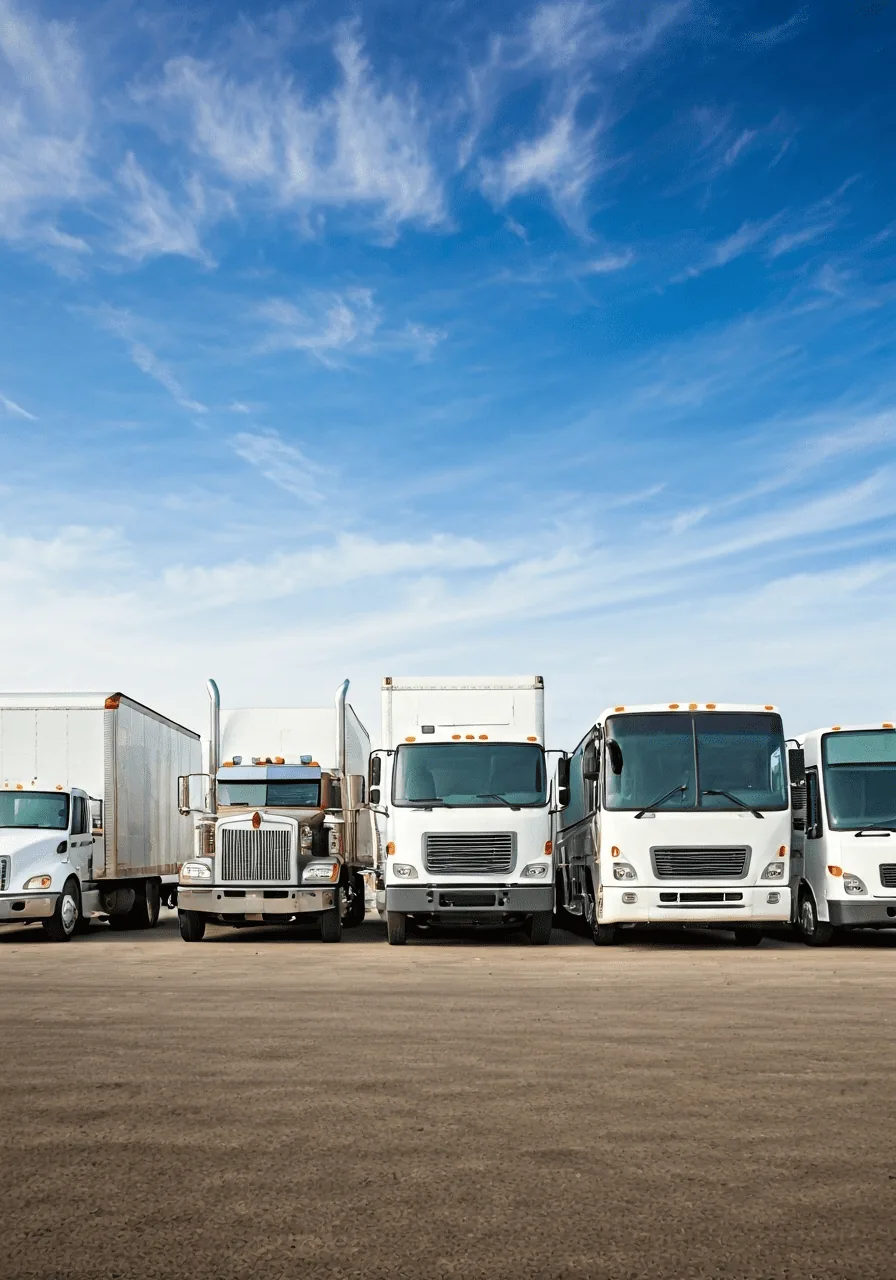
The term “commercial vehicle” covers far more ground than most people realize. Any vehicle used primarily for business purposes qualifies, regardless of size. That includes the obvious ones like tractor-trailers and tanker trucks, but it also includes vehicles you see on every Kentucky road, every day.
Under 49 U.S.C. § 31101, the federal definition of a “commercial motor vehicle” applies to vehicles with a gross vehicle weight rating (GVWR) of 10,001 pounds or more, vehicles designed to transport 16 or more passengers, or vehicles carrying hazardous materials. These vehicles fall under FMCSA oversight with strict maintenance, driver qualification, and hours-of-service rules.
But thousands of commercial vehicles on Kentucky roads fall below that 10,001-pound threshold. These include:
- Box trucks and cargo vans under 10,001 lbs GVWR
- Delivery vans (FedEx, UPS, Amazon DSP)
- Company-owned fleet cars and SUVs
- Tow trucks and flatbed carriers
- Utility service trucks (HVAC, plumbing, electrical)
- Landscaping and construction vehicles
- Rideshare and taxi vehicles used commercially
- Government vehicles (city, county, state)
These lighter commercial vehicles are still subject to Kentucky state motor vehicle laws, employer liability rules, and the insurance requirements of the business that owns or operates them. The legal path is different from a standard car accident, even when FMCSA regulations do not apply.
Why Commercial Vehicle Crashes Are Different from Car Accidents
When a commercial vehicle causes a crash, the case is immediately more complex than a standard two-car collision. The driver is on the clock. The vehicle is owned or leased by a business. The insurance policy is a commercial auto policy, not a personal one. And the company behind the vehicle has its own legal team already moving before you even leave the hospital.
Three factors set commercial vehicle cases apart:
Multiple Liable Parties
In a regular car accident, you typically deal with one at-fault driver and their personal auto insurer. In a commercial vehicle crash, liability can extend to the driver, the company that employs or contracts with the driver, the vehicle owner (if different from the employer), the leasing company, the cargo loader, and the maintenance provider. Kentucky’s respondeat superior doctrine (KRS 411.182) holds employers liable for the actions of their employees when those actions occur within the scope of employment.
Higher Insurance Minimums
Commercial vehicles carry commercial auto insurance policies with higher coverage limits than personal policies. FMCSA-regulated vehicles must carry minimum liability coverage of $750,000 to $5,000,000 depending on the cargo type. Even commercial vehicles below the FMCSA threshold typically carry policies ranging from $500,000 to $1,000,000 or more, because that is what their business insurance requires.
Evidence That Disappears Fast
Commercial vehicles often have electronic logging devices (ELDs), GPS tracking, dashcam footage, dispatch records, and maintenance logs. This evidence can prove exactly what the driver was doing, how fast they were going, and whether the vehicle was properly maintained. But companies are not required to preserve this data indefinitely, and some of it overwrites automatically within days. Our team sends spoliation preservation letters immediately after being retained to prevent evidence destruction.
The 10,001-Pound Line
Vehicles at or above 10,001 lbs GVWR trigger FMCSA regulations: mandatory ELDs, hours-of-service limits, CDL requirements, drug testing, and detailed maintenance records. Vehicles below that weight are not subject to those rules, which means less automatically preserved evidence and a different approach to building the case. Either way, the company that operates the vehicle has records, and we know how to get them.
Box Trucks, Delivery Vans, and Fleet Vehicles
The fastest-growing category of commercial vehicle crashes involves vehicles that most people would not call “trucks.” Box trucks, cargo vans, delivery vans, and company fleet vehicles are everywhere on Kentucky roads, and they are involved in crashes every day.
The NHTSA Fatality Analysis Reporting System tracks crashes involving all motor vehicles, and the data shows that medium and light commercial vehicles are involved in a significant and growing share of fatal crashes. The rise of e-commerce delivery has put more vans and box trucks on the road than at any point in history.
What makes these cases tricky is that the vehicles often look like regular trucks, but the legal landscape is completely different:
Box trucks under 10,001 lbs: No CDL required, no FMCSA oversight, no mandatory ELD. The driver may have minimal training. The truck may have been rented from a national rental company, creating a question about who is actually liable: the renter, the rental company, or both.
Delivery vans and DSP vehicles: Companies like Amazon use Delivery Service Partner (DSP) contractors who own and operate their own van fleets. When an Amazon DSP driver causes a crash, the liability question involves the driver, the DSP company, Amazon’s insurance layer, and sometimes the staffing agency that hired the driver. FedEx Ground uses a similar independent contractor model.
Fleet vehicles: Businesses in every industry operate fleet vehicles: sales reps, service technicians, property managers, medical couriers. When a company employee crashes a fleet vehicle while on the job, the employer is typically liable under respondeat superior. But if the employee was on a personal errand (a “frolic and detour”), the liability analysis changes. GPS records and dispatch logs become critical to establishing whether the driver was acting within the scope of employment.
Who Is Liable in a Commercial Vehicle Crash
Identifying every liable party is the single most important step in a commercial vehicle case. Missing even one party can leave money on the table and let a responsible company walk away without accountability.
Here is who we investigate in every commercial vehicle case:
The driver. The person behind the wheel is always a starting point. Were they texting? Fatigued? Under the influence? Did they have a valid license for the vehicle they were operating? Kentucky requires a CDL for vehicles over 26,001 lbs GVWR, and FMCSA CDL requirements add endorsements for hazmat, passenger vehicles, and tankers.
The employer or business owner. Under respondeat superior, the company is liable for its employees’ negligent acts committed within the scope of employment. This includes the company’s own negligence: did they properly screen the driver? Did they check driving records? Did they enforce safety protocols? KRS 411.182 governs negligence allocation in Kentucky.
The vehicle owner. If the vehicle is leased, rented, or borrowed, the owner may carry separate liability. Rental truck companies like Penske, Ryder, and U-Haul may be liable under negligent entrustment if they rented a vehicle to an unqualified or dangerous driver.
The maintenance provider. If a brake failure, tire blowout, or steering malfunction caused the crash, the company or shop responsible for maintaining the vehicle may be liable. FMCSA-regulated vehicles must follow 49 CFR Part 396 maintenance and inspection standards. Even non-regulated commercial vehicles must be maintained in safe operating condition under Kentucky law.
The cargo loader. Improperly loaded or secured cargo causes rollovers, cargo spills, and shifting-load crashes. 49 CFR Part 393 Subpart I governs cargo securement for FMCSA vehicles. For non-regulated vehicles, general negligence principles apply: whoever loaded the cargo had a duty to do it safely.
The broker or dispatcher. Freight brokers who hire carriers with poor safety records can be independently liable. If a broker ignored a carrier’s safety rating or failed to verify insurance coverage, that is negligence.
The Insurance Layers in Commercial Vehicle Cases
One of the biggest advantages of commercial vehicle cases is that the insurance coverage is almost always substantially higher than what you would see in a regular car accident.
A typical Kentucky driver carries $25,000 in liability coverage (the state minimum under KRS 304.39-110). That is often not enough to cover serious injuries. Commercial vehicle policies are a different story.
FMCSA-regulated vehicles: Federal minimums range from $750,000 for general freight to $5,000,000 for hazardous materials. Many carriers carry policies well above the minimum.
Non-FMCSA commercial vehicles: Most business auto policies carry $500,000 to $1,000,000 in liability coverage. Larger companies often carry $2,000,000 or more, plus umbrella policies that add additional layers of coverage.
Multiple policies in play: A single crash can trigger the driver’s personal policy, the employer’s commercial auto policy, the vehicle owner’s policy, and excess or umbrella coverage. When an independent contractor is involved, both the contractor’s policy and the hiring company’s policy may apply.
More coverage does not mean easier cases. Higher policy limits attract more aggressive defense teams. Commercial insurers and their law firms are experienced, well-funded, and motivated to minimize every claim. They deploy investigators, accident reconstructionists, and medical examiners within hours of a crash. Having a legal team that handles commercial vehicle cases daily makes a measurable difference in the outcome.
Evidence We Collect in Commercial Vehicle Cases
The evidence available in a commercial vehicle crash is more extensive than in a typical car accident, but much of it has a limited shelf life. Our team moves quickly after being retained to preserve every possible piece of evidence.
Electronic data: ELDs (for FMCSA vehicles), GPS tracking systems, telematics data, dashcam footage, and event data recorders (EDRs or “black boxes”). Many fleet vehicles now have forward-facing and driver-facing cameras that capture the moments before and during a crash.
Driver records: CDL status, driving history, drug and alcohol testing results (pre-employment, random, and post-accident), training certifications, and employer evaluations. FMCSA’s CSA program tracks safety performance data for carriers and drivers. For non-regulated vehicles, we subpoena the employer’s personnel and training files.
Vehicle records: Maintenance logs, pre-trip inspection reports, repair histories, recall compliance, and tire and brake inspection records. Evidence collection in commercial vehicle cases follows a structured process that begins within the first 24 hours.
Company records: Dispatch logs, route assignments, delivery schedules, safety policies, training programs, prior complaints, and prior accident history. These records can show whether a company had a pattern of cutting corners on safety.
DOT and TriMarc camera footage: Sam Aguiar Injury Lawyers has access to statewide DOT and TriMarc traffic camera footage with archives dating back six months. This footage can show the crash itself, the vehicles’ positions and speeds before impact, and road and weather conditions at the time.
Police and regulatory records: Crash reports, FMCSA inspection results, FMCSR violation histories, hours-of-service records, and any prior enforcement actions against the carrier or driver.
Common Injuries in Commercial Vehicle Crashes
Commercial vehicles are heavier than passenger cars, and the physics of a collision between a 3,500-pound sedan and a 16,000-pound box truck produce devastating injuries. According to the Insurance Institute for Highway Safety, occupants of passenger vehicles account for the vast majority of deaths in crashes involving large trucks and buses.
The injuries we see most often in commercial vehicle cases include:
- Traumatic brain injuries (TBI) and concussions
- Spinal cord injuries and paralysis
- Multiple fractures: legs, hips, ribs, pelvis
- Internal organ damage and internal bleeding
- Crush injuries requiring amputation
- Severe burns (fuel fires, chemical spills)
- Neck and back injuries (herniated discs, vertebral fractures)
- Post-traumatic stress disorder (PTSD)
These injuries often require months or years of treatment: surgeries, rehabilitation, physical therapy, pain management, and long-term care. The total cost of treatment frequently reaches six or seven figures, which is why the higher insurance limits available in commercial vehicle cases matter so much.
Government and Municipal Vehicle Crashes
When a commercial vehicle is owned by a city, county, or state agency, the claim process changes significantly. Government entities have sovereign immunity protections under Kentucky law (KRS 44.070 and KRS 65.200), which limit when and how you can sue a government agency.
Key differences in government vehicle cases:
Notice requirements: You may need to file a formal notice of claim with the government agency within a specific window before filing a lawsuit. Missing this deadline can bar your claim entirely.
Liability caps: Kentucky imposes caps on damages recoverable from government entities in certain circumstances. The available recovery may be lower than what a private commercial insurer would cover.
Different insurance structures: Government vehicles may be self-insured or covered through a state risk management pool rather than a traditional commercial auto policy.
These cases require immediate legal attention because the procedural requirements are strict and the deadlines are shorter than in standard civil cases.
How Our Trucking Team Handles Commercial Vehicle Cases
Sam Aguiar Injury Lawyers runs a dedicated trucking and commercial vehicle team that handles these cases from the first call through resolution. Every commercial vehicle case gets a dedicated three-person team: a top-rated attorney, an experienced case manager, and a legal professional working your case from day one.
Here is what happens when you call us:
Immediate evidence preservation. We send spoliation preservation letters to every potentially liable party on the day we are retained. These letters put the driver, the company, the insurer, and any maintenance providers on legal notice that they must preserve all relevant evidence, including electronic data, vehicle components, and internal records.
Liability investigation. We identify every liable party early. That means pulling the company’s corporate structure, identifying all insurance layers, checking FMCSA safety records for regulated carriers, and running the driver’s history through commercial databases.
Full case resources. Our team works with accident reconstructionists, biomechanical engineers, life care planners, and economists to build the strongest possible case. We document every dollar of past and future medical costs, lost wages, diminished earning capacity, and pain and suffering.
No upfront cost. You pay $0 out of pocket. Our fee never increases, even if the case goes to litigation or trial. And with our Bigger Share Guarantee®, your share is always bigger than ours after all bills, liens, and expenses are paid.
Related Kentucky Crash Resources
Related Kentucky Crash Resources
Frequently Asked Questions
What is the difference between a commercial vehicle accident and a truck accident?
“Truck accident” usually refers to crashes involving semi-trucks and tractor-trailers regulated by the FMCSA. “Commercial vehicle accident” is broader and includes any vehicle used for business purposes: box trucks, delivery vans, fleet cars, tow trucks, utility vehicles, and government vehicles. Many commercial vehicles fall below the 10,001-pound federal threshold and are not subject to FMCSA rules. The Kentucky Transportation Cabinet tracks crash data that can shape how roadway claims are evaluated. The Kentucky Transportation Cabinet tracks crash data that can shape how roadway claims are evaluated. The Kentucky Transportation Cabinet tracks crash data that can shape how roadway claims are evaluated. The Kentucky Transportation Cabinet tracks crash data that can shape how roadway claims are evaluated. The Kentucky Transportation Cabinet tracks crash data that can shape how roadway claims are evaluated. The Kentucky Transportation Cabinet tracks crash data that can shape how roadway claims are evaluated. The Kentucky Transportation Cabinet tracks crash data that can shape how roadway claims are evaluated.
Can I sue the company that owns the commercial vehicle?
Yes. Under Kentucky’s respondeat superior doctrine, an employer is liable for the negligent acts of its employees committed within the scope of employment. If the driver was on the job at the time of the crash, the company is typically liable for your damages along with the driver. The Kentucky Transportation Cabinet tracks crash data that can shape how roadway claims are evaluated. The Kentucky Transportation Cabinet tracks crash data that can shape how roadway claims are evaluated. The Kentucky Transportation Cabinet tracks crash data that can shape how roadway claims are evaluated. The Kentucky Transportation Cabinet tracks crash data that can shape how roadway claims are evaluated. The Kentucky Transportation Cabinet tracks crash data that can shape how roadway claims are evaluated. The Kentucky Transportation Cabinet tracks crash data that can shape how roadway claims are evaluated. The Kentucky Transportation Cabinet tracks crash data that can shape how roadway claims are evaluated.
What if the commercial vehicle was a rental truck?
Rental truck crashes involve multiple potential liable parties. The driver (renter) is liable for their own negligence. The rental company may be liable under negligent entrustment if they rented to an unqualified driver. The rental company’s insurance and the renter’s purchased coverage may both apply. We trace every policy to maximize your recovery. The Kentucky Transportation Cabinet tracks crash data that can shape how roadway claims are evaluated. The Kentucky Transportation Cabinet tracks crash data that can shape how roadway claims are evaluated. The Kentucky Transportation Cabinet tracks crash data that can shape how roadway claims are evaluated. The Kentucky Transportation Cabinet tracks crash data that can shape how roadway claims are evaluated. The Kentucky Transportation Cabinet tracks crash data that can shape how roadway claims are evaluated. The Kentucky Transportation Cabinet tracks crash data that can shape how roadway claims are evaluated. The Kentucky Transportation Cabinet tracks crash data that can shape how roadway claims are evaluated.
How much insurance do commercial vehicles carry?
It varies by vehicle type. FMCSA-regulated vehicles must carry at least $750,000 in liability coverage, with hazmat carriers required to carry up to $5,000,000. Non-regulated commercial vehicles typically carry $500,000 to $1,000,000 or more through their business auto policies. Many companies also carry umbrella policies that add additional layers of coverage. The Kentucky Transportation Cabinet tracks crash data that can shape how roadway claims are evaluated. The Kentucky Transportation Cabinet tracks crash data that can shape how roadway claims are evaluated. The Kentucky Transportation Cabinet tracks crash data that can shape how roadway claims are evaluated. The Kentucky Transportation Cabinet tracks crash data that can shape how roadway claims are evaluated. The Kentucky Transportation Cabinet tracks crash data that can shape how roadway claims are evaluated. The Kentucky Transportation Cabinet tracks crash data that can shape how roadway claims are evaluated. The Kentucky Transportation Cabinet tracks crash data that can shape how roadway claims are evaluated.
What evidence should I collect after a commercial vehicle crash?
Photograph the vehicles, the crash scene, the commercial vehicle’s markings (company name, DOT number, license plate), and any visible damage. Get the driver’s name and employer information. Do not give a recorded statement to any insurance company before talking to an attorney. The most critical evidence (ELD data, GPS records, dashcam footage) must be preserved through legal channels. The Kentucky Transportation Cabinet tracks crash data that can shape how roadway claims are evaluated. The Kentucky Transportation Cabinet tracks crash data that can shape how roadway claims are evaluated. The Kentucky Transportation Cabinet tracks crash data that can shape how roadway claims are evaluated. The Kentucky Transportation Cabinet tracks crash data that can shape how roadway claims are evaluated. The Kentucky Transportation Cabinet tracks crash data that can shape how roadway claims are evaluated. The Kentucky Transportation Cabinet tracks crash data that can shape how roadway claims are evaluated. The Kentucky Transportation Cabinet tracks crash data that can shape how roadway claims are evaluated.
Do I need a lawyer for a commercial vehicle accident?
Commercial vehicle cases involve multiple liable parties, higher insurance limits, and defense teams that start working immediately after the crash. The company’s insurer will have investigators on the scene within hours. An attorney who handles commercial vehicle cases daily can preserve evidence, identify all liable parties, and counter the defense strategy from the start. The difference between having legal representation and going alone in these cases is significant. The Kentucky Transportation Cabinet tracks crash data that can shape how roadway claims are evaluated. The Kentucky Transportation Cabinet tracks crash data that can shape how roadway claims are evaluated. The Kentucky Transportation Cabinet tracks crash data that can shape how roadway claims are evaluated. The Kentucky Transportation Cabinet tracks crash data that can shape how roadway claims are evaluated. The Kentucky Transportation Cabinet tracks crash data that can shape how roadway claims are evaluated. The Kentucky Transportation Cabinet tracks crash data that can shape how roadway claims are evaluated. The Kentucky Transportation Cabinet tracks crash data that can shape how roadway claims are evaluated.