

Dashcam Evidence in a Kentucky Car Accident Case
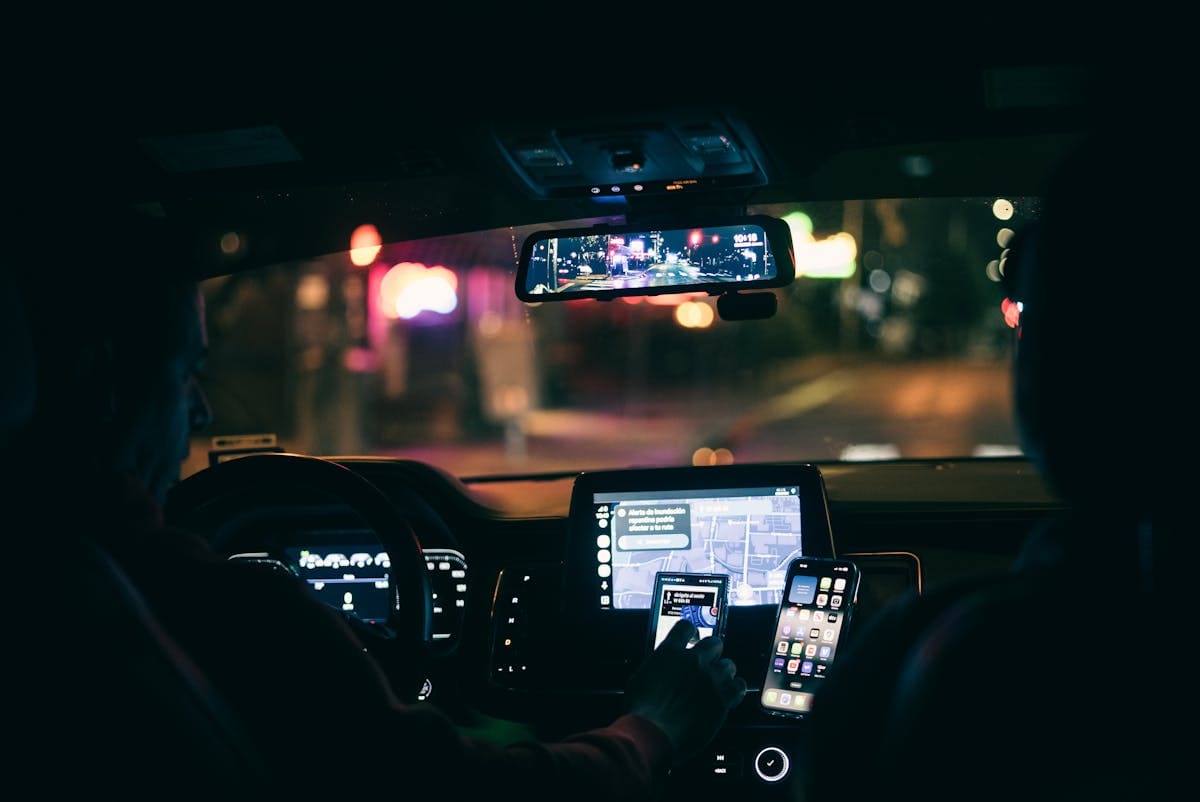
Dashcam evidence can show the seconds before a Kentucky car accident: the color of the signal, the lane each vehicle held, and the moment brake lights came on. That video only reaches a jury or an adjuster if the file still exists and a court accepts it as genuine. Kentucky’s evidence rules, its eavesdropping statute, and the way insurers investigate all decide how much a recording does for a case. The car accident practice page covers the rest of a Kentucky car accident case.
Dashcam Loop Recording
Consumer dashcams write over their own footage. The Garmin Dash Cam 46, 56 and 66W manual says the camera starts recording as soon as it powers up and keeps recording until it is switched off. When the memory card is full, the device deletes the oldest unsaved video to make room for new video.
The same manual describes a setting, offered in some regions, that deletes unsaved video more than three minutes old and clears all unsaved video each time the camera powers off. With that setting on, an accident clip that nobody saved can disappear before the driver leaves the scene.
A saved clip is protected from that cycle. Garmin’s event detection page says the camera uses a sensor to detect possible incidents and saves footage from before, during, and after the event, stamped with the time, date, and location. That stamp later ties the clip to one accident on one road at one time.
Original File Preservation
The file on the camera’s memory card is the first-generation copy of the recording. A clip that was trimmed, cropped, filtered, or filmed off a phone screen invites a question the original never raises: what was left out.
Kentucky courts look at how a recording was made and handled. In Litton v. Commonwealth, the Supreme Court of Kentucky approved surveillance photographs after the store owner explained how the camera system worked and traced the film from the camera to the finished prints. The court held that a photograph can come in as real evidence once the party offering it shows that the process producing it was accurate.
A dashcam owner gives the same kind of account. These records make that account easy to give:
- The memory card itself, removed from the camera and kept out of use.
- A full, unedited copy of every clip from the trip, with the original file names.
- The camera’s make, model, mounting spot, and date and time settings.
- The name of each person who held the card or copied the files, and when.
Video From Other Drivers
Another driver’s camera may hold the clearest angle, especially when the injured person’s car had no camera at all. Who owns that camera decides how the footage is obtained.
When the other driver is a party to the case, the footage falls under ordinary discovery. In Metropolitan Property & Casualty Insurance Co. v. Overstreet, the Supreme Court of Kentucky explained that Civil Rule 34.01 reaches documents and records in the “possession, custody or control” of the party served with the request.
A witness driver who is not a party stands in a different place. The same opinion says a nonparty witness can be required by subpoena duces tecum to produce relevant, unprivileged documents along with a deposition or trial testimony, but cannot be ordered to hand them over for discovery ahead of that testimony. Until a case reaches that stage, footage from a passing driver comes in only by asking, and that driver’s camera keeps recording over the trip.
Rideshare drivers and commercial fleets may run cameras of their own. The rideshare accident page covers cases where an Uber or Lyft vehicle is involved.
Business Security Camera Footage
Gas stations, stores, banks, and apartment complexes along a road may have cameras that take in the street. A business runs its system on its own schedule, and before a lawsuit it decides for itself whether to share a copy. After a lawsuit, the same subpoena rule from Overstreet applies to a business that is not a party.
A business system that records over itself on a routine cycle can erase the footage before anyone asks for it. Kentucky law offers little after that point, as the section on the missing evidence instruction below shows, so the written request to the business is the step that keeps the video in existence.
Public traffic cameras and police video follow separate rules, including open records requests and state retention schedules. The TRIMARC cameras and accident footage post covers those sources.
| Video Source | Who Holds It | How It Is Obtained | Authority |
|---|---|---|---|
| The injured driver’s own dashcam | The injured driver | Save the clip, keep the memory card, and copy the full file | Garmin dash cam manual |
| The other driver’s dashcam | A party to the case | Written request, then discovery under Civil Rule 34.01 once a lawsuit is filed | Overstreet |
| A witness driver’s dashcam | A nonparty | Voluntary request, then a subpoena duces tecum with a deposition or trial | Overstreet |
| Business security camera | A nonparty business | Prompt written request, then a subpoena duces tecum with a deposition or trial | Overstreet |
| Traffic camera or police video | A government agency | Open records request | TRIMARC camera post |
Sources: Metropolitan Property & Casualty Insurance Co. v. Overstreet, 103 S.W.3d 31 (Ky. 2003) and the Garmin Dash Cam 46, 56 and 66W manual.
Authentication of Dashcam Video
A Kentucky court admits a recording only after it is authenticated. Kentucky Rule of Evidence 901(a), as quoted by the Supreme Court of Kentucky in Johnson v. Commonwealth, says the requirement “is satisfied by evidence sufficient to support a finding that the matter in question is what its proponent claims.” The same opinion calls the burden “slight” and says it requires only a prima facie showing of authenticity.
Video meets the same standard as a still photograph. In Fields v. Commonwealth, the court wrote that a videotape of a crime scene “is just as admissible as a photograph, assuming a proper foundation is laid.” For a dashcam clip, that showing usually comes from the camera’s owner or from anyone who saw the accident and can testify that the clip shows what happened.
Getting the video admitted does not settle what it means. Litton describes photographic evidence as carrying whatever credibility and weight the trier of fact gives it, so a jury still decides how much a dark, grainy, or partial clip establishes.
Recorded Audio Statements
The Garmin recording page lists a setting for turning audio recording on or off, so a dashcam clip may carry voices along with the picture.
Kentucky treats that sound differently from the picture. In Fields, the court allowed the video portion of the tape but held that the narration on it was “an out-of-court statement offered to prove the truth of the matter asserted,” which is hearsay, and that it did not fall within any exception.
In a car accident case, a remark captured after impact, such as a driver saying the light was already red, gets its own evidence analysis apart from the video. Whether the words come in depends on who said them and why they are offered, not on whether the picture was admitted.
Kentucky Eavesdropping Law
Kentucky’s eavesdropping statute is written about conversations, not pictures. Under KRS 526.010, to eavesdrop means “to overhear, record, amplify or transmit any part of a wire or oral communication of others without the consent of at least one (1) party thereto” by means of a device. KRS 526.020 makes intentionally using a device to eavesdrop a Class D felony.
The consent of one party is the dividing line. A driver who records a conversation the driver is part of has that consent. KRS 526.020 also applies to a person who uses a device to eavesdrop “whether or not he is present at the time,” so a camera left recording sound in a parked car is covered even when its owner is not inside.
A video track of traffic on a public road carries no conversation at all, which is why this statute reaches a dashcam’s audio setting and not its lens.
Missing Evidence Instruction
Kentucky does not allow a separate lawsuit for destroying evidence. In Monsanto Co. v. Reed, the Supreme Court of Kentucky declined to create a spoliation tort and wrote that “where the issue of destroyed or missing evidence has arisen, we have chosen to remedy the matter through evidentiary rules and ‘missing evidence’ instructions.”
University Medical Center, Inc. v. Beglin sets the terms for that instruction. When material evidence in a party’s exclusive possession and control was lost without explanation, the jury may find that it was destroyed or concealed in bad faith and infer that it would have been adverse to that party. The jury may draw that inference but does not have to.
The same opinion lists cases where the instruction is not given, including evidence lost through “mere negligence” and destruction in the normal course of file maintenance. A dashcam or store camera that records over a clip on its usual cycle, before anyone asked for it, fits that description. A clip deleted after its owner knew the other side wanted it presents a different set of facts.
Insurer Review of Dashcam Footage
An adjuster looks at video to place each vehicle and settle who caused the accident. Kentucky’s Unfair Claims Settlement Practices Act, KRS 304.12-230, lists refusing to pay claims without an investigation based upon all available information as an unfair claims settlement practice. Dashcam footage the insurer holds or knows about is part of that information.
The footage shows both cars. The clip that shows the other driver running a light also shows the camera owner’s speed and following distance, and an adjuster reviewing it looks at both. The firm’s post on how insurance companies investigate car accident fault lists the other records an adjuster weighs alongside video.
Adjusters also ask for recorded statements, and a spoken account that differs from the video gives the insurer a point to dispute. The officer’s narrative in a Kentucky police report is one more document the footage can confirm or contradict.
Did a Camera Record Your Accident?
A saved dashcam clip, the memory card it sits on, and the names of the businesses near the intersection are the parts of a video case that disappear first. Sam Aguiar Injury Lawyers gives every case a dedicated three-person team: a top-rated attorney, an experienced case manager, and a skilled legal assistant. With our Bigger Share Guarantee®, you always get more. If a dashcam, a phone, or a store camera caught your accident, a free case review is where that work begins.
Frequently Asked Questions
1Is dashcam footage admissible in a Kentucky car accident case?+
2Is it legal for a dashcam to record audio in Kentucky?+
3How long does a dashcam keep footage?+
4Can a business be forced to turn over security camera video?+
5What happens if the other driver deletes dashcam video?+
6Will the insurance company use dashcam video to decide fault?+
Latest Articles
TRIMARC Cameras in Louisville and Crash Footage
What Louisville interstate cameras record and how long the footage is kept.

Insurance Company Fault Investigations
The records an adjuster reviews before deciding who caused a car accident.
How to Read a Kentucky Police Report
What each part of a Kentucky police accident report records.