
Insurance Company Fault Investigations

After a car accident claim is filed, the insurance company assigns it to a claims adjuster. The adjuster works for the insurance company and is measured by how effectively payouts are managed. The adjuster opens a file, records the claimant’s initial statement, and requests the police report, medical records, vehicle photos, and other evidence. In Kentucky, the at-fault driver’s insurance company pays the other driver’s damages once the tort threshold under KRS 304.39-060 is met, so the fault determination controls which company pays, how much, and whether the case moves forward at all.
Documents Adjusters Review
Police Crash Report
The police crash report is the first document an adjuster reviews. Kentucky officers complete a standardized collision report that captures the officer’s observations, driver statements, witness contact information, road conditions, and a diagram of the crash, and the Kentucky Office of Highway Safety publishes the crash data built from those reports.
Adjusters pay close attention to the officer’s narrative. A note that one driver ran a red light, failed to yield, or followed too closely becomes the starting point for the fault assessment, along with any citations issued at the scene. The report is still not the final word. Officers arrive after the crash, reconstruct events from what is available, and sometimes get details wrong, especially in multi-vehicle pileups or crashes where driver statements conflict.
Recorded Statements
Within days of the crash, the adjuster will ask for a recorded statement. The questions are designed to lock the claimant into a version of events, and the adjuster listens for admissions of fault (“I didn’t see the light change”), inconsistencies with the police report, and statements about injuries that can later be used to minimize the case.
No Kentucky law requires a claimant to give a recorded statement to the other driver’s insurance company, and anything said becomes part of the claim file. The claimant’s own insurer may require a statement under the policy, but the policyholder can still have an attorney present.
Vehicle Damage Photos
Adjusters analyze photos of both vehicles to estimate speed, angle of impact, and the sequence of events. They look at:
- Point of impact, which shows who struck whom and from which direction.
- Severity of damage, where deep intrusions, frame bending, and airbag deployment indicate high-speed collisions.
- Damage patterns, including scrape marks, paint transfer, and glass scatter that show the crash sequence.
- Pre-existing damage unrelated to this crash.
A delayed vehicle inspection gives the adjuster room to argue that some damage happened after the crash or was already there.
Medical Records and Injury Causation
Adjusters request medical records to verify the injuries and to challenge whether the crash caused them. They look for:
- Gaps in treatment, which let the adjuster argue the injuries are minor or came from something else.
- Pre-existing conditions, such as prior back or neck problems, that can be blamed for current symptoms.
- Inconsistent symptoms, such as an ER note of mild soreness followed by later reports of severe pain.
- Treatment type and duration compared with what the insurer’s internal claims data treats as normal for the injury.
Insurance companies sometimes send injured claimants to an independent medical examination. The doctor conducting it is hired and paid by the insurance company, and these examinations frequently conclude that injuries are less severe than the treating doctors report.
Witness Statements
Adjusters contact the witnesses listed in the police report and look for others by checking nearby businesses and requesting available video. Witness credibility depends on vantage point, relationship to the parties, consistency with the physical evidence, and any reason to favor one side. When witnesses disagree, as they often do in multi-vehicle crashes, the adjuster gives more weight to accounts that match the damage patterns and the reconstruction.
Technical Evidence in Fault Disputes
Accident Reconstruction
In disputed or high-value cases, insurance companies hire accident reconstruction teams, typically engineers or former law enforcement officers trained in physics, biomechanics, and crash dynamics. Reconstructionists measure skid marks, analyze vehicle damage, review electronic vehicle data, and build a computer model of the collision that assigns speeds and angles. Their reports carry significant weight in settlement negotiations and at trial, and the same techniques support crash reconstructions done for the injured person.
Traffic Camera and Dashcam Footage
Video is the strongest evidence in a fault investigation. Useful footage can come from:
- Traffic cameras operated by Louisville Metro or the Kentucky Transportation Cabinet.
- Cameras at controlled intersections.
- Business security cameras facing the roadway.
- Dashcams in the involved vehicles or nearby vehicles.
- Doorbell and home security cameras in residential areas.
Footage that shows one vehicle clearly running a red light leaves little room to argue shared fault. Footage also has a limited retention window, and systems record over it within days or weeks, so evidence that is not secured quickly can be lost for good.
Event Data Recorders
Modern vehicles contain event data recorders (EDRs), sometimes called black boxes, that capture pre-crash data such as speed, brake application, steering input, throttle position, and seatbelt status. The U.S. Department of Transportation reported that NHTSA estimated about 96 percent of model year 2013 passenger cars and light-duty vehicles were equipped with EDR capability. When a vehicle’s EDR shows it was traveling well over the speed limit at impact, an adjuster uses that data to assign partial fault.
Surveillance and Social Media Monitoring
Insurance companies conduct surveillance on claimants, including hiring private investigators to photograph or record them in public, monitoring social media accounts, and reviewing public records. A claimant who reports being unable to lift objects because of a back injury, then appears in vacation photos carrying luggage, hands the adjuster evidence to undermine the case. Gym check-ins, concerts, and any physically active content are saved for settlement negotiations, as covered in social media and personal injury cases.
Cases Evaluation Software
Many major insurance companies use cases evaluation software, such as Colossus, to calculate settlement offers. These programs assign values to injuries based on diagnosis codes, treatment duration, and settlement data, and insurers configure them with internal rules. A program may assign lower values to chiropractic treatment than to treatment from an orthopedic surgeon, even when the injuries are identical. Automated decision tools are expanding, as explained in how insurers use AI to decide cases.
Fault Percentage Assignments
After gathering the evidence, the adjuster assigns a fault percentage to each driver. That number is a judgment call informed by the adjuster’s training, the company’s internal guidelines, and the claims software, not a scientific calculation. The process generally runs in this order:
- Review the police report narrative and citations, which set the baseline.
- Analyze the physical evidence and vehicle damage to confirm or contradict driver statements.
- Compare witness statements and weigh credibility where they conflict.
- Review video footage and electronic data, which outweigh subjective recollections.
- Issue a liability decision, usually approved by a supervisor before a settlement offer is made.
Adjusters are not required to share their internal fault analysis. An adjuster may say a claimant was 30% at fault without explaining how that number was reached, which makes the conclusion harder to challenge.
Adjuster Tactics That Raise a Fault Percentage
- Rushing a recorded statement before the claimant has seen the police report or spoken with an attorney.
- Asking leading questions that suggest the claimant was hurried or inattentive.
- Isolating a single old medical note about back pain to call the injuries pre-existing.
- Using reconstruction to argue the claimant was traveling faster than reported, even by a small margin.
- Claiming a failure to mitigate because the claimant did not follow every treatment recommendation exactly.
- Delaying the investigation so mounting bills make a lower offer more tempting.
Kentucky’s comparative fault statute, KRS 411.182, reduces damages by the claimant’s share of fault. On a $100,000 case, the difference between 0% and 15% fault is $15,000.
Kentucky’s Choice No-Fault System and Fault
Kentucky operates a choice no-fault system under the Motor Vehicle Reparations Act. Personal injury protection pays up to $10,000 in medical bills and lost wages regardless of who caused the crash, so PIP benefits do not depend on fault. Once the claimant’s damages cross the tort threshold, with medical expenses over $1,000, a fracture, permanent injury, permanent disfigurement, or death, fault becomes the central issue.
Attorney Involvement in the Fault Investigation
Once a claimant has an attorney, the adjuster can no longer contact the claimant directly, and all communication goes through the lawyer. The attorney’s own investigation can include:
- A spoliation letter to preserve vehicle data, camera footage, and phone records.
- Independent accident reconstruction consultants who work for the injured person.
- The full claims file, obtained through litigation discovery if the case does not settle.
- Counter-evidence that challenges the adjuster’s fault determination.
- A deposition of the adjuster about how the conclusions were reached.
Sam Aguiar Injury Lawyers handles these cases through its Louisville car accident lawyers.
Evidence to Save Before the Fault Decision
Small gaps in the record give the adjuster room to frame the case. The original items are worth saving before they are overwritten, repaired, deleted, or filtered through an insurance summary:
- Vehicle photos from every angle, including close-ups of impact points, debris, skid marks, traffic controls, and roadway conditions.
- The collision report number, officer information, witness names, and the locations of business or traffic cameras near the scene.
- Medical visit dates, discharge papers, imaging orders, work notes, and symptom changes that show how the injury developed.
- Repair estimates, total-loss paperwork, rental and towing records, and insurer messages about vehicle damage or fault.
- Original photos, videos, texts, emails, and case messages, kept in the format they were created or received.
- Declarations pages and case correspondence that identify the available coverage.
The vehicle itself is physical evidence and should be inspected and photographed before repair. More pitfalls are listed in mistakes to avoid after an accident.
Can You Contest the Adjuster’s Fault Decision?
An adjuster’s fault percentage is an opinion built from the documents, photos, and software the insurer chose to rely on. Sam Aguiar Injury Lawyers builds a competing record, drawing on scene evidence, witness accounts, and DOT and TRIMARC traffic camera archives reaching back about six months. If the insurer refuses to move, the fee never goes up when your case heads to court. Request a free case review while that footage still exists.
Frequently Asked Questions
1Can an adjuster’s fault determination be challenged?+
2Is a recorded statement to the other driver’s insurance company required?+
3Does a traffic citation automatically decide fault?+
4How do insurance companies use social media in a case?+
5Is the insurance company’s first settlement offer usually its best offer?+
Latest Articles
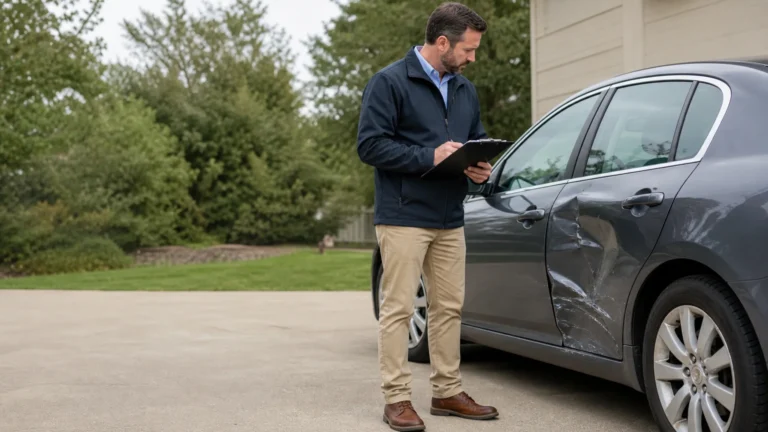
Kentucky Diminished Value Claims
Kentucky drivers may pursue a repaired vehicle’s leftover market loss from the at-fault driver as part of a.
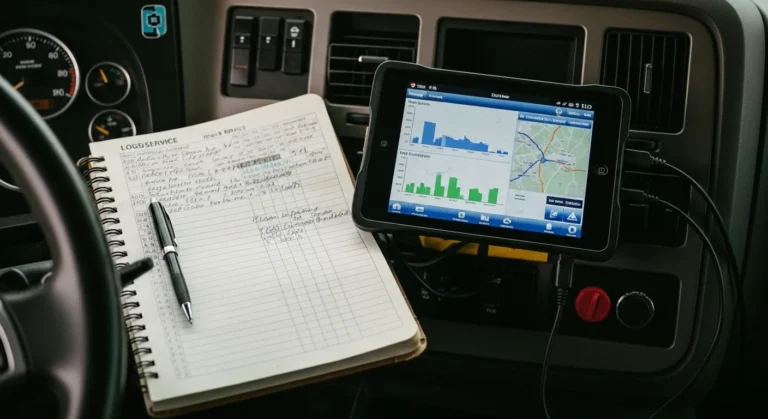
FMCSA Revoked ELDs: Fleet Compliance and Enforcement Deadlines
FMCSA removed five electronic logging devices from the registered list on August 6, 2026, and set an October.
FMCSA English Proficiency Rule and OOS Enforcement
FMCSA English Proficiency Rule Sam Aguiar Injury Lawyers August 11, 2026 7 minute read On This Page.