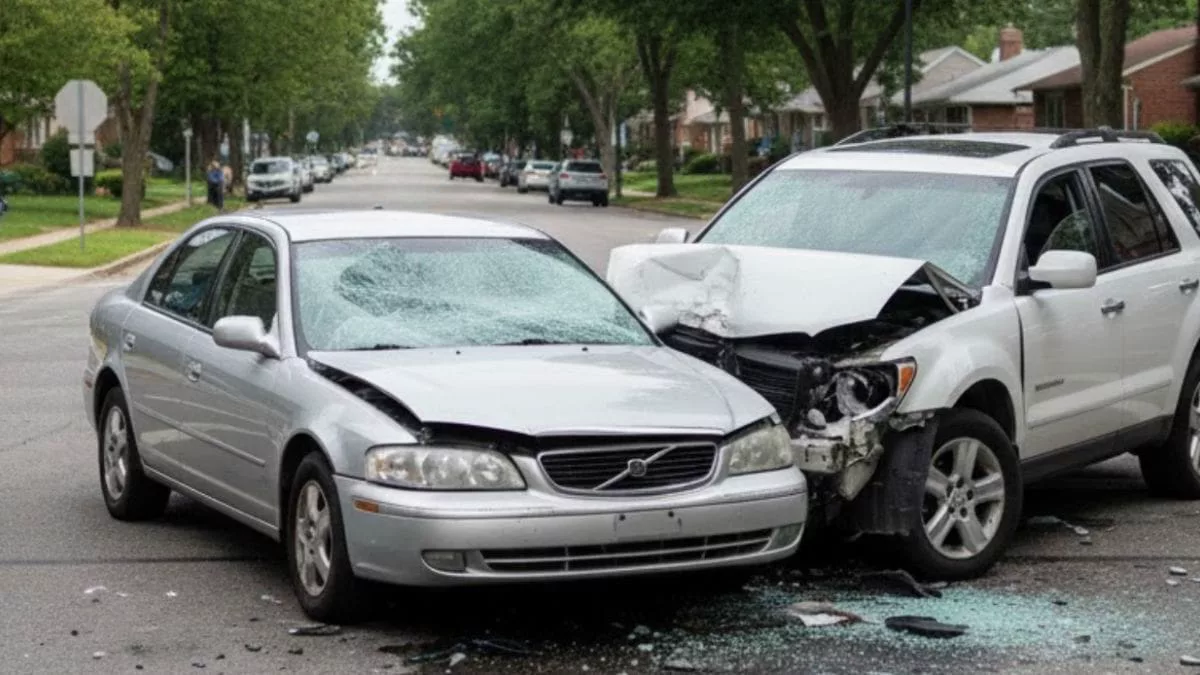
Sam Aguiar Injury Lawyers represents car accident victims throughout Louisville and Kentucky, recovering damages from at-fault drivers and their insurers under KRS 304.39 and KRS 411.182. The firm has achieved 40+ seven-figure results since 2020, holds a 4.9/5 Google rating across 1,000+ reviews, and is the only Louisville car accident firm named Forbes Best-In-State 2025. The Bigger Share Guarantee® ensures your walk-away amount is always the largest share after all bills, liens, and case expenses are resolved.
What the Insurance Company Is Already Doing
The moment a crash is reported, the at-fault driver’s insurance carrier assigns an adjuster. That adjuster’s sole objective is to protect the insurer’s money, not yours. By the time you receive that first phone call, they have already begun building their case. Here is exactly what is happening in the background:
Recorded Statements
Adjusters call quickly to get you on record before you understand the full extent of your injuries. Any statement you make can be used later to reduce or deny your claim.
Social Media Monitoring
They review your Facebook, Instagram, and other profiles immediately, looking for photos or posts that appear to contradict your injury claims.
Quick Low Offers
A fast settlement offer is designed to close your claim before you know what your injuries will actually cost, especially future medical treatment and lost earning capacity.
Deliberate Delays
When a quick offer fails, they slow everything down. The longer your bills pile up and your income stays disrupted, the more likely you are to accept less than your case is worth.
Insurance adjusters are also trained to assign you a higher fault percentage than the evidence supports. Under KRS 411.182, Kentucky follows pure comparative fault, meaning your recovery is reduced by your percentage of fault but never eliminated. Even if you were 30% responsible, you can still recover 70% of your damages. Do not accept any fault determination without an independent assessment of the evidence.
How Louisville Car Accident Claims Work in Kentucky
Kentucky is one of a handful of states that uses a “choice no-fault” system under KRS 304.39. Every driver is required to carry Personal Injury Protection (PIP) coverage of at least $10,000. After a crash, your own PIP pays for medical bills and a portion of lost wages regardless of who caused the accident. The limitation: $10,000 disappears fast. A single emergency room visit, imaging, and one follow-up appointment can exhaust PIP before you are even discharged.
Once PIP is exhausted, you can pursue the at-fault driver’s liability insurance, but only if your medical expenses exceed $1,000, you suffered a permanent injury or fracture, or there was a death. The National Highway Traffic Safety Administration documents that the average crash injury generates medical costs well above that threshold, meaning most seriously injured Louisville victims qualify to bring a liability claim.
The filing deadline matters. Under KRS 413.140, the statute of limitations for personal injury claims is one year from the date PIP benefits are exhausted or rejected, with separate rules for minors and wrongful death. Missing this window bars your claim entirely. Insurance adjusters know these deadlines and may use delays to run out the clock.
The Fault Percentage Problem
Adjusters are trained to push your fault percentage as high as possible. Under KRS 411.182, Kentucky’s pure comparative fault rule means a 40% fault assignment cuts your recovery by 40%. A $300,000 case becomes $180,000. That difference is exactly what the insurer is trying to capture by inflating your fault share. Independent evidence, including DOT camera footage and crash reconstruction, is often the only way to counter an inflated fault determination.
What Sets Our Car Accident Cases Apart
Sam Aguiar Injury Lawyers handles motor vehicle crash cases only. That singular focus means every resource at the firm, every investigator, every reconstructionist, every case team member, is trained on and dedicated to exactly this type of claim. No redirects to another department. No learning curve.
- ✓ Exclusive statewide DOT and TriMarc camera access. The firm has direct access to Kentucky Transportation Cabinet traffic camera archives dating back six months. Most crash scenes are covered. That footage, preserved before it cycles out, can lock down the facts of a crash before any dispute arises.
- ✓ Dedicated 3-person case teams. Every client gets an attorney, a case manager, and a dedicated legal team member assigned exclusively to their file. Low caseloads produce faster resolutions. The firm’s average pre-litigation case closes in under seven months.
- ✓ In-house crash reconstruction resources. When fault is contested, the firm deploys top-rated reconstructionists to build an independent account of how and why the crash happened, not the version the insurer is constructing.
- ✓ Bigger Share Guarantee®. If a settlement would leave the client’s share smaller than the firm’s share after all bills, liens, and case expenses are resolved, the firm cuts its fee so the client always walks away with more. This is a written commitment, not a talking point.
- ✓ No fee increase at litigation. The firm’s fee does not increase if your case proceeds to trial. Many firms raise their rate when a case goes to litigation. This one does not.
- ✓ 40+ seven-figure results since 2020. Real outcomes for real clients, including $6.8M (car accident), $4.1M (car accident), $2.5M (car accident), and $1.6M (car accident). Past results are not guarantees, but they reflect what the firm consistently goes to work to achieve.
Real Clients. Real Results.
 Google Review
“This was my first experience with a lawyer. Let me tell you, these guys really are amazing!”
Google Review
“Outstanding group of people. They made sure that I could heal with peace of mind.”
Google Review
“It felt like we had known each other for years. They really made us feel like family, and my mom and I really appreciate it.”
Google Review
“I was one of those people who felt injury lawyers were not necessary if it was 100% the other party’s fault. I was so wrong. They received over five times the amount initially offered and got the medical bills covered. Lesson learned.”
Google Review
“They ACTUALLY CARE! They go above and beyond for their clients and protect you like family.”
Our Clients Win
Frequently Asked Questions
How long do I have to file a car accident claim in Kentucky?
The deadline depends on your case. Under KRS 413.140, the general rule is one year from the date your PIP benefits are exhausted or rejected. Separate deadlines apply to wrongful death and claims involving minors. Missing the deadline bars recovery entirely. Contacting a Louisville car accident lawyer early preserves your options and the evidence.
What is PIP coverage and how does it work in Kentucky?
Under KRS 304.39, Kentucky requires all drivers to carry at least $10,000 in Personal Injury Protection coverage. PIP pays your medical bills and a portion of lost wages after a crash, regardless of who was at fault. The $10,000 cap is often exhausted quickly, particularly with emergency care and follow-up treatment, making a liability claim against the at-fault driver critical for most serious injuries.
Can I still recover damages if I was partially at fault?
Yes. Under KRS 411.182, Kentucky follows pure comparative fault. Your recovery is reduced by your percentage of fault but never eliminated. If you were 25% at fault and your damages total $200,000, you can still recover $150,000. Insurance companies routinely inflate fault percentages to reduce payouts. Independent evidence is often needed to correct an inflated assignment.
What should I do if the other driver’s insurance calls me?
Do not give a recorded statement to the other driver’s insurance company. According to the National Highway Traffic Safety Administration, early recorded statements are one of the most common tools insurers use to limit claim values. You are not required to provide one. You can confirm basic facts, but anything beyond that should wait until you have spoken to a Louisville car accident lawyer about your situation.
How does the Bigger Share Guarantee® work?
The Bigger Share Guarantee® is a written commitment that if a settlement would leave your walk-away amount smaller than the firm’s share after all medical bills, liens, and case expenses are resolved, the firm cuts its fee until your share is the largest. The client took the harm, and this guarantee makes sure the outcome reflects that. It is separate from the $0 out-of-pocket policy and the no-fee-increase-at-litigation commitment.
What kind of evidence is important after a car accident?
The most valuable evidence includes DOT and intersection camera footage (which can cycle out within 30 days), the police report, photos from the scene, medical records starting from the day of the crash, and witness contact information. According to CDC injury data, delayed documentation of injuries is one of the primary reasons insurance companies dispute medical causation. Acting quickly to preserve all evidence strengthens your case.
How much is my car accident case worth?
Case value depends on medical expenses (past and projected future costs), lost income and reduced earning capacity, pain and non-economic damages, and in some cases punitive damages for gross misconduct. The National Highway Traffic Safety Administration documents that the average seriously injured crash victim accumulates costs far exceeding initial insurance offers. The only reliable way to evaluate an offer is against documented evidence of your actual and projected losses.