

Instacart Delivery Accidents
Hit By An Instacart Driver?
 ★★★★★
Over 1,000 Five-Star Reviews
•
Available 24/7. $0 Out-Of-Pocket Forever.
★★★★★
Over 1,000 Five-Star Reviews
•
Available 24/7. $0 Out-Of-Pocket Forever.
Instacart Accident Coverage Questions
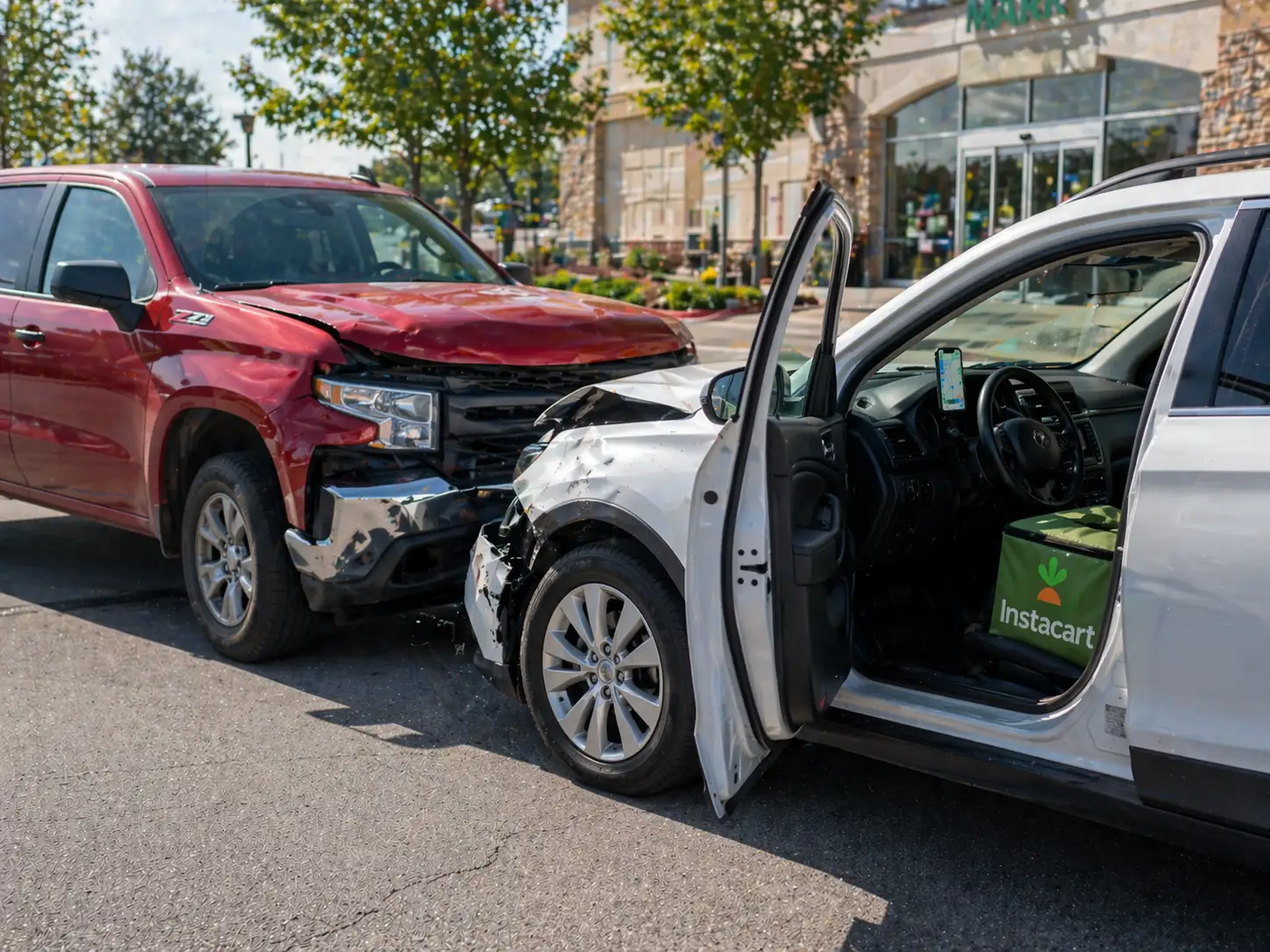
An Instacart accident can involve a shopper driving to a store, to a customer, or between orders. Instacart’s own Auto Liability Claim Form asks when the accident happened and offers four answers: on the way to the customer’s home, on the way to the retailer or grocery store, online and waiting for a delivery opportunity, or offline.
The same form asks whether the accident was reported to the shopper’s personal auto insurer. The timing of the trip and the shopper’s own policy are two of the first facts an Instacart accident case has to establish.
Shopper Status at the Time of the Accident
Instacart records can show whether the driver was accepting an order, shopping, leaving a store, or completing a delivery.
Those records can change which insurer responds and what evidence is needed.
Records That Show the Timeline
Evidence may be held by the grocery store, Instacart, the driver, and nearby businesses.
Pickup records, checkout timing, delivery screenshots, GPS data, camera footage, and customer messages can all fill in the timeline.
Grocery cameras, app data, parking lot footage, and witness details can disappear quickly. The early work in a case is collecting the route, the delivery timing, vehicle photos, every applicable insurance policy, and footage from cameras near the accident scene.
Auto Liability Coverage in Instacart’s Annual Reports
Maplebear Inc., which does business as Instacart, describes its accident coverage in its 2025 annual report on Form 10-K, filed with the U.S. Securities and Exchange Commission on February 26, 2026. The company says it uses third-party insurance, with deductibles, against auto liability for bodily injury, physical damage, and uninsured and underinsured motorists.
The same report says Instacart carries automobile liability and general liability insurance, but that the policies “do not cover all claims to which we are exposed and are not always adequate to indemnify us for all liability.” If claims go past its aggregate coverage limits, Instacart says it would bear the excess itself, on top of deductibles and self-insured retentions.
Instacart also tells investors it is “regularly subject to claims of significant liability based on traffic accidents, deaths, injuries, or other incidents” caused by shoppers, customers, or third parties. The filings do not name the auto insurer or state the policy limits.
Instacart Insurance Reserves
The 2025 Form 10-K describes an insurance reserve for accidents that have happened but are not yet resolved. It includes reported claims, claims incurred but not yet reported, expected development on reported claims, and claims that may reopen, and it is listed within accrued and other current liabilities on the balance sheet.
When Instacart adjusts the reserve, the change is recorded in cost of revenue, the same line that includes “insurance costs attributed to fulfillment.” In its 2024 Form 10-K, Instacart said an independent actuarial firm periodically reviews the reserves, and that the length of time a claim stays open, rising healthcare costs, and rising automotive costs can affect the actual losses on any given claim.
Independent Contractor Classification
Instacart classifies its shoppers as independent contractors. Its 2025 Form 10-K says shoppers pick and deliver orders through Instacart’s technology platform and are paid primarily per batch, and that Instacart acts as the customer’s agent in buying those services. The company says it does not control the fulfillment services or direct shoppers to perform them on its behalf.
Instacart’s customer Terms of Service, last updated May 7, 2026, say picking, packing, and delivery may be done by retailer staff, independent contractors, or third-party logistics providers, depending on the retailer. The terms state that those people “are not Instacart’s employees, partners, or agents, and Instacart does not supervise, direct, or control their performance.”
The company says it believes it has properly classified its workers in every jurisdiction where it operates. The 10-K also reports proposed class and collective actions and thousands of individual claims alleging that shoppers were misclassified, along with state and local audits of shopper classification. None of those class or collective actions has reached class certification, and the misclassification cases have been compelled to individual arbitration or are on appeal after motions to compel arbitration were granted.
What Instacart’s Filings Mean for Your Case
Instacart requires shoppers to carry their own insurance, including automobile insurance. Its 2025 Form 10-K warns that shoppers “may fail to acquire adequate coverage or any coverage at all,” so your own uninsured motorist coverage may need review alongside the shopper’s policy.
Its risk disclosures say Instacart may be subject to liability for incidents involving shoppers that its insurance does not cover, and the company lists disputes over “whether we are responsible for injury resulting from alleged shopper actions or negligence” among its legal proceedings.
Because Instacart treats shoppers as contractors it does not control, your case needs records of what the shopper was doing at the time of the accident, including the order, the route, and the app status.
Personal Auto Policy Exclusions
The National Association of Insurance Commissioners says most personal auto policies exclude coverage when a vehicle is used for livery or commercial purposes. A shopper’s personal insurer may rely on that kind of personal insurance exclusion to dispute coverage for an accident during a delivery.
The case may also require review of Instacart’s auto liability coverage, household policies, and uninsured or underinsured motorist coverage.

Key Takeaways
Hit by an Instacart Shopper on the Road?
After an Instacart accident, the shopper app’s records from the moment of impact can be lost while you are still in treatment. Sam Aguiar Injury Lawyers looks for the app, store, and phone data behind the accident, and a dedicated three-person case team led by an attorney keeps your case moving. Most cases qualify in under 10 minutes. Call today for a free case review.