

Kentucky Golf Cart Accident Lawyers
Injured in a Kentucky Golf Cart Accident?
 ★★★★★
Over 1,000 Five-Star Reviews
•
Available 24/7. $0 Out-Of-Pocket Forever.
★★★★★
Over 1,000 Five-Star Reviews
•
Available 24/7. $0 Out-Of-Pocket Forever.
Golf Carts and Low-Speed Vehicles
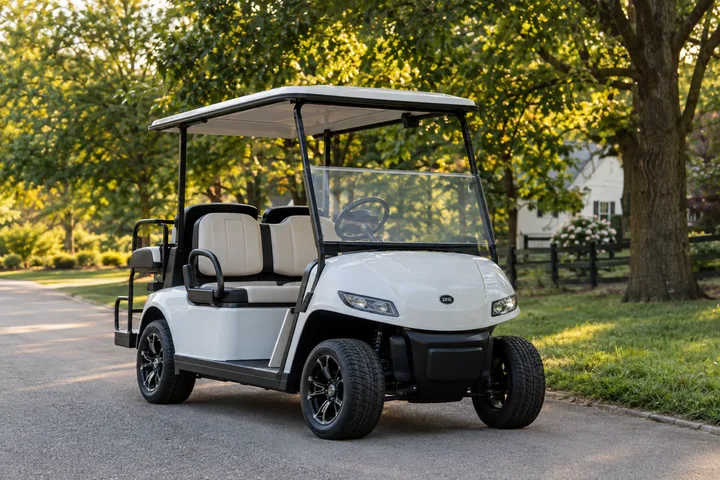
Kentucky splits street-going carts into two categories, and the category decides which statute and which insurance rule apply. A golf cart is a locally permitted vehicle that is not a motor vehicle on a designated road, and a low-speed vehicle is a motor vehicle that is titled, registered, and insured like a car.
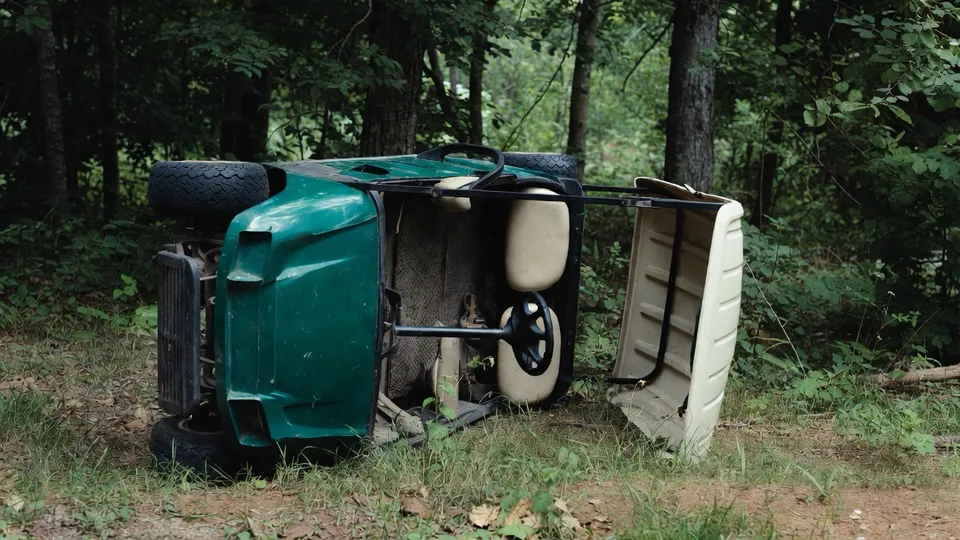
A golf cart accident on a public road is measured against these statutes. A golf cart accident on private property is a premises case, because KRS 189.286 does not reach a cart that stays off public roadways.
Statutory Golf Cart Definition
Subsection (1) of KRS 189.286 defines a golf cart by its design, size, speed, and equipment. A cart that does not meet every element is outside the section’s definition.
Golf Cart Elements Under KRS 189.286
KRS 186.010(16) defines a low-speed vehicle as a self-propelled motor vehicle with four wheels that is designed to operate at no more than 25 miles per hour, as certified by the manufacturer. The two categories can look alike on the road, but they fall under different statutes. Off-road vehicles such as ATVs follow another set of rules.
Road Rules for Carts and Low-Speed Vehicles
A golf cart needs a local ordinance, a permit, and an inspection before it may use a public road, and a low-speed vehicle needs a federal safety standard, a 17-character identification number, a title, and a registration.
Golf Carts on Public Roads
Under subsection (2) of KRS 189.286, a local government may allow golf carts on a public road only by an ordinance that specifies each road open to carts. Subsection (3) requires the ordinance to call for a permit from the local government, a displayed sticker or permit identifying the roads the cart may use, and an inspection by a certified inspector designated by the county sheriff.
Subsection (4) allows a cart on a designated road only if the posted speed limit is 35 miles per hour or less, the operator does not cross a road posted above 35 at an intersection, the operator has a valid operator’s license in his or her possession, and the cart displays a slow-moving vehicle emblem. The operator is subject to the traffic regulations of Chapter 189, and a local government may adopt stricter ordinances for cart safety equipment and operation.
Low-Speed Vehicles on Highways
KRS 189.282 allows a low-speed vehicle on a highway when it meets the federal safety standards for low-speed vehicles in 49 C.F.R. sec. 571.500, displays a 17-character vehicle identification number, and has not been modified to increase its speed above its original manufactured limit. The posted limit must be 35 miles per hour or less, the operator may not cross a road posted above 35 at an at-grade intersection unless an electronic traffic signal controls it, and the operator must have a valid license in his or her possession.
A low-speed vehicle on a highway is considered a motor vehicle, titled under KRS Chapter 186A and registered as a motor vehicle, and its operator is subject to KRS Chapter 189A, the driving under the influence chapter.
Insurance Requirements on Public Roads
Both categories must be insured when they operate on a public road. Subsection (5) of KRS 189.286 requires a golf cart on a designated road to be insured in compliance with KRS 304.39-080 by the owner or operator, and subsection (3) of KRS 189.282 requires the same of a low-speed vehicle. Documentation of the insurance must stay inside the vehicle at all times of operation.
Subsection (5) of KRS 304.39-080 requires the owner or operator of a motor vehicle to continuously provide security for the payment of basic reparation benefits and for tort liabilities. In a golf cart accident on a public road, as in a low-speed vehicle accident, the first questions are whether the required policy existed and what its limits were. When it did not exist, the injured person’s own policies are read for coverage, and uninsured motorist coverage stands in for the missing liability coverage, up to the policy’s stated limit.
Accidents on Courses and Private Property
Subsection (10) of KRS 189.286 takes a golf cart outside the section when it is not used on a public roadway except to cross a roadway on a golf course cart path. A golf cart accident on a golf course, a private road, or a resort path is therefore not a road case under that statute.
Those cases are decided on premises liability and on who owned, maintained, and supervised the cart and the property. The owner’s duty is judged by what the property owner knew, what the property owner should have known, and what the property owner did about it before someone got hurt, and a cart case also asks who owned the cart, who maintained it, and who let the driver use it.
Common Cart Injuries
An estimated 147,696 nonfatal golf cart injuries were treated in United States emergency departments from 1990 through 2006, and the yearly count rose 132 percent over those 17 years. Falling from the cart was the leading cause of injury at 38 percent, 31 percent of the injuries involved children under 16, and 8 percent of the patients were hospitalized. Of the injuries with a reported location, 15 percent happened on streets or public property.
Emergency departments treated an estimated 156,040 golf cart injuries from 2007 through 2017, and children had the highest rate of traumatic brain injury from golf carts, 1.62 per 100,000 children compared with 0.52 per 100,000 adults.
Key Takeaways
Hurt in a Golf Cart Accident? Get Every Dollar You Are Owed
After a golf cart accident, insurance companies are about protecting their bottom line. We’re about protecting you. Sam Aguiar Injury Lawyers takes over your case so you can focus on getting better. Every client gets a dedicated three-person team: a top-rated attorney, an experienced case manager, and a skilled legal assistant. With our Bigger Share Guarantee®, you always get more, and you pay $0 out-of-pocket forever. Call today for a free case review.