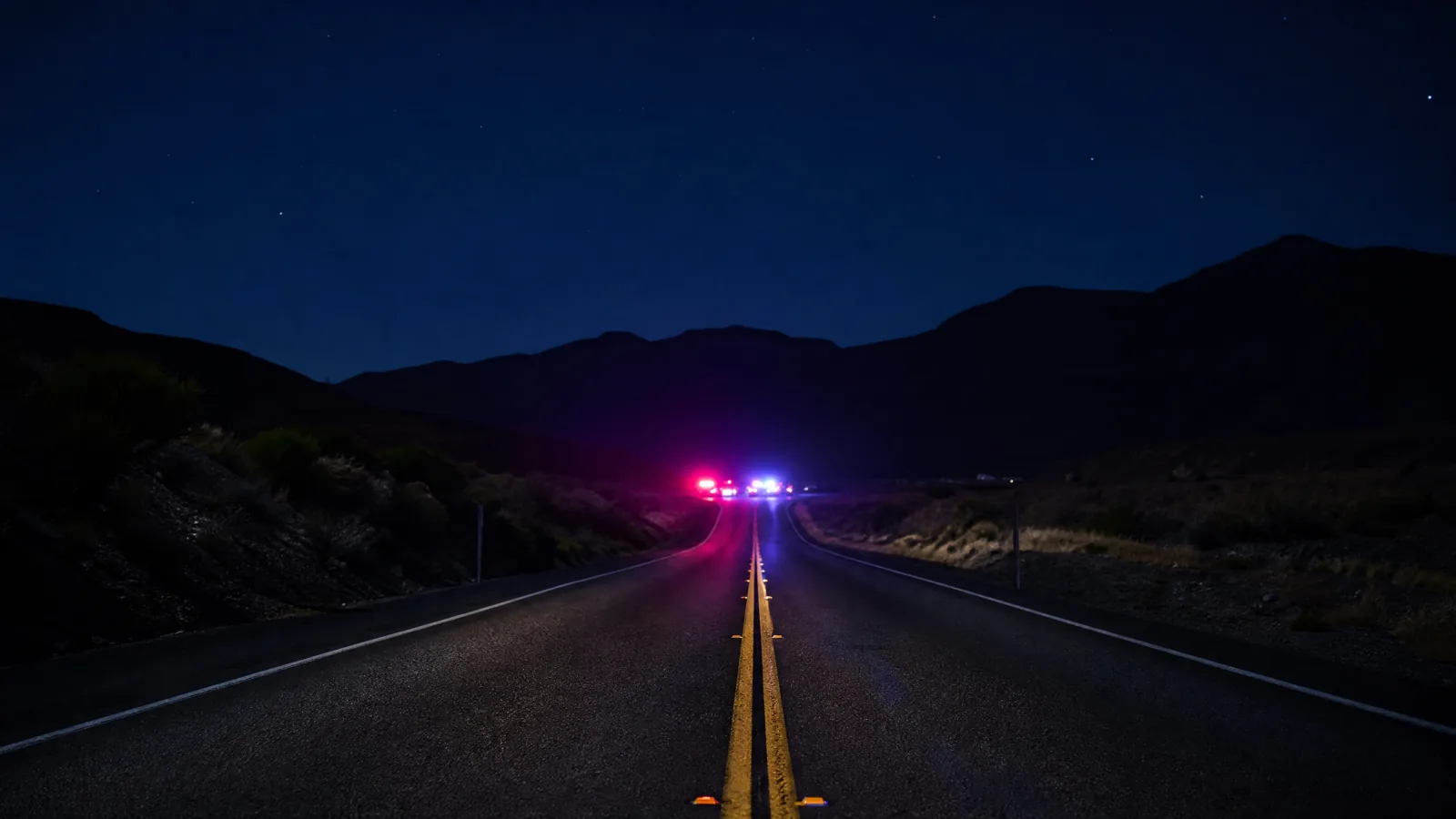
Hit and run accident scene on a kentucky road at night

Hit-and-Run Accident Lawyer in Kentucky

Forbes Best-In-State Top Lawyer
Super Lawyers 2017–2026
Bigger Share Guarantee®
$0 Out-Of-Pocket Forever
On This Page

A hit and run car accident in Kentucky is any crash where a driver involved leaves the scene without stopping to identify themselves under KRS 189.580. The fleeing driver faces criminal penalties up to a Class D felony under KRS 189.990(10). Even when the at-fault driver is never identified, Kentucky victims can still recover through their own uninsured motorist (UM) coverage under KRS 304.20-020 and Personal Injury Protection (PIP) benefits under KRS 304.39-230. In 2024, the Kentucky State Police recorded 12,744 hit and run collisions statewide.

What Kentucky Law Says About Hit and Run Crashes

Kentucky law requires every driver involved in a crash that causes injury, death, or property damage to stop at the scene, remain there, and share identifying information with any other driver, injured person, or responding officer. The rule lives in KRS 189.580. It applies whether the crash was the driver’s fault, the other driver’s fault, or no one’s fault at all.

The duties under the statute are specific. A driver must stop as close to the scene as possible without blocking traffic more than necessary. The driver must give their name, address, and vehicle registration to the other driver, to any person who is injured, and to any responding officer. If another person is injured or killed, the driver must render aid and must call or arrange for police to be notified. Leaving the scene of an injury crash, even briefly, can be charged as a felony.

Penalties for violating KRS 189.580 come from KRS 189.990(10). Two tracks exist. If the hit and run caused serious physical injury or death to another person, the fleeing driver is guilty of a Class D felony, punishable by 1 to 5 years in a Kentucky prison and fines between $1,000 and $10,000 under KRS 532.060 and KRS 534.030. If the crash did not cause serious physical injury, leaving the scene is a Class A misdemeanor, punishable by up to 12 months in county jail and a fine of up to $500.

Those criminal penalties do not put money in your pocket. Your recovery comes from your own auto policy and from the civil side of the claim. That is the part of the process that gets overlooked in the first 48 hours, and that is the part that controls whether you end up paying for someone else’s mistake.

Quick Reference
Kentucky hit and run statute: KRS 189.580 (duty to stop and render aid).
Criminal penalties: Class D felony (1 to 5 years, $1,000 to $10,000 fine) if injury or death; Class A misdemeanor (up to 12 months jail, $500 fine) otherwise, under KRS 189.990(10).
Coverage that pays victims: Uninsured motorist coverage under KRS 304.20-020 and PIP under KRS 304.39-230.

What the 2024 Kentucky Data Shows About Hit and Run Crashes

Hit and run crashes are more common in Kentucky than most people realize. The Kentucky State Police 2024 Traffic Collision Facts report tracks hit and run collisions as a separate category and shows a steady volume year over year.

  • 12,744 total hit and run collisions statewide in 2024.
  • 27 fatal hit and run collisions resulting in 27 deaths.
  • 1,011 hit and run injury collisions resulting in 1,290 injuries.
  • 12 pedestrian deaths and 2 pedalcyclist deaths in hit and run crashes.
  • 159 pedestrians and 33 pedalcyclists injured in hit and run crashes.

Pedestrians and cyclists are overrepresented in hit and run fatalities. The Insurance Institute for Highway Safety pedestrian fatality data shows a similar national pattern. NHTSA Traffic Safety Facts research confirms that one in five U.S. pedestrian fatalities involves a fleeing driver. Nationally, the NHTSA recorded 2,361 hit and run fatalities in 2022, the highest on record.

Urban crashes dominate Kentucky hit and run totals. Jefferson County (Louisville) consistently records the largest share of hit and run collisions in the state. The evidence strategy is completely different between crash types: an urban hit and run near 4th Street Live or Bardstown Road is a camera case; a rural hit and run on US-60 is a witness case.

Why Drivers Flee and Why It Matters for Your Claim

Understanding why a driver runs helps explain the coverage picture. The Insurance Information Institute estimates that approximately 1 in 8 drivers on U.S. roads carries no auto insurance. In Kentucky, uninsured driving is one of the most common reasons a driver flees. Others include:

  • Active DUI or drug impairment under KRS 189A.010 — the driver has more to lose from a sobriety test than from fleeing.
  • Outstanding warrants or suspended license — any interaction with law enforcement puts the driver at risk of arrest.
  • Lapsed or cancelled policy — the driver knows there is no coverage and panics.
  • Undocumented immigration status — fear of law enforcement contact regardless of fault.
  • Stolen vehicle — the driver has no claim to be operating the vehicle at all.

This matters for your claim because a driver who fled while impaired or on a suspended license may face punitive damages in the civil case in addition to compensatory damages, if they are eventually identified. A driver who was uninsured triggers UM coverage directly. The reason for flight shapes the legal strategy from day one.

Who Pays When the Driver Flees: PIP, UM, and UIM

1. Personal Injury Protection (PIP)

Kentucky’s Motor Vehicle Reparations Act created PIP under KRS 304.39-230 and related sections. Every Kentucky auto policy must include at least $10,000 in PIP unless you formally rejected it. PIP pays medical bills, a portion of lost wages, and certain out-of-pocket costs no matter who caused the crash. In a hit and run, PIP is usually the first money to arrive because it does not depend on identifying the other driver.

2. Uninsured Motorist (UM) Coverage

Under KRS 304.20-020, every Kentucky auto policy must include UM coverage at minimum limits of $25,000 per person and $50,000 per accident unless the named insured rejected it in writing. UM coverage pays for medical bills beyond PIP, lost wages, pain and suffering, and other damages caused by an uninsured driver. The statute also treats a hit and run driver as uninsured when the driver cannot be identified, so your UM claim is the civil vehicle for recovery when the other driver is never caught.

Kentucky courts have generally required that hit and run claims under UM coverage involve physical contact between the vehicles and that the crash be reported to law enforcement. Phantom vehicle cases, where no contact happens and the driver vanishes, require more corroboration, such as witness statements or camera footage. The Kentucky Court of Appeals confirmed the physical contact requirement in Huelsman v. National Emblem Ins. Co., 551 S.W.2d 579 (Ky. App. 1977). Most carriers will require a police report and a sworn statement before accepting a phantom vehicle claim.

3. Underinsured Motorist (UIM) Coverage

UIM coverage only applies when the at-fault driver is eventually identified, has liability insurance, but not enough to cover your losses. In a true unidentified hit and run, UIM typically does not apply because there is no identified driver and no liability insurer to exhaust. If the driver is caught later and carried only Kentucky’s $25,000 minimum, UIM may step in to cover the gap above that amount. UIM selection is governed by KRS 304.39-320.

4. UM Stacking in Kentucky

Kentucky courts have recognized UM stacking when separate premiums were paid for each vehicle on the policy. If you have three vehicles on a single policy and paid a separate UM premium for each, your per-person UM limit may stack to three times the individual limit. Anti-stacking clauses in policies have been found unenforceable by Kentucky courts when per-vehicle premiums were charged. Reviewing the declarations page of every auto policy in the household is one of the first steps in a serious hit and run claim.

5. When Your UM Carrier Acts in Bad Faith

Kentucky’s Unfair Claims Settlement Practices Act, KRS 304.12-230, provides a bad-faith cause of action against any UM carrier that acts unreasonably in handling a claim. The Kentucky Supreme Court in State Farm v. Reeder, 763 S.W.2d 116 (Ky. 1988) confirmed that injured drivers can pursue first-party bad-faith damages when an insurer’s handling of the claim violates the statute. That leverage exists in every serious UM claim, even when the other driver is never caught.

Google review icon ★★★★★

“My mother was injured in a car vs pedestrian accident. The insured had what I would consider a very reputable insurance carrier, and there were eyewitnesses. I attempted to work with them without legal counsel. Their first offer would have given me more for my lost wages than my elderly Mom would have received for her broken pelvis. It was such a low offer that they should have been embarrassed. They said they did not want to negotiate. I called Sam Aguiar, and it was the best thing I’ve ever done. Insurance companies don’t want to be reasonable anymore, and the attorneys and staff weren’t putting up with that.”

Jill M. — Google Review

How Insurance Companies Handle UM Claims in Kentucky Hit and Runs

The same insurance company that sold you the UM coverage is now the party on the other side of the claim. Insurance companies are already investigating your crash. Their goal is to pay you as little as possible.

The pattern in Kentucky UM claims is consistent across carriers. The National Association of Insurance Commissioners has documented the same pattern nationally. Expect some combination of the following:

  • Fast recorded statement requests designed to lock in a description of the crash, the injury, and prior medical history before you have a full diagnosis.
  • Broad medical records subpoenas going back years, used to argue a pre-existing condition is the real cause of the pain.
  • Independent medical examinations (IMEs) with doctors the insurer hires repeatedly. These reports routinely minimize injuries and attribute symptoms to something other than the crash.
  • Questions about whether there was actual contact. In phantom vehicle cases, the carrier will push hard on whether a real second vehicle existed.
  • Low initial offers well below the true cost of a serious hit and run claim, banking on the idea that a claimant without a lawyer will take the first number just to move on.

Kentucky’s Unfair Claims Settlement Practices Act, KRS 304.12-230, provides a bad-faith cause of action when an insurer acts unreasonably. The firm tracks every carrier interaction from day one.

Identifying the Fleeing Driver: Camera Footage and Investigation

Many hit and run crashes in Kentucky occur at or near intersections monitored by traffic cameras. Sam Aguiar Injury Lawyers maintains exclusive statewide access to DOT and TriMarc camera footage archived up to six months back. For crashes on monitored Louisville corridors or Kentucky highways, that footage may capture the fleeing vehicle’s make, model, color, and partial license plate. This access is not available through standard public records channels, and most firms do not have it.

Beyond traffic cameras, dashcam footage from other vehicles on the road at the time of the crash is an underutilized evidence source. Neighboring businesses with exterior cameras, residential doorbell cameras at nearby intersections, and gas station surveillance systems can all capture relevant footage that overwrites quickly. The Kentucky Transportation Cabinet runs public traffic cameras and the Louisville-area TriMarc system covers interstates, interchanges, and many major urban corridors. Retention windows are short. Footage must be preserved within days or it is gone.

Kentucky State Police and local law enforcement also work hit and run cases as criminal matters under KRS 189.580, and their investigations can produce evidence that supplements the civil claim. A vehicle identified from camera footage, combined with witness descriptions and law enforcement investigation, can shift a UM claim into a direct liability claim against an at-fault driver.

A Hit and Run Happened: Now What?

The first three days after a hit and run set the ceiling on what the case can recover. Evidence decays fast. DOT cameras overwrite on a short retention cycle. Witnesses forget details. Physical evidence at the scene gets swept or washed away.

  1. Call 911 from the scene. Request a police unit and an ambulance if anyone is injured. Under KRS 189.580 and local rules, an officer response and a crash report are typically required for UM coverage to apply to a hit and run. No report means a harder path to a UM claim. The Kentucky Transportation Cabinet maintains crash report access for reference and verification.
  2. Get medical care the same day. Every insurance carrier treats a gap between the crash date and the first medical visit as evidence that the injury is not serious. Same-day ER or urgent care documentation is the single most valuable piece of evidence after the police report.
  3. Photograph everything before anyone moves. Wide shots of the scene, close shots of vehicle damage, debris, paint transfer, skid marks, traffic signals, and any visible injuries. Also photograph surrounding buildings and poles; those will tell you which cameras may have captured footage.
  4. Collect witness information before they leave. A witness who saw the make, model, direction of travel, or even a partial plate can break the case open. Get names and phone numbers at the scene.
  5. Request DOT and TriMarc camera footage immediately. The firm sends written preservation requests within hours of the initial call. Footage must be preserved within days or it is gone permanently.
  6. Notify your own insurance carrier. There is no other driver. The claim runs through your own policy, and it starts with a reported claim followed by a PIP application.
  7. Do not give a recorded statement before understanding the coverage. Even your own carrier will ask for a recorded statement in the first few days. Anything inconsistent in that statement gets used later to reduce the claim.

Criminal Case vs. Civil Claim: Two Separate Tracks

If the hit and run driver is caught, two parallel processes run simultaneously: a criminal prosecution by the Commonwealth and a civil claim by the victim. They are independent. A plea deal or acquittal in the criminal case does not end the civil claim. A finding of guilt in the criminal case can be used as evidence in the civil matter, but is not required to win on the civil side.

Restitution ordered in the criminal case is separate from the civil recovery. The amounts are almost always far below what a serious injury claim is worth, and they do not offset UM or UIM benefits. Restitution is part of the criminal sentence under KRS 533.030. It does not replace civil recovery.

If the convicted driver fled while impaired under KRS 189A.010 (DUI), or while on a suspended license, that conduct may support a claim for punitive damages in the civil case in addition to compensatory damages.

Kentucky’s pure comparative fault rule under KRS 411.182 allocates fault among parties. In a hit and run where the fleeing driver is later identified, the jury assigns fault percentages. Kentucky’s pure comparative rule allows recovery even if the plaintiff was found partially at fault.

Google review icon ★★★★★

“Working with Sam and his crew has been a great experience; the insurance company was trying to take advantage of my situation and they put a stop to that. I never had to leave my house and they took care of business, which was a big help for me considering I’m disabled. I’m highly appreciative of their services.”

M. Hathaway — Google Review

Frequently Asked Questions: Hit-and-Run Accident Cases in Kentucky

What is considered a hit and run in Kentucky?

Under KRS 189.580, a hit and run is any crash where a driver involved leaves the scene without stopping, providing their name and address, and rendering aid when someone is injured. The statute applies to any crash involving injury, death, or property damage. Fault is not a factor: even a driver who did not cause the crash must stop.

Is leaving the scene of an accident a felony in Kentucky?

It can be. Under KRS 189.990(10), leaving the scene of a crash that resulted in serious physical injury or death is a Class D felony, punishable by 1 to 5 years in prison. If the crash did not cause serious injury, it is a Class A misdemeanor, punishable by up to 12 months in county jail. A conviction does not automatically transfer money to the victim; that comes from the civil/insurance side.

Can I recover if the driver who hit me is never found?

Yes. Under KRS 304.20-020, Kentucky UM coverage treats an unidentified hit and run driver as an uninsured motorist. Your UM policy pays for medical bills beyond PIP, lost wages, pain and suffering, and other damages. PIP under KRS 304.39-230 also applies regardless of whether the other driver is ever identified.

What is the phantom vehicle rule in Kentucky UM claims?

A phantom vehicle case is one where a vehicle causes a crash without making physical contact, for example by forcing you off the road. Kentucky courts have generally required physical contact for a UM hit and run claim to succeed without additional corroboration, as established in Huelsman v. National Emblem Ins. Co., 551 S.W.2d 579 (Ky. App. 1977). If there was no contact, a witness statement, camera footage, or physical evidence at the scene becomes critical to establishing that a second vehicle existed.

Does Kentucky UM coverage apply to hit and run crashes?

Yes. KRS 304.20-020 expressly includes unidentified drivers in the definition of an uninsured motorist. When a hit and run driver is never caught, UM is the primary civil recovery tool. Coverage typically requires that the crash be reported to law enforcement, that there was some form of physical contact or corroborated evidence of a second vehicle, and that the claim is reported to your insurer within a reasonable time under your policy terms.

Do I need a police report for a hit and run UM claim?

Most UM policies require a prompt report to law enforcement as a condition of coverage for hit and run claims. The officer response creates the official crash report, which is the foundation document for both the UM claim and any criminal investigation. Filing a report at the scene, rather than later, also establishes a contemporaneous record of the incident that is much harder for a carrier to dispute. Under KRS 189.580, hitting another vehicle and not remaining is itself a crime, and law enforcement documentation begins that criminal record.

Will filing a UM claim raise my insurance rates in Kentucky?

KRS 304.20-045 prohibits insurers from cancelling or non-renewing a policy solely because of a UM claim where the insured was not at fault. However, policies vary in their premium impact provisions. This is a question worth addressing before you report, but doing so before obtaining legal representation is not advisable in a serious injury case.

Can traffic camera or TriMarc footage identify a hit and run driver?

Yes, in many urban Kentucky cases. The Louisville-area TriMarc system operates more than 300 cameras across major corridors and interstates. The Kentucky Transportation Cabinet operates additional cameras on state highways. Sam Aguiar Injury Lawyers has exclusive statewide access to archived DOT and TriMarc footage up to six months back. That footage is not available through standard public records requests, which is why timing and preservation requests matter from day one.

What happens if the hit and run driver is caught after the fact?

Two processes run simultaneously. In the criminal case, the Commonwealth charges the driver under KRS 189.580. In the civil case, the identified driver’s liability insurance becomes the primary source of recovery, which may be supplemented by UIM coverage if the policy limits are insufficient. Restitution ordered in the criminal case under KRS 533.030 is separate from civil recovery and does not offset it. If the driver fled while impaired, punitive damages may be available in the civil claim.

How much does it cost to hire a Kentucky hit and run lawyer?

$0 out-of-pocket forever. Sam Aguiar Injury Lawyers works on a contingency basis, and our Bigger Share Guarantee® means you always keep more than our fee. If we do not recover for you, you owe nothing. No retainer, no hourly billing, no cost reimbursement.

HURT IN A CAR? CALL SAM AGUIAR!

You focus on getting better. We’ll handle everything else.