
Moped Accident Lawyers
Injured In A Moped Accident?
 ★★★★★
Over 1,000 Five-Star Reviews
•
Available 24/7. $0 Out-Of-Pocket Forever.
★★★★★
Over 1,000 Five-Star Reviews
•
Available 24/7. $0 Out-Of-Pocket Forever.
Kentucky Moped Accident Cases
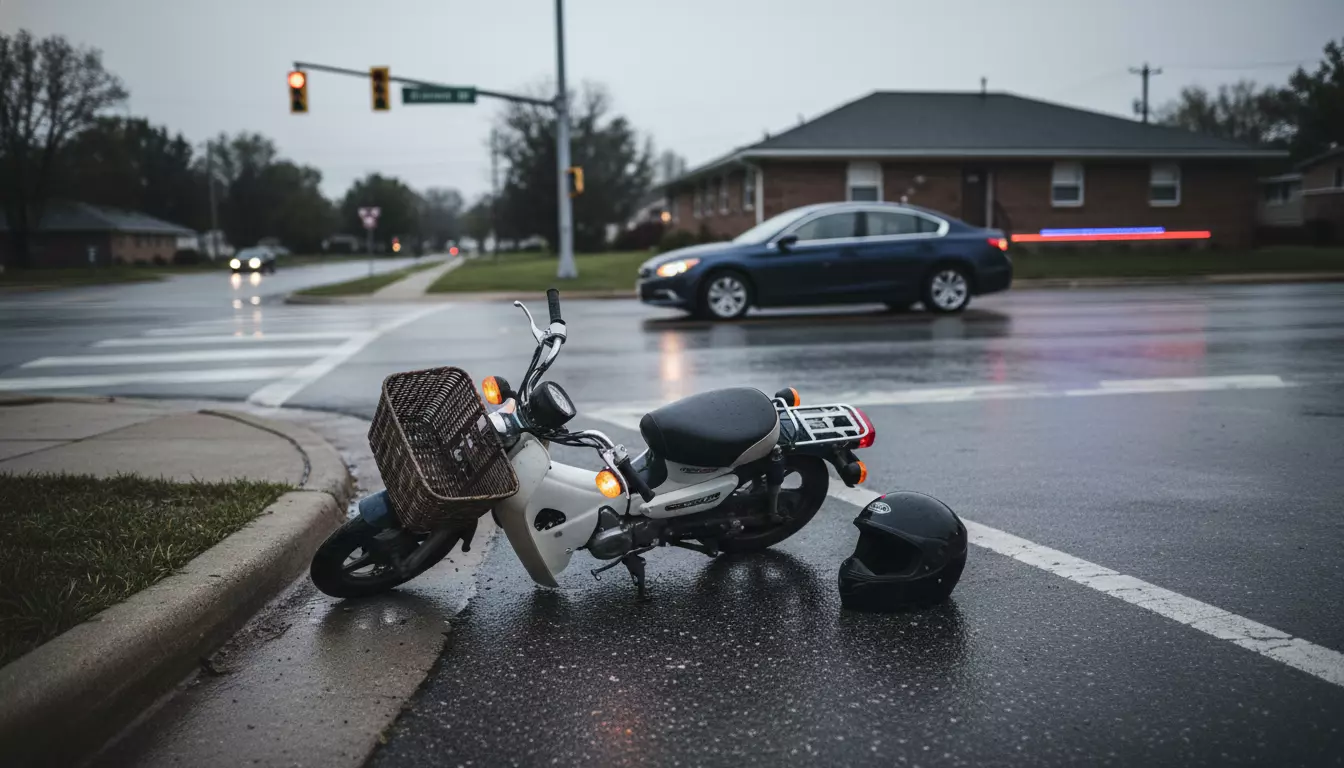
Moped riders in Kentucky face serious injury risks from driver negligence. After a crash, the vehicle’s legal classification and the available insurance policies determine which coverage rules apply.
Sam Aguiar Injury Lawyers goes to work on a moped case from the first call, and the Bigger Share Guarantee® means you keep more of your settlement.
The insurance and legal framework governing moped crashes contains important differences from standard auto accident cases. Kentucky law classifies mopeds separately from motorcycles, with distinct registration, licensing, and insurance requirements. Sam Aguiar Injury Lawyers handles moped accident cases across Kentucky with the same dedicated three-person case team used in all motor vehicle cases.
Kentucky Moped Laws: Classification, Registration, and Insurance
Under KRS 186.010, a moped must have the specified bicycle or step-through frame, no more than two brake horsepower, an engine of 50cc or less, an automatic transmission, and a maximum speed of 30 mph.
A vehicle meeting that moped definition does not require a Kentucky registration plate.
Under KRS 186.410, a moped operator must be appropriately licensed. A standard driver’s license is sufficient for a qualifying moped; a separate motorcycle endorsement is not required.
KRS 189.285 excludes qualifying mopeds from its motorcycle definition, so its motorcycle helmet and eye-protection requirements do not apply to them.
KRS 304.39-020 also excludes qualifying mopeds from the Motor Vehicle Reparations Act’s definition of a motor vehicle. That does not mean a moped rider can never receive PIP benefits.
When a motor vehicle strikes a qualifying moped rider, the rider may be eligible for that vehicle’s PIP benefits under the pedestrian coverage rules in KRS 304.39-050. Eligibility must be checked against the crash facts and applicable exclusions.
The at-fault driver’s liability coverage and any applicable UM/UIM policy should be reviewed alongside possible PIP benefits. A case does not automatically wait until $10,000 in PIP has been paid.
Kentucky’s 2024 licensing change eliminated the stand-alone moped license on July 15, 2024. Vehicle classification still matters: a scooter that exceeds the moped limits may face different licensing, registration, and insurance rules. Golf carts and other low-speed vehicles follow separate street-legal rules in Kentucky.
A driver who strikes a moped rider is held to the same standard of care as a driver striking a car: they are required to yield, maintain lane position, and avoid distractions.
Insurance Coverage and Cases After a Moped Crash in Kentucky
Start by confirming whether the vehicle legally qualifies as a moped. The word “scooter” on a sales listing does not establish which Kentucky insurance rules apply.
A qualifying moped rider struck by a motor vehicle may seek PIP from the striking vehicle’s insurer. Other potential coverage must be reviewed if that vehicle is uninsured or the rider’s eligibility is disputed.
An at-fault driver’s liability coverage may compensate an injured rider for recoverable damages, including medical expenses, lost income, and pain and suffering, subject to the evidence of fault, applicable law, and policy limits.
Available uninsured motorist coverage or underinsured motorist coverage may apply when the at-fault driver has no insurance or too little coverage. Whether a policy covers the rider depends on its terms and exclusions.
One practical issue is that a qualifying moped may have no insurance policy of its own because Kentucky does not require one.
A rider with serious injuries can face a gap between available coverage and the cost of medical care, lost income, and future needs. A household auto policy should be reviewed for any coverage that may apply rather than assumed to cover the crash.
Identifying possible coverage under the vehicles’ policies, household policies, and health insurance is part of early case evaluation. Any insurer’s right to seek repayment also needs review before a settlement is distributed.
Why Moped Riders Face Elevated Injury Risk
Moped riders are among the more vulnerable users of Kentucky’s roads, sharing some of the same visibility and exposure risks as motorcyclists and bicyclists. A moped’s smaller visual profile can make it harder for other drivers to judge its distance and speed.

Key Takeaways
Knocked Off a Moped by a Driver?
Moped riders have little protection in a crash, and coverage questions come up fast because Kentucky treats mopeds differently from cars and motorcycles. Sam Aguiar Injury Lawyers sorts out which policies apply, from the driver’s liability coverage to your own. Under the Bigger Share Guarantee®, you always walk away with more than the firm after bills, liens and case costs, or the firm cuts its fee. Call today for a free case review.
Frequently Asked Questions
1What license do I need to operate a moped in Kentucky?+
A standard driver’s license is sufficient for a vehicle that meets Kentucky’s full moped definition; a separate motorcycle endorsement is not required. Kentucky eliminated the stand-alone moped license on July 15, 2024. Different rules can apply if the vehicle exceeds the moped limits.
2Does Kentucky’s no-fault PIP coverage apply to moped accidents?+
Not automatically. Kentucky excludes qualifying mopeds from the Motor Vehicle Reparations Act’s motor-vehicle definition. A qualifying moped rider struck by a motor vehicle may still receive PIP through the striking vehicle’s coverage, subject to eligibility and applicable exclusions. The crash facts and policies must be reviewed.
3Is a driver held to a different standard if they hit a moped instead of a car?+
No. A driver who strikes a moped at an intersection is held to the same standard of care as any motorist would be held to in a crash involving another car, and ordinary negligence principles apply.
4Can mopeds be driven on Kentucky highways?+
Mopeds must follow traffic laws and cannot use limited-access highways where an enforced minimum speed exceeds 30 mph. Route restrictions matter; Lexington Police specifically identifies New Circle Road and Interstate 75 as examples.
5Why does moped insurance coverage sometimes fall short after a crash?+
Kentucky does not require insurance for a qualifying moped, and an at-fault driver’s available coverage may be too small for a serious injury. Any UM/UIM or other potentially applicable policy must be reviewed for coverage, limits, and exclusions.