

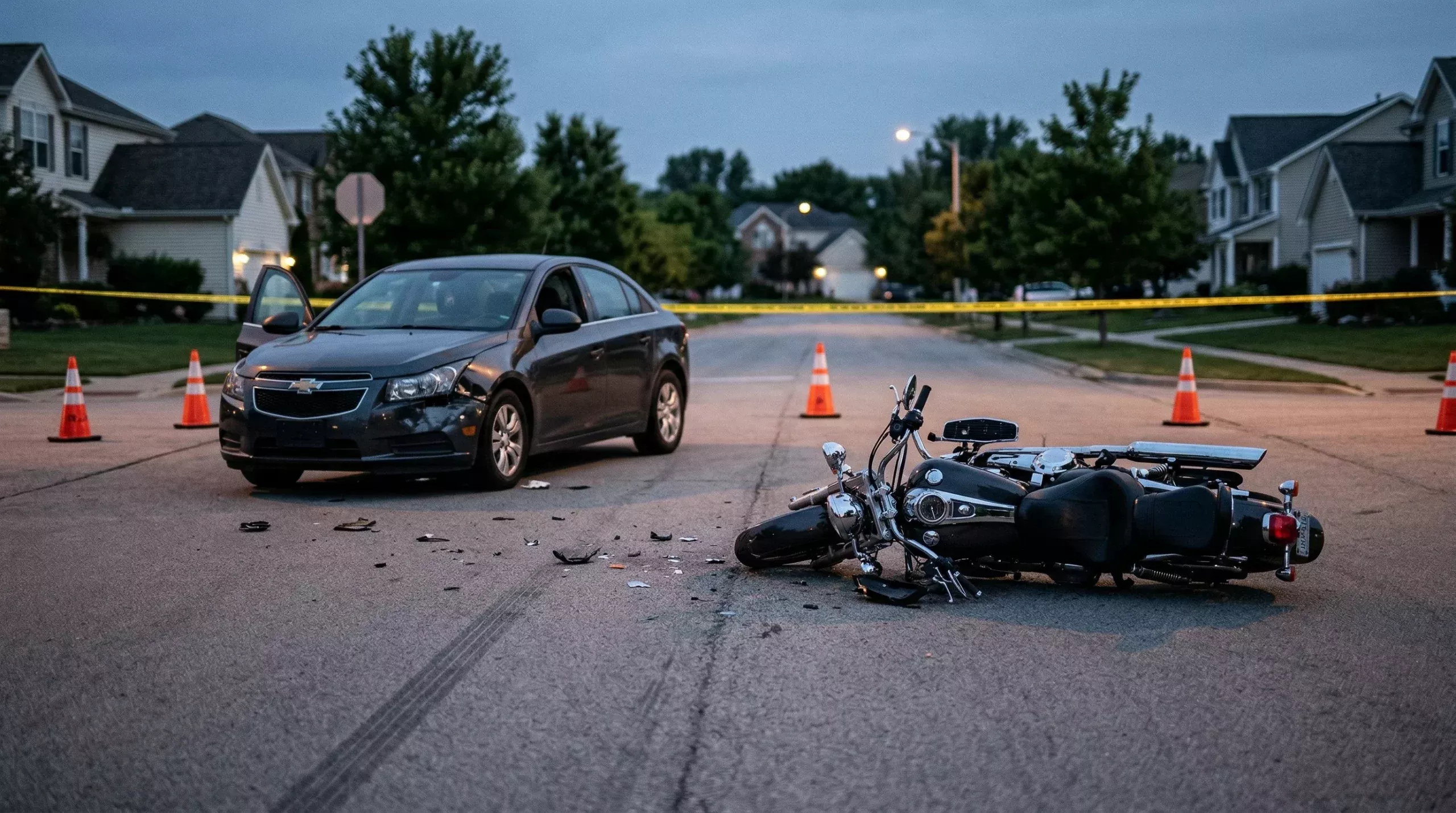
Kentucky’s Top-Rated Motorcycle Accident Lawyers
Motorcyclists are owed full compensation when someone else’s negligence causes a crash.
We make sure they get it.
Sam Aguiar Injury Lawyers represents motorcyclists injured in crashes across Kentucky, including Louisville, Lexington, and surrounding areas. Kentucky’s motorcycle fatality rate is the 9th highest in the nation, and riders who are hit by negligent drivers deserve a legal team that understands the unique challenges motorcycle injury claims present. With our Bigger Share Guarantee®, every client takes home more than the lawyer after all bills and costs are paid.
Insurance Company Bias Against Motorcyclists
Insurance adjusters treat motorcycle claims differently from the moment a file is opened. There is a deeply ingrained bias in the insurance industry: the assumption that the motorcyclist caused the crash. Adjusters know that juries often share this bias, and they use it as leverage to reduce payouts.
This bias exists even though more than 80% of motorcycle crashes in Kentucky involve at least one other vehicle. In most multi-vehicle motorcycle wrecks, the other driver violated the rider’s right of way. But that does not stop adjusters from building a case that the rider was reckless, speeding, or weaving through traffic.
Social media surveillance starts almost immediately. Adjusters and their investigators will pull your Facebook, Instagram, and TikTok posts looking for photos or videos that suggest physical activity. A post showing you at a family cookout two weeks after a serious back injury can be used against you at trial. They do not care about context; they care about closing your file for as little as possible.
What Makes Kentucky Motorcycle Cases Different
The Helmet Law Creates a Trap
Kentucky does not require all riders to wear helmets. Under KRS 189.285, helmets are required only for riders under 21, those riding on an instruction permit, and those who have been licensed for less than one year. Every other rider can legally choose whether to wear one.
Insurance companies use this against adult riders who were not wearing a helmet at the time of the crash. Even though the rider was following the law, adjusters will argue that the injuries would have been less severe with a helmet. When Kentucky repealed its universal helmet law in 1998, motorcycle fatalities increased over 50% according to NHTSA data. Adjusters reference these kinds of numbers to shift blame onto the injured rider.
Pure Comparative Fault Cuts Both Ways
Under KRS 411.182, Kentucky follows a pure comparative fault system. An injured motorcyclist can recover damages even if partly at fault, with compensation reduced by their percentage of responsibility. A rider found 30% at fault for a crash can still recover 70% of their total damages. Insurance companies know this, so they inflate the rider’s fault percentage as high as possible to shrink the payout.
Higher Severity, Higher Stakes
Per mile traveled, motorcyclists are nearly 28 times more likely to die than passenger car occupants according to the Insurance Institute for Highway Safety. There is no crumple zone, no airbag, no seatbelt. That means motorcycle crashes produce more severe injuries: traumatic brain injuries, spinal cord damage, multiple fractures, road rash requiring skin grafts, and limb amputations. Higher injury severity means higher medical bills, longer recovery timelines, and greater case value, which gives insurance companies even more reason to undervalue the claim.
Evidence That Matters in Motorcycle Cases
Motorcycle cases require evidence that car accident cases do not. Road surface conditions, such as gravel, oil, or uneven pavement, can explain how a crash happened. Sight-line obstructions, like overgrown vegetation at an intersection, can prove the other driver could not see the rider. Helmet condition (cracking patterns, impact points) can be critical to disproving the insurer’s claim that helmet use would have changed the outcome. This evidence disappears fast. Roads get repaved, vegetation gets trimmed, and helmets get discarded.
(Governor Beshear)
(NHTSA)
(IIHS)
How Insurance Companies Undervalue Motorcycle Claims
Motorcycle claims get lowballed more than most other motor vehicle cases. Here are the specific tactics insurers use.
Recorded statements within 48 hours. An adjuster will call while you are still on pain medication and ask for a recorded statement. Anything you say, including off-hand comments like “I’m doing okay,” becomes evidence that your injuries are not serious.
Pre-existing condition mining. They will subpoena years of medical records looking for any prior back pain, neck pain, or joint problems. If you had a shoulder issue three years ago and now have a torn rotator cuff from the crash, they will claim the crash did not cause it.
Low initial offers designed to close the file. The first offer is almost always a fraction of the claim’s actual value. Insurers count on injured riders being financially pressured, unable to work, and willing to take whatever is offered just to pay medical bills.
Delay tactics. Adjusters will request the same documents multiple times, claim paperwork was lost, or take weeks to respond to a demand letter. The goal is to push you closer to Kentucky’s one-year statute of limitations under KRS 413.140, where you lose all leverage.
Evidence Disappears Fast After a Motorcycle Crash
Road surface evidence, surveillance camera footage from nearby businesses, and vehicle data recorder information can all be lost or overwritten within days. We send evidence preservation letters immediately and use investigators and accident reconstructionists to lock down the physical proof that makes motorcycle cases winnable. The sooner you call, the more evidence we can preserve.
Frequently Asked Questions
Can I still recover damages if I was not wearing a helmet during my motorcycle crash in Kentucky?
Yes. Under KRS 189.285, riders over 21 with a full license are not required to wear helmets. However, the insurance company may argue your injuries were worse because you chose not to wear one, and a jury could reduce your award under Kentucky’s comparative fault rules.
How does Kentucky’s pure comparative fault law affect my motorcycle accident case?
Under KRS 411.182, you can recover compensation even if you were partly at fault. Your award is reduced by your percentage of fault. If a jury finds you 20% responsible, you still receive 80% of the total damages.
Why are motorcycle accident settlements typically larger than car accident settlements?
Motorcycle crashes produce more severe injuries because riders lack the structural protection of a car. The IIHS reports motorcyclists are 28 times more likely to die per mile traveled. Higher medical bills, longer recovery periods, and greater lost wages all increase the value of a motorcycle injury claim.
What evidence is most important in a Kentucky motorcycle accident claim?
Road surface conditions, sight-line obstructions, helmet condition, vehicle event data recorder readings, and nearby surveillance footage are all critical. Much of this evidence can disappear within days. Preservation letters to the at-fault driver’s insurer and involved businesses should go out immediately.
How many motorcyclists die on Kentucky roads each year?
In 2024, 96 motorcyclists were killed on Kentucky roads out of 707 total traffic fatalities, according to Governor Beshear’s office. Kentucky’s fatality rate of 1.45 per 100 million vehicle miles traveled ranks 9th highest nationally.
Should I give a recorded statement to the other driver’s insurance company after a motorcycle crash?
No. You are not legally required to give a recorded statement to the at-fault driver’s insurer. Adjusters ask for one while you are still in pain so they can use your words to minimize your claim. Let your attorney handle all communication with the insurance company.
What is the Bigger Share Guarantee® and how does it apply to motorcycle cases?
The Bigger Share Guarantee® means the client always takes home more money than the lawyer after all bills, liens, and costs are paid. If the client’s share would ever be less, Sam Aguiar Injury Lawyers cuts the fee. It applies to every case, including motorcycle crashes.
Does lane splitting affect my motorcycle accident claim in Kentucky?
Lane splitting is illegal in Kentucky. If you were lane splitting when the crash occurred, the insurance company will use it to increase your comparative fault percentage under KRS 411.182. However, that does not eliminate your claim entirely; Kentucky is a pure comparative fault state.
Real Clients. Real Success.
“You will get a great attorney with the whole team behind you. We were not just a number. We were treated like family.”
Start Your Free Case Review
Fill out the form below and our team will reach out to discuss your options.