

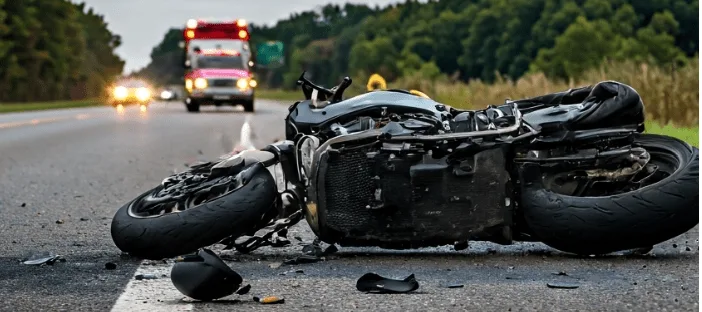
Motorcycle Accident Injuries
Without a steel frame, airbags, or seatbelts, motorcycle riders absorb the full force of every collision. The injuries are devastating — and the compensation should match.
Motorcycle crashes produce some of the most severe injuries seen in any motor vehicle collision. Without the steel frame, airbags, and seatbelts that protect car occupants, riders absorb the full force of impact with their bodies. The NHTSA reports that motorcyclists are 24 times more likely to die and 4 times more likely to be injured per vehicle mile traveled than passenger car occupants. If you were seriously hurt in a motorcycle crash, Sam Aguiar Injury Lawyers will build the case that gets you full compensation for every injury.
Why Motorcycle Injuries Are So Severe
The physics of a motorcycle crash are fundamentally different from a car accident. A rider who is struck — or who strikes another vehicle or object — has nothing between their body and the impact surface. At even moderate speeds of 30-40 mph, the forces involved can cause catastrophic, life-altering injuries.
According to the Centers for Disease Control and Prevention (CDC), motorcycle crash injuries cost an estimated $12 billion in medical care and economic losses annually in the United States. In Kentucky, motorcyclists account for a disproportionate share of serious-injury trauma admissions despite representing a small fraction of overall traffic.
(NHTSA)
(CDC)
(CDC)
Traumatic Brain Injuries (TBI)
Traumatic brain injuries are among the most devastating outcomes of a motorcycle crash. Even helmeted riders can sustain TBI from the rotational and deceleration forces involved in a high-speed collision. The CDC reports that helmets reduce the risk of head injury by approximately 69% and the risk of death by about 37% — but they don’t eliminate the risk entirely.
TBI from motorcycle crashes ranges from concussion (mild TBI) to severe diffuse axonal injury that can leave a rider permanently disabled. Symptoms may not appear for hours or days after the crash, which is why immediate medical evaluation is critical. Common TBI effects include:
- Persistent headaches, dizziness, and cognitive fog
- Memory loss and difficulty concentrating
- Personality changes, irritability, and depression
- Vision and hearing problems
- Seizures and loss of motor function in severe cases
Kentucky requires all motorcycle riders to wear DOT-compliant helmets under KRS 189.285. If you were wearing a helmet and still sustained a TBI, that fact strengthens your claim by demonstrating you took proper precautions. If you were not wearing a helmet, your claim is not barred — but the insurance company will argue your injuries would have been less severe. We handle both scenarios and know how to minimize that argument’s impact on your recovery. Learn more about how we handle brain injury cases.
Spinal Cord Injuries
The impact forces in a motorcycle crash can fracture vertebrae, herniate discs, or sever the spinal cord — resulting in partial or complete paralysis. According to the National Spinal Cord Injury Statistical Center, motor vehicle crashes (including motorcycle crashes) are the leading cause of spinal cord injuries in the United States.
Spinal cord injuries carry staggering lifetime costs. A rider with high tetraplegia (paralysis in all four limbs) faces estimated lifetime medical costs exceeding $5 million, according to the same source. These cases require attorneys who understand the full scope of future damages — not just current medical bills, but decades of care, equipment, home modification, and lost earning capacity.
Read more about how we approach spinal cord injury claims in Kentucky.
Road Rash and Skin Injuries
When a rider slides across pavement, the friction strips away skin layer by layer. Road rash is categorized by degree:
- First degree: Surface-level scraping — painful but typically heals without scarring
- Second degree: Deeper abrasion that exposes the inner skin layer (dermis) — infection risk increases significantly
- Third degree: Full-thickness skin loss exposing muscle, fat, or bone — requires skin grafting and carries a high risk of permanent scarring and disfigurement
Severe road rash often requires the same treatment as burn injuries: debridement, skin grafts, and months of wound care. The resulting scars can be disfiguring and may require multiple reconstructive surgeries over years.
Fractures and Orthopedic Injuries
Broken bones are the most common motorcycle crash injury. The most frequent fractures include:
- Leg and femur fractures: Often caused by the motorcycle falling on the rider or by direct impact with the other vehicle
- Arm and wrist fractures: Caused by instinctive bracing during a fall — the “FOOSH” (fall on outstretched hand) mechanism
- Pelvic fractures: High-energy injuries that carry serious internal bleeding risk and long recovery times
- Collarbone (clavicle) fractures: Extremely common in motorcycle crashes, especially when a rider is thrown over the handlebars
- Rib fractures: Can puncture lungs or damage internal organs, requiring emergency surgical intervention
Complex fractures often require surgical hardware (plates, screws, rods) and months of physical therapy. Some never heal completely, leaving the rider with permanent limitations, chronic pain, and reduced range of motion.
Internal Injuries
Blunt force trauma from a motorcycle crash can damage internal organs even when there’s no visible external injury. Internal bleeding from a ruptured spleen, lacerated liver, or damaged kidneys can be life-threatening if not diagnosed quickly. These injuries are one of the primary reasons we tell every crash victim to get a medical evaluation immediately — even if they feel fine at the scene.
Compensation for Motorcycle Crash Injuries
The severity of motorcycle injuries drives the value of these claims well above typical car accident cases. A full recovery for serious motorcycle injuries may include:
- All past and future medical costs — including surgery, hospitalization, rehabilitation, home health care, and adaptive equipment
- Lost income and reduced earning capacity — covering both the recovery period and any permanent work limitations
- Pain and suffering — physical pain, emotional distress, anxiety, depression, and loss of enjoyment of life
- Scarring and disfigurement — the lasting physical and psychological impact of visible injuries
- Loss of consortium — the impact on your relationship with your spouse
- Wrongful death — funeral expenses, lost financial support, and loss of companionship for surviving family members under KRS 411.130
Kentucky’s PIP coverage under KRS 304.39 pays up to $10,000 in initial medical expenses. For serious motorcycle injuries, that amount is typically exhausted within days of the crash — opening the door to a full tort claim against the at-fault driver for every category of damages above.
Motorcycle injuries demand maximum recovery. At Sam Aguiar Injury Lawyers, our Bigger Share Guarantee® means you keep more of every dollar we recover. No increased litigation fees contingency — never increases. $0 Out-Of-Pocket, no matter what. If your crash happened in Central Kentucky, we also handle Lexington motorcycle accident cases.
Frequently Asked Questions
What is the most common injury in a motorcycle accident?
Fractures (broken bones) are the most common motorcycle crash injury overall. Leg and femur fractures top the list, followed by arm, wrist, and collarbone breaks. However, traumatic brain injuries and spinal cord injuries — while less common — are the most devastating in terms of long-term impact and claim value.
How much are motorcycle injury claims worth in Kentucky?
The value of a motorcycle injury claim depends on the severity of your injuries, the total medical costs, your lost income, and the impact on your quality of life. Serious motorcycle crash injuries — TBI, spinal cord damage, multiple fractures — routinely generate six- and seven-figure claims. Kentucky has no cap on compensatory damages in personal injury cases.
Do I need to wear a helmet in Kentucky?
Yes. KRS 189.285 requires all motorcycle riders and passengers in Kentucky to wear a DOT-compliant helmet. If you were not wearing a helmet, your claim is not barred — but the insurance company may argue that your head injuries would have been less severe with one.
Can I recover compensation for road rash scars?
Yes. Scarring and disfigurement are separate categories of damages in Kentucky personal injury law. Compensation covers not only the medical treatment for road rash (including skin grafts and reconstructive surgery) but also the lasting physical and psychological impact of visible scarring.
What should I do if I was injured in a motorcycle crash?
Get medical attention immediately — even if you feel fine. Many serious motorcycle injuries (TBI, internal bleeding, spinal damage) do not produce symptoms right away. Document the scene, do not give recorded statements to insurance companies, and contact an attorney before accepting any settlement. Read our full breakdown on what to do after a motorcycle crash.
Start Your Free Case Review
Fill out the form below and our team will reach out to discuss your options.