
Tesla FSD Investigation
Tesla Full Self-Driving Investigation
 ★★★★★
Over 1,000 Five-Star Reviews
•
Available 24/7. $0 Out-Of-Pocket Forever.
★★★★★
Over 1,000 Five-Star Reviews
•
Available 24/7. $0 Out-Of-Pocket Forever.
What PE25012 Is Examining
ODI opened PE25012 to examine driving maneuvers that may constitute traffic-safety violations. The resume identifies two commonly reported scenario groups: proceeding into an intersection against a red signal and entering an opposing lane of travel. It also discusses improper lane use within intersections.
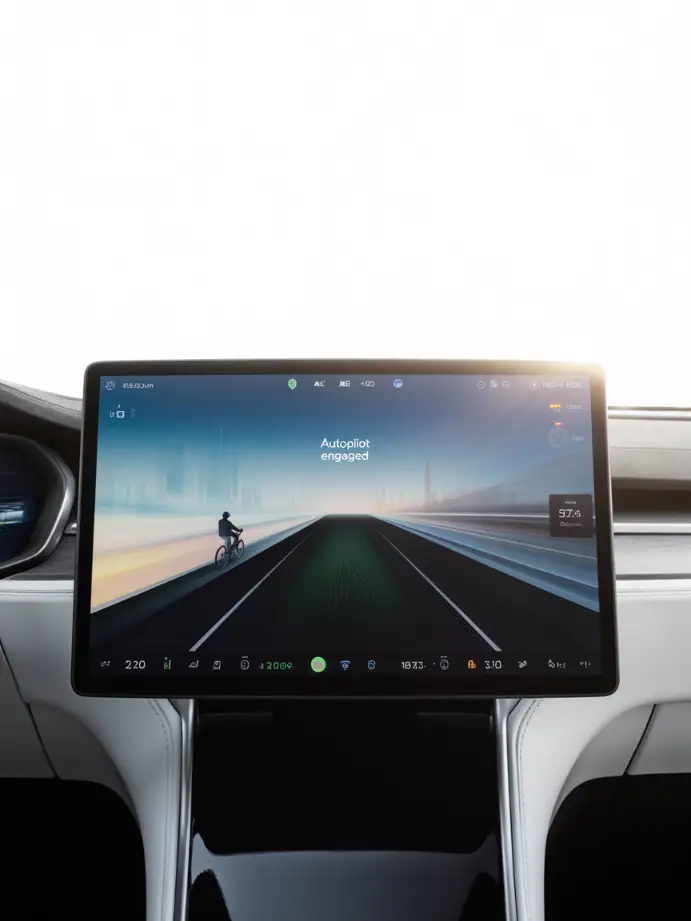
The agency’s questions go beyond whether a maneuver occurred. ODI says it will assess FSD’s ability to detect and respond to traffic signals, lane markings, and wrong-way signs. It will also consider warnings to the driver, the time available to respond, and whether unexpected driving inputs can impede effective supervision.
NHTSA records Tesla’s characterization of FSD as an SAE Level 2 partial automation system. In that description, the driver must remain fully attentive, supervise the system, and intervene as necessary. The driver remains responsible for the driving task and compliance with traffic laws.
The investigation therefore includes an interaction question. It is not limited to a software command in isolation. ODI is examining system behavior, how that behavior is shown or warned to the driver, and whether the driver has adequate notice and time to respond.
Figures in the Opening Resume
At opening, the resume listed 44 ODI reports and 14 other reports, for 58 total incidents in its summary table. It listed 14 crashes or fires, 10 injury incidents, 23 injuries, and no fatal incidents in that opening summary. Those figures are a dated investigation snapshot, not a national crash rate.
The narrative describes complaints and Standing General Order reports involving red-signal scenarios, opposing-lane travel, wrong-way entries, and lane-use issues. It says six SGO reports involved vehicles that continued into intersections against red lights and then crashed with other vehicles. Four of those crashes reportedly involved one or more injuries.
The resume also says some numbers are not cumulative because a reported incident can involve more than one alleged behavior. Counts should not be added casually. A complaint, media report, and SGO report may also describe different evidence categories rather than independent proof of separate defects.
“ODI identified” means the agency identified reports for investigation. It should not be rewritten as “NHTSA proved,” “NHTSA found a defect,” or “Tesla vehicles were recalled.” A preliminary evaluation is designed to gather and assess information before any later decision.
The December 3, 2025 Information Request
NHTSA sent Tesla a detailed information request dated December 3, 2025. The letter states that PE25012 will assess FSD’s ability to detect and respond to signals, signs, and lane markings, along with the adequacy and timing of indications and warnings to the driver.
The letter says ODI had received 62 complaints and identified 4 media reports and 14 SGO reports that might relate to the alleged issue. Those counts differ from the opening resume because the documents were created at different points and use their stated categories. They should be attributed to the dated letter rather than blended into one total.
NHTSA requested production data by model and model year, vehicle identification numbers, hardware and software versions, FSD versions, dates the system was equipped, and whether access came through purchase, subscription, or a free trial.
The request also sought complaint, field-report, crash, injury, fatality, property-damage, arbitration, and lawsuit information that might relate to the alleged issue. For incident-level records, ODI requested location, time, software version, system engagement, alert information, vehicle speed, takeover requests, and alleged outcomes.
Investigation Records Need Careful Reading
Opening resumes, information requests, and extension letters document an investigation’s scope and evidence requests without deciding the final outcome.
Why the Requested Electronic Records Matter
The information request sought vehicle data logs, electronic data recorder reports, videos, center-display recordings, visualizations, imagery, and police reports for covered incidents. It asked Tesla to organize records by category and vehicle identification number and explain its search methods.
ODI also requested a timeline beginning 30 seconds before the first alleged traffic violation and continuing through the event. That request shows the level of detail investigators may use to compare system commands, warnings, driver response, vehicle motion, and the reported outcome.
These requested materials are not themselves findings. A data log may support, contradict, or complicate a complaint. A video may show roadway context that a summary lacks. Software version and map data may distinguish one incident from another.
For a crash-specific review, the exact vehicle, software build, FSD engagement state, display information, driver inputs, and event timing matter more than a general statement that the vehicle had FSD capability.
Alerts, Warnings, and Driver Response
Question 7 of the information request asks Tesla to identify indications, alerts, warnings, and other signals provided when FSD is engaged and takes an action that may violate a traffic-safety law. NHTSA requested the timing, presentation, duration, and changes in those alerts.
This reflects the focus described in the opening resume. ODI is examining whether a driver received accurate, conspicuous, and sufficiently timely information to supervise the system and intervene. The inquiry does not assume that every event had no warning or that every attentive driver could have prevented it.
NHTSA also requested Tesla’s assessment of whether an attentive driver could have intervened in each crash-related incident. That is a question posed to the manufacturer, not a conclusion already reached by the agency.
The Level 2 classification does not end the technical inquiry. Driver responsibility and system performance can both be examined. The investigation asks how the system behaved and whether the supervision interface provided adequate information and response time.
Testing, Analysis, and System Changes
The request sought assessments, tests, studies, simulations, investigations, and human-factors evaluations related to the alleged issue. NHTSA asked for objectives, methods, metrics, results, and responsible engineering groups.
It also sought information about changes or updates that might affect performance. Software-based driver-support systems can change across versions, so an incident should be tied to the version installed and operating at that time.
A later update does not automatically prove that an earlier version was defective, and the existence of testing does not prove that every allegation is valid. Those are reasons to examine the records, not substitute conclusions for the investigation.
The opening resume states that NHTSA’s review will consider updates or modifications affecting FSD performance with respect to traffic laws and signals. Any article about the matter should keep that forward-looking investigative language.
The March 4, 2026 Extension Memo
The docket includes a March 4, 2026 extension memo. It records Tesla’s request for additional time to respond to information-request questions 8 and 9 because of the volume of data and documents to be reviewed.
ODI granted a partial extension to April 13, 2026 for those questions. The memo states that the production would be specific to FSD (Supervised). It is an administrative response-timing document.
The extension does not decide whether a safety defect exists. It does not confirm a complaint, announce a remedy, close the preliminary evaluation, or order a recall. Describing it as an “escalation” or “NHTSA finding” would add a conclusion the memo does not contain.
The NHTSA docket materials cited here establish the opening of PE25012, the information request, and the partial extension. They do not supply a final defect determination or recall announcement.
PE25012 Is Not PE24031
PE25012 and PE24031 concern Tesla FSD, but they are separate preliminary evaluations with different subjects. They should not be combined under one investigation number or described as one agency finding.
The PE24031 information request, dated November 5, 2024, concerns potential failure to detect and respond appropriately in reduced roadway visibility. NHTSA identified conditions such as sun glare, fog, and airborne dust.
That request states that PE24031 followed four SGO-reported crashes, one involving a fatality. It says the review would consider system performance in reduced visibility and the adequacy of feedback or information provided to drivers when the system’s capability may be exceeded.
PE25012 instead centers on alleged traffic-safety-law violations, including red signals, opposing lanes, wrong-way signs, and lane markings. Reduced visibility may be relevant to a particular event, but it is not the defining subject of PE25012.
What Neither Investigation Establishes
Opening a preliminary evaluation does not mean NHTSA has found a defect. An information request does not mean every allegation is confirmed. A report count is not a crash rate, and a crash report does not by itself establish which person, system, condition, or combination caused the event.
Neither investigation document is a recall notice. A recall would require its own official action and identifying information. The words “recall,” “defect,” and “finding” should not be used as shorthand for an open inquiry.
The documents also do not support a claim that FSD is fully autonomous. The opening resume describes the covered system as Level 2 partial automation requiring an attentive supervising driver.
They do support careful preservation and analysis of vehicle-specific electronic information when an event involves FSD. The requested categories show that software version, engagement, warnings, inputs, location, and timing can all matter.
Reading FSD Crash Evidence Carefully
A vehicle may be equipped with FSD without the system being engaged at the relevant time. A crash review should distinguish capability, subscription status, activation, engagement, and the specific feature controlling the vehicle.
Center-display imagery, vehicle logs, event data, driver inputs, road markings, traffic-signal state, map data, and video may answer different questions. No single category necessarily provides the whole event.
Software version is essential because system behavior can change. A current demonstration does not establish how an older version behaved. Likewise, a complaint about one intersection or road geometry does not establish performance everywhere.
NHTSA’s own request reflects this event-specific approach. It asks for incident dates, coordinates, versions, alerts, takeover requests, speeds, and timelines. An accurate public article should preserve that specificity and the investigation’s unresolved status.
How to State the Investigation Status Accurately
Accurate wording starts with the document type. The October 7, 2025 resume opens a Preliminary Evaluation. The December 3 letter requests information. The March 4, 2026 memo grants a partial response extension. None of those documents is a final engineering analysis, closing resume, defect decision, or recall notice.
The reported behaviors should remain allegations or scenarios under review. A complaint can report that a vehicle entered an intersection against a red signal. An SGO report can document a crash involving a vehicle with FSD engaged. Those records prompt investigation, but the cited sources do not establish a final cause for every event.
Counts should carry the document date and category. The opening resume and later information request use different counts because they reflect different snapshots and categories. Replacing them with one combined number would erase the source distinctions and could double-count reports about the same incident.
Status language should also avoid predicting the agency’s next action. A preliminary evaluation can lead to additional investigation, closure, manufacturer action, or another result, but the cited documents do not establish which outcome will occur.
As of July 26, 2026, the NHTSA docket materials cited on this page show PE25012 as a preliminary evaluation with an information request and a partial extension. They do not provide a final defect determination or recall.
Questions After an FSD Crash?
If a collision involving automated-driving technology raises questions about electronic evidence, Sam Aguiar Injury Lawyers can review the software version, engagement state, alerts, and event timing tied to that specific crash. Call today for a free case review.