Quick Answer
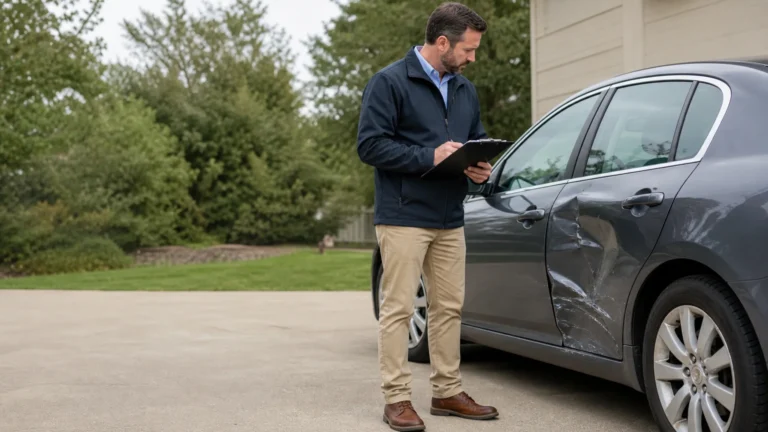
When your car is totaled in a Kentucky car accident, the at-fault driver’s auto insurance (or your own collision coverage) owes you the actual cash value (ACV) of your vehicle as it was right before the crash, not the cost of repairs. In Kentucky, a vehicle is typically declared a total loss when repair costs exceed about 75 percent of ACV, per the Kentucky Revised Statute 186A.520 salvage title threshold.
You have the right to dispute a low offer, recover diminished value in some cases, request rental coverage for a set period, and collect medical expenses and lost wages under Kentucky’s no-fault PIP system. The Kentucky Department of Insurance regulates how insurers must handle total loss claims.
What “Totaled” Actually Means in Kentucky
A car is declared a total loss in Kentucky when the cost to repair the vehicle, combined with its estimated salvage value, exceeds a percentage threshold of the car’s actual cash value. Kentucky uses a salvage title threshold of 75 percent under KRS 186A.520, which means if a car is worth $20,000 and repairs plus salvage value top $15,000, it is branded a salvage vehicle and typically totaled by the insurer.
Insurance companies have their own internal formulas, too. Most carriers total a vehicle when repairs run between 70 and 80 percent of ACV, but each insurer sets its own trigger. Geico, State Farm, Progressive, Allstate, Liberty Mutual, USAA, and Kentucky Farm Bureau all apply slightly different standards. According to the Insurance Institute for Highway Safety, newer vehicles are more likely to be totaled because their parts, sensors, and driver-assistance calibration systems push repair estimates higher.
The key word is value, not cost. A 2021 Toyota Camry with $9,000 in damage may be totaled even though it still drives, because its market value makes repairs uneconomical. Newer vehicles with airbag deployment, frame damage, or flood exposure are almost always declared total losses even when cosmetic damage is minor.
Signs Your Car Will Likely Be Totaled
- Airbags deployed during the crash (sensor and module replacement is expensive).
- Frame or unibody structural damage is visible or confirmed by body shop inspection.
- The engine, transmission, or battery pack (on hybrids and EVs) sustained major damage.
- The car was submerged in floodwater or sustained fire damage.
- Multiple panels, the roof, or the rear quarter panels are crumpled.
- The vehicle is more than 10 years old and sustained moderate damage.
The adjuster will not make this call at the scene. The determination happens after your vehicle is moved to a body shop or insurance yard and a damage estimate is written. That typically takes three to ten days.
How Insurance Companies Calculate the ACV of Your Totaled Car
Actual cash value is what your car was worth immediately before the accident, not what you paid for it, not what you still owe, and not what it would cost to replace with a comparable used vehicle. Most insurers rely on third-party valuation tools like CCC Intelligent Solutions, Mitchell, or Audatex, which pull comparable sale data from dealer inventory databases.
The insurer’s goal is to anchor the offer to a low end of the market. Adjusters often exclude high-value comparable vehicles, apply unwarranted “condition adjustments,” and ignore recent maintenance receipts that increased your car’s value. the first offer is rarely the accurate offer.
Factors That Move Your ACV Up or Down
| Factor | How It Moves ACV | Proof You Need |
|---|---|---|
| Mileage | Lower mileage than comps = higher ACV. 20,000 fewer miles can add 8 to 15 percent. | Dashboard photo, last service record, Carfax report. |
| Pre-Crash Condition | Above-average condition can add 5 to 10 percent over book value. | Recent photos, detail receipts, inspection records. |
| Recent Maintenance | New tires, brakes, timing belt, transmission service all increase value. | Dated receipts within the past 12 to 24 months. |
| Optional Equipment | Leather, sunroof, premium audio, navigation, tow package add to value. | Original window sticker or build sheet, dealer listing. |
| Ownership History | One-owner, no-accident vehicles carry a premium in the used market. | Title, Carfax, AutoCheck report. |
| Local Market | Louisville and Lexington dealer inventory prices can run higher than national averages. | Dealer listings within 50 miles of your zip code. |
If the insurer’s first offer feels low, you have the right to pull your own comparable listings, demand an itemized valuation report, and formally contest the ACV figure. Under 806 KAR 12:230, Kentucky’s Unfair Claims Settlement Practices regulation, insurers are required to give you the basis for their offer in writing.
Real Clients. Real Results.
“My car was totaled and I had no idea where to start. The team at Sam Aguiar took over the whole process. They got me a much larger settlement than the insurance company’s first offer, and I didn’t pay a dime out of pocket. Everything was handled professionally and quickly.”
– Rebecca D., Louisville
Your Rights When Your Car Is Declared a Total Loss in Kentucky
Kentucky law and insurance regulation give you concrete rights after a total loss that most drivers do not know about. These rights are enforceable under the Kentucky Unfair Claims Settlement Practices Act and federal lending laws.
1. The Right to Actual Cash Value, Not Loan Payoff
If you owe more on the car than it is worth, the insurer still only pays the ACV. The gap between ACV and your loan balance is called negative equity. Without GAP insurance (guaranteed asset protection), you remain responsible for that balance with your lender. Kentucky does not require insurers to cover this gap on auto policies.
2. The Right to Dispute the Offer
You are not required to accept the first valuation the insurance adjuster gives you. You can demand a second appraisal, request a line-item report that shows which vehicles were used as comparables, and submit your own list of comparable listings from Louisville, Lexington, Bowling Green, or your local market. Many policies contain an appraisal clause that lets you invoke a three-appraiser process if a dispute stalls.
3. The Right to Sales Tax and Title Transfer Fees
When the insurer pays ACV, Kentucky requires that payment include the applicable 6 percent motor vehicle usage tax and title transfer fees that you would incur to replace the vehicle, per KRS 138.450. Insurers sometimes omit this line item in their initial offer. Always verify that sales tax and title fees are included.
4. The Right to Rental Reimbursement (If Covered)
If you carry rental reimbursement coverage or the at-fault driver’s liability carrier accepts responsibility, you are entitled to a rental vehicle for a set period while the total loss is processed. “Adequate” is not unlimited. Once the check is cut, the rental coverage typically ends within three to five days. Keep receipts and document delays caused by the insurer’s inspection backlog.
5. The Right to Keep the Vehicle
You can elect to keep your totaled vehicle rather than surrender it. The insurer will deduct its salvage value from your ACV payment. This option makes sense only if you have the title free and clear, the vehicle is driveable, and you intend to rebuild or sell for parts. Under KRS 186A.520, the car will receive a salvage title in Kentucky, which limits resale value and future financing.
6. The Right to Personal Belongings
Car seats, sunglasses, garage door openers, dash cameras, tools, and prescription items are yours. Ask the tow yard or insurer for supervised access within the first 10 days. Child car seats that were in the vehicle during the crash should be replaced, and the insurer should pay for replacement if the at-fault carrier is handling liability.
Diminished Value, GAP Coverage, and the Hidden Losses After a Total Loss
A Kentucky car accident creates losses beyond the check for the totaled vehicle itself. Three hidden categories of loss can surface after the ACV payment clears.
Diminished Value Claims in Kentucky
Under Kentucky case law, including State Auto Property & Casualty Ins. Co. v. Hargis, 785 S.W.2d 496 (Ky. Ct. App. 1990), a vehicle that is repaired rather than totaled can lose market value simply because its Carfax now shows an accident. This loss is called inherent diminished value. You generally cannot claim diminished value on a car that was totaled and paid out at ACV, because the ACV figure should already reflect the full pre-crash market. Diminished value matters on borderline total loss cases where the insurer chose to repair instead of total.
GAP Coverage and Loan Payoff
If you financed or leased your car and still owe a balance, the ACV check may not cover the loan. GAP coverage, sold by your auto lender or insurer, pays the difference. If you do not have GAP, you are on the hook for the shortfall. The Consumer Financial Protection Bureau explains how GAP works at the federal level. Some credit unions and community banks in Kentucky offer standalone GAP products cheaper than dealer-sold GAP.
Loss of Use and Rental Gap
Even with rental coverage, there is often a gap between when the rental benefit ends and when the ACV check funds clear. On a typical total loss in Louisville or Lexington, that gap runs three to seven days. If you were hit by an uninsured or underinsured driver, you may need to file through your own UM/UIM coverage, which can extend the timeline by weeks.
Medical Bills, Lost Wages, and Pain and Suffering
The totaled car is often the smallest piece of a Kentucky car accident claim. Kentucky is a choice no-fault state under KRS Chapter 304, which means your own insurer’s PIP (personal injury protection) coverage pays up to $10,000 in medical bills and lost wages regardless of fault, unless you rejected PIP in writing. Beyond PIP, serious injuries can cross the no-fault threshold and open a liability claim against the at-fault driver for full medical bills, future care, lost earning capacity, and pain and suffering.
The statute of limitations for injury claims arising from a Kentucky motor vehicle collision is two years from the date of the last PIP payment under KRS 304.39-230, not two years from the crash date. Get legal advice before you accept a property damage settlement, because insurers sometimes bundle quick property checks with injury releases.
Common Mistakes Drivers Make After a Total Loss
The first seven days after a Kentucky car accident shape the property damage outcome. These are the mistakes we see most often when drivers call us after the fact.
Accepting the first offer.
Adjusters are trained to open low. The first number is a negotiating anchor, not a final valuation. Pulling three comparable listings from dealer inventory within 50 miles of your zip code usually moves the offer by 8 to 20 percent.
Giving a recorded statement to the at-fault driver’s insurance.
You are not required to give a recorded statement to the other driver’s carrier. Adjusters use recorded statements to lock in comments that conflict with your later medical records. You have to cooperate with your own insurer under the policy contract. You do not owe the same duty to the at-fault carrier.
Signing a property damage release that also releases injury claims.
Read every release before you sign. Some insurers send a single release that closes both property damage and bodily injury. If you sign it, your injury claim is dead even if symptoms show up a week later. Ask for a property-damage-only release, or have a Kentucky injury attorney review it first.
Throwing away repair estimates or body shop paperwork.
Keep everything. Body shop invoices, adjuster emails, photos, tow receipts, and communications with the tow yard. These documents prove market value, repair scope, and the insurer’s handling of the claim. If your case moves to litigation, those records become evidence.
Letting the tow yard run up storage fees.
Louisville and Lexington tow yards charge daily storage fees that can exceed $75 per day. The at-fault insurer should pay allowable storage, but “adequate” is limited. Release the vehicle to the insurer quickly once ACV is confirmed, or have it moved to a cheaper facility.
Downplaying injuries in the early days.
Soft tissue injuries, whiplash, concussions, and disc injuries often become worse in the first two to three weeks. Telling the adjuster “I feel fine” right after the crash becomes a quotable line in their claim file. Get evaluated by a doctor, follow through with the treatment plan, and do not discuss your condition with the other insurer.
Ignoring your own UM/UIM coverage.
Kentucky’s high rate of uninsured drivers makes your own uninsured motorist (UM) and underinsured motorist (UIM) coverage critical. If the at-fault driver has minimum limits or no coverage, your UM/UIM can fill the gap. Do not assume your own insurer will volunteer this coverage, because they often don’t.
When a Totaled Car Means You Need a Kentucky Car Accident Attorney
Not every total loss needs an attorney. A single-car, no-injury fender bender handled by your own collision carrier usually does not. But many totaled-car scenarios have layered liability, injury, and coverage issues that make handling the claim alone costly.
Call a Kentucky car accident attorney if any of the following applies:
- You, a passenger, or a family member was injured in the crash.
- The airbags deployed or the vehicle was towed from the scene.
- The at-fault driver’s carrier is delaying, denying, or disputing liability.
- You were hit by an uninsured or underinsured driver and need to tap your own UM/UIM coverage.
- A commercial vehicle, rideshare driver, delivery van, or semi-truck was involved.
- The insurer offers a low ACV figure and refuses to share its comparable listings or formula.
- The insurer wants you to sign a release that combines property damage and bodily injury.
- The crash involved a fatality or catastrophic injury.
Sam Aguiar Injury Lawyers handles every stage of Kentucky motor vehicle collision claims, from the property damage side to the full injury case. Our Bigger Share Guarantee® means the client always walks away with more than the firm after bills, liens, and costs are paid. Our fee is flat contingency, never increases if the case moves to litigation or trial, and you pay $0 Out-Of-Pocket Forever.
We have recovered hundreds of millions for Kentucky crash victims, including more than 40 seven-figure results since 2020. Our three-person case teams average under seven months to pre-litigation resolution. We also have access to DOT and TriMarc camera footage that most firms do not, which can produce up to six months of real-time data on major Kentucky interstates.
Hurt In A Car? Call Sam Aguiar!
You focus on getting better. We’ll handle everything else. Real Clients. Real Results.
Forbes 2025 Best-In-State · 1,000+ 5-star reviews · Bigger Share Guarantee®
Frequently Asked Questions
How long does it take to get paid for a totaled car in Kentucky?
Most carriers cut the ACV check within 5 to 14 business days after you accept the offer and sign the required release and title paperwork. If the insurer is still investigating liability or requires the title to be mailed to a central processor, expect 3 to 4 weeks. Kentucky’s Unfair Claims Settlement Practices regulation requires insurers to acknowledge claims within 15 days and act in good faith, but does not set a hard payment deadline for total loss.
Can I sue the insurance company for lowballing my totaled car?
You can file a bad faith claim under Kentucky’s Unfair Claims Settlement Practices Act if the insurer unreasonably refuses to pay or denies without adequate investigation. Most total loss disputes are resolved through the appraisal clause in the policy or through direct negotiation. A bad faith lawsuit is reserved for extreme insurer conduct.
Do I still owe on the loan if my car is totaled in Kentucky?
Yes, unless you had GAP insurance. The insurer pays ACV directly to your lender if the loan balance exceeds ACV, and any leftover money goes to you. If ACV is less than the payoff, you owe the difference to the lender. GAP insurance purchased at the dealer, through your auto policy, or through your lender pays that gap.
What is the statute of limitations for a Kentucky car accident claim?
Kentucky’s car accident injury statute of limitations is two years from the date of the last PIP payment under KRS 304.39-230, not two years from the accident. If no PIP was paid, it is two years from the accident date. Property damage claims have a separate two-year period under general tort law. Do not rely on these dates without confirming with an attorney, because the rule has nuances.
Can I keep my totaled car and still get paid?
Yes. You can keep the totaled vehicle, but the insurer will deduct the salvage value from your ACV check. The title will be reissued by the Kentucky Transportation Cabinet as a salvage title under KRS 186A.520. Salvage title cars are difficult to finance, insure, and resell in Kentucky.
Does my totaled-car payout include sales tax in Kentucky?
Yes. The ACV settlement should include the 6 percent Kentucky motor vehicle usage tax and title transfer fees that you would pay to replace the vehicle. Some insurers omit these line items. Ask for a written itemized breakdown of the offer before you sign.
How does Kentucky PIP coverage work after a totaled-car accident?
Kentucky is a choice no-fault state under KRS Chapter 304. Basic reparation benefits (PIP) pay up to $10,000 in medical bills, lost wages, and related expenses per person, regardless of fault, unless you rejected PIP in writing. PIP pays for medical treatment even if the other driver is uninsured. It does not pay for vehicle damage, rental cars, or pain and suffering.
What if the at-fault driver is uninsured in Kentucky?
File the property damage claim through your own collision coverage if you have it. Then file a UM (uninsured motorist) claim for injuries through your own policy. UM coverage is required on every Kentucky auto policy unless rejected in writing. For a totaled car with no collision coverage and an uninsured at-fault driver, you may have to sue the driver personally, but collection is often impractical.
How much does it cost to hire Sam Aguiar Injury Lawyers for a totaled car injury case?
Nothing up front. $0 Out-Of-Pocket Forever. We work on a flat contingency fee that never increases if the case moves to litigation or trial. Our Bigger Share Guarantee® means you always get more than the firm after bills, liens, and costs are paid. If your share is ever less, we cut our fee.