

Kentucky Brain Injury Lawyers

Key Takeaways
- Clinicians grade TBI severity with the Glasgow Coma Scale, which scores eye, verbal, and motor responses from 3 to 15. A score of 13 to 15 is mild, 9 to 12 is moderate, and 3 to 8 is severe.
- NINDS lists motor vehicle crashes among the causes of closed head injury and says diffuse axonal injury commonly happens in vehicle crashes.
- A Lancet Neurology review describes a higher risk of dementia after a single moderate-to-severe TBI, observed up to 7 years after the injury.
Building a Kentucky Brain Injury Case
A brain injury case is built on records that show the distance between the person before the crash and the person after it. We gather the emergency department chart, the imaging, and the treating physician notes, then follow the care that documents what has not resolved.
Neuropsychological testing measures attention, memory, and processing speed against expected performance for someone of the same age and education. Those scores put a number on a change that relatives notice long before a scan shows anything.
People who knew the person before the crash matter to the record. A spouse, a supervisor, or a teacher can describe a shorter temper, a longer pause while finding a word, or an afternoon that now ends in exhaustion. Those accounts are recorded while the details are still fresh, not reconstructed a year later.
Insurer Disputes Over Late Symptoms
The dispute in a brain injury case is rarely about whether the crash happened. It is about whether what followed belongs to the crash.
Symptoms that surface days later, or that show up as irritability and lost words rather than something a camera can capture, invite the argument that the person is exaggerating or that something else explains the change. Records made at the time are what answer that argument, which is why the first visits carry so much of the case even when someone feels able to push through.
A gap in treatment gets read as recovery. When someone stops going to appointments because work or childcare makes it impossible, the file shows an absence, and the absence gets used against them.
Brain Injury Definition
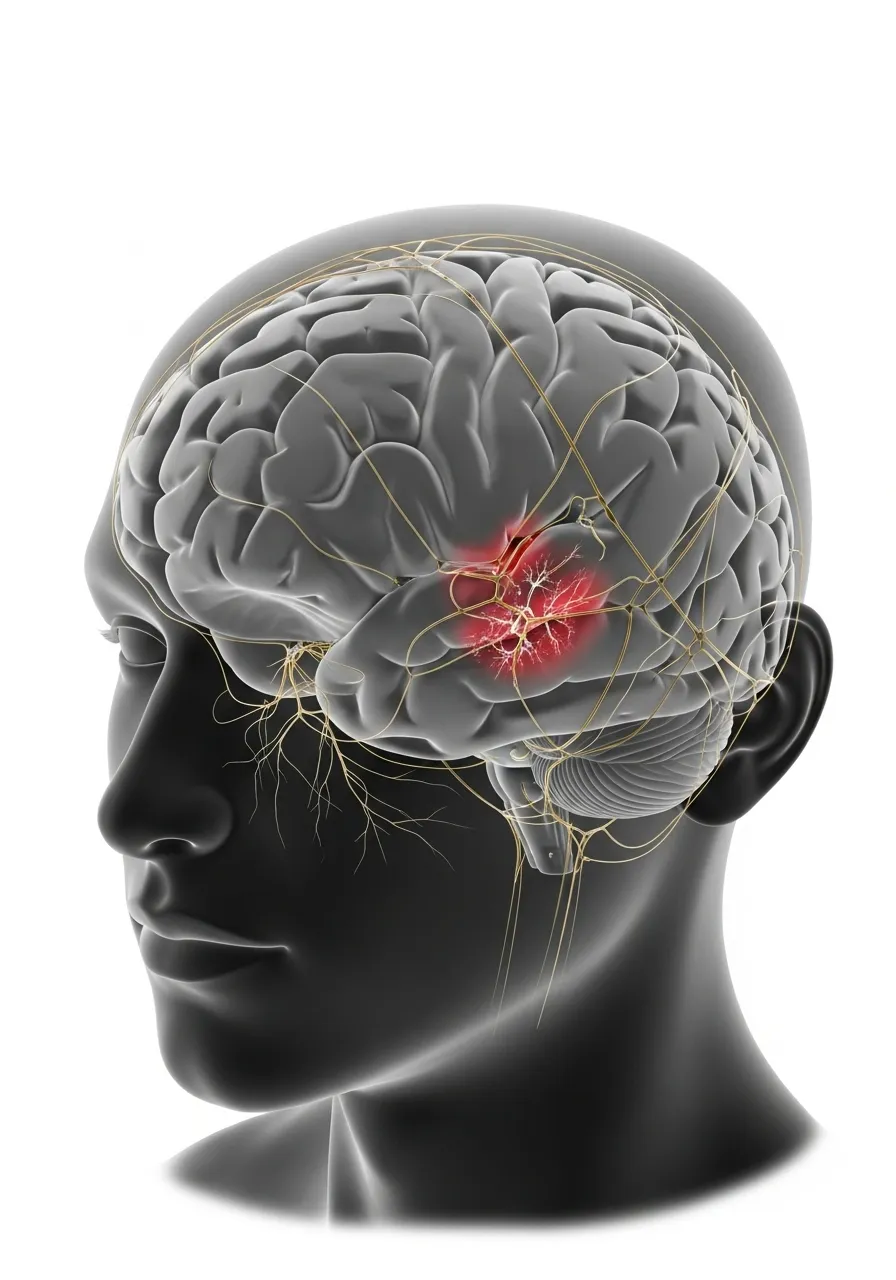
A traumatic brain injury (TBI) is a brain injury caused by an outside force. The National Institute of Neurological Disorders and Stroke (NINDS) says a forceful bump, blow, or jolt to the head or body can cause one, and so can an object that enters the brain. Not every blow to the head causes a TBI.
NINDS sorts these injuries into penetrating and non-penetrating TBI. A non-penetrating TBI, also called a closed head injury, happens when an outside force moves the brain inside the skull, and motor vehicle crashes are one of the causes NINDS lists.
Some damage is immediate. NINDS says other damage is secondary and can develop over hours, days, or weeks from reactive processes that follow the first trauma. Injuries to other parts of the body from the same crash are covered in the Car Accident Injuries library.
Glasgow Coma Scale Severity Grades
The StatPearls chapter on the Glasgow Coma Scale (GCS) explains that the scale scores eye opening, verbal response, and motor response, and the total runs from 3 to 15, with 3 the lowest score.
| Severity | Glasgow Coma Scale Score |
|---|---|
| Mild | 13 to 15 |
| Moderate | 9 to 12 |
| Severe | 3 to 8 |
StatPearls notes that the GCS may underestimate the need for early surgery in mild to moderate head injury, and that the same total score can stand for different clinical states.
Crash Mechanisms
The CDC says a mild TBI can come from a hit to the body that makes the head and brain move quickly back and forth, which can make the brain bounce around or twist in the skull.
NINDS says brain contusions generally happen when the head abruptly decelerates and the brain bounces back and forth inside the skull, as in a high-speed car crash. A bruise on the side of the brain opposite the impact is a contrecoup injury, and NINDS says contusions form there more often than directly under the impact.
MedlinePlus says an open, or penetrating, head injury is more likely at high speed, such as going through the windshield in a crash. NINDS ranks vehicle-related injuries, including those involving pedestrians, motor vehicles, and bicycles, as the third most common cause of TBI.
Symptoms and Danger Signs
The CDC symptom page says some mild TBI and concussion symptoms appear right away, while others may not appear for hours or days. NINDS lists headache, dizziness, confusion, and fatigue as symptoms that tend to start right after the injury, with frustration and irritability tending to develop during recovery.
The CDC warns that, in rare cases, a dangerous blood clot can crowd the brain against the skull, and it lists danger signs that need emergency care right away. The MedlinePlus head injury page lists a seizure, pupils of unequal sizes, and vomiting more than once among the signs that need medical care right away.
Symptoms That Need Prompt Medical Attention
- A headache that gets worse and does not go away
- Weakness, numbness, decreased coordination, or seizures
- Repeated vomiting
- Slurred speech or unusual behavior
- One pupil larger than the other
- Confusion, restlessness, agitation, or trouble recognizing people or places
- Loss of consciousness, heavy drowsiness, or being unable to wake up
Why Clients Choose Sam Aguiar
Types of Brain Injury
NINDS calls damage that stays in one area a focal injury and damage over a wider area a diffuse injury.
Concussion
NINDS describes a concussion as a type of mild TBI. A person with a concussion either loses consciousness or has a sudden change in awareness. Symptoms that last for weeks or longer are called post-concussion syndrome.
Contusion
A contusion is bruising or swelling of the brain that happens when very small blood vessels bleed into brain tissue. NINDS says contusions can appear after a delay of hours to a day.
Diffuse Axonal Injury
Diffuse axonal injury (DAI) is widespread damage to the brain’s white matter. NINDS lists DAI among the most common TBIs and says it commonly happens in vehicle crashes. It can disrupt communication among nerve cells, and the damage may be temporary or permanent.
Hematoma
A hematoma is bleeding in and around the brain from a burst blood vessel. NINDS describes three main kinds: epidural hematomas, which can form within minutes to hours and are particularly dangerous; subdural hematomas, which press on the outside of the brain; and intracerebral hematomas, which bleed into the brain itself.
Penetrating Injury
A penetrating TBI, also called an open TBI, happens when an object such as a bone fragment pierces the skull and enters brain tissue. NINDS says this type typically damages only part of the brain.
Imaging and Neurological Exams
NINDS says a neurological exam checks motor and sensory skills, hearing and speech, coordination and balance, mental status, and mood or behavior. A doctor’s physical exam and the person’s symptoms decide whether imaging is needed.
NINDS names CT and MRI as the commonly used imaging for TBI. CT can show a skull fracture and brain bruising, bleeding, or swelling, while MRI is more sensitive and can pick up subtle changes a CT scan may miss. The CDC says a brain scan is not needed to spot a mild TBI or concussion but may be used for patients at risk of bleeding on the brain.
NINDS says clinically validated imaging, blood tests, and other measures cannot always detect damage from mild, concussive injuries. Researchers are studying diffusion tensor imaging, which could identify damage in white matter tracts, and susceptibility-weighted imaging for small bleeds.
NINDS says neuropsychological tests are often used along with imaging after a mild TBI and assess memory, concentration, information processing, executive functioning, reaction time, and problem solving.
Recovery and Rehabilitation
NINDS names the size, severity, and location of the injury as factors in treatment and recovery speed, and says studies point to age and the number of prior TBIs as two more.
For mild TBI, NINDS says treatment focuses on symptom relief and brain rest, which means avoiding activities that require concentration or attention, while a healthcare provider watches for new or worsening symptoms.
NINDS says people with severe TBI are often transferred to a rehabilitation center once the hospital has treated and stabilized their injuries. The team may include neurologists, psychologists, and physical, occupational, speech, and vocational therapists, and therapy may be short or long term. Cognitive rehabilitation therapy uses an individualized training program to restore brain function and teaches ways to cope with lasting memory and problem-solving difficulties.
Long-Term Effects and Dementia Risk
A Lancet Neurology review of long-term TBI outcomes says that for many patients, TBI should be understood as a chronic health condition. The review reports that function can improve or decline for up to two decades after injury, and it names TBI as a risk factor for epilepsy, stroke, and neurodegenerative disease.
The same review describes a California hospital study that compared almost 52,000 patients with TBI to more than 112,000 trauma patients without a brain injury. The study found a higher risk of dementia after a single moderate-to-severe TBI, observed up to 7 years later. NINDS says studies of large populations show that moderate or severe TBI in early or mid-life may be associated with a higher risk of dementia later in life.
NINDS says research suggests repeated TBIs may cause chronic traumatic encephalopathy (CTE), a progressive disorder that develops over years. Lasting symptoms after a single concussion are covered on the long-term concussion effects page.
Medical Records
StatPearls says nurses and advanced practitioners record each GCS component and the total score in the electronic health record, with the date and time, so the trend can be followed.
Imaging reports, neurological exam notes, and neuropsychological test results add to that record. Follow-up visit notes can record symptoms that start after the emergency visit.
A brain injury case rests on two sets of documents: the medical records from the first emergency visit onward and the crash report. Keeping both in one file shows how the injury was found and how recovery progressed.
Ready to Take Action on Your Case?
After a serious injury, medical bills pile up while the insurance company looks for ways to pay you less. Most law firms take their cut first and leave you with whatever is left. Sam Aguiar Injury Lawyers does things differently. With our exclusive Bigger Share Guarantee®, you always get more. Every client gets a dedicated three-person team: an attorney, a case manager, and a legal assistant. We never raise our fee rate if we have to go to court, and you pay $0 Out-Of-Pocket Forever.