

Car Accident CTE Injuries
Key Takeaways
- CTE can be confirmed only by examining brain tissue under a microscope after death, according to Cleveland Clinic.
- Repeated head injuries are the likely cause of CTE, Mayo Clinic says, and the disease is not believed to be related to a single head injury.
- Motor vehicle accidents rank among the most common causes of concussions, Cleveland Clinic reports, and multiple concussions and other head injuries increase the risk of CTE.
Chronic Traumatic Encephalopathy Defined
Cleveland Clinic describes chronic traumatic encephalopathy, or CTE, as a degenerative brain condition that happens after repeated head injuries, and notes that it most commonly affects former football players, boxers, and military veterans.
The Boston University CTE Center calls CTE a progressive degenerative disease found in people with a history of repetitive head impacts, often from contact sports, military service, work as a first responder, and other activities that involve repeated blows to the head. Those impacts may include concussions that cause symptoms as well as nonconcussive hits that cause none, the center adds.
Mayo Clinic words the cause more cautiously, describing CTE as a brain disease likely caused by repeated head injuries. The damage it leaves is permanent and the symptoms get worse with time, according to Cleveland Clinic, which also states that there is no cure.
Repeated Head Impacts and Tau Protein
Tau is a protein that helps brain cells keep their shape, Cleveland Clinic explains. Researchers think repeated head injuries cause a buildup of abnormal tau in the brain, Cleveland Clinic adds, and when the hits damage brain cells, the tau proteins may lose their normal structure. In a brain with CTE, Cleveland Clinic says, tau clusters that look like brownish tangles gather around tiny blood vessels deep in the brain’s grooves.
The tau pattern seen in CTE is distinct from Alzheimer’s disease and other neurodegenerative diseases, according to the BU CTE Center, and the changes can begin months, years, or even decades after the last brain trauma. Under the first consensus from the NINDS and NIBIB, tau deposits around blood vessels within the sulcal depths, deep in the brain’s grooves, are a critical criterion for diagnosing CTE, according to StatPearls, the clinical reference hosted by the National Library of Medicine.
The BU CTE Center states that the number or type of hits to the head needed to trigger degenerative changes is unknown, and that other factors, such as genetics, may play a role, since not everyone with a history of repeated brain trauma develops the disease. Among contact athletes, StatPearls reports a consistent dose-response relationship between cumulative years of playing sports such as American football and ice hockey and both the onset and severity of CTE.
Repeated traumatic brain injuries are thought to increase the risk of CTE, Mayo Clinic notes, while the disease is not believed to be related to a single head injury.
Collision Forces That Shake the Brain
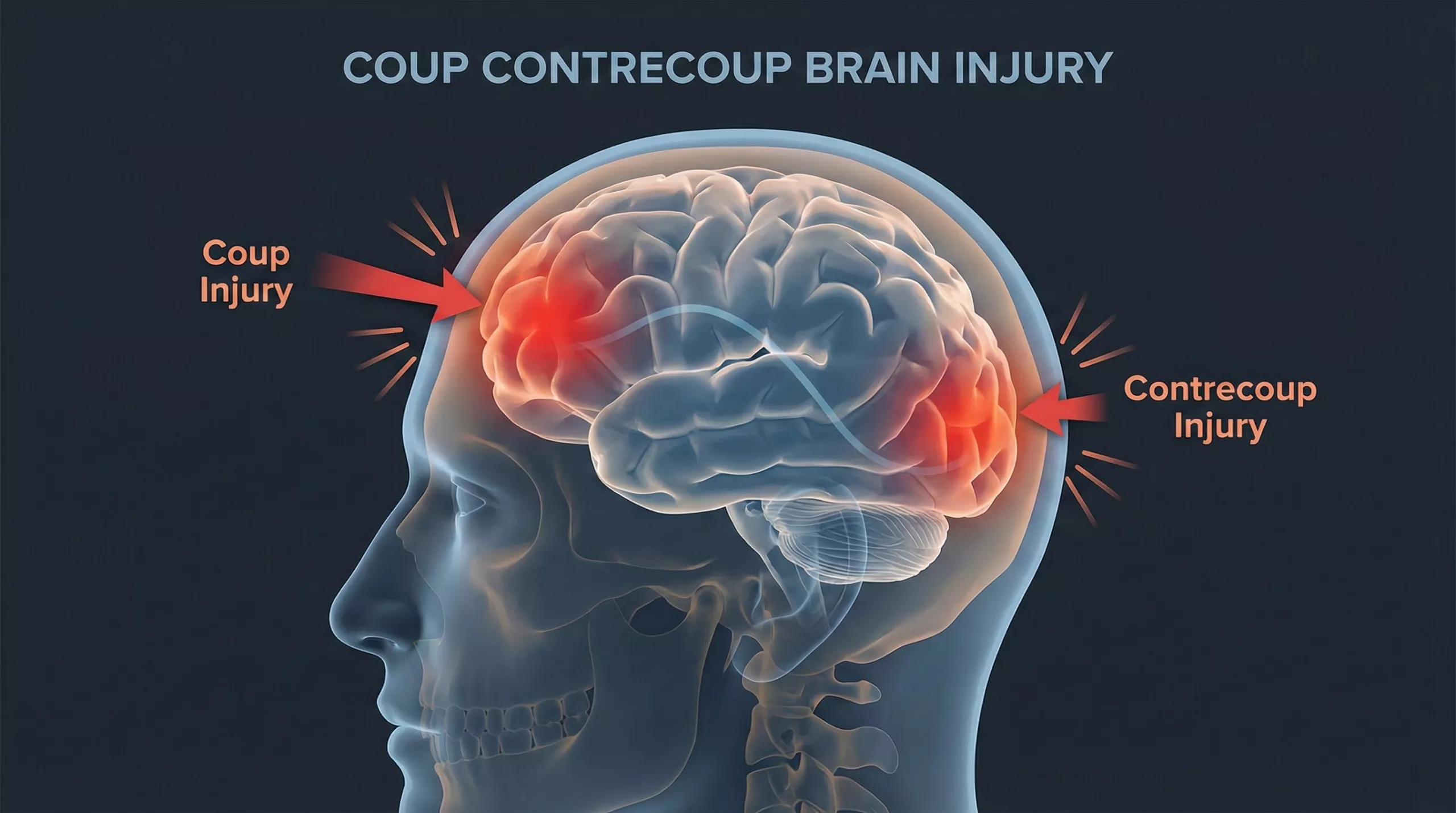
The CDC says a mild traumatic brain injury or concussion can come from a bump, blow, or jolt to the head, or from a hit to the body that causes the head and brain to move quickly back and forth. That motion can make the brain bounce around or twist in the skull, the CDC explains, stretching and damaging brain cells.
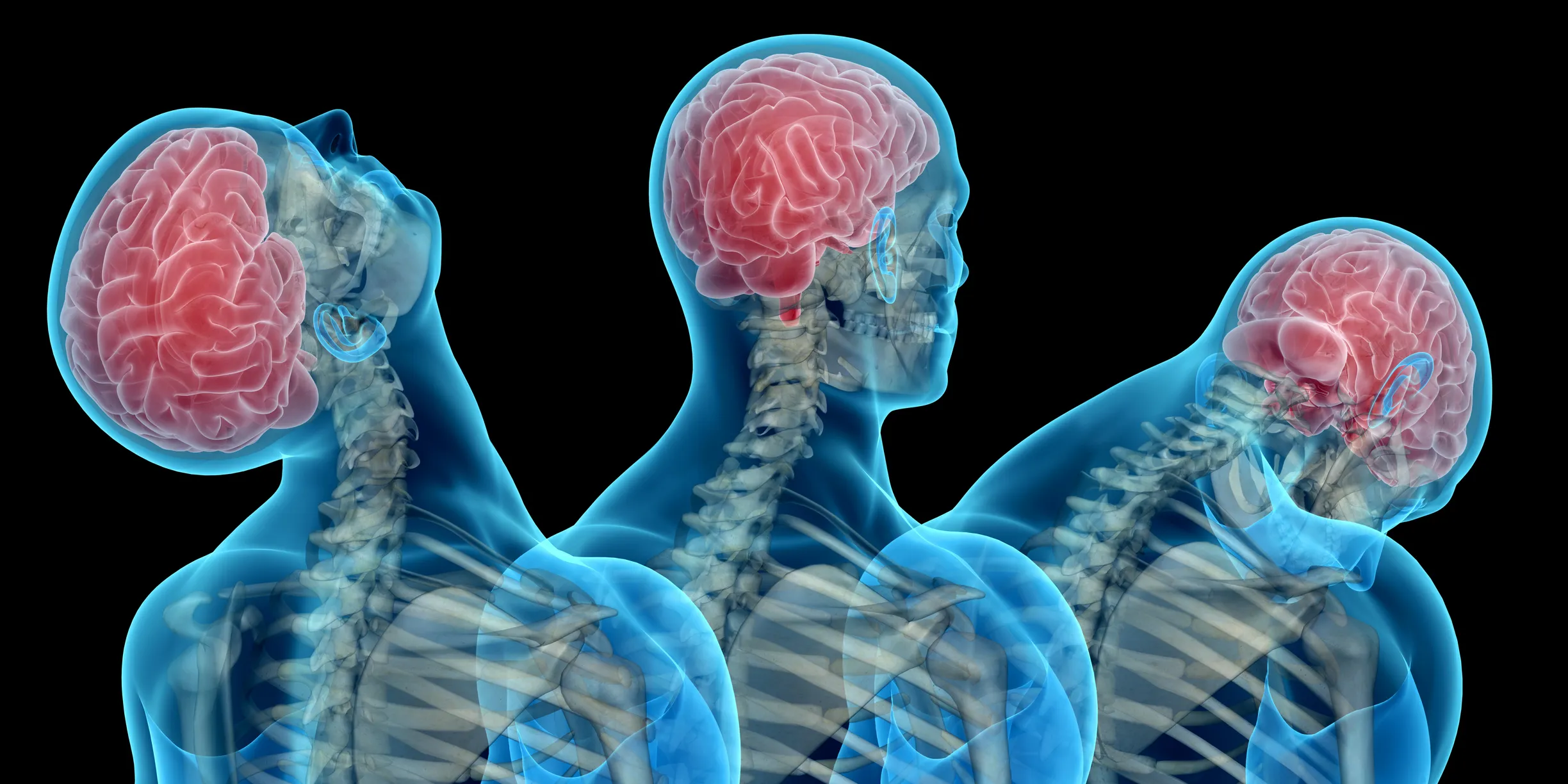
Cleveland Clinic compares the brain to gelatin in a glass bowl: a strong force passes through the skull and makes the brain shake, which can twist and damage the tiny nerves and blood vessels inside it. Cleveland Clinic’s list of the most common causes of concussions includes motor vehicle accidents, and MedlinePlus names vehicular accidents among the causes of traumatic brain injury.
For CTE purposes, a head injury means any impact that makes the brain shake within the skull, according to the Cleveland Clinic CTE page, from mild hits that cause no symptoms to concussions and traumatic brain injuries. One concussion usually does not cause permanent brain damage, the Cleveland Clinic concussion page says, but multiple concussions over a lifetime can change the brain’s structure or how it works, and multiple concussions and other head injuries increase the risk of CTE.
A separate page on coup contrecoup brain injuries covers that crash pattern in detail.
Early Warning Signs After a Crash
Concussion symptoms can affect the body, thinking, sleep, and emotions, Cleveland Clinic explains, and its list includes headaches or a feeling of pressure in the head, neck pain, dizziness, blurred or double vision, ringing in the ears, confusion, trouble concentrating, short-term memory loss, irritability, and mood swings.
Some mild TBI and concussion symptoms may appear right away, while others may not appear for hours or days after the injury, the CDC reports. MedlinePlus notes that mild TBIs do not always lead to loss of consciousness and that a person can have a mild TBI and not realize it.
The CDC lists the danger signs below as reasons to seek immediate emergency medical care after a head injury.
Head Injury Danger Signs
- A headache that gets worse and does not go away
- Weakness, numbness, decreased coordination, convulsions, or seizures
- Repeated vomiting
- Slurred speech or unusual behavior
- One pupil larger than the other
- Confusion, restlessness, or agitation, or not recognizing people or places
- Loss of consciousness, heavy drowsiness, or being unable to wake up
Why Kentucky Hires
Sam Aguiar Injury Lawyers
Persistent Post-Concussion Symptoms
Concussion symptoms usually go away within two to six weeks after an injury, according to Cleveland Clinic, and post-concussion syndrome is diagnosed when they continue for much longer, sometimes months or a year or more. Cleveland Clinic reports that studies estimate about 15% of people with a concussion also experience post-concussion syndrome, and that researchers have strong reason to believe that figure is an underestimation.
The risk of post-concussion syndrome goes up with every successive concussion or head injury, Cleveland Clinic states, and it is more likely when a concussion brings complications such as a skull fracture or bleeding inside the skull or brain.
The BU CTE Center says post-concussion syndrome is different from CTE and that its symptoms usually resolve years or decades before CTE symptoms begin. In a small number of people, symptoms of a TBI do not go away, MedlinePlus notes, and the risk for these long-term changes in the brain is higher after more than one TBI.
The page on long-term concussion effects follows those months after a crash in more detail.
Mood, Memory, and Movement Changes
The symptoms Mayo Clinic lists for CTE fall into four groups, starting with trouble thinking, memory loss, and problems with planning, organizing, and carrying out tasks. Mayo Clinic’s behavior and mood lists include impulsive behavior, aggression, depression or apathy, emotional instability, substance misuse, and suicidal thoughts or behavior. Movement symptoms on the Mayo Clinic list include trouble with walking and balance, along with parkinsonism, which it describes as shaking, slow movement, and trouble with speech.
Cleveland Clinic adds headaches, personality changes, loss of coordination, tremors or twitches, and dementia in late-stage cases. Cleveland Clinic also notes that CTE shares symptoms with other brain diseases that cause neurodegeneration, and that it can be hard to know whether symptoms come from CTE or another condition.
Younger individuals are more likely to present with mood and behavior symptoms, while older individuals commonly exhibit cognitive impairment and executive dysfunction, StatPearls reports. CTE symptoms do not develop right after a head injury, according to Mayo Clinic, and are believed to develop over years or decades after repeated head trauma.
Having some or many of these symptoms does not necessarily mean a person has the disease, the BU CTE Center cautions. The center points to many possible causes and says many of the symptoms can be successfully treated.
Three Conditions Side by Side
The table sets an acute concussion beside post-concussion syndrome and CTE, drawing on the Cleveland Clinic pages on concussion, post-concussion syndrome, and CTE, along with Mayo Clinic.
| Feature | Concussion | Post-Concussion Syndrome | CTE |
|---|---|---|---|
| What it is | A head injury that happens when the brain moves or twists inside the skull | Concussion symptoms that last months or a year or more | A degenerative brain condition after repeated head injuries |
| Usual timing | Usually lasts a few weeks, up to a month | Persistent form commonly diagnosed when symptoms last past 3 months, 6 months, or a year | Symptoms develop over years or decades |
| How it is diagnosed | Physical exam, neurological exam, or a concussion test | Clinical judgment and symptoms; no specific test | Confirmed only by examining brain tissue at autopsy; a probable diagnosis rests on exams, symptoms, and history |
| Outlook | Most people recover without long-term effects | Most eventually recover; some have permanent effects | Permanent, with symptoms that worsen over time |
Diagnosis Confirmed Only at Autopsy
The only way to confirm CTE is by looking at samples of the brain under a microscope, which can happen only during an autopsy, Cleveland Clinic explains. A diagnosis requires evidence of degeneration of brain tissue and deposits of tau and other proteins, and Mayo Clinic says those findings can only be seen after death.
At autopsy, a brain with CTE can show shrinking of the outer layer of the brain, especially in the front and sides, thinning of the corpus callosum that connects the right and left sides, and tau clusters around tiny blood vessels, according to Cleveland Clinic. Pathologists assign a stage from I through IV, mild to severe, based on the type and amount of damage, Cleveland Clinic adds.
The Boston University CTE Center announced in 2023 that it had diagnosed CTE in 345 of 376 former NFL players studied, or 91.7 percent. The same announcement warns that the figure should not be read to mean 91.7 percent of all current and former NFL players have CTE, because brain bank samples are subject to selection biases, and it cites a 2018 BU study of 164 brains donated to the Framingham Heart Study in which only 1 had CTE.
Traumatic Encephalopathy Syndrome Criteria
CTE is a neuropathological diagnosis, the BU CTE Center explains, and traumatic encephalopathy syndrome, or TES, is the proposed clinical syndrome of CTE.
Meeting the 2021 TES criteria requires substantial exposure to repetitive head impacts, at least one core clinical feature (cognitive impairment in memory or executive function, or neurobehavioral dysregulation), a progressive course, and core features not fully accounted for by other disorders, according to the BU CTE Center. The center states that the TES criteria are for research purposes only and should not be used in the clinic.
StatPearls notes that these criteria carry a high risk of false positives, with nearly 54% of cognitively normal individuals receiving a consensus diagnosis, and reports that the degree of depression is the only significant predictor of a positive TES diagnosis. StatPearls also lists a single traumatic brain injury, Alzheimer disease, frontotemporal lobar degeneration, Lewy body disease, and parkinsonism among the conditions with clinical features that mimic CTE.
Brain Scans and Research Biomarkers
There is no known way to use MRI, CT, PET, SPECT, or other brain imaging to definitively diagnose CTE, the BU CTE Center states, and there are no known blood or spinal fluid tests for it. Mayo Clinic describes the hope of eventually using neuropsychological tests, brain imaging such as special MRI scans, and other biomarkers to diagnose CTE.
StatPearls reports growing evidence for tau PET using flortaucipir, while noting that its specificity remains poorly documented and that off-target binding in the hippocampus and thalamus complicates interpretation. MRI and PET imaging are essential for ruling out other clinical mimics, StatPearls adds.
After a crash, a scan such as a CT is not needed to spot a mild TBI or concussion but may sometimes be used for patients at risk for bleeding on the brain, the CDC says. Cleveland Clinic agrees that imaging tests cannot diagnose a concussion and describes CT or MRI as a way to look for serious complications such as bleeding in or around the brain. The page on radiology imaging after a car accident explains how those scans differ.
Symptom Management Without a Cure
Providers cannot directly treat CTE because there is no way to reverse the brain damage, Cleveland Clinic explains, so care focuses on managing symptoms. The Cleveland Clinic list includes cognitive rehabilitation therapy for memory and attention, talk therapy for mood swings and coping, occupational therapy for everyday tasks, physical therapy for movement problems, and medications for symptoms that linger despite other therapy.
Therapies such as cognitive behavioral therapy and medicines may help symptoms of depression and anxiety, according to Mayo Clinic, though there is no treatment for CTE itself and symptoms continue to worsen over time. StatPearls calls supportive measures the mainstay of management and notes that depression requires careful management due to the potential risk of suicidality.
The current approach is to prevent head injury, Mayo Clinic says, and Cleveland Clinic describes avoiding head injuries as the only way to lower the risk of CTE.
Progression Over Years and Decades
CTE changes tend to happen slowly, over years or even decades, according to Cleveland Clinic. Over time a person may develop dementia and lose the ability to feed, bathe, or dress, Cleveland Clinic says, and researchers are still studying whether CTE directly affects life expectancy.
StatPearls describes a disease process that begins with affective disturbances, moves to a stage of social instability and behavioral changes with subtle early parkinsonism, and progresses to cognitive dysfunction, dementia, and full parkinsonism. StatPearls reports that CTE is progressive in approximately 68% of patients, and that in a small subgroup with predominantly behavioral or mood symptoms the condition may remain stable for years before progressing after a latency of 11 to 14 years.
StatPearls also notes an increased risk of suicide among these subsets of patients, and cites studies showing a link between CTE and the development of early-onset parkinsonian dementia.
Medical Records for Every Head Injury
The 2021 TES criteria begin with substantial exposure to repetitive head impacts, according to the BU CTE Center, and Cleveland Clinic says a provider builds a probable CTE diagnosis from a physical exam, a neurological exam, the symptoms or changes a person is experiencing, and medical history, especially known head injuries.
When diagnosing a concussion, providers ask about symptoms and when they first started, Cleveland Clinic notes, along with the exact moment or injury that caused them. For suspected post-concussion syndrome, Cleveland Clinic describes follow-up visits that may repeat many of the same tests or questions to look for any changes in symptoms, even subtle ones.
The page on pre-existing conditions and car accident cases covers how a prior injury fits into a new claim.
Copies of the emergency record, imaging reports, and each follow-up note are easier to collect soon after a crash than years later. A written list of earlier head injuries, with dates and where each was treated, keeps that history from depending on memory.
Memory or Mood Changes Since the Crash?
Headaches, irritability, or a memory that slips after a crash are easy for an insurer to blame on an old concussion or on age. Sam Aguiar Injury Lawyers lines up the crash-day chart beside every later neurology visit so the timeline of your symptoms is on paper. Under our Bigger Share Guarantee®, you always walk away with more than the firm after bills, liens, and case costs. Start with a free case review.