

TRUCK TALK
Trucking Insurance
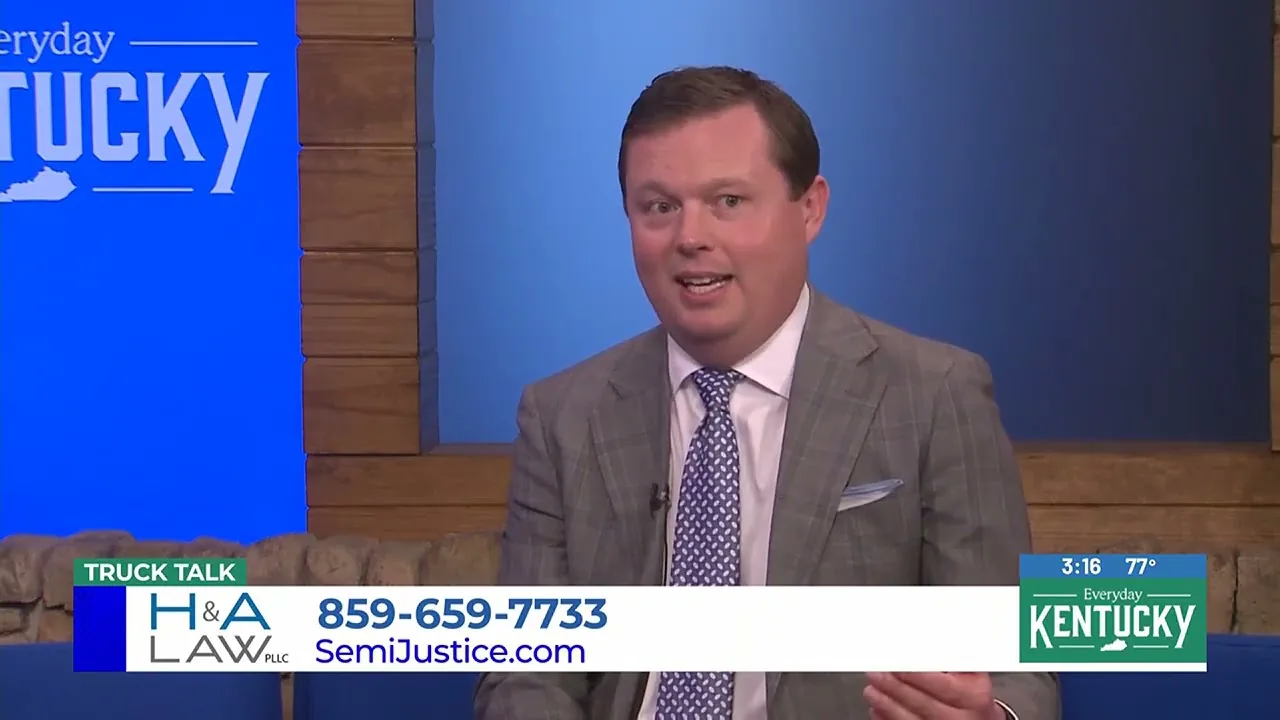
Jon Hollan breaks down how trucking insurance is layered.
The insurance behind a commercial truck looks nothing like the policy on a passenger car. Federal law forces interstate carriers to carry coverage that dwarfs the state minimum, and a serious truck crash routinely pulls in several policies stacked on top of one another. Finding every layer is the difference between a case that pays the full damages and one that stops at the first number an adjuster offers. In this Truck Talk segment, Jon Hollan breaks down how trucking insurance is structured and why identifying every policy early is part of a truck case.
The structure is built to be hard to see from the outside. A trucking company can spread its operations across a motor carrier, a separate equipment-leasing entity, a broker, and a network of contractors, and each of those can carry its own insurance. The crash report names the driver and the truck, but the policies that have to pay are often held by companies whose names never appear at the scene. Reading the insurance correctly means reading the corporate structure first, and that is where these cases are won or lost.
Federal Minimums
Federal law sets a floor on how much insurance an interstate trucking company has to carry, and that floor is far above the Kentucky minimum for a passenger car. Under 49 CFR 387.9, a for-hire carrier hauling general freight in interstate commerce must carry at least $750,000 in liability coverage, and a carrier hauling certain hazardous materials must carry far more, up to $5,000,000. The amount scales with the danger of the cargo.
Large trucks over 10,001 pounds, non-hazardous freight
$750,000. 49 CFR 387.9
Large trucks, oil (non-hazmat classification)
$1,000,000. 49 CFR 387.9
Large trucks, hazardous materials
$5,000,000. 49 CFR 387.9
Small trucks under 10,001 pounds, non-hazardous freight
$300,000. State and federal hybrid.
Passenger vehicles, 16 or more passengers
$5,000,000. 49 CFR 387.33
Passenger vehicles, 9 to 15 passengers
$1,500,000. 49 CFR 387.33
The Federal Motor Carrier Safety Administration enforces these minimums as a condition of operating, and a carrier cannot run interstate without showing it carries the required coverage. The minimum is the smallest amount of insurance that must stand behind the truck, and the coverage stacked above it is the target of the investigation.
The contrast with a passenger car is stark. The Kentucky minimum liability coverage for an ordinary car is far smaller than what a freight carrier has to carry, and that difference exists because the harm a loaded truck can cause is far greater. A person hurt by a commercial truck is dealing with a vehicle that the law already requires to carry serious coverage, and the early work is making sure none of that coverage gets overlooked. The federal filing that documents the carrier’s compliance with the minimum is a public record we can pull to confirm the floor.
Coverage Layers
A serious truck crash rarely involves just one policy. Most operating carriers buy excess and umbrella coverage well above the federal minimum, and a single crash can trigger several layers at once. Identifying each one early is how a case reaches the full medical bills, lost wages, and the rest of the damages instead of stopping at the primary policy.
Primary liability. The base auto policy on the truck, at least at the federal minimum and often higher.
Excess and umbrella coverage. Additional layers that sit above the primary policy, common on carriers running serious freight.
General liability. A separate policy that can respond to negligent hiring, training, supervision, and maintenance, the non-driving conduct of the company.
Trailer and equipment coverage. When the trailer is owned or leased by a different company than the tractor, a separate policy may apply.
Broker and shipper coverage. A freight broker or shipper that controlled the load may carry its own coverage when its decisions contributed to the crash.
Each layer is a separate policy with its own limits, its own insurer, and its own defenses. An adjuster has no incentive to volunteer the existence of a policy you have not found. Preservation and disclosure demands go to every entity connected to the trip.
The order in which the layers pay is set by the policies themselves. The primary policy responds first, and the excess or umbrella layer comes into play only once the primary is exhausted. A serious crash can exhaust a primary policy quickly, which is why identifying the excess coverage early is part of the work rather than a formality. A case that stops at the primary policy because no one looked higher has left the excess layer untouched, and that is the outcome a careful early investigation is meant to prevent. The full tower of coverage is mapped at the outset so the case is built against everything that can respond.
MCS-90 Endorsement
A federally mandated safety net called the MCS-90 endorsement requires an insurer to pay a judgment against the carrier up to the federal minimum, even when the policy would otherwise deny coverage for that loss. Federal law requires many interstate carriers to attach the form to their policy, and the form is prescribed at 49 CFR 387.15, within 49 CFR Part 387. No equivalent exists in a passenger car policy.
The MCS-90 exists to protect the public, so that an injured person is not left with nothing because of a coverage dispute between a carrier and its insurer. It sits alongside the underlying policy and carries its own limits and conditions, and it can establish a baseline recovery in situations where an ordinary policy might walk away. Knowing when the endorsement applies is part of reading a trucking insurance file correctly.
The endorsement carries the most weight in the messy cases. When a carrier let its coverage lapse, used a truck for a purpose the policy did not cover, or disputed the facts of the crash with its insurer, the MCS-90 can be the difference between a recovery and a dead end. It reflects a deliberate federal choice that the public should not bear the cost of a carrier’s insurance problems. Identifying whether the endorsement is in play, and pressing the insurer on its obligations under it, is part of the technical reading these cases demand.
Self-Insured Carriers
Some of the largest trucking companies do not buy a traditional policy at all. Federal rules allow a carrier with enough financial strength to satisfy the insurance requirement by self-insuring under 49 CFR 387.309, meaning the company pays claims directly out of its own assets up to a certain level. A self-insured carrier handles its own claims, and its cases department has the same incentive as any insurer to limit what it pays.
Dealing with a self-insured carrier changes the approach, because there is no separate insurance company on the other side, only the carrier protecting its own money. These companies have deep resources and experienced in-house teams, which is why a documented file carries even more weight. A self-insured carrier is treated the same way as an insurer, by building the case the federal records support and refusing to accept a number the evidence does not justify.
A large self-insured carrier often layers commercial coverage on top of its self-insured retention, which means the company pays the first portion of a case itself and a traditional insurer responds above that level. Sorting out where the self-insured layer ends and the commercial coverage begins is part of reading the file, because the answer changes who makes the decisions and how much coverage stands behind the crash. The self-insured retention is one more layer to map.
Bad Faith
Kentucky law holds an insurer responsible for handling a claim unfairly, and the Kentucky Department of Insurance regulates insurer conduct in the state. The Unfair Claims Settlement Practices Act, KRS 304.12-230, sets standards for how a case has to be handled. An insurer that ignores clear liability, delays without cause, or refuses to deal honestly with a valid case can face consequences beyond the original policy.
How an insurer handles a claim is documented from the first contact, because the record of that conduct can become part of the case. An insurer that drags out a case with strong liability and clear damages is making a choice, and that choice is tracked and preserved. The same disciplined approach drives our broader truck accident representation, and our episode on truck accident lawsuits covers what happens when an insurer refuses to deal.
The conduct that crosses the line follows a pattern. An insurer that asks for the same document over and over, that goes silent for long stretches, that makes an offer with no relation to the documented harm, or that misrepresents what its own policy covers is not handling a case in good faith. Every contact, every request, and every delay is documented, because that record shows whether the insurer met its duties or treated a valid case as something to wear down. Insurers behave differently when they know the file is being kept that carefully.
Underinsured Coverage
Your own auto policy can respond when the truck’s insurance runs out before the damages are paid in full. Underinsured motorist coverage is often overlooked, and an adjuster on the truck’s side has no reason to point it out.
Reading every available policy, including the injured person’s own, is part of finding the full coverage behind a serious crash. A recovery that stops at the truck’s primary policy may leave real coverage on the table. The job is to identify every dollar of insurance that can respond, from whatever direction it comes.
Cargo and Trailer Coverage
The trailer is a separate insurance question from the tractor that pulls it. In modern trucking, the company that owns the tractor frequently is not the company that owns the trailer, and the load inside may belong to a third company entirely. Each of those relationships can carry its own policy. When a trailer was loaded improperly, was poorly maintained, or broke loose, the entity responsible for the trailer and its coverage becomes part of the case alongside the carrier that employed the driver.
Cargo that shifts or spills creates its own liability picture. An overloaded or unbalanced trailer changes how a truck handles and stops, and the records of who loaded it and how much it weighed can point at a shipper or a loading facility that contributed to the crash. Tracing the trailer and the load back to the companies that controlled them is the same detective work as tracing the driver, and it can open coverage that a focus on the tractor alone would miss.
Recorded Statements
A truck insurer often asks the injured person for a recorded statement within hours of a crash, and that request rarely serves the injured person’s interest. An adjuster trained to limit a case knows how to ask questions that lock a hurt, medicated, still-shaken person into answers that get used against the case later. There is no legal obligation to give the at-fault carrier’s insurer a recorded statement, and giving one early does far more harm than good.
The contrast with the carrier’s side is telling. The trucking company has its own insurer, its own lawyers, and its own claims team working the file from the first hours, often before the injured person has left the hospital. Leveling that imbalance is one reason a firm is retained early. Once the firm represents the injured person, the insurer deals with counsel, and the injured person does not face a practiced adjuster alone while still recovering.
Finding Coverage
The agency’s SAFER carrier-search system publishes a carrier’s registration and insurance filing data, which is the first thread to pull. From there, the formal case and the records demands force the disclosure of the full policy stack, the excess layers, and the other entities involved in the trip.
BMC-91 or BMC-91X proves public liability coverage for bodily injury, property damage, and environmental restoration.
BMC-34 or BMC-83 proves cargo insurance for household-goods carriers ($5,000 per vehicle / $10,000 per occurrence minimum).
The MCS-90 endorsement is the mandatory attachment to auto liability policies.
BOC-3 designates the carrier’s process agents.
Preservation and disclosure demands go to the carrier, the broker, the shipper, and any equipment owner connected to the trip, before anyone has a reason to be vague about what coverage exists. A truck crash with several policies behind it is common, and the only way to recover against all of them is to find all of them.
The work does not stop at the policies that are easy to find. Once the companies involved in the trip are identified, each one is pressed to disclose its full coverage, including the excess layers and any policies that might respond to the non-driving conduct of the company. The federal filing data sets the floor, the corporate records identify the entities, and the formal demands produce the rest. Putting that picture together early keeps a recovery from being capped at the first policy an adjuster is willing to admit exists.
Our Team
Trucking insurance cases reward firms that already know the federal minimums, the coverage layers, and the disclosure tools before the call comes in. Our Lexington office, run by Jon Hollan, handles commercial vehicle cases against the national carriers and their insurers running Kentucky interstates. If you or a family member was hurt by a commercial truck in Kentucky, the case is worth a real conversation with our team before any insurance adjuster gets a recorded statement. You can watch the rest of the series on the Truck Talk page. Commercial vehicle crash cases from Lexington are covered on the Lexington truck accident lawyer page.
How Truck Insurance Layers Stack
A commercial truck crash can trigger several policies at once. Federal rules set the floor, and the layers pay in a set order.
1. Driver status. Whether the trucker is a company employee or an owner-operator decides whose policy answers first.
2. The carrier’s primary liability policy. Interstate carriers hauling general freight must carry at least $750,000 in coverage under 49 CFR 387.9. Many carry $1,000,000 or more.
3. The MCS-90 endorsement. A federally required safety net under 49 CFR 387.15 that pays injured members of the public even when the insurer disputes coverage.
4. Excess and umbrella layers. Larger fleets stack additional policies above the primary limit, which is where serious-injury cases are often paid.
5. The broker or shipper’s coverage. When a broker or shipper hired the driver or controlled the load, their policies may also respond.
6. Your own UM and UIM. Covers the gap when the truck is uninsured or underinsured. UIM claims require the Coots notice before you settle.
Sources: 49 CFR 387.9; 49 CFR 387.15 (MCS-90); Coots v. Allstate Ins. Co. (Ky. 1993).
Why Kentucky Chooses Sam Aguiar