

Avoiding Accidents During Winter Conditions
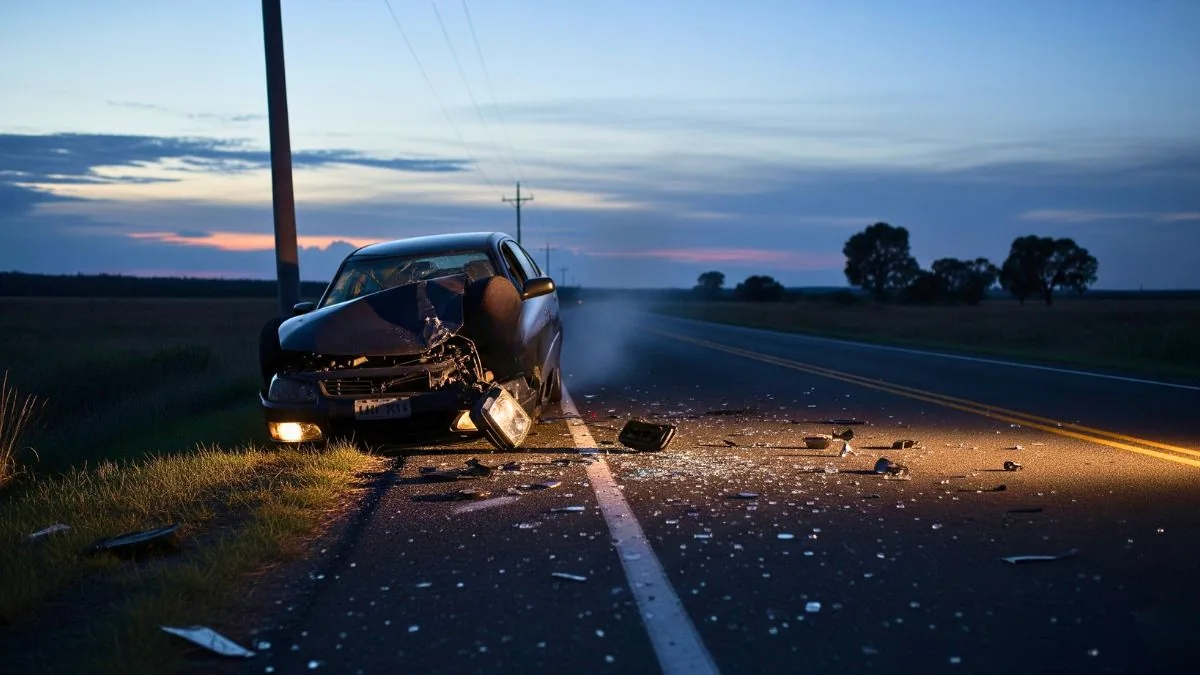
The National Weather Service Louisville office reports that more than 1,300 people are killed and more than 116,000 are injured each year in vehicle accidents on snow, slush, or ice covered roads. Speeding is a factor in 56% of those winter weather fatalities. Kentucky’s freeze and thaw pattern adds black ice on pavement that still looks dry.
Winter Accident Data
The same National Weather Service briefing reports that 24% of weather-related crashes, and 20% of weather-related fatalities, occur on roads covered with snow, slush, or ice. Those are national counts, and they describe the same conditions that follow a Kentucky ice storm: reduced traction, longer stopping distances, and drivers who held the posted speed.
KRS 189.290 requires the operator of any vehicle on a highway to operate it in a careful manner, with regard for the safety and convenience of pedestrians and other vehicles. KRS 189.390 separately forbids driving at a speed greater than is reasonable and prudent, having regard for the traffic and for the condition and use of the highway. A driver at 55 mph on a road posted at 55 mph can still violate that speed rule on ice.
Freeze and Thaw Road Risk
Kentucky winters swing between wet pavement, a drop below freezing, and a glaze that does not look like packed snow. That cycle forms black ice on bridges, overpasses, shaded lanes, and drainage dips. Air moves above and below a bridge deck, so the bridge surface loses heat faster than the approach roadway.
Black Ice
Black ice takes on the color of the pavement under it. A driver who treats a dark, wet-looking lane as dry pavement has not accounted for the condition of the highway. KRS 189.290 requires careful operation, and KRS 189.390 requires a speed matched to that surface.
Snow Route Priorities
The Kentucky Transportation Cabinet ranks snow and ice routes by traffic volume. An untreated rural road in the first hours of a storm is a foreseeable condition, and it gives no defense to a driver who kept highway speed on that surface.
Rural Priority C Routes Wait Up to 16 Hours for Treatment
Cabinet treatment goals for a routine snow event, ranked by traffic volume
Priority A: interstates, parkways, and major arteries with the highest traffic volume. Goal: a one-hour turnaround on interstates and a two-hour turnaround on other A routes.
Priority B: highways not as heavily traveled as A routes. Goal: a four-hour turnaround during a routine storm.
Priority C: mainly rural and other low-volume routes. Goal: treatment within 16 hours of the start of a routine snow event, and C routes might not be treated overnight.
Source: Kentucky Transportation Cabinet
Common Accident Patterns
Rear-End Collisions
A following driver who does not leave extra space on ice often cannot stop. That is a speed and condition problem under KRS 189.390 and a careful operation problem under KRS 189.290 in the same event. Occupant injuries after that impact are covered on the car accident injuries pages.
Loss of Control
National Weather Service Louisville reports that 49% of winter weather fatalities involve only a single vehicle. A spinout that starts with one car can still cross into the next lane and become a multi-vehicle accident, and the first driver’s speed on ice remains the starting fact.
Intersection Accidents
A driver who does not reduce speed before a red light or stop sign can slide through the intersection, and side-impact collisions follow. Fault still depends on careful operation and a speed matched to the ice, the same rules used in other Kentucky car accident cases.
Interstate Visibility
National Weather Service Louisville reports that about two-thirds (67%) of winter weather fatalities occur on highways. Heavy snow and blowing snow cut visibility on I-64, I-65, I-71, and I-75, and a driver who keeps interstate speed into a whiteout has not met KRS 189.390. When a commercial truck is in the chain, a truck accident investigation adds carrier records to that speed question.
No-Fault Coverage
Winter weather does not take a Kentucky accident out of the Motor Vehicle Reparations Act. KRS 304.39-020 defines basic reparation benefits as reimbursement for economic loss, capped at $10,000 per person per accident. That benefit covers medical expense, work loss, and replacement services loss. It does not pay for pain and suffering.
KRS 304.39-060 sets the tort threshold. An injured person may recover pain and suffering damages when medical expenses exceed $1,000, or when the injury includes a fracture, permanent disfigurement, permanent injury, permanent loss of bodily function, or death. When the at-fault driver is uninsured, uninsured motorist coverage is a first-party path if that coverage was kept, and written rejection of that coverage is explained in Do I Need Uninsured Motorist Coverage?
Recoverable Damages
Once the tort threshold is met, the same damage categories available in any Kentucky motor vehicle case remain available after ice or snow: medical expense, lost wages and earning capacity, pain and suffering, property damage, and related out-of-pocket costs. Punitive damages require a separate showing of egregious conduct, such as a drunk driver on an icy road. In every winter accident, the driver’s conduct is measured against the condition of the highway at the time of the accident under KRS 189.290 and KRS 189.390, not only against the posted speed limit.
Injured in a Winter Crash on Kentucky Roads?
Kentucky law measures a driver against the icy or snowy road in front of them, so sliding through an intersection at the posted limit can still be negligent. Sam Aguiar Injury Lawyers pairs your PIP benefits with a case against the at-fault driver for lost wages, pain and suffering and property damage. Most cases qualify in under 10 minutes, and a dedicated three-person case team handles your file. Once you are safe and treated, ask for a free case review.
Frequently Asked Questions
1Is a driver at fault for an accident on an icy Kentucky road?+
2What if the other driver says ice caused the accident?+
3Does PIP pay after a winter accident in Kentucky?+
4Does an untreated rural road change the driver’s duty?+
5Can a driver going the posted speed still be negligent?+
Latest Articles
Kentucky Diminished Value Claims
Kentucky drivers may pursue a repaired vehicle’s leftover market loss from the at-fault driver as part of a.
FMCSA Revoked ELDs: Fleet Compliance and Enforcement Deadlines
FMCSA removed five electronic logging devices from the registered list on August 6, 2026, and set an October.
FMCSA English Proficiency Rule and OOS Enforcement
FMCSA English Proficiency Rule Sam Aguiar Injury Lawyers August 11, 2026 7 minute read On This Page.