

Underinsured Motorist Coverage After a Company Vehicle Accident
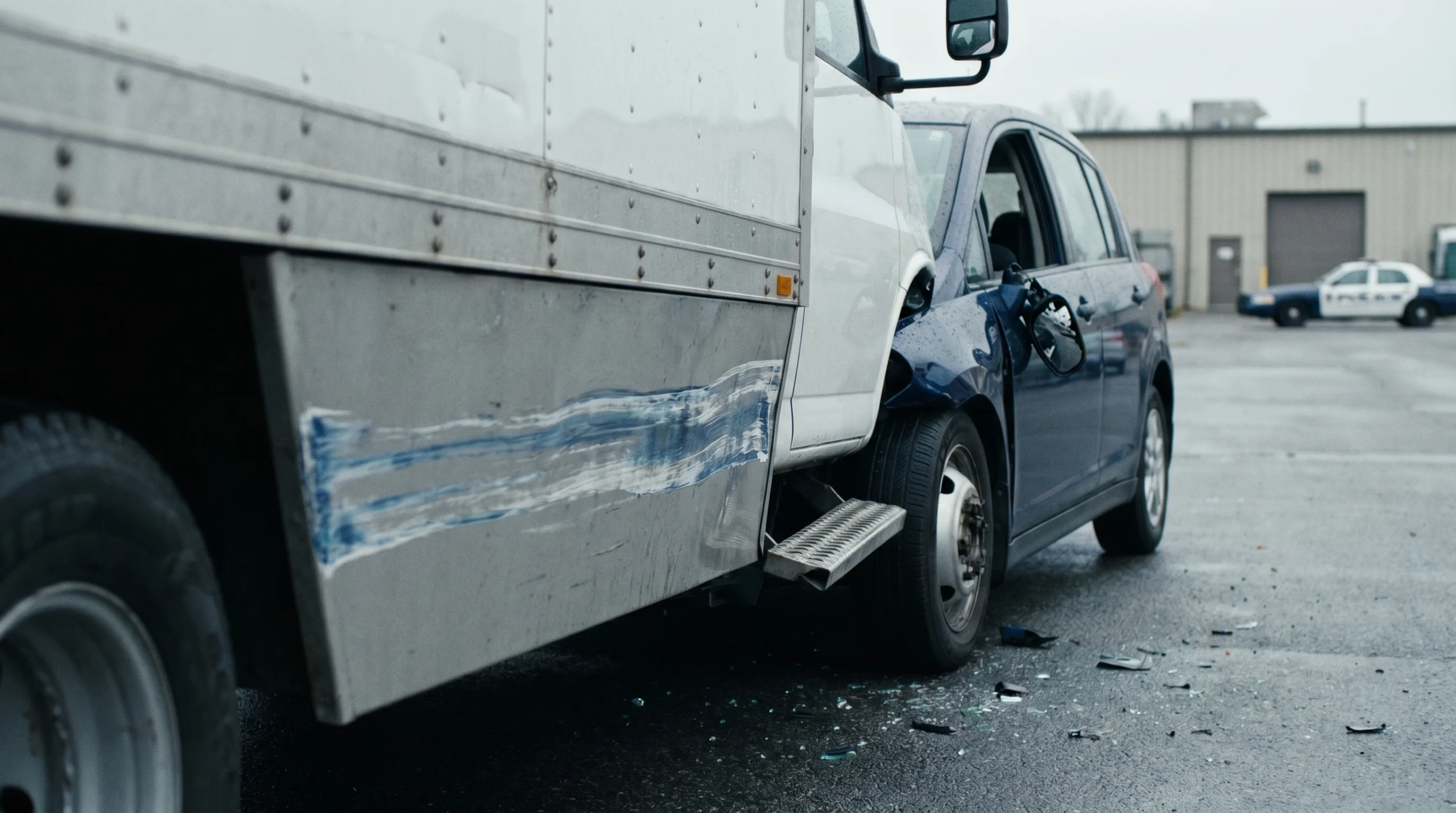
A company truck accident can leave a hard coverage question. Does the truck’s underinsured motorist coverage, called UIM, pay the employee who was driving it?
On September 25, 2026, the Kentucky Court of Appeals said no for one driver. The case is Rouse v. AmGuard Insurance Co., No. 2025-CA-0856-MR. The opinion is marked “Not To Be Published.” It is not final. It does not bind other Kentucky courts.
Interstate 75 Shoulder Crash
On March 9, 2020, Joshua Jones was driving a Ford F-250 work truck on Interstate 75 in northern Kentucky. He was a service technician for Drake Services in Paducah. Drake Lighting owned the truck. AmGuard insured it. He was driving from his home in Ohio toward a job in Louisville.
Jones’s truck and a Toyota driven by Daniel Kincaid had a minor collision. Both drivers moved to the shoulder. Kincaid later told police that Jones said he was not supposed to be driving the company vehicle. Jones also asked to handle the accident without calling police.
While they talked, a GBM Trucking tractor-trailer hit both men and both vehicles. Jones died at the scene. Kincaid’s daughter, Katherine, was in the Toyota. She also died. Kincaid was injured.
The trucking company had one liability limit. Both families had to share it. Jones’s estate then sought the UIM coverage on the F-250. KRS 304.39-320 is the Kentucky statute for that coverage. It can pay damages above the at-fault driver’s liability limits, if the policy allows it. The firm’s overview of underinsured motorist coverage in Kentucky explains the general rules.
AmGuard Entitlement Exclusion
Drake Services bought the AmGuard policy. The policy listed Drake Lighting as an additional named insured. It excluded “[a]nyone using a vehicle without a reasonable belief the person is entitled to do so.” Kentucky courts call that an entitlement exclusion.
AmGuard asked the Boone Circuit Court to decide the claim without a trial. It relied on Jones’s statement on the shoulder. It also offered two possible reasons for that statement. His Ohio license had been suspended about five weeks earlier. His toxicology results were positive for drugs.
Kentucky Entitlement Test
The test comes from Hugenberg v. West American Insurance Co./Ohio Casualty Group, 249 S.W.3d 174 (Ky. App. 2006).
First, did the driver believe he was allowed to use the vehicle? Second, was that belief reasonable?
The exclusion applies if the driver knew he was not allowed to drive. It also applies if he claimed a belief he had no reasonable basis for.
The Rouse panel said the AmGuard wording “essentially tracks” an exclusion the Kentucky Supreme Court already enforced. That case is York v. Kentucky Farm Bureau Mutual Insurance Co., 156 S.W.3d 291 (Ky. 2005).
Holdings of Each Authority
Rouse v. AmGuard Insurance Co.
This is the opinion in the case. It is unpublished and not final, so other Kentucky courts do not have to follow it. It shows how one undisputed roadside statement can keep a company truck’s UIM coverage from the driver.
Hugenberg, 249 S.W.3d 174
This published 2006 opinion supplies the two-part test. The panel used it. It stopped after the first question, because it found that Jones believed he was not allowed to drive.
York, 156 S.W.3d 291
This is the Kentucky Supreme Court case from 2005. It enforced a similar exclusion. The panel treated the AmGuard sentence as that same kind of policy term, not as a new rule.
Auto-Owners Insurance Co. v. Spalding, 573 S.W.3d 626
This 2019 opinion shows when a jury still has work to do. There, a party denied the conversation and offered proof. Here, nobody denied that Jones made the statement.
KRS 304.39-320
This statute requires insurers to offer UIM on request. It describes the coverage. It does not erase a valid entitlement exclusion in the policy.
Estate Evidence
Jones’s estate argued that he believed he could drive the truck. It offered four pieces of proof and said a jury should weigh them.
Supervisor Testimony
Jones’s supervisor said Jones was entitled to use the F-250.
Ohio License Notice
The suspension notice came back undeliverable after Jones moved.
Fiancée Testimony
His fiancée said she knew of no license suspension.
Toxicology Limit
A forensic pathologist could not say whether Jones was intoxicated when he died.
Undisputed Shoulder Statement
The Court of Appeals reviewed the ruling on its own. It did not defer to the trial court. It affirmed. Judge Moynahan wrote the opinion. Judges Combs and Taylor agreed.
The court treated Jones’s statement to Kincaid as undisputed. It said the statement was “made against his own interest.” In the court’s words, “the only reasonable conclusion” was that Jones believed he had no right to drive the truck that day.
That ended the appeal under the first part of the Hugenberg test. The court said its inquiry “begins and ends with the test’s first prong.” It did not decide whether the license suspension or the drug results made a belief reasonable.
The estate argued that Jones lied to keep police away. The court rejected that theory. It called the inference unreasonable, because Jones had simpler things he could have said. A jury question would exist only if someone disputed that Jones made the statement. The estate did not.
Kincaid’s deposition was the only evidence of what Jones said. More on this coverage is on the firm’s underinsured motorist coverage page and in stacking uninsured and underinsured coverage.
Publication and Finality
Rouse is unpublished. Kentucky Rule of Appellate Procedure 41 says an unpublished opinion is not binding. A court may consider one only in limited situations. A citation must say the opinion is not binding.
The opinion is not final yet. Under Rule 40(G), a Court of Appeals opinion becomes final on the 31st day after the court issues it. That date moves if a party asks for rehearing, or asks the Kentucky Supreme Court to take the case. As of October 3, 2026, both windows were still open.
The holding is tied to an uncontested statement on this record. The opinion does not say what happens if the driver’s words are disputed.
Hurt in an Accident Involving a Work Truck?
When a work truck is part of the accident, the coverage on that vehicle can depend on a few lines of policy wording. Sam Aguiar Injury Lawyers assigns every case a three-person team: a top-rated attorney, a case manager, and a legal assistant. With our Bigger Share Guarantee®, you always get more. Call (502) 888-8888 for a free case review.
Latest Articles
Stacking Uninsured and Underinsured Coverage in Kentucky
How stacking uninsured and underinsured motorist coverage works under Kentucky law.
Underinsured Motorist Claims in Kentucky
How Kentucky underinsured motorist claims work under KRS 304.39-320, including the settlement notice and stacking.

Underinsured Motorist Coverage
How underinsured motorist coverage works when the at-fault driver’s limits are too low.