

Injury Guides
Car Accident Whiplash Injuries

Key Takeaways
Whiplash Injuries
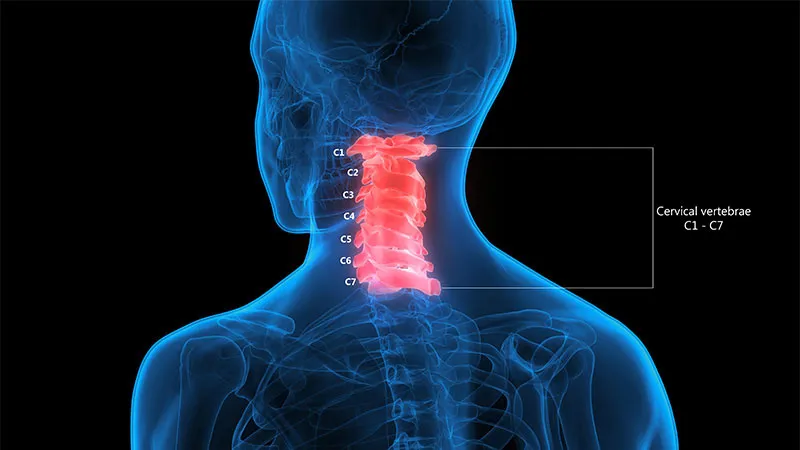
According to the NHTSA, approximately 806,000 people sustain whiplash injuries in motor vehicle crashes every year in the United States, with associated costs exceeding $9 billion annually. Rear-end collisions are the primary cause, and they don’t have to be high-speed to cause serious injury. Insurance companies routinely dismiss whiplash as a minor or even fabricated condition. That strategy costs victims thousands of dollars in rightful compensation. We know whiplash, how it’s documented, and what it takes to recover what these cases are worth.
Whiplash is a cervical spine injury caused by the rapid back-and-forth motion of the head and neck during a collision, according to the Mayo Clinic. In a rear-end crash, the occupant’s torso is pushed forward by the seat while the head momentarily lags behind, hyperextending the neck backward. Then the head snaps forward into hyperflexion. This entire sequence takes about 150 milliseconds, too fast for any voluntary muscle contraction to protect you.
The forces involved stress and strain the cervical vertebrae, intervertebral discs, muscles, ligaments, tendons, and the nerve roots of the cervical spine. When soft tissue is stretched or torn, or when discs are compressed or herniated, the result is the cluster of symptoms we call whiplash, formally known as cervical acceleration-deceleration (CAD) injury or whiplash associated disorder (WAD), according to the Mayo Clinic.
What makes whiplash particularly challenging is that it often doesn’t appear on standard X-rays or CT scans, according to the Mayo Clinic. Soft tissue damage is largely invisible to these modalities. That’s exactly why insurance companies use “normal imaging” as a reason to minimize or deny claims, and exactly why proper documentation matters so much.
Whiplash Symptoms to Know
One of the most important facts about whiplash: symptoms frequently do not appear until 24 to 72 hours after the crash, according to the Mayo Clinic. This delay is well-documented in the medical literature and is one of the most common reasons people minimize their injury, or fail to seek immediate medical care. By the time symptoms become disabling, days may have passed since the crash, and the gap in documentation can be used against your claim.
Neck and Spine Symptoms
- Neck pain and stiffness. the hallmark symptom, often worsening with movement
- Reduced range of motion. difficulty turning or tilting the head
- Shoulder and upper back pain. pain that radiates from the neck into surrounding areas
- Muscle spasms. involuntary contractions in the neck and shoulder muscles
- Tenderness along the cervical spine. localized pain at specific vertebrae
Neurological Symptoms
- Headaches. often originating at the base of the skull and radiating forward
- Numbness or tingling in the arms. indicating possible nerve root compression
- Dizziness and balance problems. caused by disruption of the vestibular system or upper cervical structures
- Blurred vision. visual disturbances from trauma to cervical-connected structures
- Ringing in the ears (tinnitus)
- Jaw pain (TMJ disorder). common in frontal crashes where the jaw is thrown forward
Cognitive and Psychological Symptoms
- Memory and concentration problems, “brain fog,” difficulty processing information
- Sleep disturbances, insomnia, trouble staying asleep, poor sleep quality
- Fatigue and irritability, from chronic pain and neurological disruption
- Depression and anxiety, especially in cases of chronic pain or long recovery
- PTSD, a recognized consequence of serious crashes, independent of physical injury severity
Whiplash Can Happen at Low Speeds
One of the most persistent myths about whiplash: that it requires a high-speed impact. NHTSA biomechanics research documents that whiplash injuries can occur at speeds as low as 5-10 mph. The critical factors are the speed change (delta-V) applied to the occupant and their position at impact, not the absolute speed of the vehicles involved. A fully stationary vehicle can absorb a low-speed rear impact and transmit enough force to injure an occupant’s cervical spine. Insurance companies know this. They deny these claims anyway.
How Whiplash Is Diagnosed and Documented
Proper medical documentation is the foundation of a successful whiplash claim, according to the Mayo Clinic. The doctor’s notes, imaging results, and functional assessments you generate in the weeks following a crash are the evidence that drives the strength of your case.
Physical Examination
A thorough physical exam assesses range of motion, muscle spasm, trigger points, reflexes, and specific nerve function. The Spurling test, cervical compression test, and other orthopedic assessments can document specific cervical spine pathology. These findings in the medical record establish objective evidence of your injury.
Imaging
- X-rays. rule out fractures, check cervical alignment
- MRI. the most useful imaging for whiplash; identifies disc herniations, ligament tears, nerve root compression, and soft tissue damage invisible on X-ray or CT, according to the Mayo Clinic.
- CT scan. useful when fracture is suspected; less useful for soft tissue injury
An MRI that shows a disc herniation or nerve root compression at the cervical level converts a “soft tissue” claim into an objectively documented structural injury, and changes the strength of your case significantly. This is why we strongly recommend pursuing MRI imaging when symptoms persist beyond the first few days. See our page on herniated discs from car accidents for more information on this specific injury type.
Neurological Assessment
When numbness, tingling, or weakness is present, electrodiagnostic testing (EMG/nerve conduction studies) can document nerve damage. This is objective, quantified evidence of neurological injury that is very difficult for insurance companies to dispute.
Why Clients Choose Sam Aguiar
1,000+ Five-Star Reviews
“Outstanding group of people. They made sure that I could heal with peace of mind.”
Whiplash and the Cervical Spine: The Structural Connection
Whiplash is more than muscle strain. The rapid hyperextension-hyperflexion sequence can cause or worsen several structural conditions:
- Cervical disc herniation. the crash forces can rupture or bulge intervertebral discs, causing nerve compression and radiculopathy
- Facet joint injury. the small joints between cervical vertebrae can be strained, fractured, or develop chronic pain syndrome
- Ligament tears. the anterior and posterior longitudinal ligaments, among others, can stretch or tear, leading to cervical instability
- Cervical strain/sprain. muscle and tendon damage that causes acute pain and long-term spasm patterns
- Nerve root compression. disc herniation or inflammation can compress cervical nerve roots, causing radiating arm pain (cervical radiculopathy)
When the structural damage extends to the cervical discs or nerve roots, whiplash is no longer just a “soft tissue” claim, according to the Mayo Clinic. It’s a documented spinal injury that may require extended treatment, epidural injections, or surgery, and the damages calculation grows accordingly.
Whiplash injuries also frequently occur alongside other injuries sustained in the same crash: seatbelt injuries, brain injuries, or damage requiring review through an independent medical exam. All of these injuries combine into the full picture of what you’re owed.
What Whiplash Is and How Crashes Cause It
Whiplash is a neck injury caused by sudden motion. The Mayo Clinic defines whiplash as a neck injury due to forceful, rapid back-and-forth movement of the neck, like the cracking of a whip, and notes it is commonly caused by rear-end car crashes.
That mechanism is exactly what a rear-end collision delivers. The abrupt acceleration and deceleration whip the head beyond its normal range, straining the muscles, ligaments, and soft tissues of the neck even at speeds that leave little visible vehicle damage.
Whiplash Symptoms
The symptoms extend beyond a stiff neck. The Mayo Clinic lists neck pain and stiffness, headaches that most often start at the base of the skull, and loss of range of motion in the neck among the common signs of whiplash.
Why Some People Recover Slowly
For many, whiplash resolves; for some, it does not. The Mayo Clinic explains that most people who have whiplash feel better within a few weeks, but some people have pain for months or years after the injury.
Certain factors predict a harder recovery. The same Mayo Clinic guidance links worse outcomes to prior whiplash, older age, pre-existing neck or back pain, and a high-speed injury, which is why a persistent complaint deserves ongoing evaluation rather than being dismissed as a minor strain.
Delayed symptoms make early evaluation worthwhile even after a low-speed crash. Because the Mayo Clinic describes headaches starting at the base of the skull and a loss of neck range of motion that can persist for months or years, a stiff neck that seems minor at first can develop into a lasting problem, so tracking the symptoms over time keeps the medical record aligned with how the injury actually unfolds.
Why Insurance Companies Dispute Whiplash Claims
Insurance adjusters use predictable tactics against whiplash victims, according to the Mayo Clinic. Knowing them is the first step to countering them.
- “Your imaging is normal.” Standard X-rays and CT scans don’t show soft tissue damage. An MRI is required to document disc and ligament injuries. Normal plain films are not a clean bill of health.
- “You delayed treatment.” Delayed symptom onset is normal in whiplash, the CDC and medical literature document this, according to the Mayo Clinic. A 24-72 hour delay in symptoms or medical care does not break the causal connection to the crash.
- “This was a minor collision.” As NHTSA biomechanics research shows, low-speed crashes can produce significant soft tissue injury. Vehicle damage does not determine occupant injury severity.
- “You had pre-existing conditions.” Kentucky law does not bar recovery for aggravation of pre-existing conditions. If the crash made a prior condition worse, the at-fault driver is liable for that aggravation.
How We Build a Whiplash Case
- Preserve crash and medical evidence immediately. Crash photos, the police report, vehicle damage documentation, and immediate medical records establish the foundation. We also preserve black box data and identify surveillance footage before it’s overwritten.
- Connect you with the right medical providers. The quality of your medical documentation directly shapes your case documentation. We connect clients to orthopedists, neurologists, pain management physicians, and physical therapists who document whiplash injuries thoroughly and professionally.
- Pursue imaging that captures soft tissue damage. When symptoms persist beyond the first few days, MRI is essential. A cervical MRI showing disc herniation, nerve root compression, or ligament injury transforms a “soft tissue” whiplash claim into an objectively documented structural injury, according to the Mayo Clinic.
- Document the full impact on your daily life. Missed work, reduced hours, accommodations, activities you can no longer perform, and the daily impact of chronic pain are all documented and included in your damages claim. Wage verification, employer records, and functional capacity assessments all support this documentation.
- Counter insurance company tactics with evidence. We address the “low-speed collision” argument with biomechanical analysis, the “pre-existing conditions” argument with medical records showing the crash-related aggravation, and the “normal imaging” argument with MRI findings and functional assessments. Our attorneys are ready to take cases to trial when insurance companies won’t make a serious offer based on the full record.
Crash photos, the police report, vehicle damage documentation, and immediate medical records establish the foundation. We also preserve black box data and identify surveillance footage before it’s overwritten.
The quality of your medical documentation directly shapes your case documentation. We connect clients to orthopedists, neurologists, pain management physicians, and physical therapists who document whiplash injuries thoroughly and professionally.
When symptoms persist beyond the first few days, MRI is essential. A cervical MRI showing disc herniation, nerve root compression, or ligament injury transforms a “soft tissue” whiplash claim into an objectively documented structural injury, according to the Mayo Clinic.
Missed work, reduced hours, accommodations, activities you can no longer perform, and the daily impact of chronic pain are all documented and included in your damages claim. Wage verification, employer records, and functional capacity assessments all support this documentation.
We address the “low-speed collision” argument with biomechanical analysis, the “pre-existing conditions” argument with medical records showing the crash-related aggravation, and the “normal imaging” argument with MRI findings and functional assessments. Our attorneys are ready to take cases to trial when insurance companies won’t make a serious offer based on the full record.
Our Bigger Share Guarantee® means you take home more of your settlement than at most firms, and the contingency fee never increases even if your case goes to trial. A dedicated team of three, an attorney, a case manager, and a legal assistant, handles every aspect of your case.
Claiming Damages From Whiplash
Kentucky has no cap on compensatory damages in personal injury cases. The value of a whiplash claim depends on the severity of the injury, the extent of treatment required, the impact on your ability to work, and the strength of your medical documentation, according to the Mayo Clinic. Recoverable damages include:
- Medical expenses. ER, professionals visits, MRI, physical therapy, chiropractic care, pain management, injections, surgery (if needed)
- Future medical costs. ongoing treatment for chronic symptoms, anticipated procedures, long-term physical therapy
- Lost wages. income lost during recovery, missed work days, reduced hours
- Lost earning capacity. if chronic pain or structural injury has permanently reduced your ability to work
- Pain and suffering. physical pain, emotional distress, loss of enjoyment of activities
- Property damage. vehicle repair or replacement
- Long-term damages. future care costs, life-care planning for chronic conditions
Whiplash cases with documented disc herniations, nerve compression, or surgical treatment can reach the six-figure range, according to the Mayo Clinic. Cases with surgery and permanent limitations can go higher. Don’t accept an early settlement without Knowing the full medical picture.
Ready to Take Action on Your Case?
After a serious injury, medical bills pile up while the insurance company looks for ways to pay you less. Most law firms take their cut first and leave you with whatever is left. Sam Aguiar Injury Lawyers does things differently. With our exclusive Bigger Share Guarantee®, you always get more. Every client gets a dedicated three-person team: an attorney, a case manager, and a legal assistant. We never raise our fee rate if we have to go to court, and you pay $0 Out-Of-Pocket Forever.
Frequently Asked Questions
1What exactly happens to the neck during a whiplash injury?
The head accelerates forward and then snaps back faster than the neck’s supporting muscles and ligaments can control, a motion pattern documented in NHTSA biomechanics research .
2Can whiplash happen in a low-speed crash?
Yes. The Mayo Clinic explains that whiplash is commonly caused by rear-end crashes and that some people have pain for months or years after the injury, so a crash that looks minor can still cause a real neck injury.
3How is whiplash diagnosed and documented?
Diagnosis typically involves physical examination and sometimes imaging, and our independent medical exam page explains how insurers evaluate these soft-tissue findings.
4Why do insurance companies frequently dispute whiplash claims?
Because whiplash often lacks a visible fracture on X-ray, insurers sometimes treat it skeptically, even though NHTSA biomechanics research documents it as a real and measurable injury mechanism.
5Is whiplash connected to herniated discs?
Yes, in some cases. Our page on herniated discs from car accidents explains how the same forward-and-back neck motion that causes whiplash can also injure spinal discs.
6How much does whiplash cost the country each year?
NHTSA estimates that traffic crashes cost the United States billions of dollars annually, with neck injuries like whiplash among the most common claims.