
Amazon Flex Accident Lawyers
Injured in an Amazon Flex Accident?
 ★★★★★
Over 1,000 Five-Star Reviews
•
Available 24/7. $0 Out-Of-Pocket Forever.
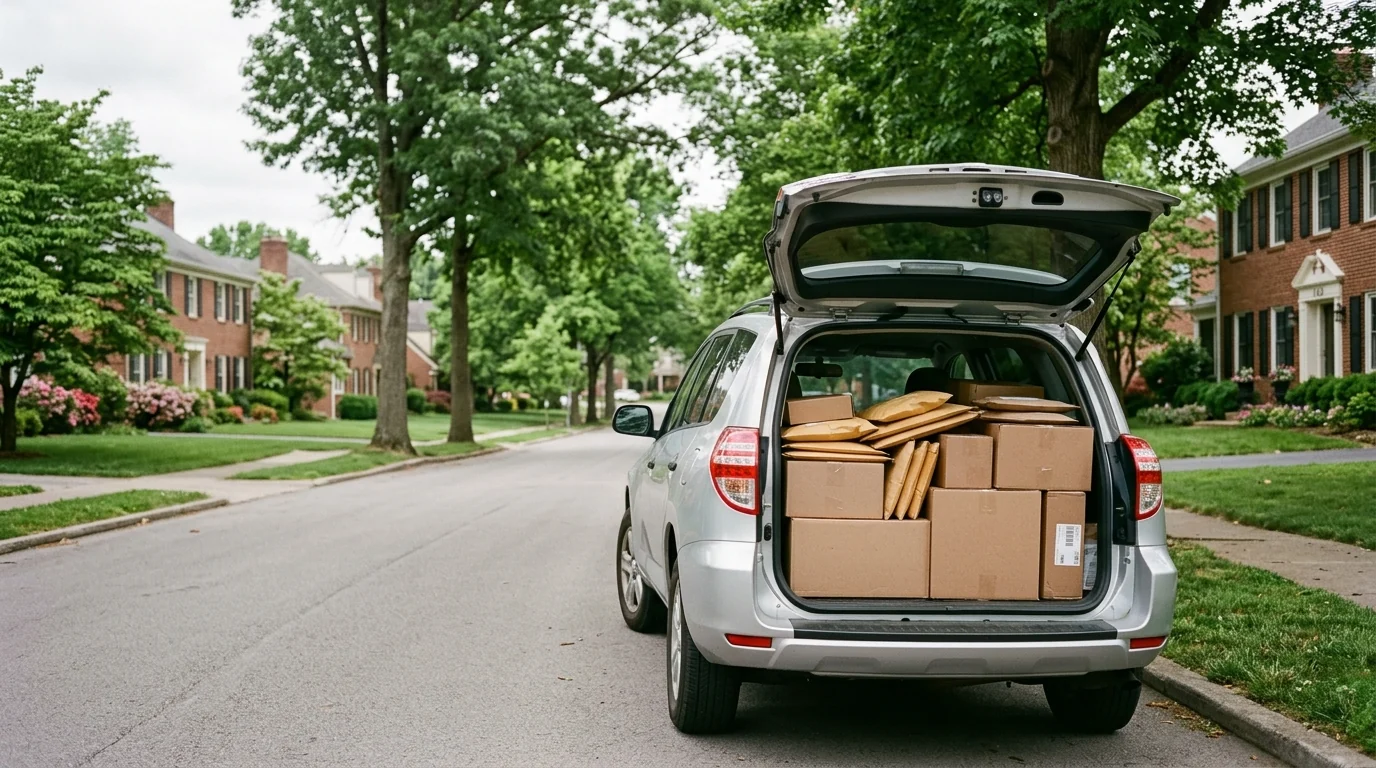
When an Amazon Flex driver hits you, the car in the other lane looks like an ordinary personal sedan or SUV. Inside that unmarked vehicle, the driver is running a timed commercial route controlled through the Amazon Flex app. Personal auto policies in Kentucky can exclude delivery work under KRS 304.39-048, while Amazon’s $1,000,000 commercial liability policy covers an accident only while the driver is actively delivering during a scheduled block.
Pinning down app status at the minute of impact decides whether you face an excluded policy, minimum limits, or commercial coverage built for serious injuries. Sam Aguiar Injury Lawyers steps in, shuts down insurance company delays, and demands every dollar you are owed. Our dedicated trucking and commercial vehicle team represents injured drivers and passengers across Kentucky, backed by Over 1,000 Five-Star Google reviews and 50+ seven and eight figure results.
Amazon Flex Commercial Insurance Coverage
Kentucky enacted delivery-network insurance statutes that took effect on January 1, 2025, for auto policies issued or renewed on or after that date. Under KRS 365.530, state law splits app-based delivery driving into two active windows: a delivery available period, when the driver is logged into the digital network and eligible for offers, and a delivery service period, which runs from the moment the driver starts en route to pick up goods until the final drop-off or designated return.
Those boundaries create a personal-policy trap. Under KRS 304.39-048, a Kentucky auto insurance company may exclude all coverage, along with the duty to defend or pay, for any injury or property loss during a delivery available period or delivery service period. That exclusion can strip away tort liability, medical payments, and uninsured or underinsured motorist protection on the driver’s own policy, leaving denied personal delivery insurance as the first hurdle after a serious accident.
Amazon’s commercial coverage fills that gap only when strict conditions are met. Amazon provides Flex delivery partners in every state outside New York with $1,000,000 in auto liability coverage, uninsured and underinsured motorist coverage, and contingent comprehensive and collision coverage at no cost to the driver. That commercial policy applies only while the authorized Flex partner is actively delivering during the delivery block. If someone else was borrowing the account or driving the car, Amazon denies the coverage.
Even when a dispute arises over block status, Kentucky statutes set a baseline liability floor. Under KRS 365.532, the driver, the delivery network company, or both must carry at least $50,000 per person, $100,000 per accident for bodily injury, and $25,000 for property damage during both the delivery available period and the delivery service period. If the driver’s own policy lapses or excludes the loss, the delivery network company’s insurance pays from the first dollar and cannot force you to wait for another insurance company to issue a formal denial first. Before allowing deliveries, KRS 365.534 also requires written disclosure of those limits and personal-policy gaps.
Once the driver logs off, personal auto insurance responds, where minimum limits under KRS 304.39-110 start at $25,000 per person, $50,000 per accident, and $25,000 for property damage. Serious injuries exhaust those limits fast. Your own uninsured motorist coverage under KRS 304.20-020 and underinsured motorist coverage under KRS 304.39-320 can supply additional recovery, and Kentucky policy stacking rules can increase available limits when multiple household policies cover the same accident.
Amazon Flex Coverage Tiers in Kentucky
How app status at the time of an accident determines available liability insurance under Amazon policy terms and Kentucky statutes.
Sources: Amazon Flex Safety & FAQ; Kentucky Revised Statutes (KRS 365.530, KRS 365.532, KRS 304.39-048, KRS 304.39-110, KRS 304.20-020, KRS 304.39-320)
Delivery Network Tiers Across Amazon’s Fleet
Not every Amazon delivery vehicle carries the same insurance structure or corporate trail. Amazon moves packages across three separate road networks: independent Flex drivers in personal vehicles, Delivery Service Partner employees in blue branded cargo vans, and interstate motor carriers hauling freight through Amazon Relay.
Each tier triggers different coverage limits and different evidence rules. A Flex accident requires proving active-block app status under Kentucky delivery-network statutes. A branded van Amazon delivery accident involves an independent local contractor company that employs the driver and carries commercial auto policies. A Relay tractor-trailer hauling Amazon trailers is governed by federal regulations, including 49 CFR 387.9 minimum liability limits of $750,000 for nonhazardous freight up to $5,000,000 for bulk hazardous loads, along with mandatory electronic logging device records that drive our commercial truck accident investigations.
Amazon Flex vs. Delivery Service Partner vs. Amazon Relay
Vehicle, employment status, insurance layer, and primary records across Amazon’s three delivery tiers.
| Delivery Tier | Vehicle Type | Driver Status | Primary Insurance | Core Evidence |
|---|---|---|---|---|
| Amazon Flex | Unmarked personal sedan, SUV, or minivan | Independent contractor using the Flex app | $1,000,000 Amazon commercial auto policy during active block; $50,000/$100,000/$25,000 statutory floor under KRS 365.532; personal auto when app is off | Flex app login and block timestamps (KRS 365.532), Global Positioning System (GPS) route data, package scan logs, interior cargo photos |
| Amazon Delivery Service Partner | Branded blue Amazon cargo van or step van | Employee of an independent Delivery Service Partner company | Delivery Service Partner commercial auto policy plus applicable excess layers | Delivery Service Partner contract, onboard van telematics and camera records, station dispatch logs |
| Amazon Relay | Tractor-trailer or commercial box truck hauling Amazon freight | Commercial driver for an independent interstate motor carrier | Motor carrier commercial policy meeting 49 CFR 387.9 minimums ($750,000 for general freight; $1,000,000 to $5,000,000 for hazardous loads) | Electronic logging device records (49 CFR 395.8), engine control module data, bills of lading, Relay load-board dispatch records |
Sources: Amazon Flex Safety & FAQ; Amazon Logistics; Amazon Relay; 49 CFR 387.9; 49 CFR 395.8; KRS 365.532
Corporate Responsibility Beyond the Contractor Label
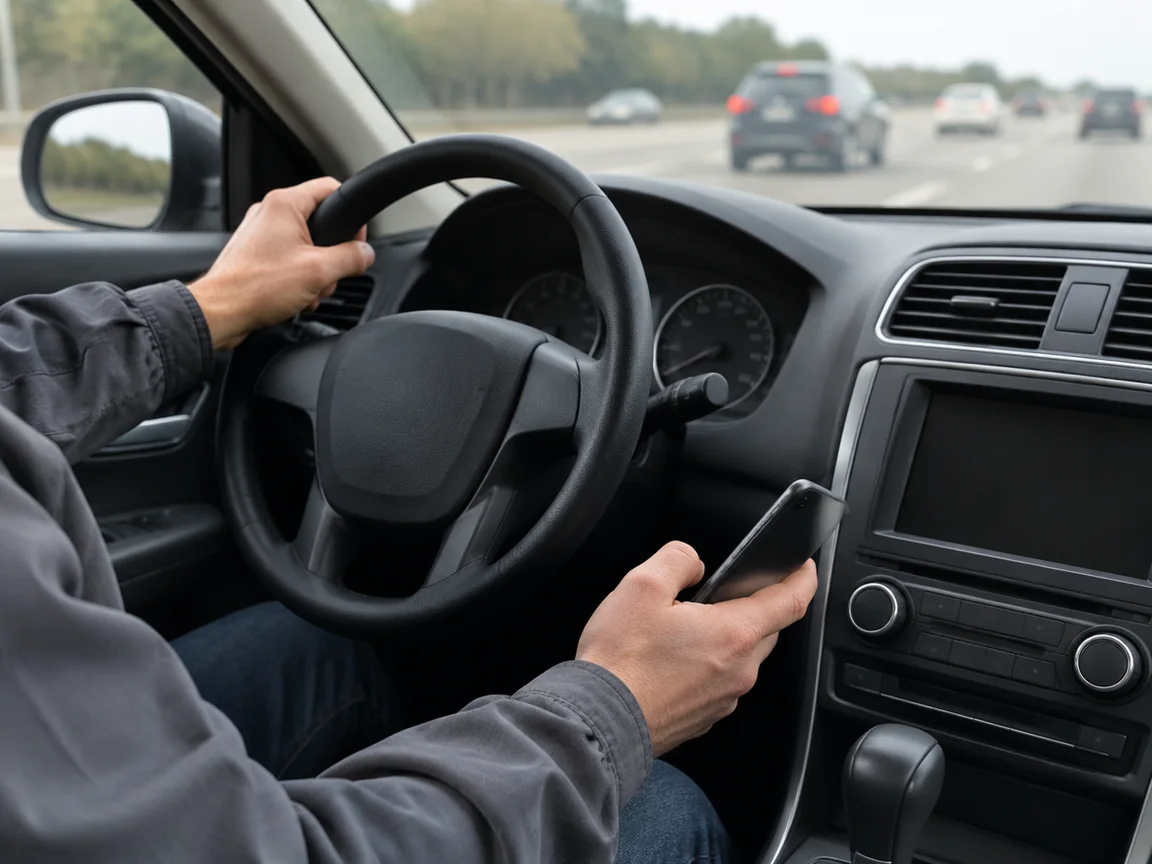
Amazon classifies Flex drivers as independent contractors to distance itself from financial responsibility when a delivery driver injures someone on a Kentucky road. Courts look past contract labels and examine how much operational control a company exerts over the work, including fixed pickup windows, app-sequenced stops, package scan deadlines, and performance standing penalties that threaten deactivation.
Vicarious liability for a driver’s negligence is legally distinct from a corporation’s own direct negligence. Even where a company argues it is not vicariously liable for an independent contractor’s driving, direct corporate negligence examines Amazon’s own conduct, such as designing delivery workflows that pressure drivers to check smartphone prompts in moving traffic, assigning compressed delivery windows across 1–6 hour standard blocks and under-1-hour Amazon Now runs, or failing to screen out unsafe drivers and unauthorized account sharing.
Building a case against Amazon requires separating the road error from the corporate system that set the route and pace. Examining how Amazon’s contractor delivery structure operates alongside outcomes in Amazon delivery lawsuits shows why discovery must reach beyond a personal auto policy to obtain route schedules, app alerts, and onboarding checks.
Preserving Evidence After an Amazon Flex Accident
Unmarked delivery cars leave few visible clues once the vehicle is towed and the packages are moved. Insurance companies know that proving an active delivery block decides whether a $1,000,000 commercial policy applies or whether the case drops to minimum personal limits. Evidence fades. Witnesses forget. Digital delivery records and roadside video overwrite on short schedules.
Kentucky law gives injured people a direct statutory tool to lock down the app timeline. Under KRS 365.532(7), a delivery network company or its insurance company must provide, upon request, the exact times the driver began and ended every delivery available period and delivery service period during the 24 hours before and after the accident. Under subsection (8) of the same statute, if a dispute exists over when a delivery period started or ended and the company fails to retain or provide those timestamps, the company’s insurance company assumes primary liability.
Additional evidence completes the picture of fault and active delivery status, including photographs of Amazon parcels, barcodes, and delivery totes inside the car, the police report narrative, residential doorbell or business security video, and nearby highway cameras. Sam Aguiar Injury Lawyers is one of the only firms in Kentucky with six months of real-time access to DOT and TRIMARC traffic camera footage archives. Our office also obtains 911 dispatch audio, electronic vehicle data, and nearby surveillance footage, and works with accident reconstructionists, investigators, life-care planners, economists, and medical experts when a case demands them.
Adjusters call while you are still treating and press for your side of the story before you finish seeing doctors. Giving a recorded statement to an insurance adjuster is not required with the at-fault driver’s insurance company and creates wording traps before medical and app evidence are gathered. Do not sign an injury settlement release without legal review. Under KRS 411.182(4), a release discharges the named parties and reduces remaining recovery by their share, and signing a bodily injury release for a driver’s liability limits without sending written notice by certified or registered mail to every underinsured motorist insurance company under KRS 304.39-320(3) can forfeit your underinsured motorist benefits.
High-Volume Amazon Flex Corridors in Kentucky
Amazon Flex vehicles load packages at fulfillment centers, parcel stations, and retail grocery pickup points across Kentucky before fanning out onto interstates and neighborhood streets. Heavy parcel volume concentrates personal-car delivery traffic along three major regional networks, and each corridor creates specific evidence opportunities when an accident happens.
Staging from SDF4 in Louisville and SDF8 in Shepherdsville feeds steady waves of unmarked sedans and SUVs across Bullitt County and onto I-65, I-64, I-264, and I-265. Because TRIMARC cameras monitor Louisville interstate corridors, securing traffic camera video before archives cycle out captures lane changes, abrupt merges, and rear-end impacts that the driver later disputes. In Lexington and Central Kentucky, Flex drivers fan out from LEX1 and LEX2 onto I-75, New Circle Road, Nicholasville Road, and Man o’ War Boulevard, where sudden left turns across multi-lane traffic and double-parked residential stops cause side-impact and rear-end accidents. Across Northern Kentucky, heavy distribution around Hebron and the KCVG air hub corridor at Cincinnati/Northern Kentucky International Airport sends commercial delivery traffic onto I-275 and I-71/I-75, where out-of-state plates and multi-state insurance policies require careful coverage verification.
Wherever an impact happens in Kentucky, Sam Aguiar Injury Lawyers handles delivery vehicle accident cases and Kentucky car accident cases statewide, with more than 15,000 clients represented across Kentucky. Unmarked delivery cars let insurance companies hide behind personal-policy exclusions and contractor labels until app logs and commercial policies are forced into the open. Locking down the delivery-period timeline, stacking every available coverage layer, and holding every responsible company accountable is how you recover everything you are owed.
Key Takeaways
Hit by an Unmarked Delivery Car?
When an Amazon Flex driver injures you, insurance companies push personal-policy denials and contractor defenses while your medical bills pile up. Sam Aguiar Injury Lawyers takes over the investigation, demands the delivery-period app logs, and tracks down every commercial and personal policy that applies. With our Bigger Share Guarantee®, you always get more, and your fee percentage never increases. Call today for a free case review.