

Concussions After a Car Accident
Key Takeaways
- A concussion is a mild traumatic brain injury, and the CDC says a hit to the body that makes the head and brain move quickly back and forth can cause one, with no blow to the head.
- Symptoms may start right away or hours to days later, and the CDC lists danger signs such as a worsening headache, repeated vomiting, or one pupil larger than the other that need emergency care.
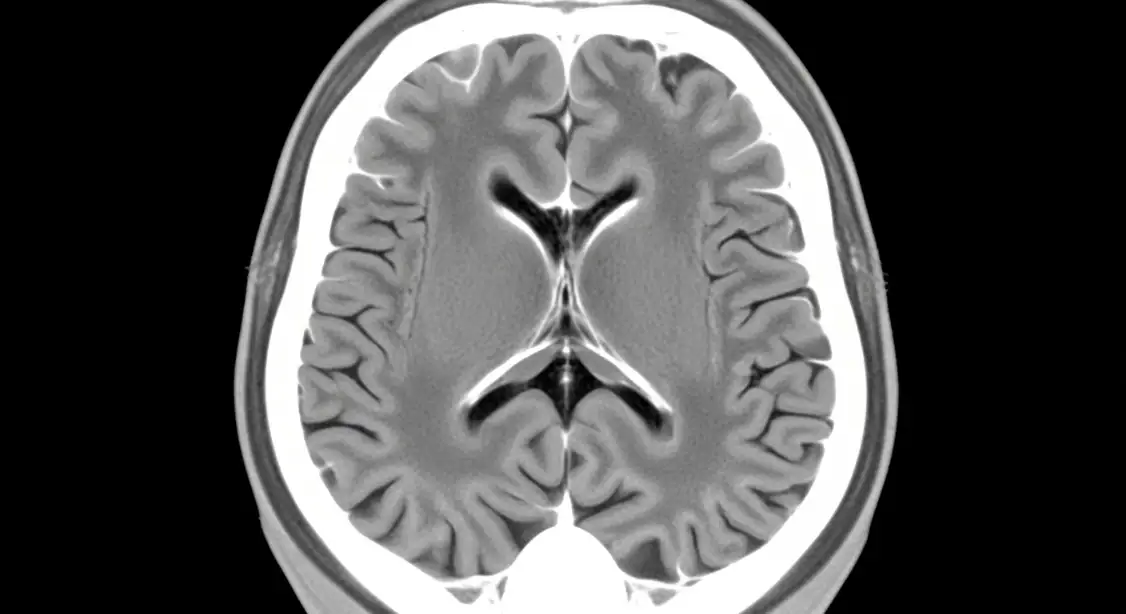
- A normal head CT does not rule out a concussion. StatPearls explains that diagnosis rests on the history and exam, and that “the majority of patients diagnosed with a concussion do not need head imaging.”
Mild Traumatic Brain Injury
StatPearls, a clinical reference on the National Library of Medicine’s bookshelf, defines a concussion as a “traumatically induced transient disturbance of brain function” and notes that the term mild traumatic brain injury, or mTBI, is often used interchangeably with it.
The CDC reports that most TBIs that occur each year are mild TBIs or concussions. The CDC’s TBI statistics page says motor vehicle crashes and assaults are “other common ways a person may get a TBI.” Moderate and severe injuries are covered on the car accident brain injuries page.
Acceleration and Deceleration Forces
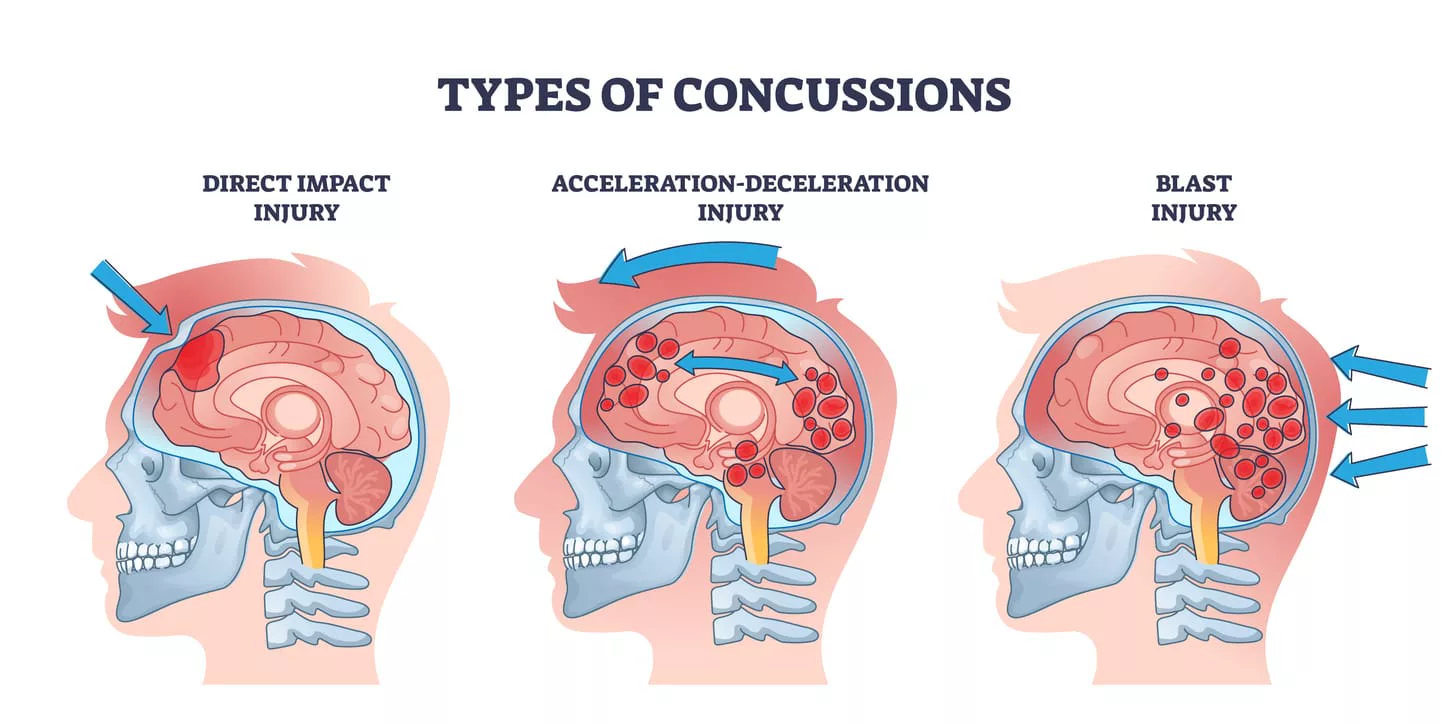
A car accident can cause a concussion without any blow to the head. The CDC explains that a hit to the body that makes the head and brain move quickly back and forth can cause a concussion. That sudden movement can make the brain bounce or twist in the skull, stretch and damage brain cells, and set off chemical changes in the brain.
StatPearls adds that indirect forces elsewhere in the body can produce an acceleration and deceleration injury to the brain. Acceleration, deceleration, or rotation of the head injures axons, the long fibers that carry signals between nerve cells.
MedlinePlus notes that head injuries causing a TBI often occur with an injury to the neck and spine, and whiplash is one neck injury that can come from the same car accident. Coup-contrecoup brain injuries have their own page.
Concussion Symptoms at Onset
The CDC HEADS UP program sorts concussion symptoms into four groups: physical, thinking and remembering, social or emotional, and sleep.
- Headaches, dizziness or balance problems, nausea or vomiting early on, vision problems, sensitivity to light or noise, and feeling tired with no energy
- Trouble concentrating, feeling slowed down, foggy, or groggy, problems with short- or long-term memory, and trouble thinking clearly
- Irritability, anxiety or nervousness, sadness, and feeling more emotional than usual
- Sleeping more or less than usual, or trouble falling asleep
StatPearls reports that more than 90% of patients diagnosed with a concussion do not lose consciousness. MedlinePlus lists memory loss for events just before or right after the injury among the signs, and notes that people may describe seeing all white, all black, or stars.
The CDC warns that, in rare cases, a dangerous blood clot can crowd the brain against the skull. It lists these danger signs as reasons for emergency care right away:
Symptoms That Need Prompt Medical Attention
- A headache that gets worse and does not go away
- Weakness, numbness, decreased coordination, convulsions, or seizures
- Repeated vomiting
- Slurred speech or unusual behavior
- One pupil larger than the other
- Confusion, restlessness, agitation, or not recognizing people or places
- Loss of consciousness, heavy drowsiness, or being unable to wake up
Delayed Signs After a Car Accident
The CDC says some mild TBI and concussion symptoms may appear right away, while others may not appear for hours or days after the injury. StatPearls adds that people may not notice problems until they return to their usual activities.
A late start leaves a gap in the medical record. When the first visit for headaches or memory trouble comes days after a car accident, the visit notes need to record the car accident for the chart to connect the two.
Why Clients Choose Sam Aguiar
Diagnosis and Physical Exam
StatPearls calls a concussion an exclusively clinical diagnosis, based on the history and exam, with no single telltale finding and no minimum number of symptoms. The history covers how the injury happened, which symptoms appeared, when they started, and how severe and lasting they are.
The exam StatPearls describes checks the head and neck for structural injury, then tests strength, sensation, reflexes, eye movements, balance, and the vestibular system, the inner-ear system that controls balance. Clinicians also assess orientation and thinking, and may compare the person’s mood with how family or friends describe it before the injury. A trained neuropsychologist can add a formal assessment across the areas a concussion affects.
Head CT Decision Rules
StatPearls says clinicians often use decision tools such as the Canadian CT Head Rule, or the PECARN guidelines for children, to decide whether head imaging is warranted, and that the majority of patients diagnosed with a concussion do not need it.
StatPearls states that a normal head CT does not mean the person did not have a concussion, and it traces the early symptoms primarily to a functional disturbance: chemical and metabolic changes that alter how the brain works.
| Test | Role After a Concussion |
|---|---|
| Head CT | Quick hospital scan to rule out neurosurgical emergencies. |
| Brain MRI | Considered when symptoms last more than 7 days. |
| Blood biomarkers | Ubiquitin C-terminal hydrolase and glial fibrillary acidic protein appear to rise early after injury. Testing is still under development. |
Early Recovery and Return to Activity
StatPearls describes the prognosis as usually good, with symptoms improving in the first 1 to 2 weeks and most patients recovering completely. It reports that there is no definitive predictor of recovery time and that the severity of symptoms in the first few days is the most consistent sign of how recovery will go.
StatPearls calls concussion treatment “primarily supportive” and states there is no longer a role for extended, strict cognitive and physical rest. It describes a short rest in the first 24 to 48 hours followed by a gradual, stepwise return to activity, scaled back if symptoms return. MedlinePlus says providers explain how to manage headaches and when to return to sports, school, work, and other activities.
StatPearls calls second-impact syndrome rare and describes it as a repeat blow to the head before the first concussion fully resolves, resulting in “usually rapid, severe swelling of the brain.”
Lingering Symptoms
MedlinePlus lists symptoms that do not go away or are not improving after 2 or 3 weeks as a reason to contact a provider. StatPearls calls post-concussion syndrome the most common complication, with symptoms lasting weeks to months.
Long-term symptoms and the research on them are covered in long-term concussion effects after a car accident.
Medical Records of the Injury
A concussion case rests on medical records: the first exam, follow-up visits, any imaging, and neuropsychological or vestibular testing when a clinician orders it. Records made close to the car accident and repeated over time show how symptoms started and changed.
A symptom log kept from the day of the car accident, noting headaches, sleep, concentration, and mood, gives clinicians a record to compare across visits. Family members, coworkers, and supervisors who notice changes in memory, mood, or work performance can describe them as well.
Keeping the emergency department notes, follow-up records, and the police report from the car accident in one file makes a concussion case easier to follow. Read together, they show when symptoms appeared and how they were treated.
Ready to Take Action on Your Case?
After a serious injury, medical bills pile up while the insurance company looks for ways to pay you less. Most law firms take their cut first and leave you with whatever is left. Sam Aguiar Injury Lawyers does things differently. With our exclusive Bigger Share Guarantee®, you always get more. Every client gets a dedicated three-person team: an attorney, a case manager, and a legal assistant. We never raise our fee rate if we have to go to court, and you pay $0 Out-Of-Pocket Forever.