

Whiplash After a Car Accident

Key Takeaways
- Whiplash symptoms most often start within days of the injury, according to Mayo Clinic, and the American Academy of Orthopaedic Surgeons notes that neck sprain pain may not begin until hours later or even the next day.
- A whiplash injury does not show on imaging tests, Mayo Clinic says, though x-rays, CT, and MRI can rule out other conditions such as broken bones.
- Most patients recover within days to several weeks, according to StatPearls, but some develop chronic pain and functional impairment.
Whiplash Defined in Plain Terms
Whiplash is a neck injury caused by forceful, rapid back-and-forth movement of the neck, like the cracking of a whip, in the words of Mayo Clinic. It most often happens when the head is thrown backward and then forward with force, and Mayo Clinic names a rear-end car crash as a frequent cause.
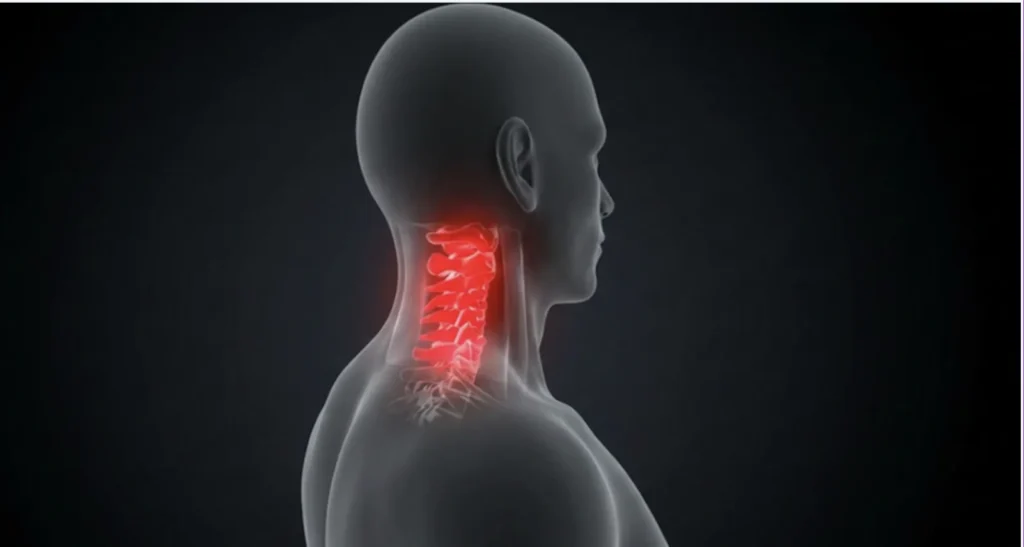

StatPearls, the clinical reference hosted by the National Library of Medicine, defines cervical sprain as a soft tissue injury of the cervical spine and calls whiplash-associated disorders (WAD) its most common type, typically following a motor vehicle accident.
The tissues at risk hold the neck together. Seven bones in the neck are connected by ligaments and muscles that act like thick rubber bands, the American Academy of Orthopaedic Surgeons explains, while the discs between the vertebrae act as shock absorbers that cushion the spine during movement.
The injury is common. StatPearls estimates that whiplash affects 0.3% of the United States population each year, with approximately 841,000 crash-related whiplash injuries evaluated in hospitals annually.
Neck Motion During a Rear-End Impact
During the impact, the neck bends into an S shape. Substantial forces deform the cervical spine into a sigmoid configuration, StatPearls explains, as the lower cervical segments rotate backward, the front elements of the spine separate, and the facet joints are impacted.
Cadaver studies cited in the same review show that this S shape pushes the lower neck into hyperextension and the upper segments into flexion, beyond the physiologic limits of spinal mobility. StatPearls adds that the motion may cause changes in the facet joints, spinal ligaments, nerve roots, intervertebral discs, cartilage, and the muscles along the spine, often resulting in spasm.
Car crashes dominate the numbers. The Quebec Task Force definition, as StatPearls summarizes it, covers bony or soft tissue injuries from rear-end or side-impact collisions in road traffic accidents, or from other acceleration-deceleration mechanisms that transfer energy to the cervical spine. Motor vehicle accidents account for approximately 86.4% of cases, the review reports, followed by accidental falls and sports injuries.
Force matters too. The sharper and stronger the movement, the greater the force on the neck, according to Cleveland Clinic, which puts vehicle accidents, especially rear-end collisions, first on its list of common causes. On the protective side, StatPearls notes that seatbelts, headrests, and airbags have been shown to reduce the incidence of WAD significantly.
Symptoms That Can Take Days to Appear
Whiplash symptoms most often start within days of the injury, according to Mayo Clinic. Its list includes neck pain and stiffness, pain that gets worse with neck movement, loss of range of motion, headaches that most often start at the base of the skull, tenderness or pain in the shoulder, upper back, or arms, tingling or numbness in the arms, tiredness, and dizziness.
The start can be staggered. Some symptoms may begin right after a crash and others take at least 12 hours to appear, Cleveland Clinic says, and it may take a full day or even a few days for all of them to show up. Neck sprain pain does not always appear right away, the American Academy of Orthopaedic Surgeons notes, and its symptom list includes pain that peaks a day or so after the injury instead of immediately.
Less common symptoms on the Mayo Clinic list are blurred vision, ringing in the ears (tinnitus), trouble sleeping, crankiness, trouble focusing, memory problems, and depression. Neck pain is the most common presenting symptom, followed by headache, according to StatPearls, and patients may also report pain between the shoulder blades, temporomandibular dysfunction in the jaw, visual disturbances, cognitive symptoms, anxiety, and depression.
Some signs point to something more serious than a sprain. The American Academy of Orthopaedic Surgeons says neck pain calls for immediate medical attention when it is constant and persistent, severe and not relieved by over-the-counter pain medication, accompanied by pain that shoots down the arms and legs, or accompanied by a headache with numbness, tingling, or weakness in the arms and legs.
Neck Injury Warning Signs
- Neck pain felt all the time that does not go away or lessen over time
- Severe pain not relieved by over-the-counter pain medication
- Pain that shoots down the arms and legs
- A headache with numbness, tingling, or weakness in the arms and legs
Why Kentucky Hires
Sam Aguiar Injury Lawyers
Quebec Task Force Severity Grades
Whiplash can be sorted by grade. The Quebec Task Force classification, as laid out in StatPearls, runs from Grade 0, with no neck complaints or physical findings, to Grade 4, neck pain with a fracture or dislocation. The middle grades separate pain without exam findings from pain with musculoskeletal signs and pain with neurologic signs.
Most cases sit at the low end of the scale. StatPearls says most WADs are considered minor soft tissue injuries without evidence of fracture.
| Quebec Grade | Neck Symptoms | Exam Findings |
|---|---|---|
| Grade 0 | No neck complaints | No physical findings |
| Grade 1 | Neck pain, stiffness, or tenderness | No physical exam findings |
| Grade 2 | Neck pain | Musculoskeletal signs, such as decreased range of motion or point tenderness |
| Grade 3 | Neck pain | Neurologic signs, such as weakness, sensory deficits, or decreased deep tendon reflexes |
| Grade 4 | Neck pain | Fracture or dislocation |
Injuries That Mimic Whiplash
Whiplash is confirmed partly by ruling other problems out. Comprehensive diagnostic workups find no identifiable structural pathology, StatPearls explains, which is why WAD remains a diagnosis of exclusion.
The StatPearls differential for a cervical sprain includes cervical spine fracture, carotid or vertebral artery dissection, spinal cord injury or compression, subluxation, herniated disc, muscle strain, facet injury, and ligament sprain. Examination and imaging can help tell them apart, the review notes.
A fracture sits at the far end of the range. At its worst, whiplash can break the vertebrae in the neck and create a risk of spinal cord damage, according to Cleveland Clinic, though Cleveland Clinic calls severe spinal injuries of that kind extremely rare thanks to advances in safety equipment and engineering, especially in vehicles. The page on cervical spine injuries covers fractures and spinal cord damage in more detail.
Physical Exam and Neurologic Checks
Diagnosis starts with a hands-on exam. The clinician touches and moves the head, neck, and arms, Mayo Clinic explains, checking range of motion in the neck and shoulders, the degree of motion that causes or increases pain, tenderness in the neck, shoulders, or back, and reflexes, strength, and feeling in the limbs.
Decreased range of motion is the most common exam finding, according to StatPearls, followed by tenderness or spasm in the muscles along the spine, the trapezius, the jaw muscles, and the base of the skull. StatPearls adds that the neurologic exam should include motor and sensory testing of the arms and screening of the vestibular (balance) and cognitive systems.
WAD is primarily a clinical diagnosis, and two screening rules shape the decision to image. NEXUS recommends imaging when there is tenderness along the back midline of the neck, a focal neurologic deficit, altered mental status, intoxication, or a distracting injury, StatPearls says. The Canadian Cervical Spine Rule, the same StatPearls review explains, looks at age over 65, a dangerous mechanism of injury, paresthesias, midline tenderness, immediate neck pain, and impaired range of motion.
Imaging Tests and Their Limits
A whiplash injury itself does not show on imaging tests, Mayo Clinic says, but imaging can rule out other conditions that could be making neck pain worse. In the Mayo Clinic description, x-rays taken from many angles can show broken bones and arthritis, a CT scan can make detailed images of bone, and MRI can show some soft tissue injuries, such as damage to the spinal cord, disks, or ligaments.
When imaging is indicated after blunt trauma, CT has become the first-line test, according to StatPearls, which cites the American College of Radiology position that CT is preferred over radiographs for the initial assessment of spinal trauma.
MRI is not routine for an uncomplicated cervical sprain. StatPearls describes it as the escalation test when the clinical picture no longer fits a benign soft tissue injury, and says MRI is preferred when there is concern for neurologic injury, a traumatic disc herniation, ligament injury, or cervical instability not explained by CT. In WAD, the review adds, there is often no clinical correlation between symptoms and MRI findings.
Nerve testing is another tool. Nerve conduction studies have been shown to detect abnormalities in approximately 32% of WAD cases, StatPearls reports.
Early Movement as First Treatment
Treatment aims to control pain, restore range of motion in the neck, and return the person to regular activities, according to Mayo Clinic. Rest may be helpful for a day or two after the injury, Mayo Clinic says, but too much bed rest may slow healing.
StatPearls calls early activation the central treatment principle once structural injury has been ruled out. International clinical recommendations call for early mobilization and activity, the review explains, which consistently show benefits compared with rest and prolonged use of cervical collars, and supervised exercise programs have been shown to reduce pain and disability.
Opinions on foam collars differ. Mayo Clinic reports that one view limits a collar to no more than 72 hours, while another allows up to three hours a day for a few weeks.
Exercise is not the only piece. StatPearls notes that adding stress management strategies to exercise programs further reduces disability after injury, and that manual therapy, including mobilization and manipulation, may be used alongside supervised exercise.
Pain Relief and Physical Therapy
Pain relievers such as acetaminophen and ibuprofen often can control mild to moderate whiplash pain, according to Mayo Clinic, and a shot of lidocaine into painful muscle areas might decrease pain enough for physical therapy. Muscle relaxants are commonly prescribed but have limited supporting evidence, StatPearls notes, and early mobilization consistently showed the greatest effectiveness among the treatments it reviews.
Physical therapists lead exercises meant to strengthen muscles, improve posture, and restore movement, Mayo Clinic says. The same source reports that some studies show chiropractic care may ease pain when paired with exercise or physical therapy, and that neck massage may provide short-term relief.
Pain that persists sometimes comes from the facet joints. StatPearls identifies the facet joint as the pain generator in about half of chronic WAD cases. Treatment for that group can begin with a diagnostic medial branch block performed with image guidance, and when the block gives meaningful relief, StatPearls describes cervical medial branch radiofrequency ablation as a sensible next step.
Surgery is uncommon. StatPearls says there is no established role for surgery in isolated cervical sprain or uncomplicated WAD grades I and II, and Cleveland Clinic says that in rare cases, disk herniations or fractured vertebrae may need surgery.
Typical Recovery Time Ranges
Most people with a whiplash injury, especially a minor one, can recover within days or a few weeks, according to Cleveland Clinic. More severe whiplash injuries can take several weeks or even months to heal, Cleveland Clinic adds.
Other sources give similar ranges. Most patients recover within days to several weeks, StatPearls reports, though some develop chronic pain and functional impairment. For neck sprains and strains, the American Academy of Orthopaedic Surgeons says most symptoms go away in 4 to 6 weeks, and severe injuries may take longer to heal completely.
Early progress says a lot about the outlook. Recovery, when it occurs, usually happens early, StatPearls notes. Symptoms that last beyond the first 3 months carry a lower probability of later full recovery, and about half of patients remain symptomatic at 1 year, StatPearls reports.
Factors Linked to Slower Healing
Recovery is hard to predict, Mayo Clinic cautions, but ongoing pain may be more likely when the first symptoms were intense, started quickly, and included severe neck pain, more-limited range of motion, and pain that spread to the arms. Mayo Clinic links a worse outcome to having had whiplash before, older age, already having low back or neck pain, and a high-speed injury.
Predictors of prolonged recovery in StatPearls include high initial pain intensity or neck disability, headache at onset, lower back pain, female sex, older age, higher WAD grade, and poor psychological responses to trauma.
Sex and age come up in other sources as well. Whiplash is more likely to cause serious or lasting injuries in older adults and females, according to Cleveland Clinic, which points to differences in height, spinal column structure, and muscle tissue, along with the way seat back and headrest height may affect shorter occupants, as possible factors.
Chronic Pain and Other Complications
The most important complication of a cervical sprain is the transition to chronic pain and disability, according to StatPearls. Approximately one-quarter of people develop new chronic pain conditions within 1 year of WAD, the review reports, with neck pain, dizziness, and headaches among the common symptoms. Mayo Clinic says some people have pain for months or years after the injury.
Two sources of lasting pain stand out. Cervical facet joint pain accounts for 50% of persistent pain after WAD, according to StatPearls, and cervicogenic headache is common, with a whiplash history frequent in that syndrome.
These chronic symptoms tend to occur without matching degenerative changes on MRI, StatPearls says, and they can interfere with work and physical function, resulting in loss of income, disability, and poor quality of life. Cleveland Clinic lists chronic dizziness, headaches, and pain among the complications of severe cases and says these issues can interfere with daily life.
Medical Records From the First Visit
Because a whiplash injury does not show on imaging tests, the written exam findings carry much of the medical story. The first exam note records the range of motion, tender areas, and reflex, strength, and sensation checks that Mayo Clinic describes for a whiplash exam.
Delayed symptoms make dates matter. A first visit soon after the crash, followed by entries as headaches, dizziness, or arm tingling appear over the next days, shows the staggered onset that Cleveland Clinic describes. Physical therapy notes then track range of motion from session to session, and the page on treatment gaps explains why long breaks between visits draw questions later.
A short symptom diary started on the day of the crash, noting headaches, sleep trouble, and activities skipped because of neck pain, records the changes that happen between appointments. Keeping that diary with the emergency, imaging, and therapy records puts the full course of the neck injury in one place.
Insurer Calling Your Whiplash Minor?
Whiplash does not show up on a scan, and an insurer may hold up a clean x-ray as proof that the neck pain is minor. Sam Aguiar Injury Lawyers pulls together the exam notes, therapy records, and symptom history that track the injury from the first visit forward. Under our Bigger Share Guarantee®, you always walk away with more than the firm after bills, liens, and case costs. Start with a free case review.