

Modern Fleet Management Systems and Crash Investigation

Modern fleet management systems monitor commercial trucks in real time, recording location, hours of service, engine diagnostics, braking events, and camera video. After a truck crash, those records are some of the most detailed evidence available, but they do not share one retention rule. Federal law sets a six-month retention duty for electronic logging device records, while GPS dashboards and camera loops follow vendor settings that can overwrite files much sooner. Sam Aguiar Injury Lawyers investigates commercial truck crashes with these records in mind.
Fleet Management Records
A fleet management system is the carrier’s cloud dashboard for GPS, hours of service, engine data, and camera video on the same truck. Named vendors in this market include Samsara, Motive, Verizon Connect, Geotab, and Lytx. The Federal Motor Carrier Safety Administration ELD rule requires an electronic logging device for most interstate drivers who must keep records of duty status. That ELD file is the hours log. Speed, cameras, and engine events come from other modules the carrier chose to run.
Counsel investigating a commercial truck crash has to separate those modules. The hours file answers whether the driver was inside the hours-of-service window. The telematics file answers speed, location, and event scores. The camera file answers what the road and the cab looked like.
Platform Dashboards
The carrier can open location, duty status, and camera clips from the office login. Dispatch messages, geofence alerts, and driver-behavior scores sit in the same product. Vendors differ in hardware, so counsel has to identify which modules were running on this unit and where the cloud copies live.
Hours Logs Versus Telematics
An ELD records date, time, location at set intervals, engine hours, vehicle miles, and driver identification under 49 CFR Part 395. FMCSA states that ELDs are not required to collect vehicle speed, braking, steering, or other performance parameters. Speed traces, hard-brake events, and inward cameras come from extra FMS hardware. See fleet data in truck crash cases for how those streams are read together in a file.
Negligence Evidence in the File
GPS and ECM speed traces show the truck’s speed at impact against the posted limit. ELD duty status compared with engine hours can show an hours-of-service violation. An inward camera can show phone use in the seconds before a crash. Those are driver files. Fault codes sent to the fleet manager, skipped maintenance reminders, and dispatch messages that pushed the driver past an hours limit are carrier files. Both can sit in one FMS export.
Driver Conduct Records
The driver file is built from timed vehicle and camera records.
- Speed at impact from GPS and ECM against the posted limit
- Hours-of-service status from the ELD compared with engine hours, including edit metadata under hours-of-service rules
- Distracted driving on an inward camera in the seconds before impact
- Harsh-brake and harsh-acceleration scores logged over prior trips
Carrier Conduct Records
The carrier file shows what the company already had on its screen before the crash.
- Diagnostic trouble codes for brake pressure, tire pressure, or ABS sent to the fleet manager
- Dispatch messages that kept the driver moving after an hours limit
- Behavior scores that a supervisor reviewed and left uncorrected
- Maintenance reminders the shop skipped, including DVIR defects carried forward
Retention Windows and Spoliation
A motor carrier must keep ELD records of duty status and supporting documents for six months, with a backup copy on a separate device. FMCSA guidance points to 49 CFR 395.8(k)(1) and 395.22(i) for that duty. The device in the cab only has to hold the current day plus the previous seven days. Other FMS files, including untriggered dashcam loops and some GPS dashboards, follow vendor overwrite settings. Those clocks are shorter than the federal ELD duty.
A written preservation demand names GPS, ELD, ECM, camera, maintenance, and scoring files, so an overwrite after notice becomes a documented failure to preserve. An informal request does not create that paper trail.
Federal Logging Retention
The six-month ELD duty applies to the carrier, not to the device in the truck. Older hours records can be purged from the device and still must exist at the motor carrier’s principal place of business. Replacing a revoked or swapped logger does not end that retention duty. FMCSA revoked ELDs is the hardware-status companion to this retention rule.
Spoliation After Notice
Once a carrier has notice of a claim or likely litigation, destroying or failing to keep relevant records can support a spoliation sanction. Courts can instruct the jury to treat the missing file as unfavorable to the party that lost it. A written preservation demand puts that notice on the record.
| Record | What It Captures | Retention |
|---|---|---|
| RecordELD / RODS | What It CapturesDriving, on-duty, off-duty, sleeper berth | RetentionSix months plus a separate backup copy |
| RecordGPS / telematics | What It CapturesLocation, speed, geofence alerts | RetentionCarrier and vendor policy |
| RecordECM / event recorder | What It CapturesThrottle, RPM, brake, sudden deceleration | RetentionHardware memory until overwritten or downloaded |
| RecordDashcam | What It CapturesForward and driver-facing video | RetentionEvent clips may upload; loop video follows the vendor overwrite setting |
| RecordAccident register | What It CapturesReportable crashes involving the carrier | RetentionThree years under 49 CFR 390.15 |
Hardware Behind the Records
The dashboard is software, and the truck still needs a GPS receiver, a cellular modem, an engine interface (OBD-II or J-Bus), accelerometers, cameras, and a registered ELD. Identifying the vendor from the unit and from the carrier’s FMCSA SAFER record tells counsel which export format to demand. Black box data in truck crash investigations covers the ECM download that sits beside this FMS stack.
- GPS receiver and cellular modem for location and status uploads
- OBD-II / J-Bus / ECM interface for engine parameters and fault codes
- Accelerometers and gyroscopes for lateral movement and event triggers
- Forward and driver-facing cameras, with event clips stored apart from the loop
- ELD hardware registered under 49 CFR Part 395
Ready to Take Action on Your Injury Claim?
After a serious injury, medical bills pile up while the insurance company looks for ways to pay you less. Most law firms take their cut first and leave you with whatever is left. Sam Aguiar Injury Lawyers does things differently. With our exclusive Bigger Share Guarantee®, you always get more. Every client gets a dedicated three-person team: an attorney, a case manager, and a legal assistant. We never raise our fee rate if we have to go to court, and you pay $0 Out-Of-Pocket Forever.
Frequently Asked Questions
1What is a fleet management system in a truck crash case?+
2Does the ELD rule require speed and camera files?+
3How long must a carrier keep ELD records?+
4How long do dashcam and GPS files last?+
5Can a carrier delete fleet management data after a crash?+
6What is the difference between an ELD, an ECM, and an event data recorder?+
Latest Articles
Kentucky Diminished Value Claims
Kentucky drivers may pursue a repaired vehicle’s leftover market loss from the at-fault driver as part of a.
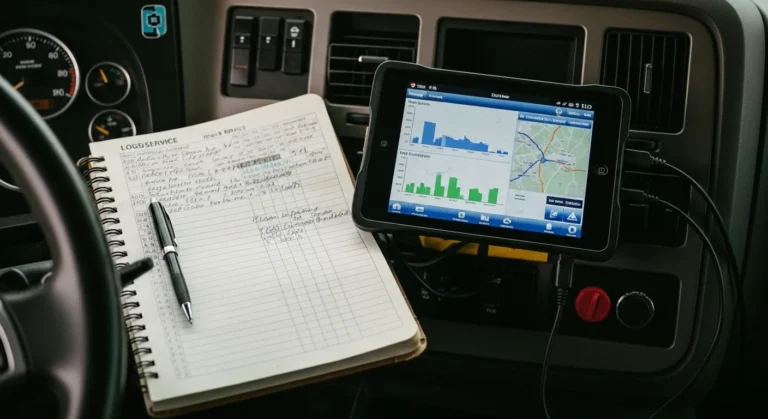
FMCSA Revoked ELDs: Fleet Compliance and Enforcement Deadlines
FMCSA removed five electronic logging devices from the registered list on August 6, 2026, and set an October.

FMCSA English Proficiency Rule and OOS Enforcement
FMCSA English Proficiency Rule Sam Aguiar Injury Lawyers August 11, 2026 7 minute read On This Page.