

Accident-Prone Hotspots in Louisville
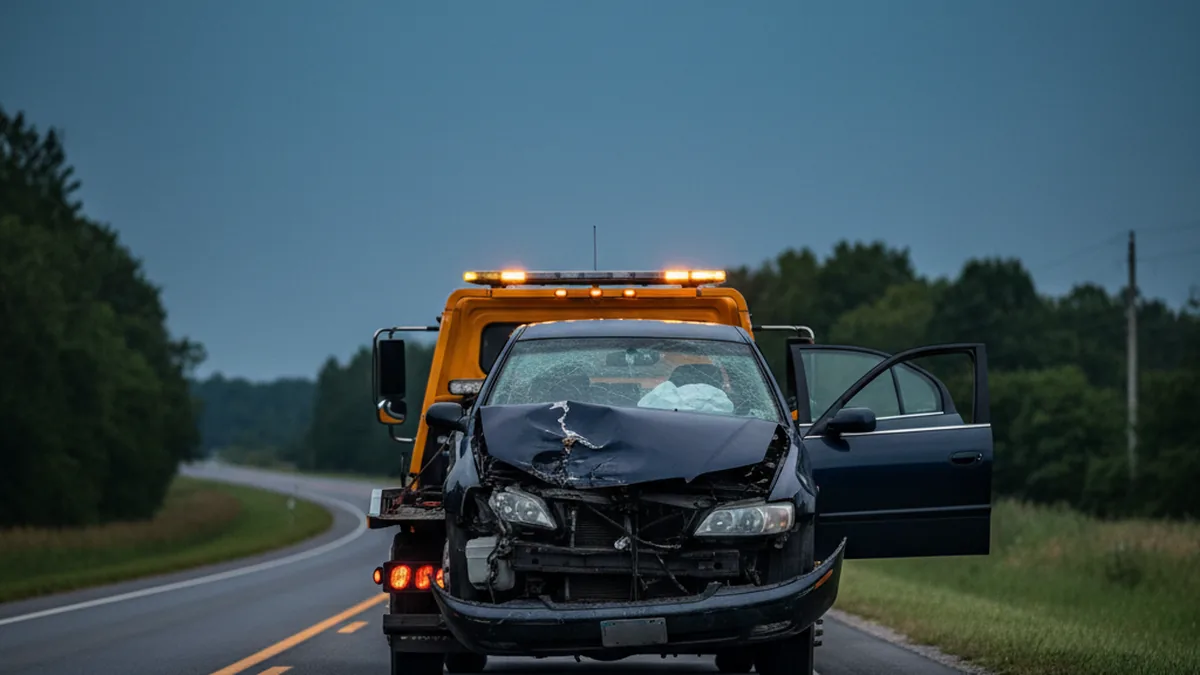
Jefferson County recorded 25,417 collisions and 113 deaths in 2024, more than any other county in Kentucky, according to the Kentucky Transportation Cabinet’s 2024 Traffic Collision Facts report. Several Louisville corridors carry a large share of that risk, including Dixie Highway, Bardstown Road, Preston Highway, the Watterson Expressway (I-264), and I-65. Louisville Metro’s Vision Zero program also maintains a High Injury Network of non-interstate road segments with a disproportionate share of fatal and serious-injury crashes.
Road Design and Crash Risk
Dangerous roads are not all dangerous for the same reasons. Some corridors have design flaws, such as inadequate turning lanes, poor sight lines, or missing median barriers. Others carry traffic volumes beyond their design capacity. When the road itself contributes to a crash, liability can extend beyond the at-fault driver to the government entity responsible for design or maintenance.
A known pothole, a broken pavement slab, or a faded line raises the same notice question. Louisville reports go through Metro 311, and state-route hazards go through the Kentucky Transportation Cabinet pothole form. Prior complaints are the record that shows the agency already knew about the defect.
Highest-Crash Corridors in Jefferson County
Dixie Highway, Bardstown Road, Preston Highway, the Watterson Expressway, and I-65 through Jefferson County repeatedly appear among Louisville’s highest-crash corridors. The Kentucky Transportation Cabinet traffic records page links the Collision Facts report, a public state police crash data query, and statewide multi-year reports. Those materials give corridor context, but they do not replace the incident-specific crash report, camera footage, or maintenance file for a particular crash.
Dixie Highway
Dixie Highway (US 31W) runs through densely developed commercial areas in southwest Louisville and Shively, mixing high-speed through traffic with frequent driveway and intersection access points. Former Louisville Mayor Greg Fischer said the corridor’s fatality rate historically ran about three times higher than comparable Kentucky roads, WDRB reported, which led to the New Dixie Highway safety project. High speeds, frequent driveways, and limited median separation still produce car accidents and pedestrian crashes along the corridor.
Bardstown Road
Bardstown Road runs from downtown through the Highlands and into the eastern suburbs. In the urban sections it is congested, narrow in places, and heavily used by cyclists and pedestrians, and the Highlands corridor is a regular source of bicycle accident injury cases. Farther south, Fern Creek sits on the same arterial, where speeds are higher and access points are frequent.
Preston Highway
Preston Highway runs south from downtown through Okolona toward Bullitt County. The multi-lane commercial artery mixes strip-mall access, bus stops, commercial truck traffic, and left-turn conflicts. Rear-end collisions in congested traffic and pedestrian crashes near transit stops are recurring patterns on this corridor.
Watterson Expressway
The Watterson Expressway (I-264) is Louisville’s inner loop and one of the most heavily traveled interstate corridors in the state. Heavy volume, lane changes, and complex interchanges, including the I-264 and I-65 interchange on the south side, make it a persistent crash zone. Crash patterns on this road are covered in more detail on the Watterson Expressway accidents page.
I-65 Through Louisville
I-65 crosses Louisville from the Ohio River bridges south toward Bullitt County. The downtown segment, including the Kennedy Interchange and the I-65 and I-264 interchange, concentrates crashes, and merging ramps produce rear-end collisions, sideswipes, and truck accidents involving semis headed to and from UPS Worldport and the Ford Louisville Assembly Plant. The I-65 truck accident hotspots page breaks down the corridor mile by mile.
Government Liability for Road Defects
A government agency’s negligence in road design or maintenance can be part of the claim when that condition contributed to the crash. Sovereign immunity rules still apply, and the procedure differs from a claim against a private driver.
Negligence claims against state agencies go to the Kentucky Board of Claims, and KRS 49.120 sets the time for presenting them. For a defect in a city street, sidewalk, or bridge, KRS 411.110 requires written notice to the city within 90 days of the injury before an action can be maintained. A late notice can close the government claim even when the road defect is documented.
The prior-complaint file is often what establishes notice. Metro 311 tickets, KYTC hazard reports, and earlier crash clusters at the same location show the agency already had the defect on its list. That record set is separate from the at-fault driver’s insurance file and has to be requested on its own track.
Prior Crash Patterns as Evidence
Public crash data can show prior crash patterns at the same location, which bears directly on cases involving road design defects or government liability. Prior crash history can support a claim that a dangerous condition was known. It also clarifies the crash dynamics, anticipates how the at-fault driver’s insurer will argue the case, and identifies which camera systems or crash data sources exist for that corridor.
The High Injury Network is a planning tool, and it does not decide what caused a particular crash. A specific incident still requires its own records. The exact location affects which agency investigated, whether roadway or traffic-control records exist, and which nearby homes or businesses may have video. Crashes involving distracted driving on these corridors add the at-fault driver’s phone records to that list.
Ready to Take Action on Your Injury Claim?
After a serious injury, medical bills pile up while the insurance company looks for ways to pay you less. Most law firms take their cut first and leave you with whatever is left. Sam Aguiar Injury Lawyers does things differently. With our exclusive Bigger Share Guarantee®, you always get more. Every client gets a dedicated three-person team: an attorney, a case manager, and a legal assistant. We never raise our fee rate if we have to go to court, and you pay $0 Out-Of-Pocket Forever.
Frequently Asked Questions
1Which roads in Louisville have the most crashes?+
2Can a lawsuit be filed when a dangerous road condition caused the crash?+
3Where does crash data for a Louisville road come from?+
4Does a crash on a known dangerous road change the claim?+
5What is Louisville’s High Injury Network?+
Latest Articles
Kentucky Diminished Value Claims
Kentucky drivers may pursue a repaired vehicle’s leftover market loss from the at-fault driver as part of a.
FMCSA Revoked ELDs: Fleet Compliance and Enforcement Deadlines
FMCSA removed five electronic logging devices from the registered list on August 6, 2026, and set an October.

FMCSA English Proficiency Rule and OOS Enforcement
FMCSA English Proficiency Rule Sam Aguiar Injury Lawyers August 11, 2026 7 minute read On This Page.