

Truck Tire Blowout Accident Injuries and Liability
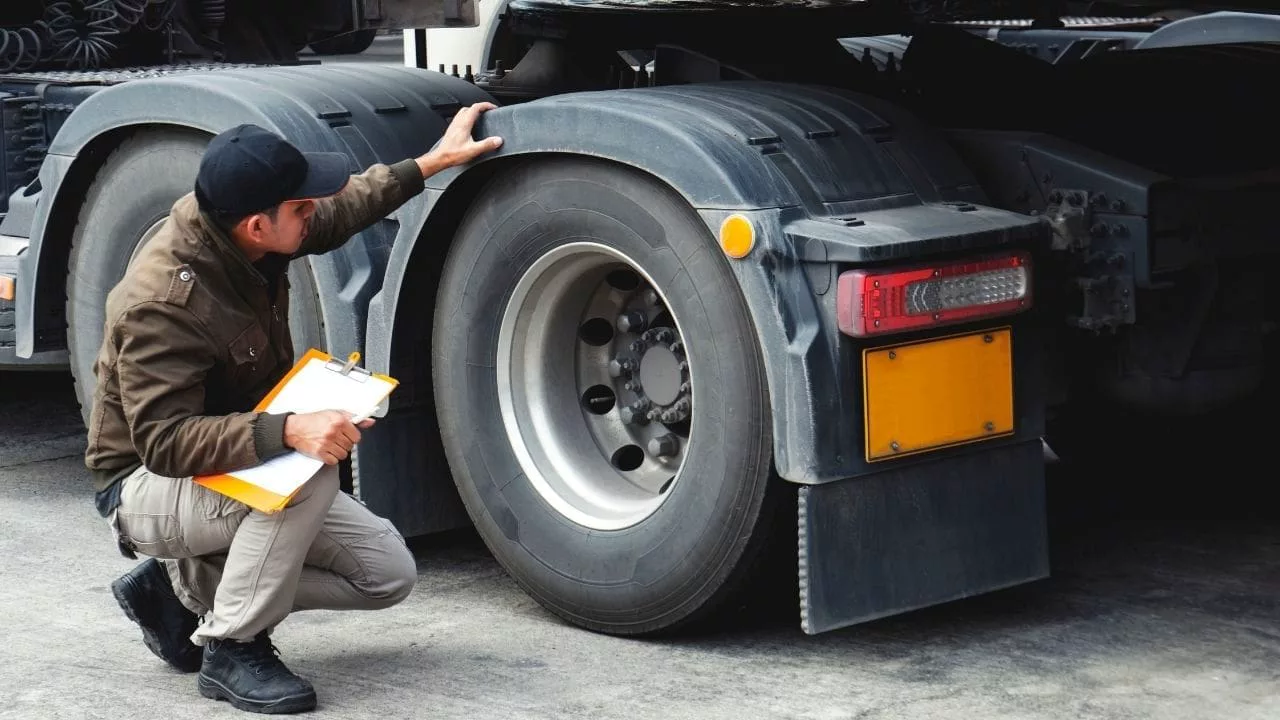
When a loaded tractor-trailer loses a tire at highway speed, the result can be a jackknife, a rollover, a debris strike, or a multi-vehicle pileup. Most truck tire blowouts have a traceable cause, and that cause is usually a maintenance failure, improper loading, or defective equipment that someone was responsible for catching.
Highway Speed Tire Failures
A truck tire blowout is dangerous because each tire carries a large share of a load that federal law caps at 80,000 pounds. A standard passenger car has 4 tires, and an 18-wheeler has 18, so a tractor-trailer has more maintenance requirements and more opportunities for failure. When one tire fails at 65 mph on an interstate, the driver has fractions of a second to respond.
Common Blowout Causes
Most truck tire blowouts trace to a failure by the driver, the carrier, the loader, or the manufacturer.
Underinflation
Running a truck tire at incorrect air pressure is the leading cause of blowouts. An underinflated tire generates excessive heat as the sidewall flexes with each rotation, and the heat breaks down the rubber compounds until the tire fails. Drivers must check tire condition as part of a pre-trip inspection, and a skipped check can end in a violent failure.
Worn Tires and Tread Depth
Under 49 CFR 393.75, steering axle tires must have at least 4/32 inch of tread depth, and other tires at least 2/32 inch. A tire worn below those limits violates federal law.
Overloading
Federal weight limits cap tractor-trailers at 80,000 pounds gross vehicle weight, and exceeding that limit puts additional stress on every tire. Improperly loaded cargo that shifts weight unevenly also increases blowout risk on specific axles.
Defective Tires
Tread separation, where the rubber separates from the underlying belt material, is one of the most dangerous tire defects and can occur without warning at highway speed. When a defective tire causes an accident, the tire manufacturer may be liable under product liability law, in addition to any negligence by the driver or carrier.
Road Hazards and Debris
Potholes, debris, and other road hazards can rupture tires instantly. A driver may not be at fault for striking unavoidable debris, but carriers are still expected to maintain tires in a condition that holds up to normal road hazards.
FMCSA Tire Maintenance Rules
Federal regulations in 49 CFR Part 393 and Part 396 require carriers and drivers to:
- Confirm tires are in good working order before driving
- Maintain tread depth at or above 4/32 inch on steering axle tires and 2/32 inch on other tires
- Remove any tire with exposed fabric, cuts, bulges, or tread separation from service
- Maintain proper inflation
- Keep maintenance records documenting tire inspections and repairs
When a carrier fails to meet these requirements and a blowout causes an accident, those failures become evidence of negligence.
Accident Types After a Blowout
The outcome of a blowout depends on which tire fails, the truck’s speed, and the driver’s reaction. Common accident types include:
- Jackknife accidents: a drive axle blowout can cause the trailer to swing outward at an angle, sweeping across lanes. Jackknife accidents are among the most dangerous truck accident types.
- Rollovers: a blowout on a loaded trailer can destabilize the vehicle and cause it to tip, especially on curves or ramps.
- Debris strikes: an exploding tire ejects large chunks of rubber, called road gators, at high speed, which can break windshields, cause vehicles to swerve, and trigger pileups.
- Rear-end accidents: a truck that loses tire pressure and slows suddenly may be rear-ended, or may rear-end vehicles ahead if the driver loses control.
- Underride accidents: a blowout that sends a truck into another lane can result in an underride accident where a smaller vehicle slides beneath the trailer.
Liable Parties
Liability for a tire blowout accident can fall on several parties at once.
Driver
Drivers must inspect their vehicles and report tire problems. A driver who skipped the inspection, noticed a problem and kept driving, or operated the truck in a way that increased blowout risk, such as speeding over road debris or running overloaded, can be held responsible.
Trucking Company
The carrier is responsible for maintaining the fleet in safe condition. Maintenance records showing deferred tire replacement, ignored inspection reports, or a pattern of tire violations are evidence of carrier negligence. Under respondeat superior, carriers are also vicariously liable for their drivers’ on-the-job negligence.
Tire Manufacturer
If the tire had a defect such as tread separation, sidewall failure, or air retention problems, the manufacturer can be held liable under product liability law by showing the tire was defective and caused the accident, without proving negligence.
Cargo Loaders and Shippers
If improper loading created uneven weight distribution that caused excessive wear on specific tires, the party responsible for loading, whether the carrier or an independent shipper, may share liability.
Evidence to Preserve
Tire blowout evidence disappears quickly. The failed tire itself, the truck’s maintenance records, pre-trip inspection logs, weight tickets showing load distribution, FMCSA inspection records showing prior tire violations, ELD data, and black box data showing speed and braking at the time of the blowout all belong in the file. Accident reconstruction professionals and tire failure analysts interpret that evidence.
Ready to Take Action on Your Injury Claim?
After a serious injury, medical bills pile up while the insurance company looks for ways to pay you less. Most law firms take their cut first and leave you with whatever is left. Sam Aguiar Injury Lawyers does things differently. With our exclusive Bigger Share Guarantee®, you always get more. Every client gets a dedicated three-person team: an attorney, a case manager, and a legal assistant. We never raise our fee rate if we have to go to court, and you pay $0 Out-Of-Pocket Forever.
Frequently Asked Questions
1Can I sue a trucking company after a tire blowout accident?+
2What if the tire itself was defective?+
3What evidence is important in a tire blowout accident case?+
4Who pays for a truck tire blowout accident?+
Latest Articles
Kentucky Diminished Value Claims
Kentucky drivers may pursue a repaired vehicle’s leftover market loss from the at-fault driver as part of a.
FMCSA Revoked ELDs: Fleet Compliance and Enforcement Deadlines
FMCSA removed five electronic logging devices from the registered list on August 6, 2026, and set an October.
FMCSA English Proficiency Rule and OOS Enforcement
FMCSA English Proficiency Rule Sam Aguiar Injury Lawyers August 11, 2026 7 minute read On This Page.