

Crash Reconstructions After an Accident

Accident reconstruction is the scientific analysis of crash evidence to determine how a collision occurred: speed, direction, sequence of events, and contributing factors. In Kentucky injury cases, reconstruction is used when the police report leaves questions disputed or unanswered. It draws on physical evidence from the scene, event data recorder (black box) data, forensic vehicle inspections, and simulation software, and its findings are documented in a technical report and, in litigation, presented through expert witness testimony.
Accident Reconstruction Process
A full reconstruction is a multi-stage investigation, and each stage builds on the last. The combined result gives attorneys, insurers, and juries a documented, science-based account of the crash, built on the same categories of evidence that NHTSA’s crash data systems track nationally.
Evidence Preservation
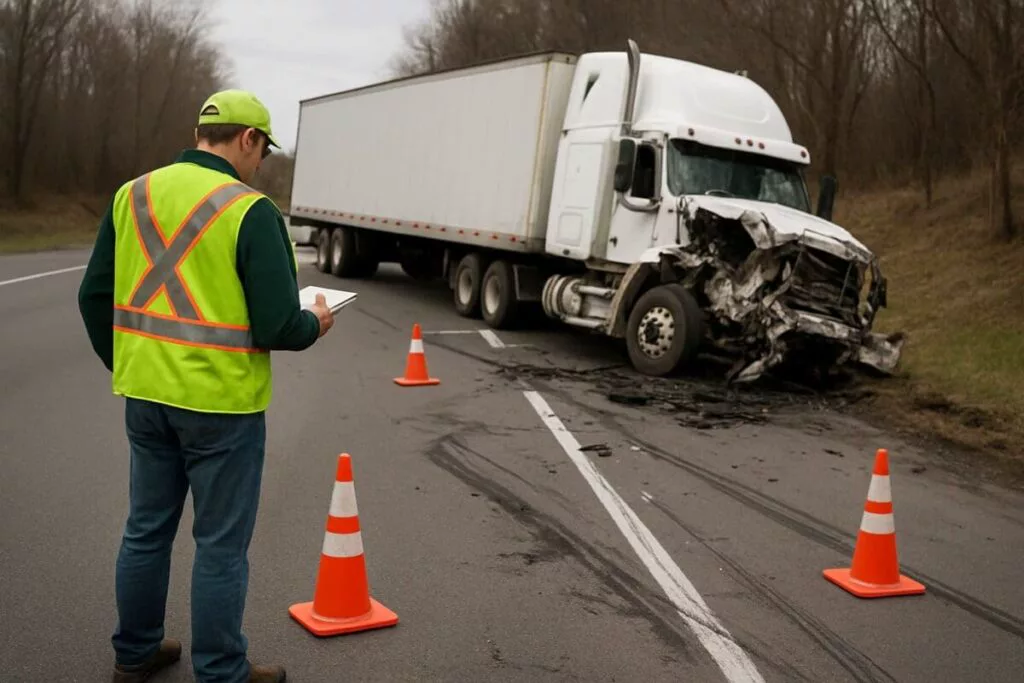
The window for preserving crash scene evidence is short. Skid marks fade, debris is cleared, and vehicles are repaired or destroyed. In commercial trucking crashes, trucking evidence such as driver logs, dispatch records, GPS data, and inspection reports should be preserved through litigation hold letters. Federal rules set minimum retention periods: 49 CFR 395.8(k) requires carriers to keep records of duty status and supporting documents for at least 6 months, so records can be lawfully discarded once that period runs unless a preservation demand is in place.
3D Scene Mapping and Visual Models
Modern reconstruction uses drones, laser scanning, and photogrammetry to build precise three-dimensional models of the crash site. These tools capture road geometry, sight lines, traffic control device positions, and physical evidence patterns. The 3D model becomes the foundation for the rest of the analysis and can be converted into animations that present the findings to a jury.
Black Box and Crash Data Retrieval
Most modern passenger vehicles carry event data recorders (EDRs), and heavy trucks record similar data in their engine control modules. Black box data captures the seconds before and during a crash, including vehicle speed, brake application, throttle position, steering input, seat belt status, and airbag deployment timing. For commercial trucks, electronic logging devices (ELDs) add hours-of-service records, and 49 CFR 395.8 has required most interstate motor carriers to use ELDs since December 18, 2017. Vehicles with advanced driver assistance systems and electric vehicles generate additional sensor data beyond the standard EDR record.
Forensic Vehicle Inspections
The vehicles carry physical evidence of how and where impact occurred: crush patterns, tire marks, paint transfer, component failures, and mechanical defects. Inspection has to happen before repair or salvage. In cases involving tire blowouts, brake failures, or equipment defects, an inspection may reveal manufacturer defects or maintenance failures that open additional liability paths beyond the at-fault driver.
Technical Crash Simulations
Engineering software, including HVE (Human, Vehicle, Environment) and PC-Crash, lets reconstruction analysts run physics-based simulations of a crash. The simulations test pre-impact speed, braking distance, collision angles, and post-crash trajectories against the physical evidence. When simulation results match the documented evidence, they support the reconstruction’s conclusions.
Expert Witness Reports and Testimony
Reconstruction findings are compiled into a technical report that documents the methodology, evidence, analysis, and conclusions. In litigation, the reconstruction analyst may testify as an expert witness at deposition and trial. Kentucky courts require expert testimony to rest on reliable methods and sufficient data, and rigorously documented reconstruction findings hold up under cross-examination.
Disputed Liability and Other Case Types
Not every case needs a full reconstruction. It carries the most weight where physical evidence decides liability or explains how a crash happened:
- Disputed liability: when the at-fault party denies fault or blames the injured person, reconstruction documents the physical facts independently of witness accounts.
- Severe or fatal crashes: catastrophic injuries justify the investment in a rigorous reconstruction.
- Commercial truck crashes: truck crash cases involve federal regulatory data such as ELD records, inspection reports, and driver qualification files that reconstruction combines with vehicle physics.
- Speed and braking disputes: when the at-fault driver claims to have been driving slowly or to have had no time to stop, EDR data and skid mark analysis supply objective answers.
- Hit-and-run crashes: physical evidence analysis can reconstruct the sequence of events and identify vehicle characteristics without an identified at-fault vehicle.
- Multi-vehicle pileups: reconstruction sequences the chain of impacts and assigns responsibility across the vehicles.
- Pedestrian and bicycle crashes: reconstruction documents sight lines, pedestrian position, and vehicle speed.
Commercial Truck Crash Data
Commercial trucking crashes are the most complex reconstructions. A fully loaded semi can weigh 80,000 pounds, and a commercial crash generates far more data than a passenger vehicle crash. A truck crash reconstruction can draw on:
- Electronic logging device records: hours of service, duty status, and engine activity, retained for at least 6 months under 49 CFR 395.8(k).
- Driver vehicle inspection reports: written reports required at the end of each day’s work under 49 CFR 396.11, which carriers keep for three months.
- Fleet management system data: GPS tracking, hard braking events, speed history, and geofencing alerts.
- Engine control module data: speed, braking, throttle, and stability control inputs in the seconds before impact.
- Carrier safety records: FMCSA Safety Measurement System data showing prior violations and inspection history.
- Driver qualification files: licensing, medical certification, and drug and alcohol testing history under 49 CFR Part 391.
Because carriers may discard records once their retention periods run and telematics data can be overwritten, a litigation hold letter to the carrier is the first step after a commercial truck crash. When reconstruction documents carrier misconduct, such as knowingly violating hours-of-service rules or dispatching an unfit truck, punitive damages may also be available.
Findings in Kentucky Cases
Reconstruction findings serve different functions as a case moves from investigation to negotiation to trial.
Pre-Suit Investigation
Findings shape the demand package sent to the insurance carrier. When objective evidence contradicts the carrier’s liability position, documented reconstruction reduces the carrier’s ability to dispute fault.
Settlement Negotiation
Insurers evaluate claims partly on the strength of the evidence likely to be presented at trial. A well-documented reconstruction with 3D models and simulation data raises the carrier’s risk of taking a disputed liability case to trial.
Trial Presentation
When a case goes to trial, reconstruction becomes a core part of the injured person’s presentation. Expert testimony on methodology and conclusions, supported by 3D animations and simulation data, gives the jury objective grounds for its liability decision.
Kentucky apportions damages by each party’s percentage of fault under KRS 411.182, so every percentage point of fault that reconstruction evidence moves to the defendant adds to the injured person’s recovery in contested Kentucky car accident and commercial truck cases.
Does Your Case Need a Crash Reconstruction?
When fault is disputed, a reconstruction built from skid marks, crush patterns and vehicle data can move percentage points of fault toward the other driver under KRS 411.182. Sam Aguiar Injury Lawyers looks at whether your facts call for a reconstructionist and can check DOT and TRIMARC traffic camera archives that reach back about six months. Our fee never goes up if your case goes to trial. Find out what evidence your crash left behind in a free case review.
Frequently Asked Questions
1What does accident reconstruction prove in a Kentucky injury case?+
2What is black box data and how is it used in reconstruction?+
3Is accident reconstruction always necessary in a Kentucky injury case?+
4Who performs accident reconstruction?+
5How quickly does reconstruction need to start after a crash?+
Latest Articles
Kentucky Diminished Value Claims
Kentucky drivers may pursue a repaired vehicle’s leftover market loss from the at-fault driver as part of a.
FMCSA Revoked ELDs: Fleet Compliance and Enforcement Deadlines
FMCSA removed five electronic logging devices from the registered list on August 6, 2026, and set an October.
FMCSA English Proficiency Rule and OOS Enforcement
FMCSA English Proficiency Rule Sam Aguiar Injury Lawyers August 11, 2026 7 minute read On This Page.