

Preventing Pedestrian School Zone Accidents
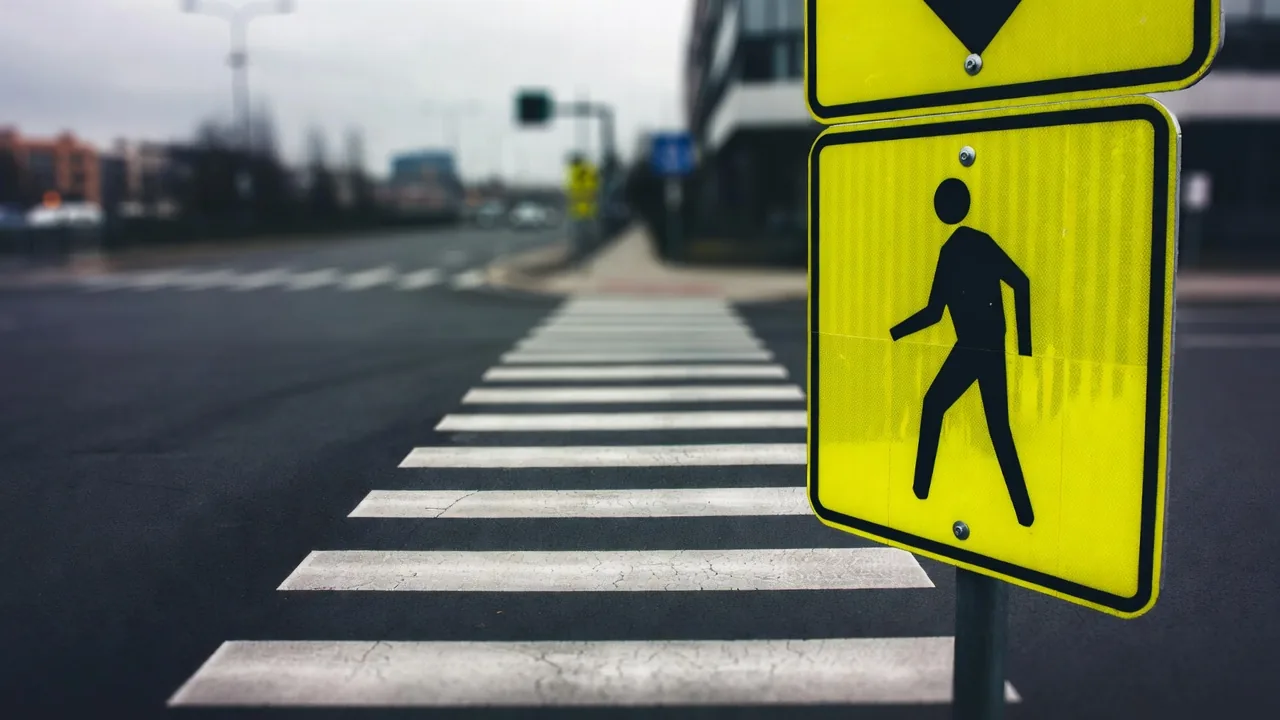
School zones carry reduced speed limits because children on foot are among the most vulnerable people on any road. Kentucky lets the local government that controls a road set the speed limit where school flasher lights operate, and it doubles speeding fines there. When a driver speeds through a school zone, passes a stopped school bus, or strikes a child in a crosswalk, legal responsibility generally falls on that driver. Sam Aguiar Injury Lawyers handles pedestrian accident claims for injured children and their families across Kentucky.
School Zone Crash Risk
School zones are designed to be among the safest corridors for children, but that design only works when drivers comply with the posted rules. Concentrated pedestrian traffic, young children with limited traffic awareness, and heavy vehicle flow twice a day create a predictable pattern of risk, and many Kentucky schools sit next to busy roads where crossing is a real hazard. Pedestrian deaths remain high nationally: the Insurance Institute for Highway Safety counted 7,080 pedestrians killed in 2024.
Kentucky School Zone Traffic Laws
Kentucky law is direct about driver obligations near schools. Under KRS 189.336, cities and fiscal courts may install school flasher lights, and the government unit that controls the highway sets the speed limit where the lights operate and posts signs notifying drivers. Under KRS 189.394(5), the speeding fine is doubled when the offense happens near a school with the flasher lights flashing and a speed limit set under that statute.
Two more statutes apply directly to children near schools:
- KRS 189.370 requires a driver approaching from any direction to stop for a school bus that is receiving or discharging passengers with its stop arm and signal lights activated, except when approaching from the opposite direction on a highway of four or more lanes divided by an elevated barrier or unpaved median.
- KRS 189.570 requires drivers to yield to pedestrians in crosswalks where signals are not operating, bars passing a vehicle stopped at a crosswalk for a pedestrian, and requires proper precaution upon observing a child on a roadway.
Negligence Per Se in School Zone Crashes
Kentucky treats a traffic statute violation as negligence per se, and KRS 446.070 lets a person injured by a statute violation recover the resulting damages. When a driver passes a stopped school bus or fails to yield to a child in a crosswalk, the injured child, through a parent or guardian, does not need to separately prove the driver acted unreasonably. The violation establishes the breach, and the claim centers on causation and damages.
Common Causes of School Zone Pedestrian Accidents
Speeding Through School Zones
Speed drives pedestrian injury severity. According to the IIHS, the average risk of serious injury or worse to a pedestrian rises from 18% at an impact speed of 20 mph to 32% at 25 mph, 67% at 35 mph, and 90% at 45 mph. Drivers who treat school zone speed reductions as optional put children at serious risk.
Distracted Driving Near Schools
Texting, phone use, and other in-car distractions pull a driver’s attention from the road at exactly the moment children are present. Near schools, where children can dart between parked cars and cross mid-block, distracted driving creates a consistently dangerous condition.
Failure to Yield at Crosswalks
Many school zone injuries happen at marked crosswalks, especially mid-block crossings and intersections without signals. Drivers often fail to see children entering a crosswalk when parked vehicles block visibility or when making a turn.
School Bus Stop Violations
Passing a stopped school bus with its stop arm extended violates KRS 189.370 and is among the most dangerous behaviors near a school. A child stepping off a bus expects traffic to be stopped, and a driver who passes the bus creates a direct collision risk with little or no warning.
Injuries Children Suffer in School Zone Crashes
Children’s bodies are smaller and their bones less developed, so a collision that might cause a soft-tissue injury in an adult often causes a fracture, a traumatic brain injury, or internal injury in a child. Common injuries include:
- Traumatic brain injuries, including concussion and, in more severe cases, skull fracture.
- Broken bones, particularly to the legs, arms, and pelvis from direct vehicle impact.
- Spinal injuries from the force of being thrown by the impact.
- Internal organ damage from blunt abdominal trauma.
- Road rash and soft-tissue injuries from pavement contact.
- Psychological effects, including PTSD and anxiety after a pedestrian accident.
A child’s injuries can carry consequences well beyond the first recovery. A fracture that disrupts a growth plate can affect physical development for years, and a brain injury can affect cognitive and emotional development long after treatment ends.
Liable Parties in School Zone Crashes
The at-fault driver generally bears primary responsibility in a school zone crash, but other parties can share liability depending on the facts:
- The driver’s employer, when the driver was working at the time of the crash, under the doctrine of respondeat superior.
- A city or county, when inadequate signage, poor crosswalk markings, or a road design failure contributed. For a defect in a city street or sidewalk, KRS 411.110 requires written notice to the city within 90 days before an action can be maintained.
- A property owner, when overgrown landscaping or a construction obstruction blocked a driver’s view of the crosswalk.
Claims involving school staff follow different immunity rules, covered in school zone car accidents and liability.
Damages for Injured Children
A claim for a child injured in a school zone crash, brought by a parent or guardian, can seek:
- Medical expenses, past and future, including long-term rehabilitation.
- Lost earning capacity, for injuries that will affect the child’s ability to work as an adult.
- Pain and suffering, including the effects the child will carry over a lifetime.
- Punitive damages under KRS 411.184, when the driver acted with oppression, fraud, or malice, such as drunk driving in a school zone.
Ready to Take Action on Your Injury Claim?
After a serious injury, medical bills pile up while the insurance company looks for ways to pay you less. Most law firms take their cut first and leave you with whatever is left. Sam Aguiar Injury Lawyers does things differently. With our exclusive Bigger Share Guarantee®, you always get more. Every client gets a dedicated three-person team: an attorney, a case manager, and a legal assistant. We never raise our fee rate if we have to go to court, and you pay $0 Out-Of-Pocket Forever.
Frequently Asked Questions
1What is the speed limit in a Kentucky school zone?+
2Is passing a stopped school bus illegal in Kentucky?+
3What does negligence per se mean in a school zone accident case?+
4Why do children suffer more severe injuries in the same type of collision?+
5What damages can be recovered for a child injured in a school zone crash?+
Latest Articles
Kentucky Diminished Value Claims
Kentucky drivers may pursue a repaired vehicle’s leftover market loss from the at-fault driver as part of a.
FMCSA Revoked ELDs: Fleet Compliance and Enforcement Deadlines
FMCSA removed five electronic logging devices from the registered list on August 6, 2026, and set an October.

FMCSA English Proficiency Rule and OOS Enforcement
FMCSA English Proficiency Rule Sam Aguiar Injury Lawyers August 11, 2026 7 minute read On This Page.