Delivery driver fatigue crashes kentucky

Delivery Driver Pressure & Fatigue Crashes In Kentucky

How quota pressure, deactivation risk, and the absence of hours‑of‑service rules put gig delivery drivers and everyone near them at risk.

Forbes Best-In-State Top Lawyer
Super Lawyers 2017–2026
Bigger Share Guarantee®
$0 Out-Of-Pocket Forever
On This Page

Why Delivery Driver Fatigue & Quota Pressure Cause Kentucky Crashes

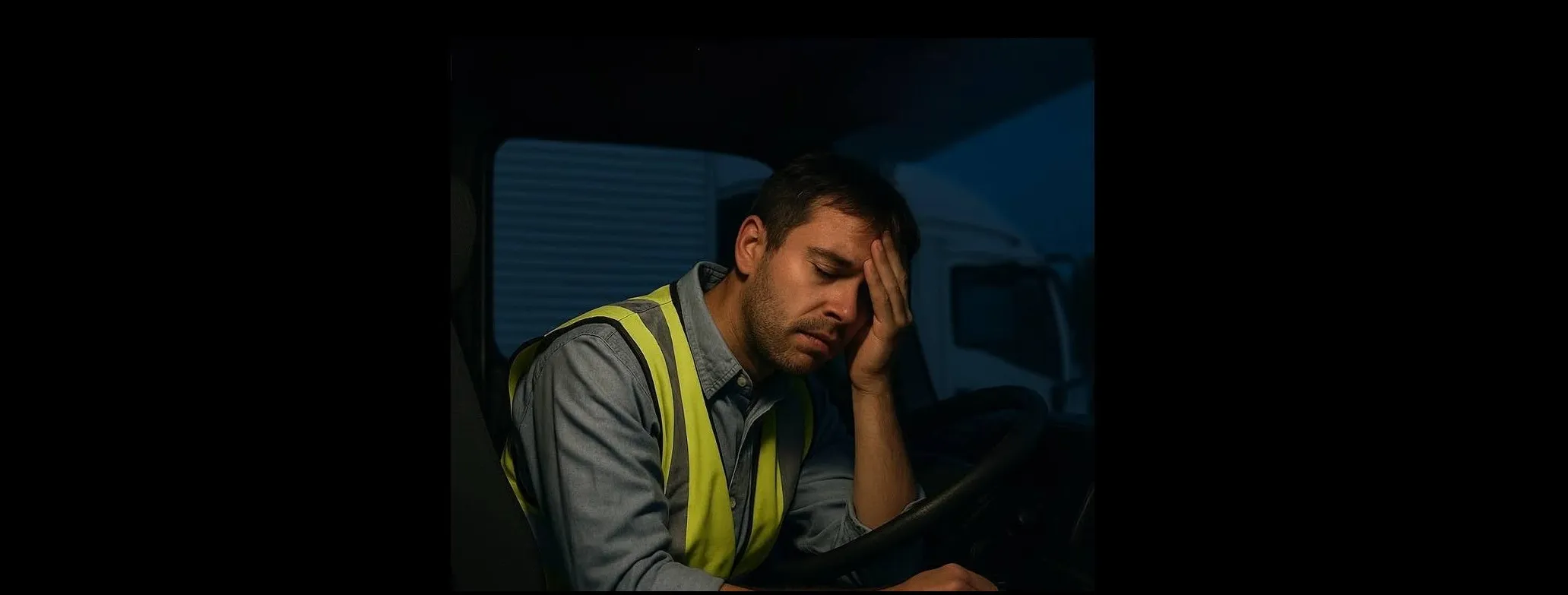
Delivery crashes rarely happen because a driver “made a mistake.” They happen because of a system. Apps set delivery windows measured in minutes, not hours. Drivers face deactivation if their acceptance rates drop, if customers complain, or if a single package is late. Unlike commercial truck drivers, gig delivery drivers have no mandated rest breaks, no hours‑of‑service cap, and no supervisor watching for fatigue signs. When a crash happens in Kentucky, the real defendants are the quota structure, the algorithm, and the carrier that insured it.

The AAA Foundation for Traffic Safety has measured that drivers who sleep under seven hours a night are 1.3 to 4.3 times more likely to crash than rested drivers, with risk scaling sharply with less sleep. The Centers for Disease Control and Prevention estimate that drowsy driving causes roughly 6,000 fatal crashes per year in the United States. Gig delivery drivers, who often work a full day at a regular job and then drive for three to six hours on an app, sit squarely inside that risk window.

Where The Pressure Comes From

Each delivery platform builds incentive pressure in slightly different ways. The mechanics vary; the outcome does not. Drivers move faster, accept more orders, take shortcuts, skip breaks, and drive tired.

Acceptance Rate Algorithms

Drivers who decline orders see their acceptance rate fall. Low acceptance rates reduce how many orders the driver sees, or trigger a “priority deactivation” review. The fix is to say yes to every ping, even when the route is bad, the traffic is worse, or the driver is tired.

Delivery Time Windows

Most platforms publish an estimated time to the customer. A driver who is late repeatedly drops in the ranking. Customers file complaints. Ratings fall. Amazon Flex and DoorDash both track on‑time delivery as a core metric in driver‑standing reviews.

Peak Pay & Surge Incentives

To keep drivers on the road during rush hour, severe weather, and late nights, apps push surge pay bonuses, quest multipliers, and peak guarantees. These bonuses only pay out if the driver completes a minimum number of deliveries in a set window, a classic structure that pushes people to drive in conditions they would otherwise skip.

Deactivation Risk

A handful of low ratings, a few customer complaints, or a pattern of late deliveries can trigger deactivation. That means the income stream ends. The algorithmic threshold is opaque, which produces constant low‑grade pressure to over‑perform. Drivers keep driving past the point they should stop.

No Hours‑Of‑Service Rules Apply To Gig Drivers

Interstate truck drivers are regulated by the Federal Motor Carrier Safety Administration’s (FMCSA) hours‑of‑service rules. A commercial truck driver is capped at 11 hours of driving after 10 consecutive hours off, with a 14‑hour shift limit and a 60/70‑hour cap. An electronic logging device records the clock. Break the rules and the driver, the carrier, or both face penalties.

None of that applies to gig delivery drivers. There is no hours‑of‑service cap. There is no required rest break. There is no logging device. A DoorDash or Amazon Flex driver can work a full‑time job, then drive eight or ten hours on the app, then do it again the next day. The platforms know this. They design the incentives around it.

  • App log data showing total hours logged on across all platforms that day, week, and month.
  • Delivery queue records showing order acceptance, time‑to‑delivery pressure, and route density.
  • Telematics and GPS data including speed profiles, hard braking, and rapid acceleration.
  • Witness and first‑responder statements regarding driver alertness, speech pattern, and body language at the scene.
  • Phone records showing app use, mapping use, and messaging at and near the time of the crash.
  • Pay and incentive data showing what quotas or bonuses were active for the driver that day.
  • DOT & TriMarc camera footage where available, which we pull through our Kentucky Transportation Cabinet relationships before it cycles out.

The Liability Theory: Negligent System Design

When a delivery driver causes a crash in Kentucky, the claim against the driver is straightforward. The harder, often more valuable claim is against the platform itself. Where the evidence supports it, we pursue the following theories:

  1. Negligent incentive structure. Quota windows, acceptance‑rate penalties, and peak‑pay bonuses that foreseeably push drivers past safe limits.
  2. Negligent route planning. Routing algorithms that require unrealistic arrival times or expose drivers to high‑risk roads.
  3. Negligent driver selection and retention. Driver screens that miss serious prior‑crash history, or retention of drivers with mounting complaints.
  4. Negligent training and warning. Failure to train on fatigue recognition, to warn drivers of known spike points, or to build in rest reminders.
  5. Vicarious liability and respondeat superior. Where the platform exercises enough control to be treated as employer rather than contractor principal.

Kentucky law recognizes comparative fault (KRS 411.182), which means recovery is available even if the victim is partly at fault, with damages reduced by percentage. The two‑year statute of limitations (KRS 304.39‑230) runs from the date of the last basic reparations benefit (PIP) payment, not the date of the crash. Missing either deadline ends the case.

Delivery Pressure in Kentucky Crash Claims

Fatigue and quota pressure are rarely the reason a case settles quickly. Defense carriers will admit a driver was tired before they will admit the algorithm pushed him there. That is why the investigation has to happen fast, the records have to be preserved, and the outside testimony on human factors has to be lined up early. Most firms never ask the questions; we do. The difference often shows up in the final settlement.

For the insurance‑coverage side of gig delivery crashes, who pays and when, see our delivery driver insurance gaps and personal insurance exclusions pages.

Frequently Asked Questions

Are delivery driver hours capped in Kentucky?
No. Federal hours‑of‑service rules apply only to commercial truck drivers subject to FMCSA regulation. Gig delivery drivers on DoorDash, Uber Eats, Grubhub, Instacart, Shipt, and Amazon Flex have no mandated rest breaks or hour caps.
Can I sue the app company and not just the driver?
In many delivery crash cases, yes. Where evidence supports negligent incentive design, unrealistic routing, inadequate screening, or the platform exercised enough control over the driver’s work, the platform itself can be a defendant. The liability theory depends on the facts of the specific crash.
How fast does delivery app data disappear?
Fast. Platforms often delete, overwrite, or archive granular trip and telematics data on 30 to 180‑day cycles, and DOT camera footage on Kentucky interstates typically rolls over within 6 months. Preservation letters need to go out within days of the crash, not weeks.
How do you prove a driver was fatigued at the time of a crash?
Through a combination of sources: total app‑on hours, prior‑day work history, medical treatment at the scene, dashcam and DOT footage, driver phone records, and if needed an outside witness in human factors or sleep medicine. The testimony is strongest when the physical evidence and the digital evidence line up.
Does comparative fault hurt my case?
Not by itself. Under KRS 411.182, Kentucky uses pure comparative fault. Even if the victim carries some percentage of fault, recovery is still available, reduced by that percentage. A skilled defense attorney will try to push the number up; the defense side will counter with evidence.
What is the statute of limitations on a delivery driver crash?
Two years from the date of the last basic reparations (PIP) payment under KRS 304.39‑230, not the date of the crash. Miss that window and the claim is lost. Many injured Kentuckians believe the clock is one year, which is incorrect for a motor vehicle crash.

You focus on getting better. We’ll handle everything else.

Real Clients. Real Results. Get more. Get it faster. Get it with Sam Aguiar.

Bigger Share Guarantee® · $0 Out‑Of‑Pocket Forever