

Obtaining Historical Crash Footage In Kentucky
On This Page
Kentucky DOT and TriMarc Camera Footage After a Crash cases are strongest when the page answers the real search intent: what happened, what proof matters, and who may be responsible. Sam Aguiar Injury Lawyers uses crash reports, medical records, insurance data, and source material like the Kentucky Transportation Cabinet crash data to frame Kentucky crash claims clearly.
The Kentucky Transportation Cabinet (KYTC) operates a network of Intelligent Transportation Systems (ITS) cameras, dynamic message signs, and traffic sensors across the state. In the Louisville metro, much of that infrastructure is run through TriMarc, a partnership between Kentucky and Indiana that monitors traffic on I-64, I-65, I-71, I-264, I-265, the Sherman Minton Bridge, the Lewis and Clark Bridge, and the Kennedy Bridge. Lexington has its own corridor of KYTC ITS coverage on I-64 and I-75 around the city.
The cameras exist mainly to manage traffic in real time, not to record. Most TriMarc and KYTC ITS feeds are not archived as a matter of standard practice. Some footage is retained for short windows when an incident triggers a save. The result is that most of what is captured rolls off the system within a short period unless someone formally requests preservation.
What TriMarc and KYTC cameras actually record
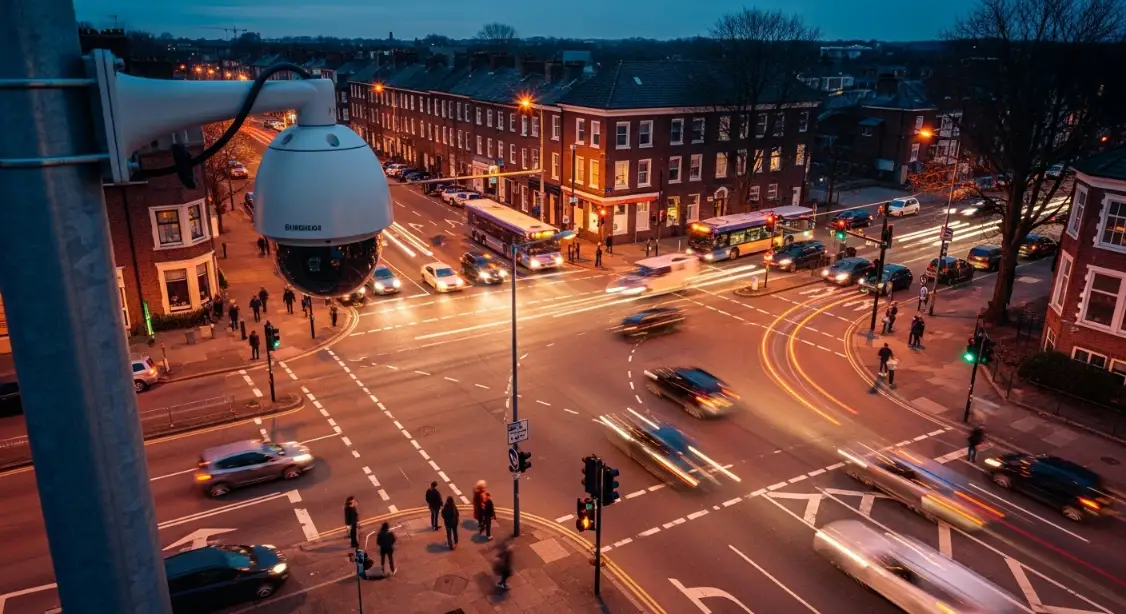
The system uses pan-tilt-zoom (PTZ) cameras at fixed locations along the interstates and on selected arterials. The video is monitored by traffic management center operators who can manually save clips when there is a notable incident. Operators also dispatch Safe Patrol assistance vehicles in the Louisville area, and those vehicles often carry their own dashcams.
Cameras do not exist at every mile-marker. Coverage is densest around major interchanges, bridges, and high-volume corridors. We can usually tell within a few hours of a crash whether the location is in the camera footprint, but we always send the request anyway because individual camera positions and retention can change.
Preservation Letters for Crash Footage
Most TriMarc and KYTC retention windows are short. The exact window varies by camera, by location, and by whether the operator manually saved a clip. The practical reality is that if no one writes within the first week or two, the footage is gone. We send our preservation request the same day we are retained on a serious crash whenever possible.
The request goes through Kentucky’s Open Records Act, codified at KRS 61.870 through KRS 61.884. Public agencies have to respond within five business days. Some requests are granted in full, some are partial, and some are denied with a stated reason. We follow up on every denial.
Where Louisville and Lexington corridors are covered
Louisville and Northern Kentucky
TriMarc covers most of the Louisville metro interstate system, including I-64 from the I-264 interchange east of downtown out to the Indiana line, I-65 from the Watterson interchange south through downtown and across the Kennedy Bridge, I-71 from downtown out to the Hurstbourne and Gene Snyder interchanges, I-264 (Watterson Expressway) all the way around the city, I-265 (Gene Snyder) from west to east, and the major bridges across the Ohio River. The Brent Spence Bridge corridor in Northern Kentucky is monitored by Ohio-Kentucky Indiana traffic operations partners.
Lexington and Central Kentucky
KYTC ITS coverage in Central Kentucky focuses on I-75 north and south of Lexington, I-64 east and west of the city, the New Circle Road interchanges, and the corridor connecting Lexington to Frankfort. Coverage is meaningful but not as dense as Louisville.
Eastern and Western Kentucky
The Mountain Parkway, Bluegrass Parkway, Cumberland Parkway, Western Kentucky Parkway, and Pennyrile have selective ITS coverage at major intersections and known incident-prone locations. Coverage on rural two-lane state routes is generally limited.
How an open records request actually works in Kentucky
Under KRS 61.872, any person can inspect or copy public records. The request must be in writing and must describe the records sought with serious specificity. The agency has five business days to respond. Denials must cite a statutory exception and describe how it applies. Disputes can be appealed to the Attorney General under KRS 61.880.
We send the request to KYTC, to TriMarc, to Louisville Metro Public Works, and to LMPD. We also send preservation letters to private cameras nearby (gas stations, restaurants, residential security systems) because those usually have far longer retention than the public cameras.
What happens when the footage is found
Footage that captures a crash is some of the strongest evidence available in a Kentucky personal injury case. It freezes the timeline, the lighting, the weather, the lane positions, the brake lights, and the speed differentials. Carriers stop arguing about who hit whom when the video shows it.
Footage that captures the buildup but not the impact still helps. Following distance, weaving, brake pumping, and lane drift are all visible in the seconds before a collision and corroborate witness accounts.
Even no-footage results are useful. A confirmed denial that no footage exists narrows the focus to other evidence and protects against later surprise.
Need TriMarc Or KYTC Footage Of Your Crash?
Real Clients. Real Results. We send the preservation letter the day we are retained.
Kentucky Car Accident Lawyer·Louisville·Lexington·Truck·Wrong-Way
Related Kentucky Crash Resources
Related Kentucky Crash Resources
 ★★★★★
★★★★★
“I could not have had an easier, more hands-free interaction than the experience I had with these injury lawyers. Truly a stress-free process.”— B. VanHoose
Frequently Asked Questions
Are TriMarc and KYTC traffic cameras recording all the time?
Most are live monitored but not continuously archived. Some incidents trigger short saves. That is why fast preservation requests are critical. The Kentucky Transportation Cabinet tracks crash data that can shape how roadway claims are evaluated. The Kentucky Transportation Cabinet tracks crash data that can shape how roadway claims are evaluated. The Kentucky Transportation Cabinet tracks crash data that can shape how roadway claims are evaluated. The Kentucky Transportation Cabinet tracks crash data that can shape how roadway claims are evaluated. The Kentucky Transportation Cabinet tracks crash data that can shape how roadway claims are evaluated.
How long does TriMarc keep footage?
Retention varies by camera and incident. The practical answer is “not long.” If you wait 30 days, the footage is usually gone. The Kentucky Transportation Cabinet tracks crash data that can shape how roadway claims are evaluated. The Kentucky Transportation Cabinet tracks crash data that can shape how roadway claims are evaluated. The Kentucky Transportation Cabinet tracks crash data that can shape how roadway claims are evaluated. The Kentucky Transportation Cabinet tracks crash data that can shape how roadway claims are evaluated. The Kentucky Transportation Cabinet tracks crash data that can shape how roadway claims are evaluated.
Can I request the footage myself?
Yes. Any person can submit an open records request under KRS 61.872. In practice, agencies are more responsive when the request comes from a lawyer, references the statute, and identifies a specific incident, time, and location. The Kentucky Transportation Cabinet tracks crash data that can shape how roadway claims are evaluated. The Kentucky Transportation Cabinet tracks crash data that can shape how roadway claims are evaluated. The Kentucky Transportation Cabinet tracks crash data that can shape how roadway claims are evaluated. The Kentucky Transportation Cabinet tracks crash data that can shape how roadway claims are evaluated. The Kentucky Transportation Cabinet tracks crash data that can shape how roadway claims are evaluated.
Does KYTC charge for the footage?
Agencies can charge a serious copying fee under KRS 61.874. The fee is usually small or waived for crash-related video. The Kentucky Transportation Cabinet tracks crash data that can shape how roadway claims are evaluated. The Kentucky Transportation Cabinet tracks crash data that can shape how roadway claims are evaluated. The Kentucky Transportation Cabinet tracks crash data that can shape how roadway claims are evaluated. The Kentucky Transportation Cabinet tracks crash data that can shape how roadway claims are evaluated. The Kentucky Transportation Cabinet tracks crash data that can shape how roadway claims are evaluated.
What if my crash was not on an interstate?
The same approach applies. We canvass nearby private cameras, traffic-signal cameras (where they exist), and Louisville Metro public-works cameras at problem intersections. The Kentucky Transportation Cabinet tracks crash data that can shape how roadway claims are evaluated. The Kentucky Transportation Cabinet tracks crash data that can shape how roadway claims are evaluated. The Kentucky Transportation Cabinet tracks crash data that can shape how roadway claims are evaluated. The Kentucky Transportation Cabinet tracks crash data that can shape how roadway claims are evaluated. The Kentucky Transportation Cabinet tracks crash data that can shape how roadway claims are evaluated.
What makes a Kentucky DOT TriMarc camera footage crash claim different?
A Kentucky DOT TriMarc camera footage crash claim often depends on records beyond the police report, including vehicle data, company records, route information, and medical proof. Kentucky crash reports and crash data are tracked through the Kentucky Transportation Cabinet. The Kentucky Transportation Cabinet tracks crash data that can shape how roadway claims are evaluated. The Kentucky Transportation Cabinet tracks crash data that can shape how roadway claims are evaluated. The Kentucky Transportation Cabinet tracks crash data that can shape how roadway claims are evaluated. The Kentucky Transportation Cabinet tracks crash data that can shape how roadway claims are evaluated.