

Tanker Truck Accident Attorneys
Injured in a Kentucky Tanker Truck Accident?
 ★★★★★
Over 1,000 Five-Star Reviews
•
Available 24/7. $0 Out-Of-Pocket Forever.
★★★★★
Over 1,000 Five-Star Reviews
•
Available 24/7. $0 Out-Of-Pocket Forever.
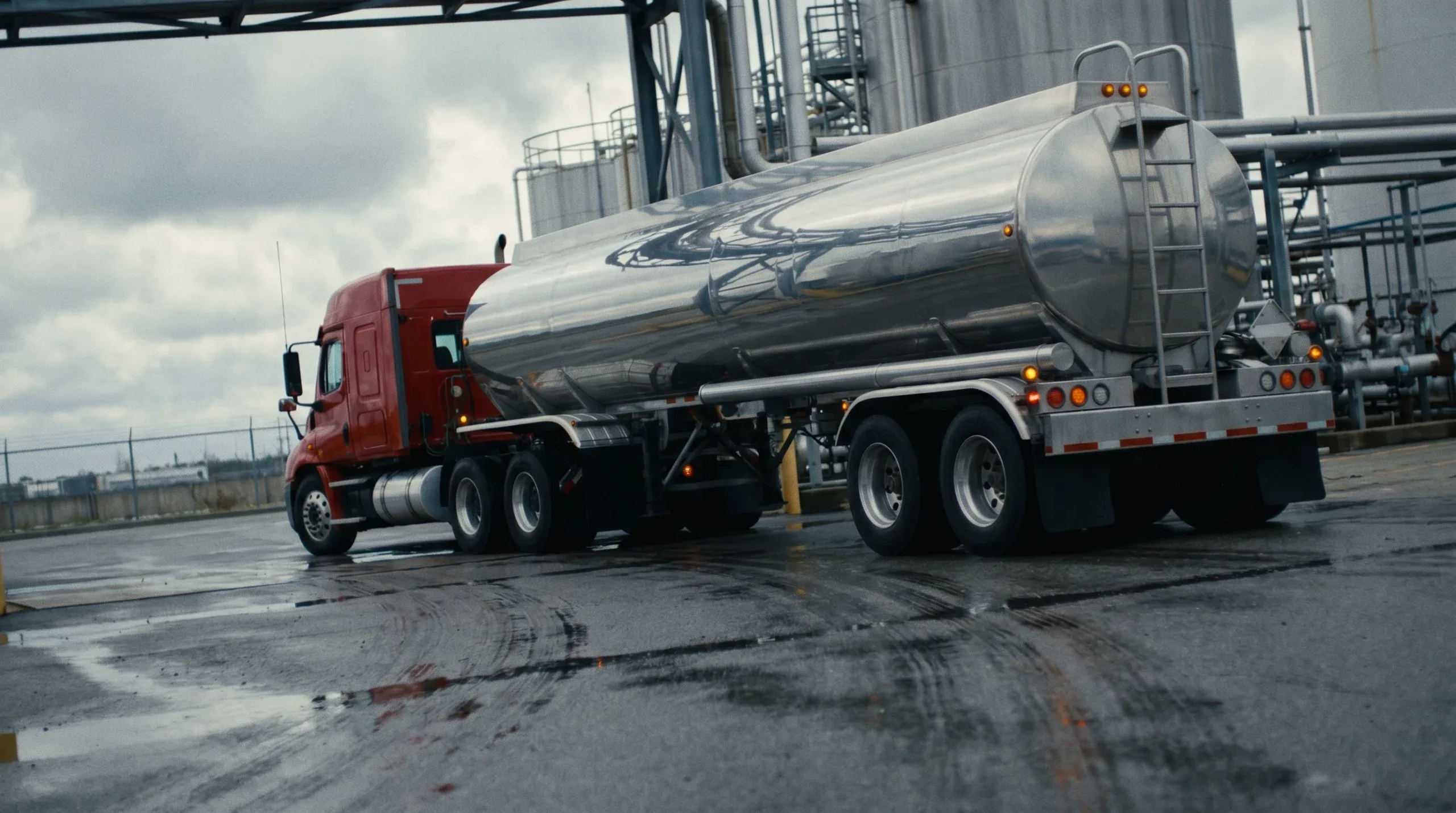
Kentucky Tanker Truck Accident Cases
A tanker truck accident attorney works from more federal rules than an ordinary tractor-trailer case involves. Federal law treats a tank vehicle as its own class of commercial vehicle and requires its driver to hold a separate license endorsement. When the tank holds hazardous materials, shipping-paper, placard, routing, and parking rules apply on top of the usual trucking regulations. Kentucky applies those federal rules to commercial motor vehicles operating for hire or in private carriage, interstate or intrastate, through 601 KAR 1:005, subject to the exceptions that regulation lists.
Sam Aguiar Injury Lawyers handles tanker truck accident cases across Kentucky through a dedicated trucking team that focuses exclusively on trucking and commercial vehicle cases. An attorney on that team reads the carrier’s records against these rules, alongside a case manager and a legal assistant. Truck cases of every type are covered on the firm’s Kentucky truck accident lawyers page.
License Endorsements for Tank Vehicles
Under 49 CFR 383.5, a tank vehicle is a commercial motor vehicle built to carry liquid or gas in a tank with an individual rated capacity of more than 119 gallons and an aggregate rated capacity of 1,000 gallons or more. 49 CFR 383.93 requires a State-issued endorsement on the commercial driver’s license to operate a tank vehicle, and a separate endorsement to haul hazardous materials. Each endorsement requires a knowledge test. Under 49 CFR 383.141, a state may not issue or renew a hazardous materials endorsement unless the Transportation Security Administration has determined that the driver does not pose a security risk, or the driver holds a valid Transportation Worker Identification Credential.
The hazardous materials test draws on Parts 171, 172, 173, 177, 178, and 397 and covers shipping papers, placarding, cargo tanks, parking, routes, and emergency response, under 49 CFR 383.121. A missing endorsement is a licensing violation tied to the exact vehicle the driver was operating. The driver qualification file is where that record lives, and qualification rules for truck drivers explains what that file must contain.
Cargo Tank Rollover Risk
The Federal Motor Carrier Safety Administration’s Cargo Tank Roll Stability Study found that cargo tank trucks account for 15 percent of fatal crashes involving heavy trucks but 31 percent of heavy vehicle rollover fatal crashes. It put the national average at 1,265 cargo tank rollovers a year. The study states that a vehicle’s tendency to roll over depends on the height of its center of gravity, its track width, and the lateral force on the tractor. It found a driver error of one kind or another in about three of every four cargo tank rollovers.
Liquid cargo adds a second problem. The commercial driver’s license manual used for the tank vehicle test, in the edition published by the Georgia Department of Driver Services, explains that liquid surge comes from movement of the liquid in partially filled tanks and can hurt handling. Baffles slow the front-to-back surge, while an unbaffled “smooth bore” tank lets that surge run strong. FMCSA’s cargo tank rollover fact sheet reports that 63 percent of rollovers involved partial loads, 56 percent happened on straight roads, 93 percent happened on dry roads, and 54 percent of the vehicles had a brake defect of some sort.
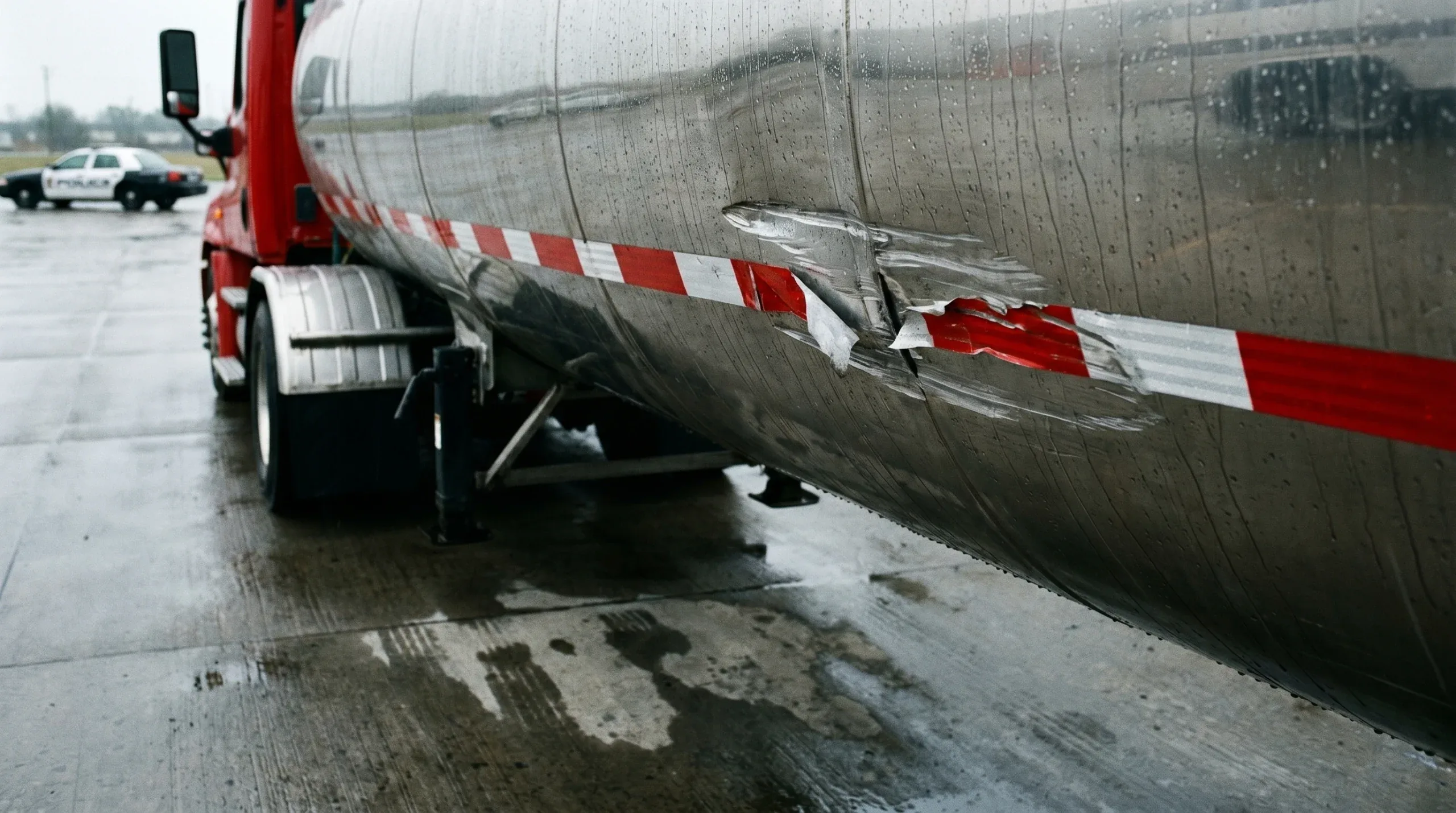
Hazardous Materials Shipping Rules
When a tanker hauls hazardous materials, the Hazardous Materials Regulations in Title 49, Parts 171 through 180, govern the shipment. Under 49 CFR 171.2, each person who offers hazardous material for transport must comply with them, and each offeror is responsible for the pre-transportation functions it performs. The shipper certifies on the shipping paper that the material is properly classified, described, packaged, marked, and labeled, under 49 CFR 172.204.
On the road, 49 CFR 177.817 requires the driver and the carrier to keep the shipping paper readily available to authorities after an accident. 49 CFR 172.602 requires emergency response information covering immediate health hazards, the risk of fire or explosion, and first steps for spills and leaks. 49 CFR 172.504 requires placards on each side and each end of a bulk package or transport vehicle carrying hazardous material, except where the regulations provide otherwise.
Part 397 Driving and Parking Rules
49 CFR 397.1 applies Part 397 to every motor carrier hauling hazardous materials in a vehicle that must be marked or placarded, and to the drivers and supervisors of those loads. Under 397.3, the vehicle must be driven and parked in compliance with state and local law. Under 397.5, a vehicle carrying hazardous materials on a public street, highway, or shoulder must be attended by its driver. Under 397.7, it may not be parked on or within five feet of the traveled portion of a public road, except for brief periods when operations make any other spot impracticable.
Routing has its own rule. Where no state or tribal routing designation for non-radioactive hazardous materials applies, 49 CFR 397.67 requires the carrier to keep placarded loads off routes through or near heavily populated areas, crowds, tunnels, narrow streets, and alleys unless there is no practicable alternative. The same section states that operating convenience is not a basis for that decision.
Tanker Truck Case Records
A tanker case adds records that an ordinary freight case does not have: the shipping paper and the shipper’s certification, the emergency response information, scene photographs of the placards, and the cargo tank’s test and inspection history. Under 49 CFR 180.407, a specification cargo tank with an overdue test or inspection may not be filled and offered for transport. 49 CFR 180.417 requires the tank owner to keep the manufacturer’s certificate for as long as it owns the tank and for one year after, and requires a motor carrier using the tank to keep a copy.
The trucking records follow: the driver’s qualification file, the hours-of-service records, the driver’s testing history in the FMCSA Drug and Alcohol Clearinghouse, and the carrier’s safety measurement scores, explained in reading the FMCSA SMS report. Sam Aguiar Injury Lawyers also has six months of real-time access to DOT and TRIMARC traffic camera archives, which can show the minutes before an accident on a covered road.
Hazardous Materials Incident Reports
49 CFR 171.15 requires the person in physical possession of the hazardous material to notify the National Response Center by telephone as soon as practical, and no later than 12 hours after the incident, when the material kills someone, injures someone seriously enough to be admitted to a hospital, evacuates the public for an hour or more, or closes a major transportation artery for an hour or more.
49 CFR 171.16 then requires a written Hazardous Materials Incident Report on DOT Form F 5800.1 within 30 days of discovery. That report is also required after an unintentional release, and after structural damage to a specification cargo tank of 1,000 gallons or more even when nothing leaked. Both filings come from the company that had the material, close to the date of the accident and before any lawsuit.
Federal Insurance Minimums for Tanker Carriers
49 CFR 387.9 sets the minimum public liability coverage a motor carrier must carry, and the minimum rises with the cargo. A for-hire interstate carrier hauling nonhazardous property in a vehicle rated at 10,001 pounds or more must carry $750,000. Oil, hazardous waste, and hazardous materials that no higher entry covers require $1,000,000. Hazardous substances hauled in bulk in cargo tanks, portable tanks, or hopper-type vehicles require $5,000,000, for for-hire and private carriers alike, in interstate, foreign, or intrastate commerce.
Those amounts are minimums, and a carrier may buy more. The policy declarations and any excess coverage show the actual limits in a given case.
More than one company can carry duties, and coverage, in a tanker accident. The motor carrier holds the driver licensing, insurance, and routing duties in Parts 383, 387, and 397. The shipper holds the classification and description duties it certified under 49 CFR 172.204, and 49 CFR 171.2 makes each offeror responsible for the functions it performs. The owner of a specification cargo tank holds the testing and recordkeeping duties in Part 180. Each company’s own policy is a separate source of coverage.
Key Takeaways
Hit by a Tanker Truck in Kentucky?
Shipping papers, placards, cargo tank test records, and hazardous materials incident reports can show what the tanker carried and who was responsible for it. Sam Aguiar Injury Lawyers handles tanker truck accident cases through a dedicated trucking team. With our Bigger Share Guarantee®, you always get more, and you pay $0 Out-Of-Pocket Forever. Call today for a free case review.