

Tire Blowout Truck Accident Lawyers
Tire Blowout Accidents
Key Takeaways
- Federal rules cap gross vehicle weight on the Interstate System at 80,000 pounds under 23 CFR 658.17, and a tire failure at highway speed can destabilize a truck loaded to that weight.
- Under 49 CFR 393.75, tires on the front wheels of a truck or truck tractor must have at least 4/32 inch tread depth and other tires at least 2/32 inch, with no exposed belt or ply material, tread or sidewall separation, or audible leaks.
- A steer tire failure takes away steering control instantly, and a rear trailer tire failure can cause trailer sway that leads to a jackknife or rollover.
What Causes Commercial Truck Tire Blowouts?
The four common causes of commercial truck tire blowouts are maintenance neglect, improper inflation, overloaded cargo, and manufacturing defects. A blowout at highway speed can destabilize a truck loaded up to the 80,000-pound federal gross weight limit in 23 CFR 658.17.
Under 49 CFR 393.75, no motor vehicle may be operated on tires that fall below minimum tread depth, have tread or sidewall separation, carry more weight than the sidewall rating, or have a cold inflation pressure below what the load requires.
- 1
Maintenance Neglect
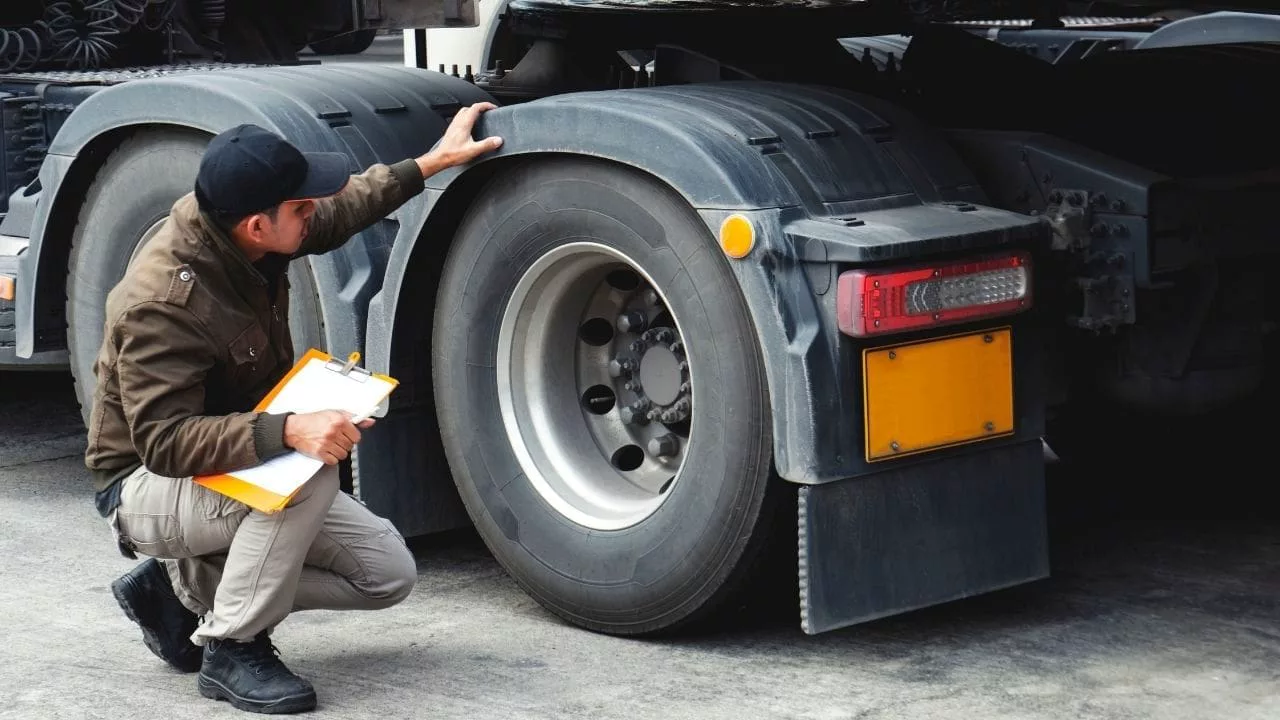
Federal regulations under 49 CFR 393.75 set clear minimums: tires on the front wheels of a truck or truck tractor must have at least 4/32 inch tread depth, and other tires at least 2/32 inch. No tire may have exposed body ply or belt material, tread or sidewall separation, or an audible leak. A carrier that runs tires past these limits violates the regulation, and the violation can be evidence of negligence when a blowout causes a crash.
- 2
Improper Inflation
Under-inflation builds heat in the tire’s sidewall during highway operation and accelerates structural degradation. Over-inflation concentrates stress on the center tread. Both lead to premature failure. Under 49 CFR 393.75(i), a truck may not be operated on a tire with a cold inflation pressure below the pressure specified for the load, as FMCSA’s compliance guidance summarizes. Under 49 CFR 392.7, a driver may not drive a commercial motor vehicle unless satisfied that its tires are in good working order.
- 3
Overloaded Cargo
Exceeding the Gross Vehicle Weight Rating (GVWR) or per-axle weight limits stresses tires well beyond their design capacity. Under 49 CFR 393.75(g), no vehicle may run on tires carrying more weight than the sidewall rating. Overloading is a separate problem from cargo securement violations, though both can appear in the same load. Weight tickets and weigh station records, compared against the vehicle’s rated capacity, show whether the truck was overloaded.
- 4
Manufacturing Defects
Some tires carry a structural flaw, such as improper belt bonding, casing defects, or material failures. When a defect contributed to the blowout, the tire manufacturer may be an additional defendant alongside the carrier.
Blowout Crash Sequence
A steer tire failure takes away the driver’s steering control instantly. The truck may pull violently to one side and enter adjacent lanes before any correction is possible. A rear trailer tire failure creates an imbalance that can cause trailer sway leading to a jackknife or rollover. Either way, other vehicles on Kentucky highways have almost no warning before the crash.
Tire Blowout Evidence
Four categories of evidence establish why a truck tire failed and who is responsible.
- 1
Preservation and Inspection of the Failed Tire
The tire must be preserved before it is replaced or destroyed. Physical examination by a tire failure analyst can determine whether maintenance neglect, overloading, improper inflation, or a manufacturing defect caused the failure.
- 2
Maintenance Records and Inspection Logs
Driver vehicle inspection reports (DVIRs), tire replacement logs, and annual inspection records show whether the carrier knew about the tire’s condition and chose to ignore it.
- 3
Weight Tickets and Bills of Lading
Weight documentation can show an overload and whether the carrier ran its tires beyond their rated capacity.
- 4
ECM and Telematics Data
Black box data records speed, braking, and steering inputs in the moments before impact. Combined with tire failure analysis, it establishes the exact sequence of the crash.
Related truck crash topics include the Kentucky truck accident lawyer page, the unsecured load accident page, and the jackknife truck crash page.
Hit After a Truck Tire Blowout?
Sam Aguiar Injury Lawyers takes truck tire blowout claims on these terms:
- Dedicated three-person team: a top-rated attorney, an experienced case manager, and a skilled legal assistant.
- Bigger Share Guarantee®: Clients always walk away with more money than the firm after medical bills, liens, and case expenses are paid. If the client’s share would ever be less than the legal fee, the firm cuts its fee.
- Flat contingency fee that never increases if your case goes to trial.
- $0 Out-Of-Pocket Forever.
A blowout claim depends on the failed tire itself, the carrier’s inspection and tire replacement records, and the weight tickets for the load, and the tire can be discarded once the truck is back on the road. Get a free case review about the blowout crash that hurt you at 502-888-8888.
Why Clients Choose Sam Aguiar
Ready to Take Action on Your Case?
After a serious injury, medical bills pile up while the insurance company looks for ways to pay you less. Most law firms take their cut first and leave you with whatever is left. Sam Aguiar Injury Lawyers does things differently. With our exclusive Bigger Share Guarantee®, you always get more. Every client gets a dedicated three-person team: an attorney, a case manager, and a legal assistant. We never raise our fee rate if we have to go to court, and you pay $0 Out-Of-Pocket Forever.
Frequently Asked Questions
1What are the federal minimum tire standards for commercial trucks?+
Under 49 CFR 393.75, tires on the front wheels of a truck or truck tractor must have at least 4/32 inch tread depth and other tires at least 2/32 inch, with no exposed ply or belt material, tread or sidewall separation, audible leaks, or cuts exposing ply or belt material. The rule also bars tires loaded beyond their sidewall rating or run below the cold inflation pressure the load requires.
2Who is liable when a truck tire blowout causes a crash?+
The trucking company is usually the primary defendant, because federal rules bar operating a truck on noncompliant tires, and 49 CFR 392.7 bars a driver from driving until satisfied the tires are in good working order. When a manufacturing defect caused the failure, the tire manufacturer may also be named as a defendant.
3What should I do if a piece of tire rubber from a truck damaged my vehicle?+
Document the scene, including the tire debris and vehicle damage, and get the truck’s license plate and DOT number if possible. The tire debris is evidence that needs to be preserved, and the carrier needs a legal hold on its maintenance records before they disappear.
4What commonly causes a commercial truck tire blowout?+
The most common causes are maintenance neglect that runs tires past federal tread depth minimums, improper inflation that causes heat buildup or stress concentration, overloaded cargo that exceeds the vehicle’s rated capacity, and manufacturing defects in the tire itself.
5What evidence is used in a tire blowout case?+
The failed tire itself, preserved and physically inspected, is the starting point. Maintenance records and inspection logs including DVIRs, weight tickets and bills of lading, and ECM and telematics data recording speed and steering inputs before impact complete the record.