

Freight Broker Liability After a Truck Crash

Freight broker liability moved to the center of truck crash litigation in May 2026, when the United States Supreme Court held unanimously that the Federal Aviation Administration Authorization Act does not shield brokers from state-law negligent hiring claims, according to the Court’s slip opinion. The decision, Montgomery v. Caribe Transport II, LLC, resolved a question that had divided lower courts for years and opened a wider path for injured people to reach the companies that put unsafe carriers on the road.
Unanimous Ruling on Broker Accountability
On May 14, 2026, the Supreme Court decided Montgomery v. Caribe Transport II, LLC, a case that asked whether a company that hires another company to transport goods can be sued under state law when the carrier it selects causes harm. The Court answered yes, reversing and remanding the lower court’s judgment in a 9 to 0 opinion authored by Amy Coney Barrett, according to the Supreme Court’s slip opinion. Brett Kavanaugh wrote a concurring opinion joined by Samuel Alito. The judgment was issued on June 15, 2026, per SCOTUSblog.
The holding was narrow but significant. A claim that one company negligently hired another to transport goods is not preempted by the Federal Aviation Administration Authorization Act, because states retain authority to regulate safety with respect to motor vehicles under the act, per the slip opinion. That language, drawn directly from the Court’s own summary of the decision, means brokers cannot invoke the federal statute to dismiss negligent hiring claims before they ever reach a jury.
How the Case Reached the Supreme Court
The dispute grew out of Shawn Montgomery’s severe injuries after a truck struck his tractor-trailer while it was stopped beside an Illinois road. Montgomery’s leg had to be amputated. He alleged that freight broker C.H. Robinson negligently hired Caribe Transport and its driver. The Supreme Court reviewed whether the FAAAA barred that negligent-hiring claim, as the opinion explains.
According to SCOTUSblog’s case page, the issue presented was whether a state-law negligent hiring claim against a freight broker is preempted by the FAAAA. The Court held that it is not, relying on the act’s safety exception for state authority over motor vehicles. The ruling reversed the judgment below and sent the case back for further proceedings.
FAAAA Preemption Question
The case turns on a single federal statute. The Federal Aviation Administration Authorization Act of 1994 added a preemption provision to federal transportation law that generally bars states from enacting laws related to a motor carrier’s prices, routes, or services. The text of that provision lives at 49 U.S.C. 14501(c), hosted by the Legal Information Institute at Cornell Law School.
Freight brokers argued that the FAAAA preempted state negligent-hiring claims concerning their carrier-selection services. In Montgomery, the Court assumed without deciding that the preemption clause otherwise applied, then held that the motor-vehicle safety exception preserved Montgomery’s claim. The exception appears in 49 U.S.C. 14501(c)(2)(A) and preserves state safety regulatory authority with respect to motor vehicles.
Safety Exception for Motor Vehicles
The safety exception was the hinge of the entire case. The Court reasoned, per the slip opinion, that a negligent hiring claim aimed at a broker’s choice of carrier is a claim about safety with respect to motor vehicles, not a backdoor regulation of prices, routes, or services. Because the exception preserves that state authority, the claim survives preemption and can proceed in state court.
That framing changes the picture for injury victims. A broker cannot wave the FAAAA as a federal shield to escape a claim that it knowingly handed a load to an unsafe carrier. The question becomes whether the broker used a proper carrier-selection process, a question state courts and juries are equipped to answer.
Freight Broker Liability After Montgomery
Freight broker liability, as a practical matter, is about the duty to select a competent and safe carrier. A broker arranges transportation between a shipper and a motor carrier but typically does not operate the truck. Before Montgomery, brokers often argued that this hands-off role insulated them from claims when the carrier they chose caused a crash. The unanimous ruling rejects the FAAAA preemption defense for this type of motor-vehicle safety claim. It does not decide whether the broker was negligent or establish causation, damages, or available insurance coverage.
The holding follows the structure of brokered freight, where a single load can pass from a shipper to a broker to a carrier and finally to a driver, and the company that arranged the haul is often the most visible and solvent link in that chain. When a fatigued or unqualified driver operating for a marginally insured carrier causes a crash, the people hurt in that crash gain a clearer route to the entity that put that carrier on the road.
Ripple Effects Across the Supply Chain
Legal analysts have been tracking the fallout in real time. Writing in Law360’s midyear transportation report, published July 9, 2026, attorneys noted that since the Supreme Court’s May 14 decision in Montgomery v. Caribe Transport II, the immediate focus has been on freight brokers and negligent carrier-selection claims, but the ripple effects may extend to shippers, logistics providers, insurers, transportation managers, and other participants in the supply chain.
That breadth is why the ruling reaches far beyond a single case. A separate Law360 analysis, published July 6, 2026, examined how the Montgomery ruling is expected to affect companies across the supply chain, and a June 26, 2026, piece cautioned that the decision does not automatically expand shipper liability. For injury victims, the universe of potentially accountable parties is larger and more contested than it was a year ago.
Kentucky Freight Corridors
Kentucky sits at the crossroads of eastern freight movement, where Interstates 65, 75, 64, and 71 carry a steady stream of commercial traffic between the Midwest, the South, and the East Coast. When a crash happens on a Kentucky corridor, the truck may be registered out of state, the carrier may be based hundreds of miles away, and the broker that arranged the haul may be a fourth party nowhere near the scene.
The carrier’s safety rating, operating authority, and insurance status are all publicly available through the FMCSA SAFER database, which makes a broker’s failure to check them before tendering a load difficult to explain away after a collision.
For people injured in those crashes, the practical problem has always been identifying a responsible, solvent defendant. The driver may carry minimal coverage. The carrier may be a small operation with thin assets. The broker, by contrast, is frequently a larger, better-capitalized company that made a deliberate decision to hire the carrier that caused the harm. Montgomery confirms that this decision can be scrutinized in court. Kentucky injury victims dealing with truck accident liability in Kentucky now have a stronger basis to include the broker in that analysis.
Evidence That Drives a Broker Liability Claim
A negligent selection claim rises or falls on the carrier-selection record. The Federal Motor Carrier Safety Administration maintains public databases that injury attorneys use to reconstruct what a broker knew, or should have known, about the carrier it hired. The FMCSA SAFER database provides company snapshots, safety ratings, operating authority, and insurance information. The agency’s Safety Measurement System data tracks Behavior Analysis and Safety Improvement Categories, or BASICs, scores that flag problem carriers.
In a broker-liability claim, the relevant questions often include whether the broker checked the carrier’s operating authority and safety rating before tendering the load, whether the carrier had a conditional or unsatisfactory rating, whether the broker reviewed the carrier’s hours-of-service compliance history, and whether the carrier had prior out-of-service violations. That evidence is gathered through the crash investigation and black box analysis in Kentucky truck cases, which can surface broker emails, load confirmations, carrier vetting checklists, and internal communications about the carrier’s safety record.
Many brokers run rigorous vetting programs. The tools to tell the difference exist and are public, which makes a broker’s failure to use them harder to defend after a crash.
Truck Safety Backdrop
The Montgomery ruling lands against a backdrop of persistent truck crash fatalities. According to a report to Congress from the National Highway Traffic Safety Administration, 5,936 people died in crashes involving large trucks in 2022. The agency’s broader traffic data, released in April 2026, recorded 39,254 lives lost on U.S. roads in 2024 overall. Each of those large-truck fatalities represents a potential chain of accountability that now reaches one link further upstream to the broker.
Regulators continue to tighten the screws on the carriers themselves. In July 2026, FMCSA removed 10 electronic logging devices from its registered list for failing to meet minimum requirements, giving carriers 60 days to replace them, according to the agency’s ELD news and events page. TruckSafe Compliance, a trucking compliance consulting firm, separately documented three FMCSA deregulatory final rules published June 22, 2026, that took effect July 22, 2026, covering CDL self-reporting, ELD operator manuals, and inspection report disposition. Those rule changes did not alter hours-of-service limits, drug and alcohol testing, or CDL qualification standards, but they reflect an agency actively reshaping the compliance rules brokers must manage when vetting carriers.
Together, these developments mean the safety record a broker should have reviewed is more visible and more current than ever. That strengthens negligent selection claims and raises the stakes for brokers that skip the vetting step. It also connects directly to the tactics carriers and their insurers use after a crash, covered in the overview of truck accident injury cases in Kentucky.
Ready to Take Action on Your Injury Claim?
After a serious injury, medical bills pile up while the insurance company looks for ways to pay you less. Most law firms take their cut first and leave you with whatever is left. Sam Aguiar Injury Lawyers does things differently. With our exclusive Bigger Share Guarantee®, you always get more. Every client gets a dedicated three-person team: an attorney, a case manager, and a legal assistant. We never raise our fee rate if we have to go to court, and you pay $0 Out-Of-Pocket Forever.
Frequently Asked Questions
1What did the Supreme Court decide in Montgomery v. Caribe Transport II?+
2Does the FAAAA shield freight brokers from negligent hiring claims?+
3Who can be held accountable after a truck crash involving a brokered load?+
4How does this ruling affect Kentucky truck crash cases?+
5What evidence supports a freight broker negligent selection claim?+
6Are shippers now liable under the Montgomery ruling?+
Latest Articles
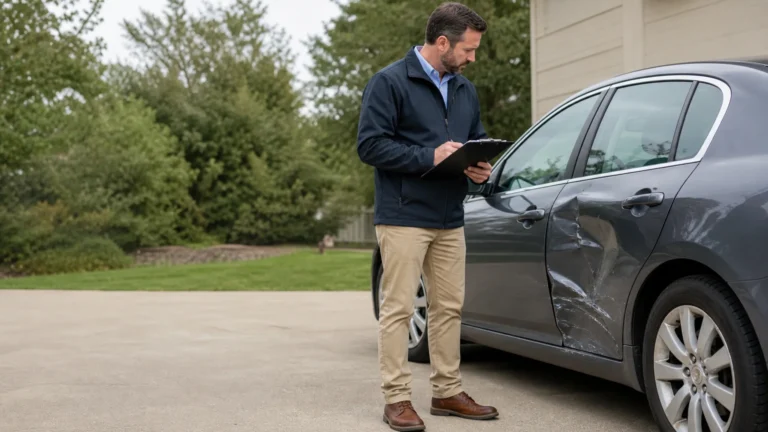
Kentucky Diminished Value Claims
Kentucky drivers may pursue a repaired vehicle’s leftover market loss from the at-fault driver as part of a.
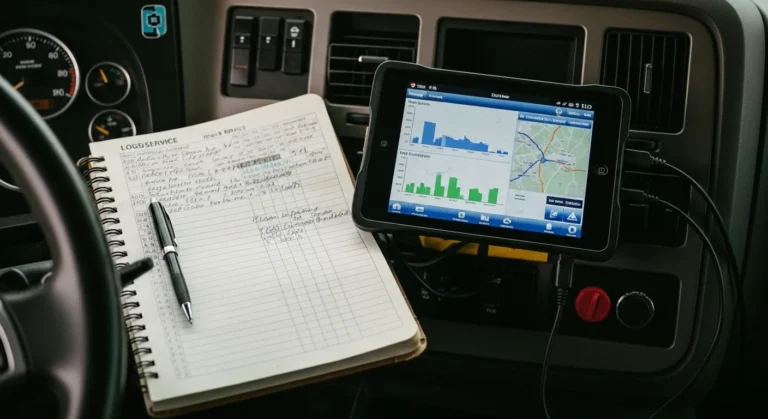
FMCSA Revoked ELDs: Fleet Compliance and Enforcement Deadlines
FMCSA removed five electronic logging devices from the registered list on August 6, 2026, and set an October.
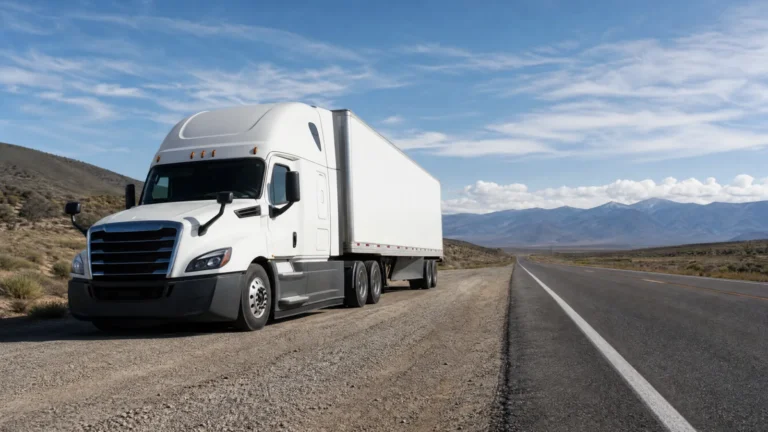
FMCSA English Proficiency Rule and OOS Enforcement
FMCSA English Proficiency Rule Sam Aguiar Injury Lawyers August 11, 2026 7 minute read On This Page.